
Keep Your Family Warm and Safe—No Matter What
From oak and hickory cut in the surrounding hills to a stove sized right for a mild-winter home, we'll match you with a local dealer who installs it correctly and handles the paperwork.
Every Project Starts From One of These Five Situations
Supplemental heat with real Appalachian roots.
Carlisle-Rockledge sits in the Appalachian foothills of Etowah County at just over 1,000 feet elevation, where winter lows average a mild 33°F and the area logs a fairly short, mild heating season—a fraction of what places like Duluth, MN see. That means wood heat here rarely has to carry a home through months of subzero cold. Instead, it's the fireplace or stove families light on the handful of genuinely cold nights each winter, and the backup heat source that matters when an ice storm knocks out power for days, which happens more often in this part of Alabama than people outside the region expect.
The oak, hickory, and pine that cover the hills around Carlisle-Rockledge make excellent firewood, and plenty of local homeowners still cut and split their own. There are no air quality restrictions or non-attainment concerns here, so burning is straightforward—the main things to get right are correct stove sizing for a mild climate, proper clearances, and a permit through the Etowah County Building Department if your project involves new construction or a masonry chimney. A properly sized stove or insert also gives you real, no-electricity heat during the ice storms that periodically take out Alabama Power service in this area.
Three steps. No salesperson until you're ready.
Tell us about your project
Your zip code, your situation, and the fuel you're leaning toward—or let the answers point you to one.
See what's actually available
The brands dealers within 100 miles genuinely carry—real options, never a catalog mirage.
Get your dealer & Project Guide
A trusted local dealer, plus the free Project Guide & Parts List that names every component of the job.
Frequently Asked Questions
How much does a wood stove installation cost in Carlisle-Rockledge?
Most wood stove and insert installations in the Carlisle-Rockledge area run $3,500 to $8,000, depending on the unit and whether you're venting through an existing masonry chimney or need new Class A pipe. Older farmhouses in Etowah County with existing but unlined chimneys often need a stainless liner added, which pushes the cost toward the higher end. Straightforward insert installations into a chimney that's already in decent shape tend to land on the lower end. Local dealers typically handle the Etowah County Building Department permit as part of the job.
What size wood stove do I need in a climate this mild?
With winter lows averaging around 33°F and only a fairly short, mild heating season each year, most Carlisle-Rockledge homes don't need a large-capacity, all-night-burn stove the way a home in Fargo, ND or Bozeman, MT would. A small to mid-size stove (rated for 1,000–1,500 square feet) is plenty for most single-family homes here, since it's usually running to take the edge off a cold snap or serve as backup heat rather than carrying the whole house through a long winter. If you're heating an older, drafty farmhouse or want the stove as your primary heat source, a local dealer can size it up based on square footage and insulation during an in-home visit.
Where can I find certified wood stove installers near Carlisle-Rockledge?
Look for NFI (National Fireplace Institute) or CSIA (Chimney Safety Institute of America) certified installers—credentials that confirm proper training in clearances, venting, and code compliance for wood-burning appliances. Because Carlisle-Rockledge is a small unincorporated community, most certified installers and hearth shops are based out of nearby Gadsden, the Etowah County seat, and travel to surrounding areas for installs. Working with a certified installer rather than a general handyman matters most on the venting and clearance details—that's where most wood stove fires start.
What's the difference between a wood stove and a wood insert?
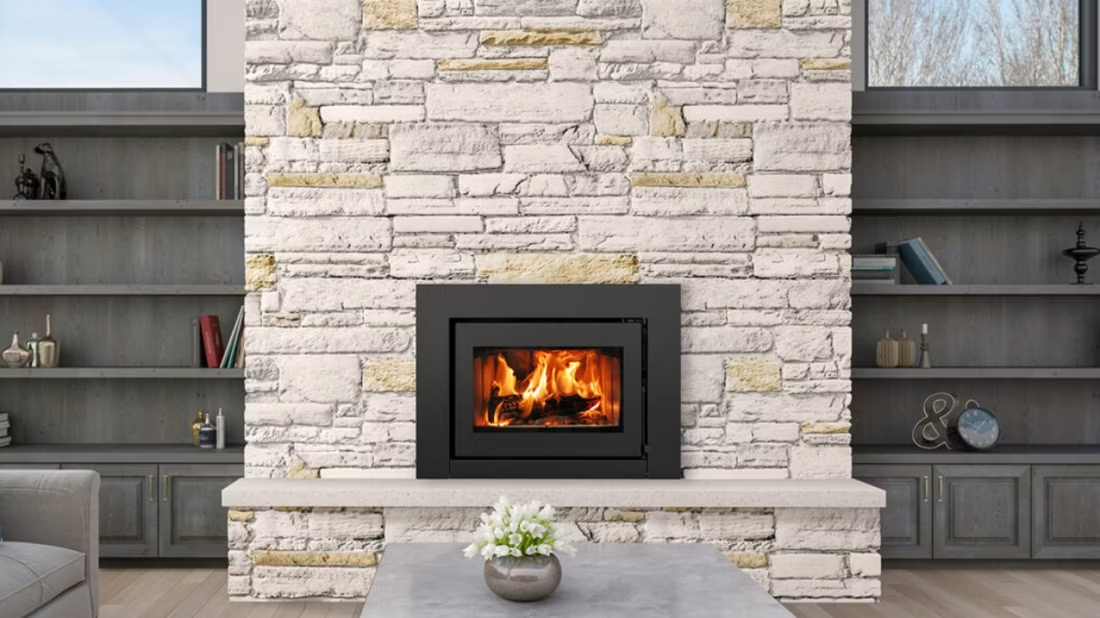
A wood stove is a freestanding unit on a hearth pad that can go almost anywhere with the right clearances, while a wood insert slides into an existing masonry fireplace opening and uses the chimney you already have. A lot of homes around Carlisle-Rockledge—especially older farmhouses—already have a working masonry fireplace that loses most of its heat up the chimney. An insert converts that fireplace into a real heat source without changing the look of the room. Homes without an existing fireplace, or newer construction, are usually better candidates for a freestanding stove instead.
Do I need a permit to install a wood stove in Carlisle-Rockledge?
For most stove or insert installations, yes—a building permit through the Etowah County Building Department is standard, particularly if new chimney or venting work is involved. Unlike parts of the West Coast or Pacific Northwest, there are no air quality non-attainment rules or seasonal burn curtailments here, so once your stove is installed and inspected, you're free to burn without restriction. Most local hearth dealers pull the permit as part of the installation, so it typically doesn't fall on the homeowner to handle.
What's the best wood stove for a Carlisle-Rockledge home?
Since most homes here use wood stoves for supplemental heat and storm backup rather than round-the-clock winter heating, you generally don't need an extreme-cold, 20-plus-hour catalytic burner. Mid-size non-catalytic stoves from brands like England's Stove Works (based just up the road in Virginia and popular throughout the Southeast), Drolet, or Vermont Castings are a good fit—reliable, easier to operate, and sized right for the region's milder heating load. If you're planning to lean on wood heat heavily during ice storm outages, ask your local dealer about models with a larger firebox for longer burn times overnight.
How often should my chimney be inspected in this climate?
An annual inspection before burning season—ideally in early fall—is still the standard recommendation from the CSIA, even in a mild climate like Carlisle-Rockledge's. Well-seasoned oak and hickory, which are the most common local firewood species, burn cleaner and produce less creosote than softer woods, but pine is also common in the area and creosotes up faster if it isn't fully dried first. If you're burning mostly pine or using your stove heavily during a cold snap, consider a mid-season check as well.
Where can I get firewood in the Carlisle-Rockledge area?
Oak, hickory, and pine are all abundant in the hills around Etowah County, and a number of local landowners and small operators sell seasoned cordwood directly or through word of mouth—asking at a local hearth shop or feed store is often the fastest way to find a supplier. Split hardwood typically runs $150 to $250 a cord in this part of Alabama, noticeably less than firewood prices out West. Oak and hickory are worth seeking out specifically for their higher heat output and slower burn compared to pine.
Wood stove vs. pellet stove—which makes more sense here?
Wood stoves work without electricity, which matters in Etowah County given how often ice storms take down Alabama Power lines for days at a time—a wood stove keeps burning regardless. Pellet stoves, which use bagged fuel from regional suppliers like Lignetics or Hamer Pellet Fuel, are more convenient to operate and burn cleaner, but they need electricity to run the auger and blower, so they go dark in an outage unless paired with a battery backup. For a mild climate like this one, where wood heat is often about storm resilience as much as everyday warmth, that's usually the deciding factor. A local dealer can walk you through both options based on how you plan to use the stove.
What's the difference between an insert and a zero-clearance fireplace?
An insert is a fireplace that slides into a pre-existing wood-burning fireplace—if you don't have one, there's nothing to insert it into. A zero-clearance fireplace is built into a framed wall, which makes it the answer for remodels and new construction. Simple test: existing masonry fireplace means insert; blank or framed wall means zero-clearance.
What do I measure to size a fireplace insert?
Four numbers tell you what fits: the front width, the front height, the back width, and the overall depth of your existing fireplace opening. Grab a tape measure, jot those down, and snap a photo of the wall—those two things do more to move your project forward than anything else you can do today.
How much should I budget for a fireplace?
For an average home—covering the fireplace, the vent pipe, and basic installation—a budget between $3,900 and $5,500 gives you a lot of options across wood, gas, and pellet. By the time you add finish work, gas line, and electrical, the average complete installation lands between $5,000 and $12,000 all-in. In a remodel or new build, a good rule is to put about 2.5% of the total project cost toward the fireplace.
Can I install a fireplace myself?
If you're putting a fire in your house on purpose, it's best to work with an expert. Unless you're genuinely experienced in framing, gas line, vent pipe, and the national code on clearances to combustibles, have a professional do it—and ideally the same company that sells you the fireplace, so warranty, service, and liability all live under one roof.
Nearby Dealers
Hearth shops serving Carlisle-Rockledge and the surrounding area. Every listing shows whether it is a WhyFire partner, a dealer we have verified as authorized for the brands we recommend, or a local business carrying hearth products. No manufacturer pays for placement. How we verify dealers →
Nomad Homestead Supply
Allgas, Inc. - Gadsden
Southern Fireplaces
Sand Mountain Brick
Discount Building Supply
Allgas, Inc. - Arab
Find your wood fireplace in Carlisle-Rockledge.
Tell us a bit about your home and we'll put together a free Project Guide & Parts List—the right stove or insert, the vent kit it needs, and a trusted local dealer near Etowah County to install it.
Find Your Fireplace →