
Pellet Heat That Fits Bessemer's Mild Winters.
With a light winter heating load and winter lows averaging 34°F, Bessemer isn't a pellet-heat hotbed—but for the right home, a pellet stove still makes sense. We'll connect you with a local dealer who'll tell you straight whether it does for yours.
Every Project Starts From One of These Five Situations
Pellet stoves are a niche choice here—and that's fine.
Bessemer sits in climate zone 3A at 507 feet elevation, with a heating season that's short and mild by national standards—a light winter heating load, compared to roughly four times as much heating load in a place like Duluth, Minnesota. Winter lows average around 34°F, which means most Jefferson County homes need heat on cold snaps and shoulder-season mornings, not sustained sub-freezing burns for months at a stretch. That's the honest context for pellet stoves here: they're not the primary heat source they'd be in a colder climate, and we won't pretend otherwise.
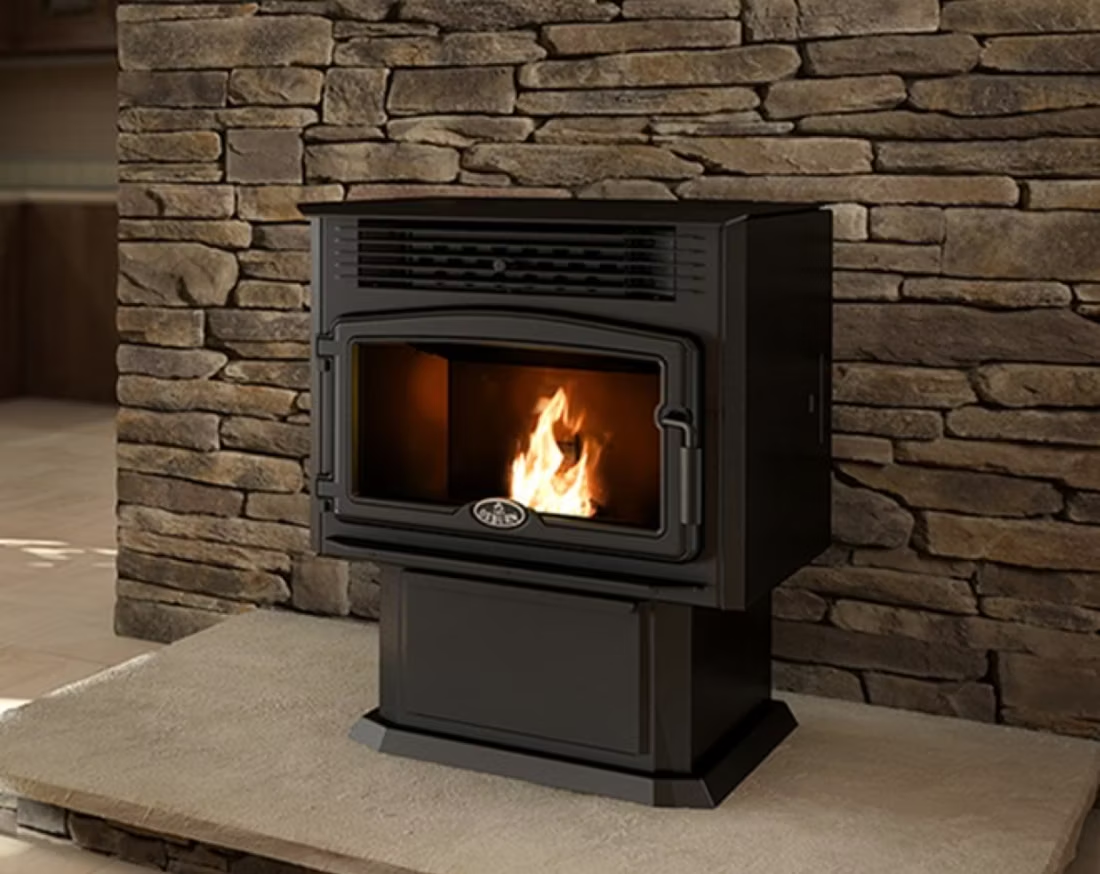
Where pellet stoves do show up in Bessemer, it's usually for a specific reason—supplemental heat in a bonus room or converted garage, a hedge against Alabama Power or City of Bessemer Utilities outages during severe spring storms, or simply a homeowner who prefers the clean, auto-fed convenience of pellets over splitting the oak, pine, and hickory that grow throughout the county. Regional brands like Lignetics, Hamer Pellet Fuel, and Greenway Renewable Energy supply the Southeast, so pellets themselves aren't hard to find—the bigger question is whether a pellet stove is the right tool for your specific room and heating goal, which is exactly what a local dealer walk-through settles.
Three steps. No salesperson until you're ready.
Tell us about your project
Your zip code, your situation, and the fuel you're leaning toward—or let the answers point you to one.
See what's actually available
The brands dealers within 100 miles genuinely carry—real options, never a catalog mirage.
Get your dealer & Project Guide
A trusted local dealer, plus the free Project Guide & Parts List that names every component of the job.
Frequently Asked Questions
How much does a pellet stove installation cost in Bessemer?
Most freestanding pellet stove installations run in the $3,000-$6,000 range depending on the unit, whether it vents through an exterior wall or an existing chimney chase, and whether any wall or floor protection needs to be added for clearance. Because Bessemer's mild winters mean pellet stoves are almost always installed as supplemental heat rather than a whole-home system, most local installs skew toward smaller units on the lower end of that range. A local dealer can give you a firm number after seeing the room.
Is a pellet stove really worth it in a climate as mild as Bessemer's?
For a lot of homes, yes—just not as a primary heat source. With a light winter heating load, Bessemer's heating season is short compared to a place like Duluth, Minnesota, where a pellet stove might run nearly continuously from October to April. Here, a pellet stove is more often a backup for the coldest week or two of January, a way to heat one specific room without running central HVAC, or a hedge against power outages during severe weather. If your goal is whole-home primary heat, gas is usually the more practical fit in this climate; if it's targeted, efficient supplemental warmth, pellet still holds up.
Will a pellet stove keep working if the power goes out?
Not on its own. Pellet stoves rely on an electric auger to feed fuel and a blower to circulate heat, so a standard unit shuts down the moment Alabama Power or City of Bessemer Utilities service drops—which matters here, since Jefferson County sees its share of outages from spring and summer thunderstorms. If outage resilience is a priority, ask your dealer about pairing the stove with a small battery backup or portable generator sized for the stove's draw; a few pellet stove models are also built with lower-wattage components that are easier to run off a generator than others.
Where can I buy pellets locally in Bessemer?
Regional producers like Lignetics, Hamer Pellet Fuel, and Greenway Renewable Energy supply pellets throughout the Southeast, and bagged pellets from these brands typically show up at farm supply and hardware retailers in the Bessemer and greater Birmingham area. Because pellet heat is a smaller market here than in colder states, stock can be more seasonal—it's worth buying a season's worth of bags in early fall before demand picks up, rather than waiting for a cold snap in January when local supply tightens.
What size pellet stove do I need for my home?
Given Bessemer's mild winter lows, most homeowners are sizing for a single room or open living area rather than the whole house—a small to mid-size pellet stove (rated for roughly 1,000-1,500 sq ft) is plenty for supplemental heat in most Jefferson County homes. Going bigger doesn't buy much here the way it might in a colder climate, since you're rarely running the stove flat-out for weeks at a time. A local dealer can size it against your specific room, ceiling height, and insulation.
Pellet stove or gas insert—which makes more sense in Bessemer?
With natural gas service standard throughout much of Bessemer, a gas insert or fireplace is the more common choice for homeowners who want reliable, hands-off heat—no fuel storage, no auger maintenance, and instant on-off operation. A pellet stove makes more sense if you specifically want the visual of a real flame with pellet fuel, don't have gas service to the room in question, or like the idea of a semi-independent heat source that doesn't rely on a utility gas line (though it still needs electricity to run). For most Bessemer homes prioritizing simplicity, gas edges out pellet; for homeowners set on the pellet-burning experience, it's still a workable choice.
Do I need a permit to install a pellet stove in Bessemer?
Most pellet stove installations require a building permit through the City of Bessemer's building inspections department (or Jefferson County, if you're outside city limits), primarily to confirm proper wall or ceiling clearances and correct venting. Bessemer has no air quality non-attainment designations or wood-smoke curtailment periods to worry about, unlike some western cities—so once the unit is permitted and installed correctly, there aren't seasonal burn restrictions to track. Most local dealers handle the permit paperwork as part of the installation.
Why don't more homes in Bessemer have pellet or wood stoves?
It mostly comes down to climate. With winter lows averaging 34°F and a heating season a fraction the length of a northern state's, most Bessemer homes are built and heated around central HVAC and gas, not solid-fuel appliances—there's simply less need for the sustained radiant heat that makes wood and pellet stoves the backbone of home heating somewhere like Duluth or Burlington, Vermont. That said, oak, pine, and hickory are all plentiful in Jefferson County, and a subset of homeowners here still choose pellet or wood for ambiance, backup heat, or personal preference—it's just a smaller share of the market than in colder regions.
Pellet stove vs. traditional wood stove—which fits Bessemer better?
Neither is a mainstream necessity in Bessemer's climate, so the choice comes down to convenience versus experience. A pellet stove loads from a hopper, burns cleaner, and is easier to operate day-to-day—appealing if you want low-maintenance supplemental heat without splitting or stacking wood. A wood stove burns the oak, pine, or hickory already common around Jefferson County, works without electricity, and gives the more traditional fire experience, but demands more hands-on tending and fuel storage. For occasional, convenience-first use, pellet tends to win locally; for homeowners who value self-sufficiency or already have a wood supply, a wood stove still has appeal.
Why is my open fireplace making my house colder?
Open fireplaces suck—literally. As the fire burns, it consumes air your furnace already paid to heat and pulls it out through the chimney, so the house is actually colder after the fire goes out than before you lit it. An insert fixes this: it seals the chimney, puts fixed glass across the front, and turns that hole in your house into a real heat source.
Why is a fireplace insert so efficient?
An insert does two things: it seals the chimney completely, so you stop losing air you already paid to heat, and it radiates warmth into the room through the firebox and glass. Most add a heat-exchange fan that pulls cool room air underneath, wraps it around the hot firebox, and pushes it back out warm. Your home is more efficient before you've even lit the first fire.
Can a fireplace actually lower my heating bill?
Yes—by creating a comfort zone. A furnace heats every square foot of the house just to warm the one room you're in; a gas fireplace on low burns roughly a sixth of the gas a typical furnace does. Set the furnace around 55–60 degrees as a baseline, then heat the rooms your family actually uses. Families who heat this way commonly save $20–$60 a month.
Does a fireplace add value to my home?
On average, a fireplace adds back to the home about the same amount you spent installing it. Add the monthly savings from heating the rooms you actually use instead of the whole house—often hundreds of dollars a year—and the value case is strong before you even count what a fire does for how your family uses the room.
Nearby Dealers
Hearth shops serving Bessemer and the surrounding area. Every listing shows whether it is a WhyFire partner, a dealer we have verified as authorized for the brands we recommend, or a local business carrying hearth products. No manufacturer pays for placement. How we verify dealers →
Colonial Fireplace Company
Southern Fireplaces
Allgas, Inc. - Gardendale
Pellet Brands Stocked Around Bessemer
Manufacturers will point you to the nearest stocking dealer.
Find your pellet stove in Bessemer.
Tell us about your room and heating goals, and we'll match you with a trusted local dealer and send over a free Project Guide & Parts List—sized right for a mild-climate home, not oversold.
Find Your Fireplace →