
Find your fireplace in the Whitehorse Region.
Wood, propane, electric, and pellet heat all have a place somewhere in the territory, but availability and service depend heavily on where you live. Tell us about your home and we'll help you find a trusted dealer who can actually get parts and support out to you.
Every Project Starts From One of These Five Situations
Long sub-arctic winters and a culture built on burning wood.
The Whitehorse Region sits in climate zone 7B, where average winter lows hover around -19.2°C and snow can stay on the ground from October into April—a stretch of cold that puts the region in the same company as Fort McMurray, Alberta, for sheer length of heating season. White spruce, lodgepole pine, trembling aspen, and paper birch are the wood species residents cut and burn most, much of it harvested under permits from the Yukon Forest Management Branch (Energy, Mines and Resources). Cold-weather inversions settle into the Whitehorse valley on calm winter days, which is part of why certified low-emission wood stoves—not older airtight units—have become the standard here rather than the exception.
Because there's no mains natural gas service anywhere in the territory, a gas fireplace here means propane, delivered and stored on-site rather than piped in. Electric fireplaces run on Yukon Energy's hydro grid and work well as steady supplemental heat in a home already warmed by wood. Pellet stoves are the outlier: pellets aren't milled in the territory, so bags get trucked up from BC and Alberta mills, which keeps pellet heat workable but genuinely more expensive and less convenient than it is further south—worth knowing going in rather than discovering later. Every wood appliance installed here falls under the CSA B365 installation code, and a WETT inspection is commonly required before an insurer will cover it. Dealers and service technicians covering this part of the Yukon are spread across long distances rather than clustered in every town, so this hub is built to help you find the nearest one who can actually reach your community, not just the nearest address on a map.
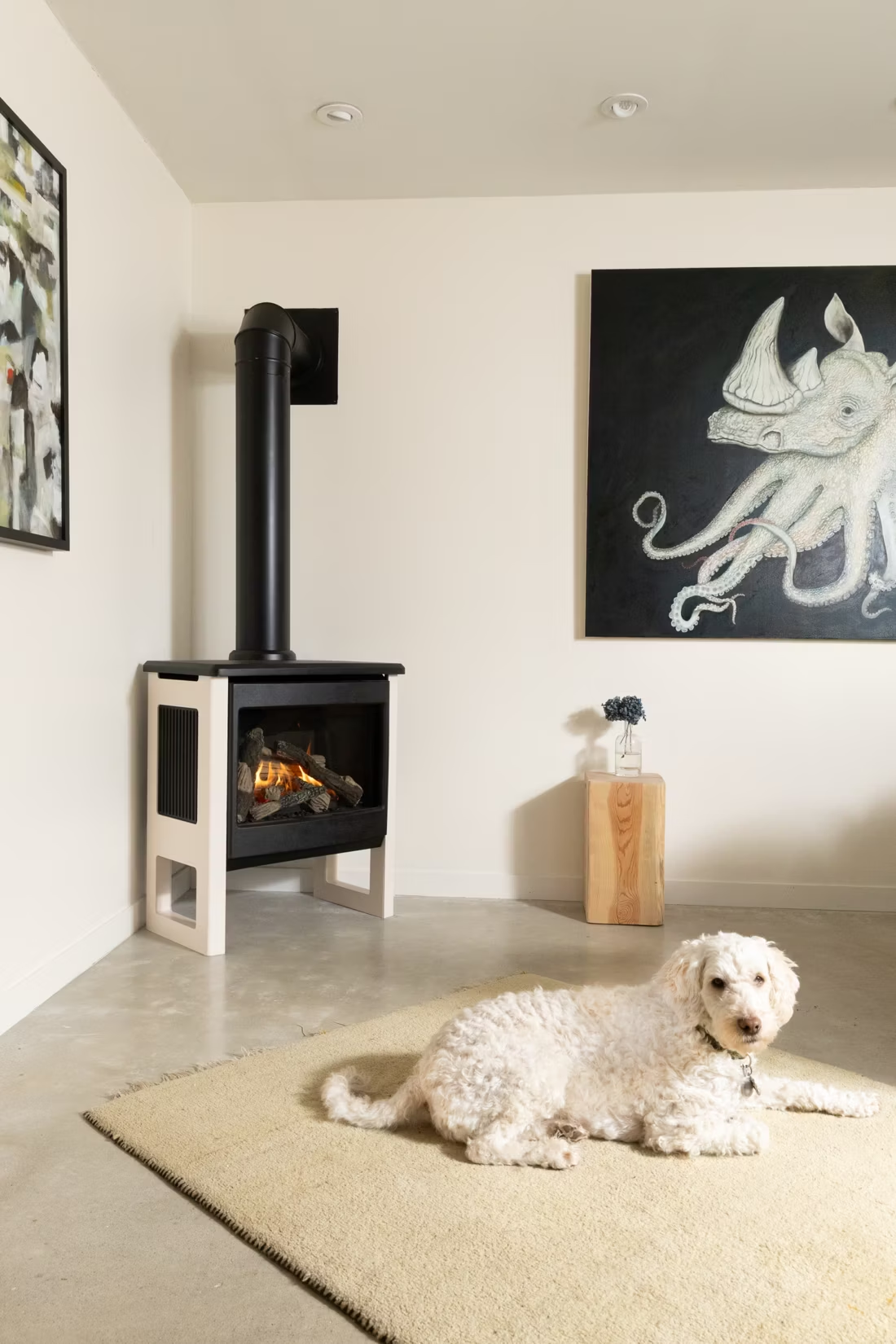
Four fuels. One honest answer for Whitehorse Region.
Wood
See what's available near Whitehorse Region.
Find your wood stove →Gas
See what's available near Whitehorse Region.
Find your gas fireplace →Pellet
See what's available near Whitehorse Region.
Find your pellet stove →Electric
See what's available near Whitehorse Region.
Find your electric fireplace →Three steps. No salesperson until you're ready.
Tell us about your project
Your postal code, your situation, and the fuel you're leaning toward—or let the answers point you to one.
See what's actually available
The brands dealers within 100 miles genuinely carry—real options, never a catalog mirage.
Get your dealer & Project Guide
A trusted local dealer, plus the free Project Guide & Parts List that names every component of the job.
Frequently Asked Questions
Which fireplace fuel makes the most sense in the Whitehorse Region?
It depends more on logistics here than almost anywhere else in the country. Wood is the backbone fuel—white spruce, lodgepole pine, trembling aspen, and paper birch are all cut under Yukon Forest Management Branch permits, and a certified low-emission stove will hold a long burn through a -19.2°C overnight much like a good catalytic unit does in Fort McMurray or Prince George. There's no mains natural gas anywhere in the territory, so a gas fireplace here runs on delivered propane rather than a piped utility line. Electric fireplaces draw on Yukon Energy's hydro grid and make sense as steady supplemental heat. Pellet stoves are genuinely rare—bagged pellets have to be trucked up from BC or Alberta mills, so while a pellet stove will work, expect to pay more for fuel and plan further ahead than you would for wood or propane.
Do I need a permit to install a wood stove in the Whitehorse Region?
Yes. Installations fall under the CSA B365 installation code, and your municipal or territorial building inspector is the authority who signs off on the work, whether you're inside Whitehorse or in one of the surrounding communities. Most insurers also want a WETT inspection completed on a wood appliance before they'll cover it, so it's worth scheduling that inspection as part of the install rather than treating it as an afterthought. A dealer who regularly works in the territory will know both the code requirements and which inspectors cover your area.
Where does firewood come from, and do I need a permit to cut my own?
Most households burning wood here are working with white spruce, lodgepole pine, trembling aspen, or paper birch, and a fair amount of it is self-cut under a personal use permit from the Yukon Forest Management Branch, part of Energy, Mines and Resources. If you'd rather buy than cut, firewood sellers in the territory fill that gap, though supply can tighten by late winter—ordering or cutting your season's wood well before the first hard frost is the normal approach here, not a luxury.
Can I get a gas fireplace if there's no natural gas line to my home?
Yes, but it runs on propane rather than mains gas, since there's no natural gas distribution anywhere in the Whitehorse Region. That means a propane tank on-site, delivery scheduling, and a dealer who sizes the appliance and tank correctly for your household's use. It's a genuinely standard option here—plenty of homes run propane fireplaces and furnaces side by side—it's just a different supply chain than what gas customers in southern Canada are used to.
How does installation and service work if I live outside Whitehorse itself?
Dealers and service technicians covering this part of the Yukon travel long distances between communities rather than keeping a shop on every corner, so we focus on helping you reach the nearest dealer who can genuinely service your community, not just the nearest address on paper. Call ahead about delivery timing for the appliance itself, and ask directly about travel charges and scheduling windows for installation and future service—winter road conditions and freight schedules can add real time to a project that would move faster further south.
What drives the cost of a fireplace project in the Whitehorse Region?
The appliance itself is only part of it—freight is the line item that catches people off guard here. Parts, vent kits, and pellets, when relevant, all have to travel a long way to reach the territory, and that pushes installed costs above what the same project would run in a southern city, sometimes considerably. A trusted dealer serving the region can walk you through what freight and travel actually add to your specific project before you commit, which matters more here than almost anywhere else in the country.
Nearest Dealers
Hearth shops are few and far apart up north, so these are the closest ones to Whitehorse Region, with how far each one is. Call ahead to ask about delivery and installation in your community. Every listing shows whether it is a WhyFire partner, a dealer we have verified as authorized for the brands we recommend, or a local business carrying hearth products. No manufacturer pays for placement. How we verify dealers →
Trapper Den's Wildlife Emporium
Tyee Building Supplies Ltd
Get help finding a trusted dealer for your Whitehorse Region project.
Tell us about your home and your fuel, and we'll put together a free Project Guide & Parts List—the right unit, the vent kit it needs, and the dealer we recommend reaching out to for your project, wherever in the territory you are.
Find Your Fireplace →