
Steady Heat When the Wyoming Wind Doesn't Let Up.
Propane-fueled comfort for Platte County's cold, wind-scoured winters. Find the right gas fireplace or insert and get matched with a trusted local dealer.
Every Project Starts From One of These Five Situations
Propane-powered comfort for high-plains winters.
Wheatland sits at 4,765 feet on Wyoming's high plains, the seat of Platte County, with average winter lows around 17°F and a heating season about as demanding as Fargo, ND's—a cold-climate load similar to what homes in Fargo, ND, deal with, except here it comes with the near-constant wind that sweeps unbroken across the plains east of the Laramie Range. That wind matters for fireplace selection: a poorly sealed unit or a chimney that doesn't draft well in gusty conditions can backdraft or struggle to stay lit.
Wheatland has no municipal natural gas main, so the overwhelming majority of gas fireplace installations here run on propane, delivered and stored in above-ground or buried tanks by regional propane suppliers. That's not a downside—modern direct-vent propane fireplaces perform identically to natural gas units once installed, and they give rural Platte County homeowners instant, thermostatically controlled heat without hauling wood in a whiteout. Many ranch properties still keep a wood stove as backup for the power outages that come with high-wind events, but for daily zone heating in the living room, propane is the practical local default.
Three steps. No salesperson until you're ready.
Tell us about your project
Your zip code, your situation, and the fuel you're leaning toward—or let the answers point you to one.
See what's actually available
The brands dealers within 100 miles genuinely carry—real options, never a catalog mirage.
Get your dealer & Project Guide
A trusted local dealer, plus the free Project Guide & Parts List that names every component of the job.
Frequently Asked Questions
How much does a gas fireplace installation cost in Wheatland?
Most gas fireplace and insert installations in Wheatland run between roughly $4,000 and $9,500, with the spread driven by whether you're running new propane line from an existing tank, adding a tank, or converting an old masonry fireplace to a direct-vent insert. Because there's no natural gas main in town, propane tank sizing and placement (setback from the house and property line under NFPA 58) is usually the first thing your installer sorts out before quoting the fireplace itself. Wind exposure on an open lot can also push venting costs up slightly if a taller or shielded termination cap is needed to keep the pilot from blowing out.
Is it natural gas or propane in Wheatland?
Propane, almost exclusively. Wheatland doesn't have natural gas utility service, so homes here rely on propane delivered by regional suppliers and stored in a residential tank. Nearly every gas fireplace, insert, or stove installed locally is set up and orificed for propane rather than natural gas—this matters when you're shopping online or comparing a unit a friend installed in Cheyenne or Casper, since the burner orifice and regulator have to match your fuel. A local installer will handle this conversion automatically; it's one more reason to avoid ordering a fireplace sight-unseen from a big-box retailer.
Do I need a permit to install a gas fireplace in Wheatland?
Yes. As the Platte County seat, Wheatland requires a building permit for new gas fireplace or insert installations, and any propane line or tank work needs to be done by a licensed propane technician under state fire code. Most local hearth dealers coordinate the permit, the gas-fitting, and the final inspection as one package, so you're not stuck managing separate trades. If you're adding or upsizing a propane tank as part of the project, your propane supplier will also need to sign off on tank placement and setback distances.
Will my gas fireplace still work if the power goes out?
Most will, with the right ignition system. Units with IPI (intermittent pilot ignition) run on AA battery backup that kicks in automatically when line power drops, so the fireplace lights and operates normally off batteries. That's worth paying attention to in Wheatland, where high-wind events on the open plains regularly knock down power lines for hours at a time. Valor fireplaces take it a step further—their pilot generates its own electricity through the thermocouple, so there's no battery to remember at all. Ask your local dealer which ignition system is on any unit you're considering if outage performance matters to you.
What's the difference between a gas fireplace, insert, and stove?
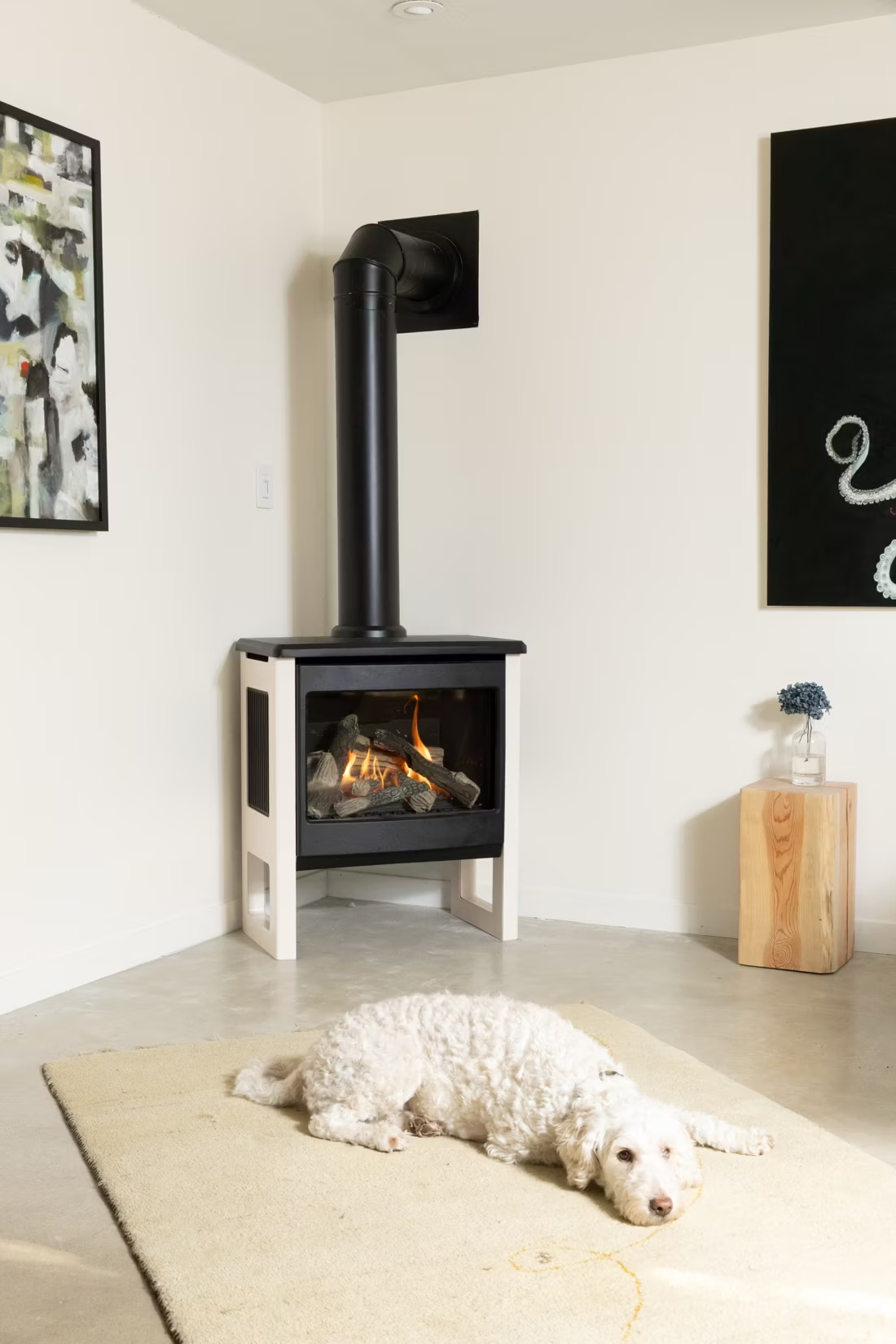
A gas fireplace is a fully framed-in, built-in unit, typically chosen for new construction or a remodel. A gas insert slides into an existing masonry fireplace opening, which is common in some of Wheatland's older homes near downtown dating back to the town's early-1900s sugar beet era. A gas stove is a freestanding cabinet unit that sits on the floor like a wood stove but runs on propane, and it's a good option for a shop, garage, or a manufactured or ranch-style home without an existing fireplace opening. Most Wheatland homeowners converting an old wood-burning fireplace choose the insert route since it reuses the existing chimney chase as a vent path.
Do I need a high-altitude version of my gas fireplace?
Likely yes. At 4,765 feet, Wheatland sits high enough that most gas appliances need a high-altitude conversion—a smaller burner orifice or a factory high-altitude kit—to burn correctly, since thinner air changes the air-to-fuel ratio at the burner. Manufacturers typically require this above 4,500 feet, and it's not optional: an uncorrected unit at this elevation can run rich, produce excess soot, or underperform on heat output. A local dealer will order the correct high-altitude kit for your model rather than shipping you a sea-level unit that needs field adjustment.
Vented vs. vent-free gas fireplaces—which makes sense in Wheatland?
Vented, direct-vent units are the strong local recommendation. They pull combustion air from outside and exhaust it back outside through a sealed pipe, which handles Wheatland's wind exposure and cold snaps reliably without pulling combustion byproducts into the house. Vent-free (unvented) propane units are legal in Wyoming but come with strict room-sizing rules and oxygen depletion sensors that are already sensitive to altitude—combine that with a tightly built modern home and a vent-free unit can trip its safety shutoff more often than homeowners expect. For a primary heat source in a Platte County winter, direct-vent is the more dependable choice.
Gas vs. wood—which is right for my Wheatland home?
Wood is still common here—lodgepole pine, aspen, and ponderosa pine are the standard local species, and Forest Service permits through the Medicine Bow-Routt National Forest run $5 to $20 per cord from May through October. Wood works without electricity, which matters when wind takes down power lines, and it's cheap if you're willing to cut and haul it yourself. Gas trades that self-sufficiency for convenience: instant on-off heat, no ash or creosote, and no exposure to the wildfire smoke that periodically affects regional air quality in dry summers. Many ranch and rural Platte County homes run both—propane for daily comfort in the main living space, a wood stove kept in reserve for extended outages.
What size gas fireplace do I need for my home?
It depends on square footage, ceiling height, and how exposed your house is to wind—a home on an open lot east of town loses heat faster through infiltration than a sheltered in-town lot near downtown Wheatland. As a starting point, a smaller direct-vent unit (20,000–30,000 BTU) suits a single living room, while larger open-concept ranch homes or manufactured homes with vaulted ceilings often need 30,000–40,000 BTU units to keep up on the coldest nights near 17°F. A local dealer will size the unit based on an in-home visit rather than square footage alone, since infiltration and wind exposure vary a lot from lot to lot out here.
Can I put a TV above my fireplace?
Yes—with an asterisk. Fireplaces are hot and TVs don't like heat. Either put a mantel between them to deflect rising warmth, or choose a fireplace with heat-management technology that creates a cool zone on the wall above—the wall stays around 125 degrees, barely warm, while the room still gets full heat. If you like clean lines and don't want a mantel, heat management is the answer.
Is my gas fireplace wasting gas?
If it was installed more than 15 years ago, probably. Older gas fireplaces keep a standing pilot light burning all the time, and that little flame can cost a couple hundred dollars a year. Newer models use pilot-on-demand ignition—the pilot lights only when you use the fireplace and goes out when you turn it off.
Can a fireplace actually lower my heating bill?
Yes—by creating a comfort zone. A furnace heats every square foot of the house just to warm the one room you're in; a gas fireplace on low burns roughly a sixth of the gas a typical furnace does. Set the furnace around 55–60 degrees as a baseline, then heat the rooms your family actually uses. Families who heat this way commonly save $20–$60 a month.
Does a fireplace add value to my home?
On average, a fireplace adds back to the home about the same amount you spent installing it. Add the monthly savings from heating the rooms you actually use instead of the whole house—often hundreds of dollars a year—and the value case is strong before you even count what a fire does for how your family uses the room.
Nearby Dealers
Hearth shops serving Wheatland and the surrounding area. Every listing shows whether it is a WhyFire partner, a dealer we have verified as authorized for the brands we recommend, or a local business carrying hearth products. No manufacturer pays for placement. How we verify dealers →
Shortline Industries
Premium Home Selection
Capital Lumber Co.
Harmony Hearth & Home
Johnson Cashway Building And Design Center
Carr Trumbull Lumber
Sheet Metal Specialties, Inc.
Magic City Stoves
Sutherlands -Casper -2219
Find your gas fireplace in Wheatland.
Tell us about your home and we'll match you with a trusted local Wheatland-area dealer and send over a free Project Guide & Parts List—sized for propane, corrected for elevation, and built around a vent kit that holds up to the wind.
Find Your Fireplace →