
Add instant, no-mess warmth to any room in Platte County.
On the wind-scoured plains of Platte County, where winters run 6,373 heating degree days and lows regularly sit near 17°F, electric fireplaces earn their place as clean, no-venting zone heat for a home office, bunkhouse room, or finished basement. Find the right unit and connect with a trusted local dealer.
Every Project Starts From One of These Five Situations
Zone heat that fits the ranching life.
Platte County covers a stretch of high plains in southeastern Wyoming, from the county seat of Wheatland at roughly 4,740 feet down through Chugwater, Guernsey, Glendo, and Hartville—about 5,700 people spread across ranch land and small towns. Winters here are long and dry, with Climate Zone 5B conditions, an average winter low of 17°F, and enough wind off the plains that wind chill matters as much as the thermometer. Most homes in the county lean on propane or wood—lodgepole pine, aspen, and ponderosa pine cut under permit from the Medicine Bow-Routt National Forest—as their primary heat, since piped natural gas isn't the norm out here.
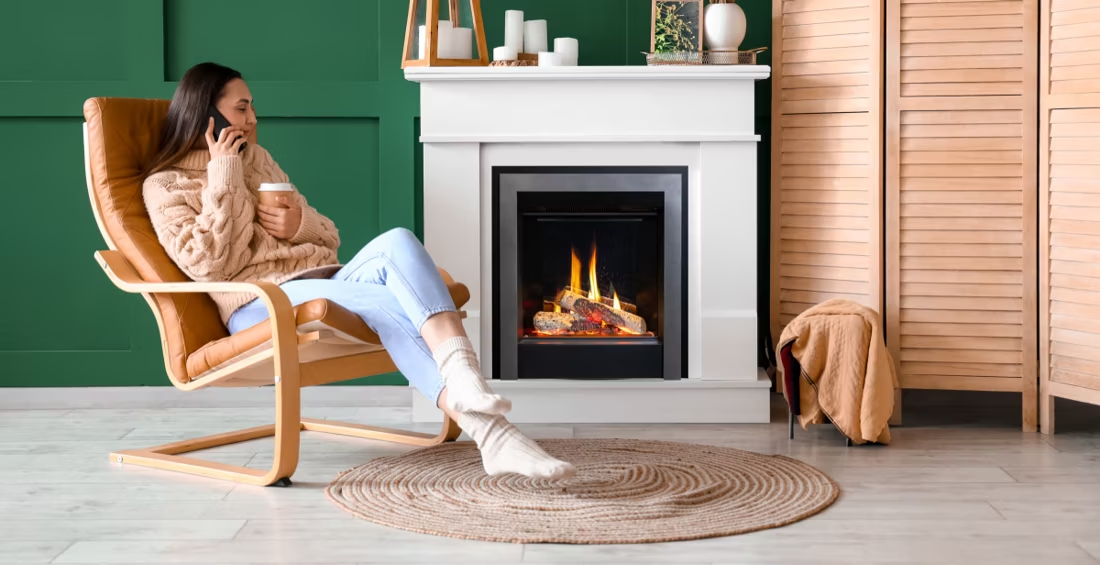
That's where electric fireplaces fit in: not as a replacement for the furnace, but as targeted warmth exactly where you spend time. Running electric resistance heat as a whole-home solution across 6,373 annual heating degree days would push power bills higher than most Platte County households want, especially on rural cooperative rates through providers like Wyrulec Company. A plug-in insert or wall unit, by contrast, takes the edge off a chilly guest room or garage-turned-office for pennies an hour, with none of the chimney, venting, or gas line work a wood stove or propane fireplace requires.
Three steps. No salesperson until you're ready.
Tell us about your project
Your zip code, your situation, and the fuel you're leaning toward—or let the answers point you to one.
See what's actually available
The brands dealers within 100 miles genuinely carry—real options, never a catalog mirage.
Get your dealer & Project Guide
A trusted local dealer, plus the free Project Guide & Parts List that names every component of the job.
Frequently Asked Questions
How much does an electric fireplace cost to install in Platte County?
Plug-in electric inserts and mantel units typically run $300 to $2,500 for the unit itself, and since they run on a standard 120V household outlet, there's usually no professional installation cost beyond mounting the unit to the wall. Larger built-in electric fireplaces that call for a dedicated 240V circuit are a different story—an electrician typically adds $200 to $600 for the wiring, and that can run higher in older ranch homes around Wheatland or Chugwater where the electrical panel has limited capacity left. Either way, electric is the least expensive fireplace fuel to install in the county, since there's no chimney, no gas line, and no venting to plan around.
Will an electric fireplace actually heat my Platte County home in winter?
For a single room, yes—most units put out around 5,000 BTU, enough to warm a bedroom or home office. But across 6,373 heating degree days and average winter lows near 17°F, electric resistance heat isn't a realistic whole-house solution; it costs more per BTU to run than propane or wood, and the county's wind-driven cold snaps can outpace what one unit can offset. Most Platte County homeowners use an electric fireplace as supplemental zone heat in a specific room while a propane furnace or wood stove carries the rest of the house through the coldest months.
Do I need a permit for an electric fireplace in Platte County?
In most cases, no. Plug-in units and even most built-in electric fireplaces don't involve venting, gas lines, or chimney work, which is what typically triggers a building permit. If a built-in unit requires a new dedicated circuit, the electrician doing that work will usually pull an electrical permit as standard practice—Platte County's building department can confirm specifics for your project. Either way, it's a far simpler permitting path than a wood stove installation or a gas line run for a propane fireplace.
What's the difference between an electric fireplace, insert, and stove?
An electric insert is built to slide into an existing masonry fireplace opening—a common upgrade for older Platte County homes with an unused wood-burning fireplace that homeowners want to close off from drafts while keeping the visual. An electric stove is a freestanding unit that mimics the look of a wood stove without any venting requirement. A wall-mount or mantel-style electric fireplace is the most flexible option, since it can go in almost any room with an outlet—a bunkhouse, a converted garage, or a home office. All three run on the same basic electric-resistance or heat-pump technology; the choice mostly comes down to the space you're filling.
Will my electric fireplace work during a power outage?
No—electric fireplaces are entirely dependent on grid power, and rural Platte County, served largely by the cooperative Wyrulec Company, does see outages during the high-wind events and winter storms that roll across the plains. If the power goes down, the fireplace goes dark along with everything else on the circuit. For that reason, most local homeowners who rely on wood or propane as a backup heat source keep that system in place even after adding an electric fireplace for everyday convenience.
What's the best electric fireplace for a Platte County home?
For supplemental heat in a bedroom or office, a mid-size insert or mantel unit from a brand like Dimplex, Napoleon, or Touchstone covers most needs and typically includes a built-in thermostat and multiple flame-brightness settings. If you're converting an old masonry fireplace, look specifically for an insert sized to your firebox opening rather than a generic freestanding model—a snug fit looks far more finished. A local dealer can measure your firebox or wall space and match you with a unit that fits, rather than guessing from a big-box store shelf.
How much does it cost to run an electric fireplace in Platte County?
Most electric fireplace inserts draw around 1,500 watts on their highest heat setting, which works out to roughly 15 to 20 cents an hour on typical rural cooperative rates—a few dollars for an evening of use. That's more expensive per BTU than burning propane or wood, which is exactly why electric units in the county tend to run as supplemental heat in one room rather than as an all-day, whole-home heat source. Running the flame effect alone, without the heater engaged, costs only a fraction of that.
Electric vs. propane—which is right for my Platte County home?
Propane is the backbone fuel for most primary heat in Platte County, since piped natural gas isn't widely available across the county's ranch land, and propane furnaces and fireplaces handle the bulk heating load through the coldest stretches efficiently. Electric fireplaces don't compete with that—they're better suited to targeted warmth in a specific room, quick installation with no gas line or tank needed, and situations where you want ambiance without committing to venting work. Many Platte County homes end up with both: propane for the whole house, electric for the spaces that need a little extra warmth without running the furnace harder.
Electric vs. wood—which is right for my home?
Wood offers real heat output, works with no electricity at all—valuable during the wind-driven outages that hit rural Platte County—and pairs with cheap, local fuel: lodgepole pine, aspen, and ponderosa pine cut under Medicine Bow-Routt National Forest permits for $5 to $20 per cord during the May-through-October season. Electric offers none of that self-sufficiency but wins on convenience: no hauling, no ash, no chimney sweep, and a flip-of-a-switch start. For a primary heat source in a county with 6,373 heating degree days, wood (often paired with propane) still does the heavy lifting for most households; electric is the easy add-on for a room that just needs to feel warmer.
Can I put a TV above my fireplace?
Yes—with an asterisk. Fireplaces are hot and TVs don't like heat. Either put a mantel between them to deflect rising warmth, or choose a fireplace with heat-management technology that creates a cool zone on the wall above—the wall stays around 125 degrees, barely warm, while the room still gets full heat. If you like clean lines and don't want a mantel, heat management is the answer.
Does an electric fireplace need a vent or chimney?
No—that's its superpower. An electric fireplace needs a wall and an outlet, period. No vent pipe, no gas line, no clearances to design around, which is why it works in bedrooms, offices, apartments, and walls where venting a gas or wood unit would be impractical or impossible. Installation is typically the simplest and least expensive of any fireplace type.
What is an in-home preview and do I need one?
It's a visit where a hearth professional measures your space, confirms the model you picked actually works in your home, and walks the specs—framing, gas line, venting, finish work—before anything is ordered. Some details you just can't know until you see the house. Never make a down payment without one; it's the single most-skipped step that burns buyers.
Can a fireplace actually lower my heating bill?
Yes—by creating a comfort zone. A furnace heats every square foot of the house just to warm the one room you're in; a gas fireplace on low burns roughly a sixth of the gas a typical furnace does. Set the furnace around 55–60 degrees as a baseline, then heat the rooms your family actually uses. Families who heat this way commonly save $20–$60 a month.
Stove and Fireplace Dealers in Platte County
Listings include WhyFire partner dealers, dealers we have verified as authorized for the brands we recommend, and established local businesses that carry hearth products. Every listing shows which one it is. The ones marked Preferred run on WhyFire's software, so they can show you real pricing and book your appointment right here. No manufacturer pays for placement. How we verify dealers →
Shortline Industries
Premium Home Selection
Capital Lumber Co.
Harmony Hearth & Home
Johnson Cashway Building And Design Center
Carr Trumbull Lumber
Sheet Metal Specialties, Inc.
Magic City Stoves
Sutherlands -Casper -2219
Find your electric fireplace in Platte County.
Tell us a bit about your home and we'll put together a free Project Guide & Parts List—the right electric fireplace or insert for your space, the parts you'll need, and a trusted local dealer in Platte County who can get it installed correctly.
Find Your Fireplace →