
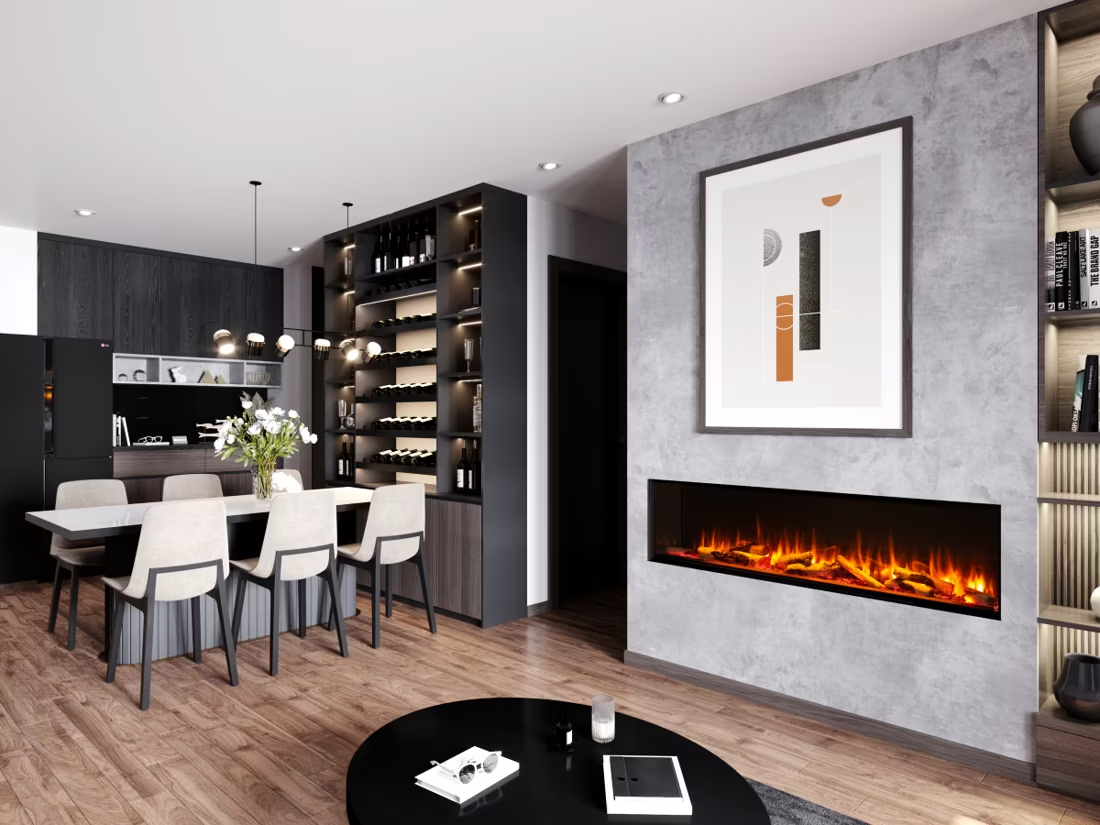
Find the right electric fireplace for Niobrara County's high-plains winters.
From Lusk to the ranch country along the Niobrara River, winter lows average 12°F and the county sees winters on par with Bismarck, ND. An electric fireplace won't replace your furnace, but it adds real supplemental warmth and instant ambiance to the rooms that need it most. We'll match you with a vetted local dealer who can size and install the right unit for your home.
Every Project Starts From One of These Five Situations
A supplemental heat source built for the high plains.
Niobrara County sits in Wyoming's high plains, sparsely populated at under 1,800 residents spread across open ranch country around Lusk, Manville, and Van Tassell. Climate zone 6B and winters on par with Bismarck, ND put this area in long, dry, and cold territory, with average lows near 12°F and wind that makes still-air temperatures feel colder still. Wood has long been the traditional heat source in this part of Wyoming, with lodgepole pine, aspen, and ponderosa pine common in local woodlots and Forest Service parcels, and wildfire smoke is the main air-quality concern most summers and falls. Electric fireplaces occupy a different niche here: they're not typically anyone's primary heat source in a climate this cold, but they're a genuinely useful supplemental option.
Most of Niobrara County is served by Niobrara Electric Association, the rural cooperative headquartered in Lusk, and that co-op context matters for electric heat decisions. Because an electric fireplace draws on the same grid that can go down in a high-plains ice storm or a summer thunderstorm outage, it's rarely the right choice as your only backup plan—pair it with a generator or a wood-burning appliance if outage resilience matters to you. Where electric shines is zone heating: a bonus room, a finished basement, a bedroom addition, or a ranch outbuilding where running a gas line or a chimney isn't practical. No venting, no clearance-to-combustibles chimney work, and a straightforward 120V or 240V electrical hookup make it one of the simplest hearth upgrades available in the county.
Three steps. No salesperson until you're ready.
Tell us about your project
Your zip code, your situation, and the fuel you're leaning toward—or let the answers point you to one.
See what's actually available
The brands dealers within 100 miles genuinely carry—real options, never a catalog mirage.
Get your dealer & Project Guide
A trusted local dealer, plus the free Project Guide & Parts List that names every component of the job.
Frequently Asked Questions
How much does an electric fireplace installation cost in Niobrara County?
Costs vary widely by unit type. A basic plug-in electric insert or mantel unit that runs on a standard 120V outlet is the least expensive option and often something a homeowner can install with minimal electrical work. A built-in wall unit or larger insert that needs a dedicated circuit typically adds an electrician's time to the job—worth checking with Niobrara Electric Association or a licensed local electrician on your panel's available capacity before you buy, especially in older ranch homes around the county where panels haven't been upgraded in decades. A local dealer can give you a firm number once they know the unit and your home's existing wiring.
Will an electric fireplace heat my whole house in this climate?
No, and any dealer worth working with will tell you that upfront. Niobrara County has winters comparable to Bismarck, ND—cold enough that a 1,500-watt electric fireplace, which puts out roughly 5,000 BTUs, isn't going to carry a whole house through a January cold snap. Think of it as zone heat: it can take the chill off a specific room or supplement a furnace that's struggling to keep one corner of the house comfortable, but it's not a substitute for your primary heating system out here on the plains.
Do I need a permit to install an electric fireplace in Niobrara County?
It depends on the scope of the work. A plug-in insert or mantel unit that uses an existing outlet generally doesn't trigger a permit. If the installation involves new wiring, a dedicated circuit, or a built-in unit set into a wall, check with the Niobrara County building office before work begins—electrical work of that scope typically needs a permit and inspection regardless of the appliance. Most local electricians and hearth dealers who work in the county can tell you quickly whether your specific project needs one.
What happens to my electric fireplace during a power outage?
It stops working, which is the main tradeoff of electric heat in a rural co-op territory like this one. Niobrara Electric Association's lines cover a lot of open, wind-exposed high-plains territory, and outages during ice storms or summer lightning events aren't unusual. If you're relying on supplemental heat during outages, pair an electric fireplace with a generator, or keep a wood stove or propane appliance as your outage backup. Electric fireplaces are best understood as a convenience and ambiance upgrade for the days the grid is up, not an emergency heat plan.
What's the difference between an electric insert, a built-in unit, and a freestanding electric stove?
An electric insert is designed to slide into an existing masonry or zero-clearance fireplace opening, instantly upgrading an old wood-burning firebox to a clean, low-maintenance heat source. A built-in electric fireplace is installed into new framing or a wall cavity, common in remodels or new construction where there's no existing firebox. A freestanding electric stove sits on the floor like a traditional wood stove but plugs into an outlet—no venting, no hearth pad required by code the way a wood stove needs. For most Niobrara County homes with an existing fireplace that's rarely used, an insert is the simplest upgrade.
Electric vs. wood—which makes more sense for my Niobrara County home?
Wood remains the deeper heating tradition out here, with lodgepole pine, aspen, and ponderosa pine widely available from local woodlots and nearby national forest parcels, and it keeps working when the power doesn't. Electric can't match that outage resilience or the BTU output needed to carry a home through a stretch of single-digit nights. But electric wins on convenience—no cutting, hauling, or ash cleanup, no chimney to sweep, and instant on-off operation that suits a guest room, a den, or a second home that isn't occupied enough to justify wood handling. Many ranch households in the county end up with both: wood or propane as the workhorse, electric for the rooms where convenience matters more than raw heat.
Electric vs. pellet stove—which fits better?
Pellet stoves burn compressed wood pellets from brands sold regionally like Bear Mountain, Lignetics, and Forest Energy, and they put out significantly more heat than an electric fireplace—enough to serve as a primary or near-primary heat source in a well-insulated home. But pellet stoves need electricity to run their auger and blower anyway, so they share electric's outage vulnerability without electric's simplicity of installation. If you want genuine heating capacity, pellet is the stronger choice; if you want the simplest possible install with zero fuel handling, electric wins.
Where can I find a dealer or electrician for this kind of project in Niobrara County?
With just over 1,700 residents spread across the county, Niobrara County doesn't have a large roster of hearth specialty retailers within its own borders—most homeowners either work with a local licensed electrician in Lusk for straightforward installs or coordinate with a hearth dealer based in a larger nearby Wyoming market for unit selection and built-in work. We match Niobrara County homeowners with a trusted dealer who covers the area and can tell you upfront whether they travel to your specific location or work with a local electrician on-site.
Are electric fireplaces actually worth it, or just for looks?
Both, depending on the unit. Entry-level electric fireplaces are mostly about the flame effect and ambiance, with modest heat output. Better units include a real 1,500-watt heating element that can genuinely warm a single room—useful supplemental heat for a bedroom or den in a county where winter lows average 12°F. The honest answer for Niobrara County: don't buy one expecting furnace-level output, but don't dismiss it as decoration either. A local dealer can show you the heat specs on specific models so you know exactly what you're getting before you buy.
Can I put a TV above my fireplace?
Yes—with an asterisk. Fireplaces are hot and TVs don't like heat. Either put a mantel between them to deflect rising warmth, or choose a fireplace with heat-management technology that creates a cool zone on the wall above—the wall stays around 125 degrees, barely warm, while the room still gets full heat. If you like clean lines and don't want a mantel, heat management is the answer.
Do electric fireplaces actually produce heat?
Yes—most put out around 4,800–5,000 BTUs from a standard outlet, which comfortably warms a bedroom, office, or den as a comfort-zone heater. What they won't do is carry a whole house the way wood, gas, or pellet can. Think of electric as ambiance-first with honest supplemental heat: flames on with no heat in July, flames plus warmth in January.
What is an in-home preview and do I need one?
It's a visit where a hearth professional measures your space, confirms the model you picked actually works in your home, and walks the specs—framing, gas line, venting, finish work—before anything is ordered. Some details you just can't know until you see the house. Never make a down payment without one; it's the single most-skipped step that burns buyers.
Does a fireplace add value to my home?
On average, a fireplace adds back to the home about the same amount you spent installing it. Add the monthly savings from heating the rooms you actually use instead of the whole house—often hundreds of dollars a year—and the value case is strong before you even count what a fire does for how your family uses the room.
Stove and Fireplace Dealers in Niobrara County
Listings include WhyFire partner dealers, dealers we have verified as authorized for the brands we recommend, and established local businesses that carry hearth products. Every listing shows which one it is. The ones marked Preferred run on WhyFire's software, so they can show you real pricing and book your appointment right here. No manufacturer pays for placement. How we verify dealers →
Shortline Industries
Builders First Source - Hot Springs
Metal Products
Carr Trumbull Lumber
Johnson Cashway Building And Design Center
Flannel Brothers
Find your electric fireplace in Niobrara County.
Tell us about your home and where you need supplemental heat, and we'll match you with a trusted local dealer serving Niobrara County—plus a free Project Guide & Parts List with the exact parts and your recommended installer for the job.
Find Your Fireplace →