
Zone heat and real ambiance for Evanston's long winters.
No chimney, no gas line, no permit hassle in most cases—just a fireplace that plugs in and adds warmth to the rooms your furnace can't quite reach. Find the right unit and connect with a trusted local dealer.
Every Project Starts From One of These Five Situations
Supplemental heat that doesn't need a chimney.
Evanston sits at 6,781 feet in the high desert of southwest Wyoming, where the winter heating load puts it in the same cold-climate bracket as Fargo, North Dakota—and winter lows average just 11°F. In a climate this demanding, an electric fireplace isn't going to replace your furnace or your wood stove as the primary heat source. What it does well is fill the gaps: a basement rec room, a bonus room over the garage, a bedroom on the far end of the ductwork, or a rental unit where running a gas line or building a chimney chase isn't realistic.
PacifiCorp serves Evanston at roughly 12.52 cents per kWh, a rate that keeps a supplemental electric unit reasonably affordable to run compared to many parts of the country. Most plug-in inserts need nothing more than a standard outlet, while built-in units drawing a dedicated circuit require a licensed electrician and a quick check with Uinta County's building department. There's also a seasonal upside here: Evanston deals with wildfire smoke advisories in late summer and fall, and an electric unit produces zero combustion byproducts—useful on the days when burning wood outdoors or in an open hearth isn't advisable.
Three steps. No salesperson until you're ready.
Tell us about your project
Your zip code, your situation, and the fuel you're leaning toward—or let the answers point you to one.
See what's actually available
The brands dealers within 100 miles genuinely carry—real options, never a catalog mirage.
Get your dealer & Project Guide
A trusted local dealer, plus the free Project Guide & Parts List that names every component of the job.
Frequently Asked Questions
How much does an electric fireplace installation cost in Evanston?
A plug-in electric insert or freestanding stove typically runs $400 to $1,200 installed, since most just need a standard 120V outlet and a bit of trim work if it's going into an existing fireplace opening. A built-in wall unit or media-wall package with a dedicated 20-amp circuit run by a licensed electrician usually lands between $1,500 and $2,500, with elaborate custom mantels or multi-sided units pushing toward $3,000. Because there's no venting or gas line involved, electric is consistently the least expensive fireplace category to install in Evanston.
Will an electric fireplace actually heat my Evanston home in winter?
Not on its own, and any dealer worth trusting will tell you that upfront. Most electric fireplaces top out around 1,500 watts, which is roughly 5,100 BTU—enough to comfortably warm a single room of 300 to 500 square feet, not a whole house at 11°F outside. With a winter heating load closer to Fargo, ND than to milder parts of the Mountain West, Evanston needs your furnace, wood stove, or gas unit to carry the real load. Think of electric as the fireplace for the room your central heat doesn't quite reach.
Do I need a permit to install an electric fireplace in Evanston?
A plug-in unit that uses an existing outlet generally doesn't require a permit. If you're adding a built-in unit that needs a new dedicated circuit, that electrical work typically does need a permit and inspection through Uinta County's building department—the same as adding any new circuit to a home. Local electricians who install fireplaces regularly handle this paperwork as part of the job, so it's rarely something homeowners have to manage themselves.
What's the difference between an electric fireplace, insert, and stove?
An electric fireplace is typically a built-in unit set into a wall or mantel surround, often the centerpiece of a media wall or remodel. An electric insert is sized to slide into an existing masonry or wood-fireplace opening, giving old fireplaces a heat source and a flame effect without touching the chimney. An electric stove is a freestanding cabinet-style unit that looks like a traditional wood stove but plugs into the wall—a common choice for basements or rooms with no existing fireplace at all. For Evanston homes with an unused masonry fireplace, an insert is often the simplest upgrade.
Electric vs. wood—which makes more sense for my Evanston home?
Wood is still the workhorse fuel in this part of Uinta County—lodgepole pine, aspen, and ponderosa pine are all common locally, and a Forest Service permit through the Uinta-Wasatch-Cache National Forest runs just $5 to $20 per cord during the May-to-October cutting season. Wood also keeps working when the power goes out, which matters given how cold Evanston winters get. Electric can't compete on raw heat output or outage resilience, but it wins on convenience: no cutting, hauling, ash, or creosote, and no chimney to maintain. Many homeowners here run wood as primary heat and add an electric unit in a bedroom or basement for quiet, no-fuss warmth on demand.
Electric vs. gas—which should I choose for a secondary room?
Gas fireplaces put out real heat—often 20,000 to 40,000 BTU—and can serve as legitimate supplemental heat for a living room or open floor plan in Evanston's cold. Electric units cap out around 5,100 BTU and are better suited to smaller rooms or pure ambiance. Gas also requires venting and a gas line, which raises both cost and installation complexity; electric needs neither. If you're heating a bedroom, home office, or basement den where a gas line isn't already nearby, electric is usually the faster, cheaper answer. If you want a fireplace that can meaningfully offset your furnace in a larger room, gas is worth the extra investment.
Will my electric fireplace still work during a power outage?
No—electric fireplaces need grid power to run the heating element, flame effect, and any fan, so they shut off the moment the power does. In Evanston, where winter storms can knock out power for hours at elevation, an electric unit shouldn't be your only heat plan. Most local dealers will point this out and recommend pairing an electric fireplace for everyday convenience with a wood stove, gas unit, or portable generator setup for backup heat during outages.
What should I look for in an electric fireplace for a cold climate like Evanston?
Look for a unit with a built-in thermostat rather than just a high/low switch—that lets it cycle on and off to hold a set room temperature instead of running full blast constantly, which matters when you're trying to offset a genuinely cold room. Brands like Dimplex and Napoleon build inserts and built-ins with digital thermostats and realistic flame technology that hold up well as daily-use supplemental heaters, not just occasional-use ambiance pieces. A local dealer can match wattage and room size so the unit you get actually keeps up with a 400-square-foot bedroom or den at Evanston's winter lows.
Is electric a good choice during wildfire smoke season in Evanston?
Yes—it's one of the more practical reasons homeowners here add one. Uinta County deals with wildfire smoke advisories in late summer and early fall, and burning wood outdoors or running an open hearth during those periods isn't ideal. An electric fireplace produces no smoke, ash, or combustion byproducts, so it's a clean way to get fireplace ambiance and a little warmth on smoky evenings without adding to the air quality problem.
Can I put a TV above my fireplace?
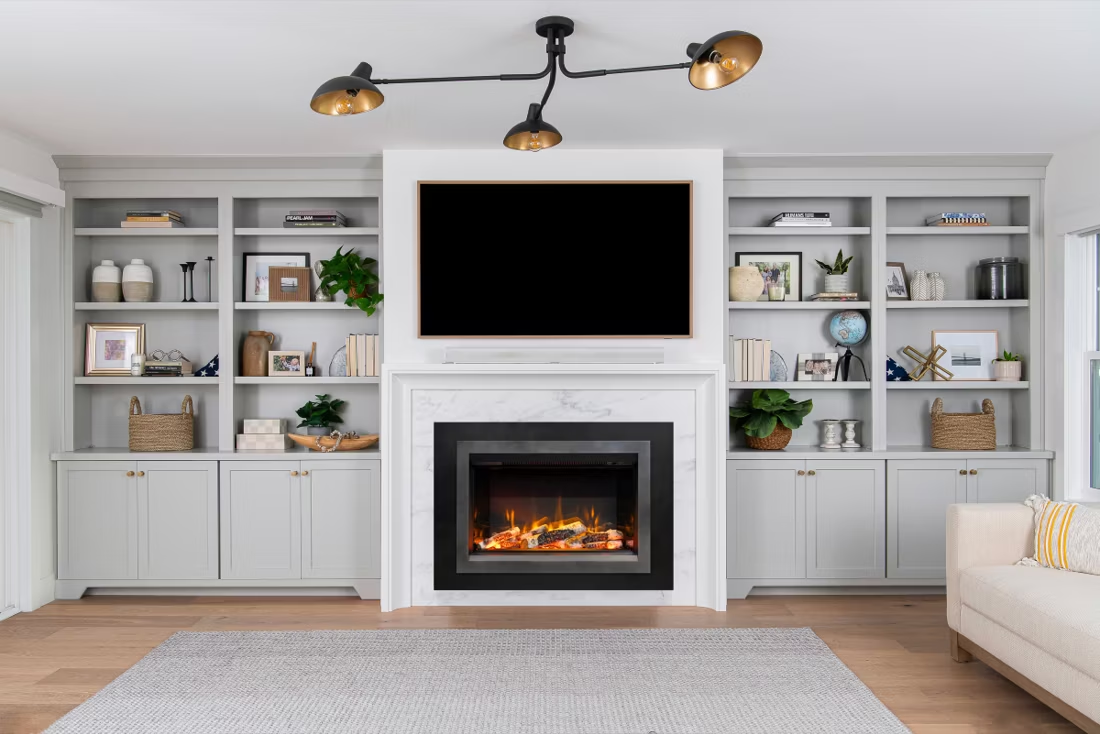
Yes—with an asterisk. Fireplaces are hot and TVs don't like heat. Either put a mantel between them to deflect rising warmth, or choose a fireplace with heat-management technology that creates a cool zone on the wall above—the wall stays around 125 degrees, barely warm, while the room still gets full heat. If you like clean lines and don't want a mantel, heat management is the answer.
Does an electric fireplace need a vent or chimney?
No—that's its superpower. An electric fireplace needs a wall and an outlet, period. No vent pipe, no gas line, no clearances to design around, which is why it works in bedrooms, offices, apartments, and walls where venting a gas or wood unit would be impractical or impossible. Installation is typically the simplest and least expensive of any fireplace type.
Can I install a fireplace myself?
If you're putting a fire in your house on purpose, it's best to work with an expert. Unless you're genuinely experienced in framing, gas line, vent pipe, and the national code on clearances to combustibles, have a professional do it—and ideally the same company that sells you the fireplace, so warranty, service, and liability all live under one roof.
Should the dealer who sells my fireplace also install it?
Ideally, yes. A fireplace project involves vent pipe, gas line, electrical, and often tile or stone. Hire three or four separate trades and you own the liability and the game of telephone between them. One company selling and installing means one accountable party, start to finish—ask about factory training, on-time completion records, and what happens if an inspection fails.
Nearby Dealers
Hearth shops serving Evanston and the surrounding area. Every listing shows whether it is a WhyFire partner, a dealer we have verified as authorized for the brands we recommend, or a local business carrying hearth products. No manufacturer pays for placement. How we verify dealers →
Benedict Trading Company
Bridger Valley Propane
Electric Service in Evanston
An electric fireplace's heater draws about 1,500 watts—pennies per hour at local rates.
Find your electric fireplace in Evanston.
Tell us a bit about your home and we'll put together a free Project Guide & Parts List—the right electric fireplace or insert, the parts it needs, and a trusted local Evanston dealer to install it.
Find Your Fireplace →