
Find the right electric fireplace for your Crook County home.
Zone heat and ambiance for Sundance, Moorcroft, Hulett, and the ranch country between—without a chimney, a wood pile, or a gas line. Get matched with a local dealer who can size and install it right.
Every Project Starts From One of These Five Situations
Simple heat for a county built on wood and propane.
Crook County sits in the far northeast corner of Wyoming, in the shadow of the Bear Lodge Mountains, and most homes here have relied on wood—lodgepole pine, aspen, ponderosa—or propane for decades. Climate zone 6B winters are long and cold enough that nobody's replacing a primary heat source with an electric unit alone. But electric fireplaces have found a real niche in Crook County homes: a finished basement in Sundance, a guest room addition outside Moorcroft, a ranch home office where running a gas line or adding a wood stove doesn't make sense.
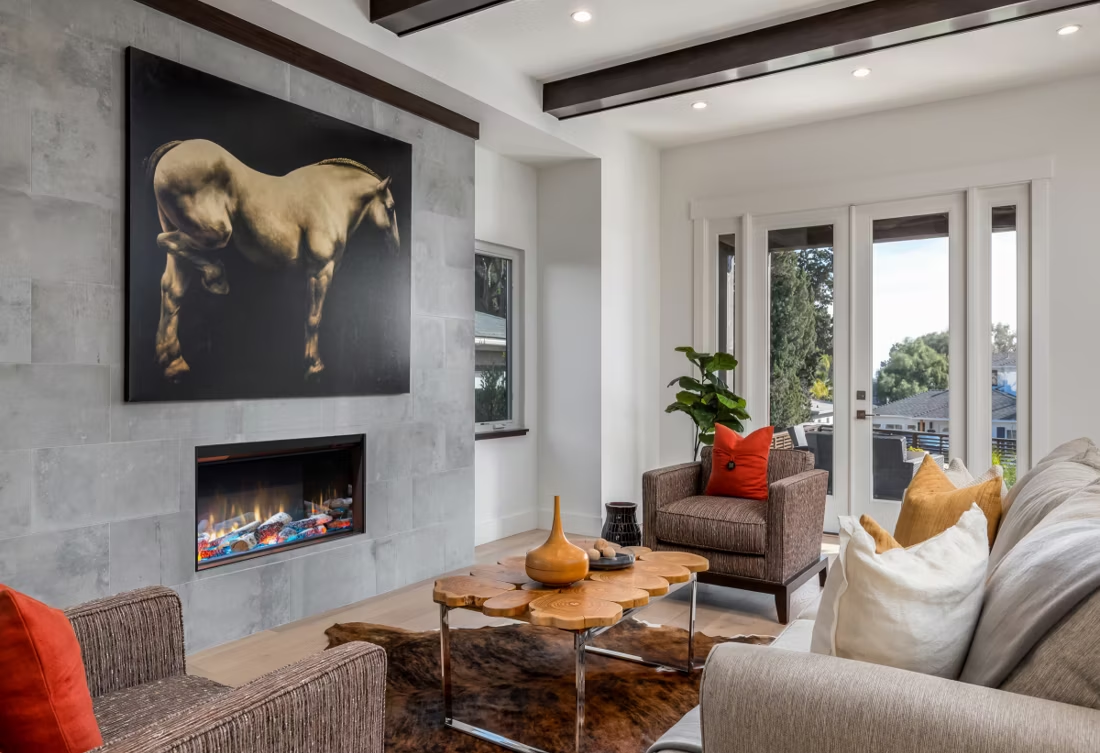
The appeal here is practical. An electric insert or wall unit plugs into a standard 120V outlet (or in some larger models, a dedicated 240V circuit) and adds instant supplemental warmth to a single room, with none of the venting, permitting, or creosote concerns that come with wood or gas. In a county this rural, where a service call from an HVAC tech or chimney sweep means real drive time, that simplicity has value. It won't replace the wood stove or propane furnace carrying the load through a Crook County winter, but it's a clean, low-maintenance way to add heat and ambiance to a specific room.
Three steps. No salesperson until you're ready.
Tell us about your project
Your zip code, your situation, and the fuel you're leaning toward—or let the answers point you to one.
See what's actually available
The brands dealers within 100 miles genuinely carry—real options, never a catalog mirage.
Get your dealer & Project Guide
A trusted local dealer, plus the free Project Guide & Parts List that names every component of the job.
Frequently Asked Questions
How much does an electric fireplace installation cost in Crook County?
Most electric fireplace installs in Crook County run $400 to $1,200. A plug-in insert or wall-mount unit that uses an existing outlet is on the low end—often just the cost of the unit and a few minutes of mounting labor. Larger built-in models that need a dedicated 240V circuit run higher, especially if an electrician has to run new wiring from the panel, which is more common in older ranch homes around Hulett or Beulah where panel capacity is limited. A local dealer can tell you within a few minutes whether your existing electrical setup will handle the unit you want.
Will an electric fireplace actually heat a room in a Crook County winter?
It'll take the edge off a single room, but don't expect it to replace your furnace or wood stove on a January night when temperatures drop well below zero, which happens regularly in this part of northeast Wyoming. Most electric units are rated for 400-1,500 square feet of supplemental heat under mild conditions—that's a finished basement, a bedroom, or a home office, not a whole ranch house. Think of it the way homeowners in Fargo or Bismarck use electric heaters: solid zone heat for a specific space, paired with a real primary heat source for the season.
Do I need a permit to install an electric fireplace in Crook County?
For a plug-in unit that uses an existing outlet, no permit is typically required—it's treated like any other appliance. If you're adding a dedicated 240V circuit or doing a built-in wall installation that involves new wiring, that electrical work generally needs to meet code and may require a licensed electrician, particularly in incorporated areas like Sundance or Moorcroft. Because Crook County is largely rural with a small population, enforcement and permitting requirements can vary by whether you're inside town limits or out in the county—a local electrician or dealer will know exactly what's required for your address.
Are electric fireplaces a realistic option in a wood-heating county like this?
They're a realistic supplement, not a realistic replacement. Crook County's wood-burning tradition runs deep—lodgepole pine and aspen from the Bear Lodge Mountains have heated homes here for generations, and most rural properties still lean on wood or propane for their primary heat load through a 6B-zone winter. Electric fireplaces fit in as a second heat source: warming a converted garage, a mother-in-law suite, or a room addition where running a new chimney or gas line isn't practical. Nobody in Crook County is heating a whole ranch house on electric resistance heat alone given the cold and the electric rates in a rural co-op service area.
What's the difference between an electric insert and a built-in electric fireplace?
An electric insert is designed to slide into an existing fireplace opening—including old wood-burning masonry fireplaces that homeowners in Sundance or Moorcroft may want to retire without ripping out the surround. A built-in electric fireplace is a standalone unit, often wall-mounted or framed into new construction, and works well in additions or remodels where there's no existing firebox. Both plug into standard household power for smaller units; larger models may call for a dedicated circuit. A local dealer can walk through your existing opening or wall space and tell you which fits.
Does an electric fireplace work during a power outage?
No—this is the one real limitation to plan around. Electric fireplaces need power to run, full stop, and rural Crook County can see outages during winter storms that stretch longer than in town. If backup heat during an outage matters to you—and for a lot of ranch and county properties it does—a wood stove or a propane unit with battery-backup ignition is the more resilient choice. Many Crook County homeowners keep a wood stove for exactly this reason and add electric heat elsewhere in the house purely for convenience and ambiance.
How much does it cost to run an electric fireplace in Crook County?
Running costs depend on your electric rate and how many hours a day you run the unit, but most electric fireplaces draw around 1,500 watts on the heat setting—roughly 1.5 kWh per hour of heater use. At typical rural Wyoming electric rates, that works out to a modest daily cost for a few hours of evening use, generally far less than heating the same space with baseboard electric heat, since most units let you run the flame effect without the heater engaged during shoulder-season months.
Electric vs. propane—which makes more sense for a Crook County home?
Propane is the workhorse fuel across most of rural Crook County, where natural gas lines don't reach and propane tanks are a standard part of ranch infrastructure—it can carry real heating load through a hard winter and many propane fireplaces run on battery-backup ignition during outages. Electric fireplaces can't compete on heat output or outage resilience, but they win on simplicity: no tank, no delivery, no gas line, and no combustion byproducts to vent. For a supplemental unit in a finished basement or an addition, electric is often the lower-hassle choice. For anything expected to carry real heat load, propane remains the more practical answer here.
Are electric fireplaces available locally, or do I need to order online?
They're available through hearth and appliance dealers that serve Crook County, though given the county's small population (under 3,000 people spread across Sundance, Moorcroft, Hulett, and the surrounding ranch land), most retail options are a short drive away in a neighboring trade area. The advantage of working with a trusted local dealer rather than ordering blind online is straightforward: they can confirm your electrical setup will actually support the unit, and they stand behind the installation instead of leaving you to troubleshoot a mail-order unit yourself.
Can I put a TV above my fireplace?
Yes—with an asterisk. Fireplaces are hot and TVs don't like heat. Either put a mantel between them to deflect rising warmth, or choose a fireplace with heat-management technology that creates a cool zone on the wall above—the wall stays around 125 degrees, barely warm, while the room still gets full heat. If you like clean lines and don't want a mantel, heat management is the answer.
Do electric fireplaces actually produce heat?
Yes—most put out around 4,800–5,000 BTUs from a standard outlet, which comfortably warms a bedroom, office, or den as a comfort-zone heater. What they won't do is carry a whole house the way wood, gas, or pellet can. Think of electric as ambiance-first with honest supplemental heat: flames on with no heat in July, flames plus warmth in January.
How much should I budget for a fireplace?
For an average home—covering the fireplace, the vent pipe, and basic installation—a budget between $3,900 and $5,500 gives you a lot of options across wood, gas, and pellet. By the time you add finish work, gas line, and electrical, the average complete installation lands between $5,000 and $12,000 all-in. In a remodel or new build, a good rule is to put about 2.5% of the total project cost toward the fireplace.
What is an in-home preview and do I need one?
It's a visit where a hearth professional measures your space, confirms the model you picked actually works in your home, and walks the specs—framing, gas line, venting, finish work—before anything is ordered. Some details you just can't know until you see the house. Never make a down payment without one; it's the single most-skipped step that burns buyers.
Stove and Fireplace Dealers in Crook County
Listings include WhyFire partner dealers, dealers we have verified as authorized for the brands we recommend, and established local businesses that carry hearth products. Every listing shows which one it is. The ones marked Preferred run on WhyFire's software, so they can show you real pricing and book your appointment right here. No manufacturer pays for placement. How we verify dealers →
Builders First Source - Spearfish
Knecht Home Center-Spearfish
Get matched with your Crook County electric fireplace dealer.
Tell us a bit about your home and we'll put together a free Project Guide & Parts List—the right electric fireplace or insert for your space, plus a trusted local dealer who can confirm your electrical setup and install it.
Find Your Fireplace →