
Find the right electric fireplace for Campbell County.
Supplemental warmth and ambiance for Gillette, Wright, and the rest of Campbell County—where a long, cold heating season means electric works best paired with your primary furnace, not replacing it.
Every Project Starts From One of These Five Situations
Zone heat and ambiance for a genuinely cold county.
Campbell County sits in the Powder River Basin of northeastern Wyoming, a climate zone 6B county with a long, demanding heating season and average winter lows around 16°F—comparable to what a family in Bismarck, ND deals with most winters. That's a serious cold-climate load, and it's the reason most Gillette and Wright homes lean on natural gas or propane furnaces, wood stoves burning local lodgepole pine and aspen, or pellet inserts as their real heat source. Electric fireplaces fit into that picture in a specific, useful way: as supplemental zone heat in a bedroom, basement, or addition, and as a no-hassle ambiance feature in living rooms and primary suites where running a chimney or gas line doesn't make sense.
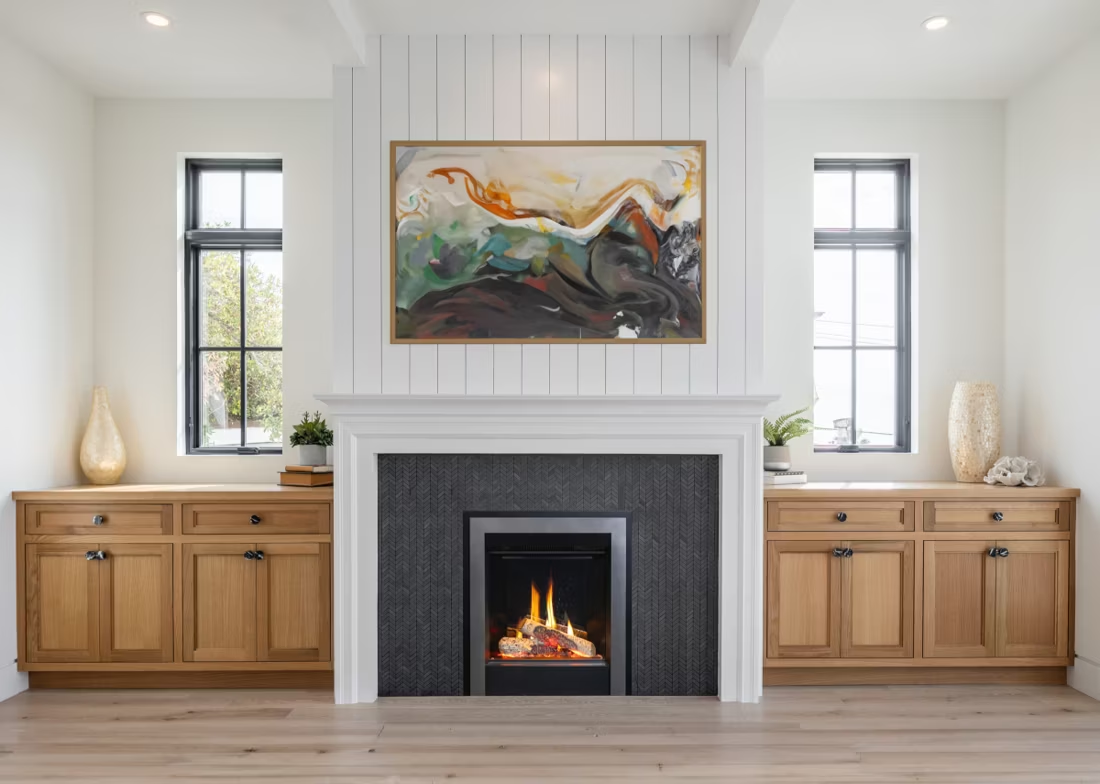
What electric does well in Campbell County is simplicity and flexibility. There's no chimney, no venting, no gas line, and no permit runaround with the county building department—most units plug into a standard outlet or a dedicated 20-amp circuit, and an electrician can have one wired in an afternoon. That matters in a county where new construction and additions are common around Gillette's growth corridors and out toward Wright. Just don't expect an electric insert to carry a whole home through a Powder River Basin cold snap the way a wood stove or gas furnace will—it's a supplement, not a substitute, in a place with such a long, cold heating season.
Three steps. No salesperson until you're ready.
Tell us about your project
Your zip code, your situation, and the fuel you're leaning toward—or let the answers point you to one.
See what's actually available
The brands dealers within 100 miles genuinely carry—real options, never a catalog mirage.
Get your dealer & Project Guide
A trusted local dealer, plus the free Project Guide & Parts List that names every component of the job.
Frequently Asked Questions
How much does an electric fireplace installation cost in Campbell County?
Most electric fireplace and insert installations in Campbell County run $400 to $1,200, and that range covers the vast majority of jobs—a plug-in unit set into an existing mantel surround on the low end, up to a built-in insert that needs a dedicated circuit run by an electrician on the high end. Wall-mounted units with a simple outlet nearby are typically the fastest and cheapest install. If you're adding a new circuit in an older Gillette home with older wiring, expect to land closer to the top of that range once electrician labor is factored in.
Can an electric fireplace actually heat a room in a Campbell County winter?
It can heat a single room comfortably, but you should size expectations to the climate. With average winter lows around 16°F and a long, cold heating season, Campbell County is a genuinely cold-climate county—most electric units are rated for 400-1,500 square feet of supplemental heat, and that's realistic for a bedroom, den, or basement family room with the door closed. What an electric fireplace won't do is replace your furnace or a wood stove as primary heat during a January cold snap in Gillette or Wright. Local dealers size units based on the specific room, not the whole house, and will tell you plainly if a space is too large or too drafty for electric alone to carry.
Do I need a permit to install an electric fireplace in Campbell County?
For a plug-in unit, no—there's no venting, no gas line, and no combustion, so it doesn't trigger the same building permit review that a wood stove or gas fireplace does through the county. If you're having a built-in insert wired to a dedicated circuit, that electrical work should be pulled by a licensed electrician and typically requires an electrical permit, which the electrician usually handles as part of the job. It's a much lighter process than what's required for a wood or gas installation in Campbell County.
What's the difference between an electric insert and a freestanding electric stove?
An electric insert is built to slide into an existing fireplace opening or a mantel surround, giving you a flush, built-in look—a common choice for Gillette homes with an old, rarely-used masonry fireplace they want to bring back to life without chimney work. A freestanding electric stove or mantel package sits on the floor and can go in a room with no existing fireplace at all, which suits additions or basement spaces out in Wright or the county's newer subdivisions. Both plug into a standard outlet in most cases, and neither requires the chimney or venting work a wood or gas unit needs.
Will an electric fireplace work during a power outage?
No—electric fireplaces require power to run the heating element and, on most models, the flame-effect display, so they go dark the moment the power drops. That's a real consideration in Campbell County, where winter storms and high winds across the Powder River Basin can knock out power for hours at a stretch. If backup heat during an outage matters to your household, a wood stove burning local lodgepole pine or ponderosa is the more resilient choice, and many Campbell County homes pair the two: electric for everyday convenience and ambiance, wood or gas as the outage-proof backup.
How much does it cost to run an electric fireplace in Campbell County?
Most electric fireplaces draw around 1,500 watts on the heat setting, which typically costs somewhere in the range of 15 to 25 cents per hour depending on your electric rate and the specific unit's efficiency. Run several hours a day through a cold Gillette winter and that adds up to a modest but real monthly bump on your bill—nowhere near what running electric resistance heat as a primary source would cost given how long and cold the county's winters run. That's exactly why most local homeowners use electric units for supplemental zone heat and ambiance rather than as the main heat source.
What size electric fireplace do I need for my room?
Sizing is mostly about the visual fit and the square footage you want to supplement, since heat output is fairly standardized across most units at 5,000 BTU or so. As a rough guide for Campbell County rooms: a 30-36 inch unit suits a bedroom or den, 40-50 inch units work well in a living room, and wall-length linear units are popular in newer Gillette great rooms where the fireplace serves as a focal point as much as a heat source. Given how cold the county gets, don't oversize expectations on the heat side—a larger unit looks more dramatic but won't out-heat the room's actual furnace load on a 16°F night.
Are electric fireplaces a good fit for Campbell County given how cold it gets, or should I look at wood or gas instead?
Electric fireplaces are a legitimate, standard option in Campbell County—they're just not going to be your primary heat source, and that's true of electric resistance heat almost anywhere with a winter this long and cold. Given Campbell County's demanding heating season and winter lows around 16°F, most homeowners here treat electric as a supplement: ambiance and zone heat in a room that already has central heat, or a simple upgrade for a den or basement that doesn't justify a chimney or gas line. If you're trying to heat a whole space or want backup heat that survives a power outage, a wood stove burning regional lodgepole pine and aspen, or a gas or pellet insert, is the more appropriate primary choice—and a local dealer can help you figure out which combination actually fits your home.
Electric vs. pellet—which makes more sense for my Campbell County home?
Pellet stoves, using bagged pellets from brands like Bear Mountain, Lignetics, or Forest Energy that are readily available in the region, burn real fuel and can serve as legitimate supplemental or even primary heat for a room, but they need electricity to run the auger and blower—so like electric units, they go down in a power outage unless you add battery backup. Electric fireplaces need no fuel storage, no venting, and almost no maintenance, but they cost more per hour to run as heat and can't touch a pellet stove's output in a genuinely cold Campbell County room. If you want low-maintenance ambiance with occasional supplemental warmth, electric is simpler. If you want a real secondary heat source for a bonus room or shop space, pellet is worth a look—a local dealer carrying both can walk you through the tradeoff for your specific space.
Do electric fireplaces actually produce heat?
Yes—most put out around 4,800–5,000 BTUs from a standard outlet, which comfortably warms a bedroom, office, or den as a comfort-zone heater. What they won't do is carry a whole house the way wood, gas, or pellet can. Think of electric as ambiance-first with honest supplemental heat: flames on with no heat in July, flames plus warmth in January.
Can I put a TV above my fireplace?
Yes—with an asterisk. Fireplaces are hot and TVs don't like heat. Either put a mantel between them to deflect rising warmth, or choose a fireplace with heat-management technology that creates a cool zone on the wall above—the wall stays around 125 degrees, barely warm, while the room still gets full heat. If you like clean lines and don't want a mantel, heat management is the answer.
How much should I budget for a fireplace?
For an average home—covering the fireplace, the vent pipe, and basic installation—a budget between $3,900 and $5,500 gives you a lot of options across wood, gas, and pellet. By the time you add finish work, gas line, and electrical, the average complete installation lands between $5,000 and $12,000 all-in. In a remodel or new build, a good rule is to put about 2.5% of the total project cost toward the fireplace.
Can a fireplace actually lower my heating bill?
Yes—by creating a comfort zone. A furnace heats every square foot of the house just to warm the one room you're in; a gas fireplace on low burns roughly a sixth of the gas a typical furnace does. Set the furnace around 55–60 degrees as a baseline, then heat the rooms your family actually uses. Families who heat this way commonly save $20–$60 a month.
Stove and Fireplace Dealers in Campbell County
Listings include WhyFire partner dealers, dealers we have verified as authorized for the brands we recommend, and established local businesses that carry hearth products. Every listing shows which one it is. The ones marked Preferred run on WhyFire's software, so they can show you real pricing and book your appointment right here. No manufacturer pays for placement. How we verify dealers →
Nelson's Fireplaces & Luxury Patio
Fireside Services
Great Divide Fabrication LLC
Bloedorn Lumber
Ramsey Enterprises
Builders First Source - Spearfish
Knecht Home Center-Spearfish
Alpine Climate Control
Ecommerce World LLC
Total Comfort Heating & Cooling
Get matched with an electric fireplace dealer in Campbell County.
Tell us about your room and we'll match you with a trusted local dealer and send over a free Project Guide & Parts List—sized right for a Powder River Basin winter, not a generic online estimate.
Find Your Fireplace →