
Instant heat for Watertown's long Wisconsin winters.
Watertown racks up roughly 7,300 heating degree days a year with winter lows near 10°F—a gas fireplace or insert delivers real warmth at the flip of a switch, no wood to split or season. Find the right unit and get matched with a trusted local dealer.
Every Project Starts From One of These Five Situations
Reliable heat without stacking cordwood.
Watertown sits along the Rock River in Jefferson County, in climate zone 6A, where the heating season regularly runs from October through April and winter lows average around 10°F—colder than Chicago, closer to what Minneapolis sees most winters. Wood heat has deep roots here; oak, maple, birch, and aspen are all common locally and plenty of homes still burn cordwood. But for many households, especially in the older two-story homes near downtown Watertown and the newer construction on the edges of town, gas has become the default choice simply because it doesn't require hauling, splitting, or seasoning wood through a seven-month heating season.
Watertown's electric service runs through Wisconsin Electric Power Co, part of the WEC Energy Group system that also brings natural gas mains through most of the city core. Outside city limits—in surrounding Jefferson County townships—propane delivery is the more typical setup. Unlike some Midwestern cities dealing with winter air-quality restrictions, Watertown has no non-attainment designation or burn-ban history, so there's no regulatory push toward gas over wood here. The appeal is purely practical: instant on-demand heat, no ash or creosote, and a unit that keeps a living room comfortable through a long, gray Wisconsin winter without daily tending.
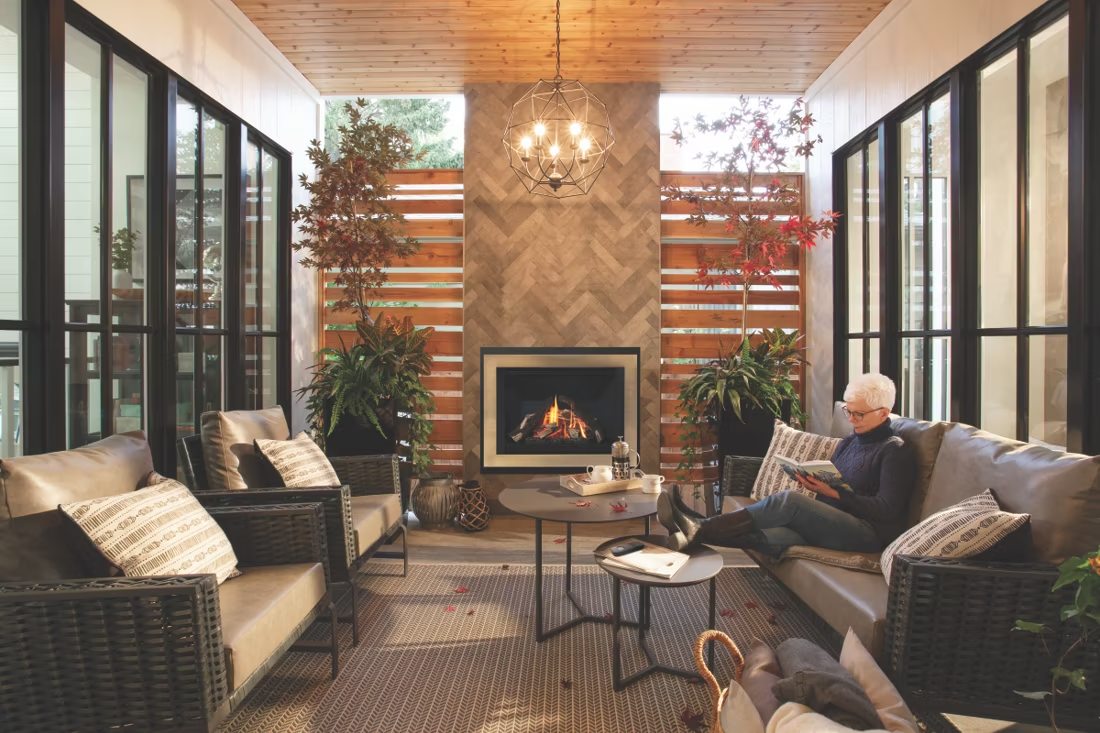
Three steps. No salesperson until you're ready.
Tell us about your project
Your zip code, your situation, and the fuel you're leaning toward—or let the answers point you to one.
See what's actually available
The brands dealers within 100 miles genuinely carry—real options, never a catalog mirage.
Get your dealer & Project Guide
A trusted local dealer, plus the free Project Guide & Parts List that names every component of the job.
Frequently Asked Questions
How much does a gas fireplace installation cost in Watertown?
Most gas fireplace and insert installations in Watertown run somewhere between $4,000 and $10,000, with the spread driven by the unit itself, whether a gas line already reaches the hearth, and the venting path. A direct-vent insert dropped into an existing masonry fireplace with gas already run to the room sits on the lower end. New construction or a remodel that requires framing a built-in unit, running new gas line, and adding venting through an exterior wall pushes toward the higher end—and that's common in some of Watertown's older Rock River-area homes that were never plumbed for gas. A local dealer will give you a firm number after seeing the space.
Can I convert my existing wood-burning fireplace to gas in Watertown?
Yes, and it's a common project. A gas insert with a stainless steel liner run through your existing chimney typically costs $4,000 to $8,500 installed, depending on the insert model and whether your home is already on natural gas or needs a propane setup. Because Watertown has no air-quality non-attainment restrictions, there's no regulatory pressure either way—homeowners convert mainly for convenience, especially after a few winters of hauling oak or maple through a Wisconsin heating season that stretches from October into April.
Is natural gas available throughout Watertown, or will I need propane?
Natural gas mains run through most of the city core, delivered through the same WEC Energy Group system that provides Watertown's electric service via Wisconsin Electric Power Co. If you're inside city limits with existing gas appliances—a furnace or water heater—adding a fireplace is usually a straightforward tie-in. Homes on the outskirts of Watertown or in the surrounding Jefferson County townships often fall outside the natural gas service area and rely on propane instead, either from an existing tank or a new tank set by a regional propane supplier. Most gas fireplace models can be configured for either fuel.
Will my gas fireplace still work if the power goes out?
Most modern gas fireplaces will. Units with intermittent pilot ignition (IPI) run on a small battery backup—typically AA batteries inside the unit—that kicks in automatically and lets the fireplace light on demand even with no power. Valor units go a step further: their pilot assembly generates its own electricity through the thermocouple, so there are no batteries to remember at all. That distinction matters in Jefferson County, where an ice storm or heavy snow load can knock out power for hours at a time while temperatures sit near 10°F. Ask your local dealer which ignition system a given model uses before you buy.
What's the difference between a gas fireplace, gas insert, and gas stove for a Watertown home?
A gas fireplace is a fully built-in unit framed into a wall—the right call for new construction or a remodel without an existing hearth, which describes a lot of Watertown's newer subdivisions. A gas insert is built to slide into an existing masonry fireplace and use the chimney you already have as the vent path, which fits well in the older homes near downtown and along the Rock River that were built with a wood fireplace decades ago. A gas stove is a freestanding unit that sits on the floor and can go almost anywhere with the right clearances and venting, useful in a room with no chimney at all. A local dealer can tell you which fits your specific hearth in about five minutes.
Do I need a permit for a gas fireplace installation in Watertown?
Yes—a building permit is required for a new gas fireplace installation, and the gas line work itself has to be done by a licensed plumber or gas-fitter, separate from the general building permit. If your address is inside city limits, that permit runs through the City of Watertown's building inspection office; addresses outside city limits go through Jefferson County's building and zoning department instead. Most established local hearth dealers pull these permits as part of the installation quote, so you're not coordinating multiple trades and inspections yourself.
Should I get a vented or vent-free gas fireplace?
Vented, direct-vent units draw combustion air from outside and exhaust it back outside through a sealed pipe—they're the safer, more universally code-compliant choice and the one most local dealers will steer you toward. Vent-free units burn fuel directly into the room and are legal in Wisconsin under specific room-size and oxygen-depletion-sensor rules, but they release some combustion byproducts indoors. In a climate zone 6A home built tight against Watertown's long, cold heating season, that indoor air quality tradeoff matters more than it would somewhere milder. Direct-vent is the standard recommendation locally for a reason.
How often should a gas fireplace be serviced in Watertown?
Plan on an annual inspection, ideally in late summer or early fall before Watertown's heating season kicks into gear in October. A technician will check the burner, pilot assembly, venting, and gas connections, and clean the glass and interior—most local service providers charge $150 to $250 for this visit. With roughly 7,300 heating degree days a year, gas fireplaces here see heavy seasonal use, so skipping the annual check is a bigger risk than it would be in a milder climate.
Gas vs. wood—which makes more sense for my Watertown home?
Wood is genuinely abundant here—oak, maple, birch, and aspen are all common regional species, and Watertown has none of the air-quality non-attainment restrictions that push some cities away from wood burning. So wood heat remains a completely viable, lower-fuel-cost option, especially for backup heat during power outages. Gas wins on pure convenience: instant on-off operation, no hauling or ash cleanup, and consistent output through a heating season that runs seven months long. Plenty of Watertown homes run both—gas in the main living space for daily use, a wood stove or insert elsewhere for backup heat when a winter storm knocks the power out.
Is my gas fireplace wasting gas?
If it was installed more than 15 years ago, probably. Older gas fireplaces keep a standing pilot light burning all the time, and that little flame can cost a couple hundred dollars a year. Newer models use pilot-on-demand ignition—the pilot lights only when you use the fireplace and goes out when you turn it off.
Why is my open fireplace making my house colder?
Open fireplaces suck—literally. As the fire burns, it consumes air your furnace already paid to heat and pulls it out through the chimney, so the house is actually colder after the fire goes out than before you lit it. An insert fixes this: it seals the chimney, puts fixed glass across the front, and turns that hole in your house into a real heat source.
How much should I budget for a fireplace?
For an average home—covering the fireplace, the vent pipe, and basic installation—a budget between $3,900 and $5,500 gives you a lot of options across wood, gas, and pellet. By the time you add finish work, gas line, and electrical, the average complete installation lands between $5,000 and $12,000 all-in. In a remodel or new build, a good rule is to put about 2.5% of the total project cost toward the fireplace.
Can a fireplace actually lower my heating bill?
Yes—by creating a comfort zone. A furnace heats every square foot of the house just to warm the one room you're in; a gas fireplace on low burns roughly a sixth of the gas a typical furnace does. Set the furnace around 55–60 degrees as a baseline, then heat the rooms your family actually uses. Families who heat this way commonly save $20–$60 a month.
Nearby Dealers
Hearth shops serving Watertown and the surrounding area.
Find your gas fireplace in Watertown.
Tell us about your home and heating goals, and we'll match you with a trusted local dealer and send a free Project Guide & Parts List for your gas fireplace, insert, or stove—including the vent kit you'll need.
Find Your Fireplace →