
Instant ambiance, no chimney required.
For finished basements, condos, additions, and any room in Washington County where running a flue or gas line isn't practical—electric delivers warmth and ambiance with a standard outlet.
Every Project Starts From One of These Five Situations
Zone heat and ambiance where your furnace can't reach.
Washington County sits in climate zone 6A with roughly 7,420 heating degree days a year and winter lows averaging around 11°F—a heating load in the same range as Duluth, Minnesota. That kind of cold means a whole-home furnace or boiler is doing the heavy lifting in nearly every West Bend, Hartford, Germantown, and Slinger household. Electric fireplaces aren't trying to replace that system. They're built for the rooms the furnace under-serves: a finished basement rec room, a three-season porch conversion, a primary bedroom that always runs cold, or a condo unit where there's no chimney and no gas line to tap into.
Because Washington County is a patchwork of municipal and investor-owned electric service—We Energies across most of the county, with West Bend's municipal Light & Water utility serving the city itself—the economics of running an electric fireplace vary a bit depending on where you live, but the appeal is consistent everywhere: no venting, no permit headaches for a plug-in unit, and installation that a local dealer or licensed electrician can usually finish in an afternoon. For renters, condo owners, and anyone in a subdivision with HOA restrictions on solid-fuel or gas appliances, electric is often the only fireplace option on the table—and modern units do a lot better job of it than the glowing-log inserts of a decade ago.
Three steps. No salesperson until you're ready.
Tell us about your project
Your zip code, your situation, and the fuel you're leaning toward—or let the answers point you to one.
See what's actually available
The brands dealers within 100 miles genuinely carry—real options, never a catalog mirage.
Get your dealer & Project Guide
A trusted local dealer, plus the free Project Guide & Parts List that names every component of the job.
Frequently Asked Questions
How much does an electric fireplace installation cost in Washington County?
Plug-in electric inserts and freestanding units typically run $300 to $1,200 for the unit itself, with little to no installation cost beyond mounting since they run off a standard 120V outlet. Built-in wall units or full mantel packages cost more—often $1,500 to $3,500 installed—because they usually call for a dedicated 20-amp circuit, some framing or trim carpentry, and an electrician to run the line. If you're finishing a Washington County basement or converting a three-season porch, budget toward the higher end since that dedicated circuit work is common in those projects. A local dealer can give you a firm number after seeing the room.
Will an electric fireplace actually heat a Washington County room in the winter?
It depends on the room and your expectations. Most electric fireplaces are rated around 4,600 to 5,200 BTU (roughly 1,500 watts), which is enough to comfortably supplement heat in a well-insulated 300 to 400 square foot space—a bedroom, den, or basement rec room. It is not enough to carry a whole floor of a Washington County home through a stretch of single-digit January nights, and it won't substitute for your furnace during a stretch like the county sees most winters. Think of it as zone heat: turn it on in the room you're actually using and you can often turn the thermostat down elsewhere in the house.
Do I need a permit to install an electric fireplace in Washington County?
A simple plug-in electric fireplace or insert generally doesn't require a permit since it runs off an existing outlet—there's no venting, gas line, or structural work involved. If you're installing a built-in unit that requires a new dedicated circuit, the electrical work itself typically needs a permit from your local municipality's building department, since Washington County's cities and townships (West Bend, Hartford, Germantown, Slinger, Jackson) each handle their own inspections rather than routing through a single county office. Any licensed electrician doing the circuit work will know which office to file with.
What's the difference between an electric insert, a built-in wall unit, and a freestanding electric stove?
An electric insert is sized to slide into an existing masonry or wood-fireplace opening, which makes it a common upgrade for older Washington County farmhouses with an unused wood-burning fireplace that homeowners no longer want to feed or clean. A built-in wall unit is framed into new construction or a remodel, similar to how a gas fireplace would be installed, and usually needs that dedicated circuit. A freestanding electric stove sits on the floor like a wood stove and can go almost anywhere with an outlet—no chimney, no existing fireplace required, which makes it popular in condos and apartments across the county.
How much does it cost to run an electric fireplace in Washington County?
At We Energies' typical residential rate (roughly 16-17 cents per kWh across the county) a standard 1,500-watt electric fireplace running on high costs about 24 to 27 cents an hour, or a little over $2 for an eight-hour evening of use. West Bend residents on the city's municipal Light & Water utility often see slightly different rates. Most units let you run the flame effect without the heater engaged, which draws only a few watts—useful if you want the ambiance on a summer evening without adding to your cooling load.
Are electric fireplaces a good fit for condos and rentals in Washington County?
Yes—this is one of the strongest cases for electric heat in the county. Condo associations and rental properties in Hartford, Germantown, and West Bend commonly restrict or prohibit wood-burning and even gas appliances due to venting, insurance, and shared-wall fire code concerns. An electric fireplace sidesteps all of that: no exterior venting, no gas line, no open flame, and in most cases no permanent alteration to the unit at all if you go with a plug-in model. It's also the only fireplace type a renter can typically take with them when they move.
Electric vs. gas vs. wood—which fireplace is right for my Washington County home?
Wood, common with local oak, maple, birch, and aspen supply, delivers the most heat and works during a power outage, but it needs a chimney, cutting or purchasing firewood, and regular cleaning. Gas delivers strong, consistent heat and can run during an outage with the right ignition system, but it requires a gas line or propane tank and venting. Electric is the lowest-commitment option—no fuel to manage, no venting, and the easiest install of the three—but it produces the least heat and stops working if the power goes out, which matters during a Washington County winter storm. Many homeowners here use wood or gas for real heat in the main living space and electric for ambiance in a secondary room.
What size electric fireplace do I need?
Manufacturers typically list a square footage rating alongside the BTU output—most 1,500-watt units are rated for 300 to 400 square feet under normal insulation. For a finished basement or converted porch in Washington County with lower ceilings and decent insulation, a standard 1,500-watt insert or stove is usually sufficient as supplemental heat. For a larger open room, or one with poor insulation like an older farmhouse addition, you may want a wider unit with a higher-wattage heater or plan to keep the furnace carrying more of the load. A local dealer can walk through your specific room dimensions.
Do electric fireplaces need any maintenance?
Very little compared to wood or gas. There's no chimney to sweep and no burner or pilot to service. Most maintenance is limited to occasionally cleaning the glass front, checking that the fan and heating element are free of dust, and replacing LED flame bulbs on older units every few years (most current models use long-life LEDs that rarely need replacement). This low-maintenance profile is part of why electric is a popular choice for Washington County vacation properties and rentals that sit unoccupied for stretches.
Can I put a TV above my fireplace?
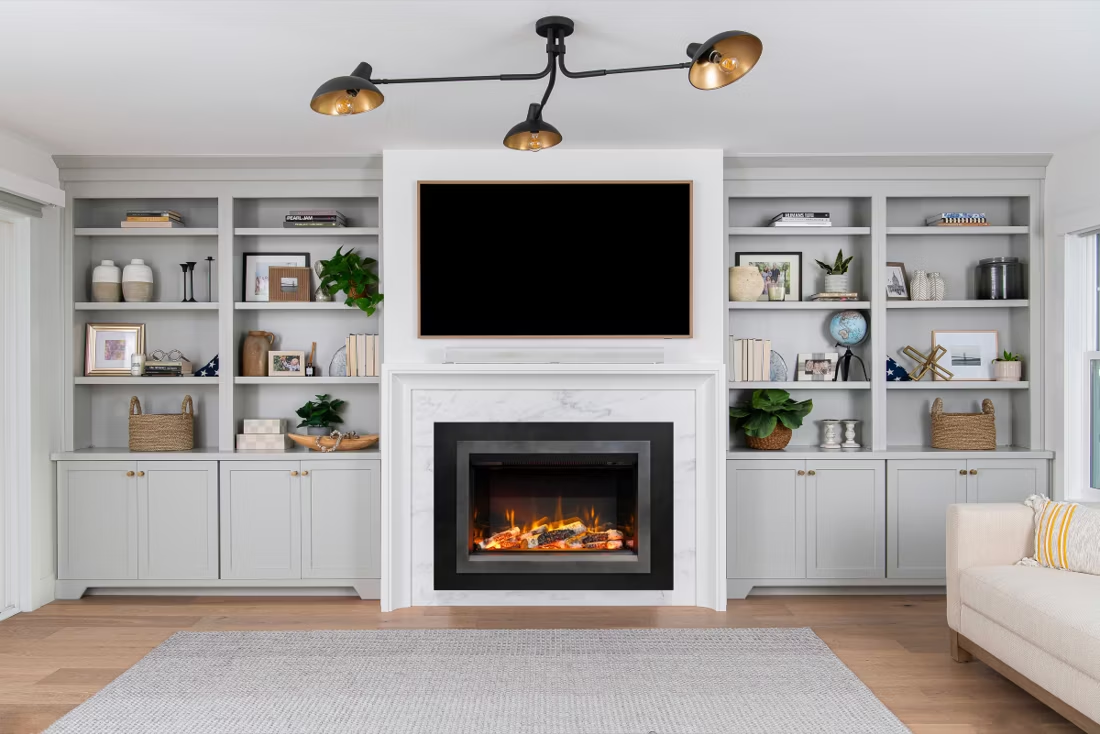
Yes—with an asterisk. Fireplaces are hot and TVs don't like heat. Either put a mantel between them to deflect rising warmth, or choose a fireplace with heat-management technology that creates a cool zone on the wall above—the wall stays around 125 degrees, barely warm, while the room still gets full heat. If you like clean lines and don't want a mantel, heat management is the answer.
Does an electric fireplace need a vent or chimney?
No—that's its superpower. An electric fireplace needs a wall and an outlet, period. No vent pipe, no gas line, no clearances to design around, which is why it works in bedrooms, offices, apartments, and walls where venting a gas or wood unit would be impractical or impossible. Installation is typically the simplest and least expensive of any fireplace type.
How much should I budget for a fireplace?
For an average home—covering the fireplace, the vent pipe, and basic installation—a budget between $3,900 and $5,500 gives you a lot of options across wood, gas, and pellet. By the time you add finish work, gas line, and electrical, the average complete installation lands between $5,000 and $12,000 all-in. In a remodel or new build, a good rule is to put about 2.5% of the total project cost toward the fireplace.
Does a fireplace add value to my home?
On average, a fireplace adds back to the home about the same amount you spent installing it. Add the monthly savings from heating the rooms you actually use instead of the whole house—often hundreds of dollars a year—and the value case is strong before you even count what a fire does for how your family uses the room.
Stove and Fireplace Dealers in Washington County
Listings include WhyFire partner dealers, dealers we have verified as authorized for the brands we recommend, and established local businesses that carry hearth products. Every listing shows which one it is. The ones marked Preferred run on WhyFire's software, so they can show you real pricing and book your appointment right here. No manufacturer pays for placement. How we verify dealers →
Bbq Grills Of Wisconsin
David J. Frank Landscape Contracting, Inc.
The Fire Factory
Chimney Doctors
Stonecraft Studios
Find your electric fireplace in Washington County.
Tell us about your room and how you plan to use it, and we'll match you with a trusted local dealer and put together a free Project Guide & Parts List for your Washington County installation.
Find Your Fireplace →