
Real Heat, Real Ambiance—No Chimney Required.
Zone heat and instant ambiance for Twin Lakes lake homes, cabins, and additions—no venting, no gas line, and often installed in an afternoon.
Every Project Starts From One of These Five Situations
Instant heat and ambiance, no venting required.
Twin Lakes sits on the Illinois state line in Kenosha County, built around Lake Mary and Elizabeth Lake, where a mix of century-old cottages and newer year-round homes ring the shoreline. At 890 feet on the flat glacial plains of southeastern Wisconsin, winters here are long and genuinely cold—climate zone 6A, an average winter low of 13°F, and a heating season about as demanding as Madison's, about 90 minutes northwest.
A lot of Twin Lakes housing stock is exactly the kind of building that suits electric heat well: seasonal cottages converted to year-round use, finished sunrooms, and additions that were never plumbed for gas or built with a chimney. Wisconsin Power & Light serves the area at roughly $0.1689 per kWh, a bit above the national average, which is why most homeowners here treat an electric fireplace as supplemental zone heat for a specific room rather than a replacement for the furnace during a January cold snap.
Three steps. No salesperson until you're ready.
Tell us about your project
Your zip code, your situation, and the fuel you're leaning toward—or let the answers point you to one.
See what's actually available
The brands dealers within 100 miles genuinely carry—real options, never a catalog mirage.
Get your dealer & Project Guide
A trusted local dealer, plus the free Project Guide & Parts List that names every component of the job.
Frequently Asked Questions
How much does it cost to install an electric fireplace in Twin Lakes?
A plug-in electric fireplace—a freestanding stove-look unit or a mantel package—typically runs $300 to $1,500 for the unit itself, and installation is as simple as setting it near a standard outlet. A recessed wall insert or linear built-in usually needs a dedicated 20-amp circuit, which means budgeting for a licensed electrician on top of the unit cost, often bringing the total to $1,000–$2,500 depending on how far the wiring has to run. A local dealer can tell you which route fits your room before you buy anything.
What size electric fireplace do I need for my Twin Lakes home?
Electric fireplaces are rated in watts rather than BTUs—a standard 1,500-watt heater puts out roughly 5,100 BTUs, enough to noticeably warm a single bedroom, den, or sunroom addition, but not an open-concept great room. Many of the newer lake homes around Elizabeth Lake have larger open living areas, and for those, a wider linear built-in with dual heating elements or a higher-wattage insert is a better match. A local dealer will look at your room dimensions and ceiling height and size it properly rather than guessing.
How much does it cost to run an electric fireplace here?
At Wisconsin Power & Light's residential rate of about $0.1689 per kWh, a 1,500-watt heater running on full output costs roughly $0.25 an hour. Run it four hours an evening through a Twin Lakes winter and you're looking at about a dollar a night—cheap for supplemental warmth in a bedroom or den, but not a substitute for whole-home heating given how many hours below freezing this area sees each winter.
Electric vs. gas—which is right for a Twin Lakes home?
Gas fireplaces put out real heat and, with an IPI ignition and battery backup, keep working through a power outage—a meaningful advantage in a lakeside area that sees its share of winter storm-related outages. Many homes in this part of Kenosha County outside the village core rely on propane rather than natural gas mains, so a gas fireplace install often means coordinating with a propane supplier as well as an installer. Electric skips all of that: no fuel deliveries, no venting, and a much simpler install—which is exactly why it's the practical choice for a cottage bedroom, a converted porch, or a lake house where running new gas line isn't worth the cost.
Do I need a permit for an electric fireplace in Twin Lakes?
A plug-in unit that runs off an existing outlet doesn't require a permit. A built-in wall insert or linear unit that needs new wiring or a dedicated circuit does require an electrical permit, pulled through the Village of Twin Lakes or Kenosha County depending on your address—and a licensed electrician typically handles that paperwork as part of the job rather than leaving it to you.
What types of electric fireplaces are available?
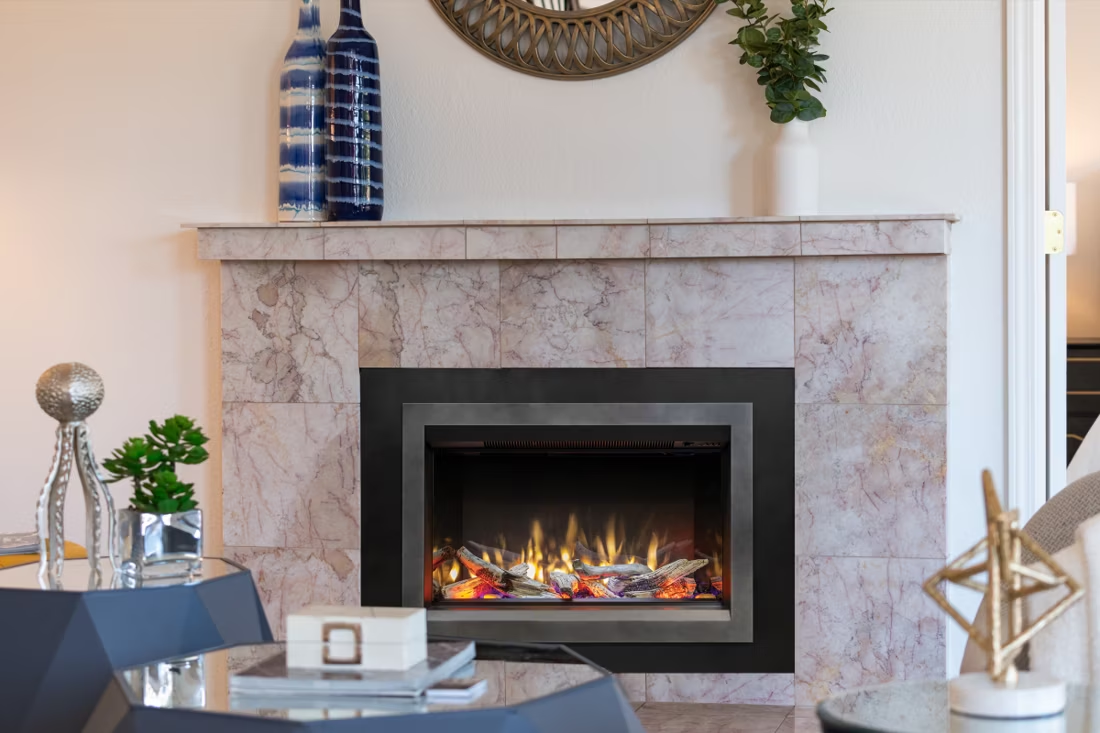
Recessed wall inserts sit flush in a framed wall for a built-in look, freestanding mantel packages give you the furniture-style stove look with zero wiring beyond an outlet, and linear built-ins offer a wide, modern flame display for great rooms. If your home has an existing masonry fireplace that's no longer practical to burn wood in, an electric log-set insert can also drop into that opening and give you flame effect and heat without touching the chimney.
Will an electric fireplace actually heat my house through a Twin Lakes winter?
Not the whole house, and it's worth being clear about that. With a long, cold heating season and average winter lows around 13°F, a single electric unit—typically 4,000 to 5,100 BTU equivalent—is built for one room, not a home. Most Twin Lakes homeowners use theirs to take the edge off a bedroom or sunroom while the furnace handles the rest of the house, which keeps utility bills lower without asking the fireplace to do a job it isn't built for.
What happens to my electric fireplace during a power outage?
It stops working—no power, no flame effect, no heat. That matters more here than in some places, since winter storms around the lakes can knock out power for hours at a stretch. If backup heat during outages is a priority for your household, a gas or propane unit with battery-backed ignition is worth considering alongside an electric fireplace rather than as a replacement for it.
Electric vs. wood—why not just put a wood stove in my cabin?
Wood-burning appliances are genuinely uncommon in Twin Lakes's housing stock, even with oak, maple, birch, and aspen all growing locally. Much of the building stock is seasonal cottages, additions, and remodeled sunrooms without a masonry chimney to work with, and adding one from scratch is a major structural project most homeowners skip. Electric fills that gap—no clearances, no wood storage, no chimney. If you happen to have an older home with an existing working chimney, a wood insert is still an option worth discussing with a dealer, but for most Twin Lakes retrofits, electric is the more realistic path.
Can I put a TV above my fireplace?
Yes—with an asterisk. Fireplaces are hot and TVs don't like heat. Either put a mantel between them to deflect rising warmth, or choose a fireplace with heat-management technology that creates a cool zone on the wall above—the wall stays around 125 degrees, barely warm, while the room still gets full heat. If you like clean lines and don't want a mantel, heat management is the answer.
Do electric fireplaces actually produce heat?
Yes—most put out around 4,800–5,000 BTUs from a standard outlet, which comfortably warms a bedroom, office, or den as a comfort-zone heater. What they won't do is carry a whole house the way wood, gas, or pellet can. Think of electric as ambiance-first with honest supplemental heat: flames on with no heat in July, flames plus warmth in January.
Can a fireplace actually lower my heating bill?
Yes—by creating a comfort zone. A furnace heats every square foot of the house just to warm the one room you're in; a gas fireplace on low burns roughly a sixth of the gas a typical furnace does. Set the furnace around 55–60 degrees as a baseline, then heat the rooms your family actually uses. Families who heat this way commonly save $20–$60 a month.
Can I install a fireplace myself?
If you're putting a fire in your house on purpose, it's best to work with an expert. Unless you're genuinely experienced in framing, gas line, vent pipe, and the national code on clearances to combustibles, have a professional do it—and ideally the same company that sells you the fireplace, so warranty, service, and liability all live under one roof.
Nearby Dealers
Hearth shops serving Twin Lakes and the surrounding area. Every listing shows whether it is a WhyFire partner, a dealer we have verified as authorized for the brands we recommend, or a local business carrying hearth products. No manufacturer pays for placement. How we verify dealers →
Lakeside Fireplace
Lakes Brick & Block
Fireplace And Patio
James R. Tayler & Sons
Alaskan Fireplace Co
Jhb Group, Inc.
Smokin' Deal Bbq
Fireplaces Plus
Electric Service in Twin Lakes
An electric fireplace's heater draws about 1,500 watts—pennies per hour at local rates.
Wisconsin Power & Light Co
Find your electric fireplace in Twin Lakes.
Tell us about your room and we'll put together a free Project Guide & Parts List—the right electric unit for your space, plus a trusted local dealer near Twin Lakes to install it.
Find Your Fireplace →