
Ambiance and supplemental warmth for Trempealeau County's long winters.
With 7,225 heating degree days and winter lows near 8°F, most homes here run on furnace or wood as primary heat—electric units add instant ambiance and zone warmth to any room, no chimney required. Find the right unit and connect with a trusted local dealer.
Every Project Starts From One of These Five Situations
Supplemental heat and easy ambiance for the coulee region.
Trempealeau County's bluff-and-coulee terrain along the Mississippi means real winter—climate zone 6A, average lows around 8°F, and over 7,200 heating degree days a year, on par with Duluth or Fargo. Wood stoves burning local oak, maple, and birch remain common as primary or backup heat, especially in the county's rural townships, and propane or fuel oil furnaces carry most homes through the coldest stretch. Electric fireplaces fit a different role here: they don't replace the furnace or the wood stove, but they add real, controllable warmth and instant ambiance to a living room, bedroom, or basement without any venting or gas line work.
That makes electric a practical fit for finished basements in Arcadia and Galesville, condos and apartments in Whitehall where a chimney isn't an option, and older farmhouses where a zero-clearance electric insert can bring a dead fireplace back to life in an afternoon. Because there's no combustion, there's no permit hassle and no air quality concern in a county that reports none—just plug-in or hardwired heat with a real flame look. A trusted local dealer can size the right unit for your room and handle any electrical work involved.
Three steps. No salesperson until you're ready.
Tell us about your project
Your zip code, your situation, and the fuel you're leaning toward—or let the answers point you to one.
See what's actually available
The brands dealers within 100 miles genuinely carry—real options, never a catalog mirage.
Get your dealer & Project Guide
A trusted local dealer, plus the free Project Guide & Parts List that names every component of the job.
Frequently Asked Questions
How much does an electric fireplace installation cost in Trempealeau County?
A typical electric fireplace or insert installation in Trempealeau County runs between $400 and $1,200, depending on the unit and whether it needs a dedicated electrical circuit. A plug-in freestanding unit or a simple insert into an existing fireplace opening sits at the lower end. Built-in wall units or installations that require an electrician to run a new 120V or 240V circuit—common in older farmhouses around Arcadia and Osseo with outdated wiring—land at the higher end. Because there's no venting, chimney, or gas line involved, electric is consistently the least expensive fireplace project a local dealer handles.
Do I need a permit to install an electric fireplace in Trempealeau County?
Usually not for the unit itself—a plug-in electric fireplace or insert requires no building permit since there's no venting or combustion involved. If the installation requires a new dedicated electrical circuit, an electrician pulling that permit is standard practice and typically handled by the installer as part of the job. Most local dealers coordinate this so you're not left tracking down permits yourself. There are no air quality restrictions to worry about either, since Trempealeau County reports no air quality concerns tied to fireplace fuels.
Will an electric fireplace actually heat my room in a Trempealeau County winter?
A quality electric fireplace with a built-in heater will genuinely warm a single room—most units are rated for 400-1,500 square feet depending on insulation, similar to a space heater but with a much better flame effect. It won't replace your furnace or wood stove as primary heat during a stretch of 8°F nights, which are typical here in a county averaging over 7,000 heating degree days a year. Think of it as zone heat for a basement, bedroom, or living room where you want supplemental warmth and ambiance without running the whole-house system harder. Homeowners in Whitehall and Blair often add electric units to basements and additions for exactly this reason.
What's the difference between an electric fireplace, insert, and wall-mounted unit?
A freestanding electric fireplace is a self-contained cabinet unit that plugs in anywhere—no installation beyond finding an outlet. An electric insert is sized to slot into an existing masonry or zero-clearance fireplace opening, a popular option for older Trempealeau County farmhouses with a dead or unused wood fireplace. A wall-mounted or built-in electric fireplace is designed to be recessed into a wall like a flat-screen TV, often requiring a dedicated circuit and some carpentry. For most existing fireplace openings, an insert is the simplest upgrade; for new construction or remodels, a built-in wall unit gives the cleanest look.
Can an electric fireplace run during a power outage?
No—electric fireplaces require power to operate the heater and flame effect, so they go dark during an outage. In a county where winter storms along the Mississippi bluffs can knock out power for hours, that's worth planning around if you're relying on the unit for real heat. Homes here that need backup heat during outages typically keep a wood stove burning local oak or maple as the fallback, with electric reserved for everyday convenience and ambiance rather than emergency use.
How much does it cost to run an electric fireplace in Trempealeau County?
Most electric fireplaces draw around 1,500 watts on the heater setting, which costs roughly 15-25 cents per hour to run depending on your electric rate—a few dollars for an evening's use. Running the flame effect alone without heat costs only pennies an hour since it draws minimal power. Compared to a wood stove requiring cut, split, and stacked firewood, or a propane furnace running through a Wisconsin winter, electric fireplaces are the cheapest fuel to operate—they just aren't sized to carry a whole home through a stretch of single-digit nights the way a furnace or wood stove can.
Do electric fireplaces need any maintenance?
Very little. There's no chimney to sweep, no gas lines to inspect, and no combustion byproducts to worry about. Occasional dusting of the unit and checking the LED light strips or heating element periodically is about all that's required. Most units carry a manufacturer's warranty of one to three years, and local dealers can source replacement parts like heating elements or remote controls if something wears out after years of use—which is rare given how few moving parts are involved.
Is an electric fireplace a good fit for older Trempealeau County farmhouses?
Often, yes—an electric insert is one of the easiest ways to bring an old, unused masonry fireplace back into service without the cost of chimney relining or rebuilding for wood or gas. Many farmhouses around Arcadia, Osseo, and the smaller townships have fireplaces that haven't burned wood safely in years due to deteriorated flues; an insert sized to the existing opening restores the look and adds real supplemental heat with no chimney work at all. The main thing to check with a local dealer is your home's electrical panel capacity, since older farmhouse wiring sometimes needs an upgrade before adding a dedicated circuit for a larger unit.
Electric vs. wood or gas—which is right for my home?
Wood, burning the county's plentiful oak, maple, and birch, offers real heat output and works during power outages, making it the choice for primary or backup heat on rural properties. Gas (typically propane in this county) delivers instant, thermostat-controlled whole-room heat without wood handling. Electric offers the lowest cost and easiest installation of the three, with genuine supplemental heat and the best selection of realistic flame styles, but no ability to function as your primary heat source through a Trempealeau County winter or to run without power. Most local homeowners choosing electric are adding it to a second living space rather than replacing their main heat source—a local dealer can walk through which combination makes sense for your specific home.
Can I put a TV above my fireplace?
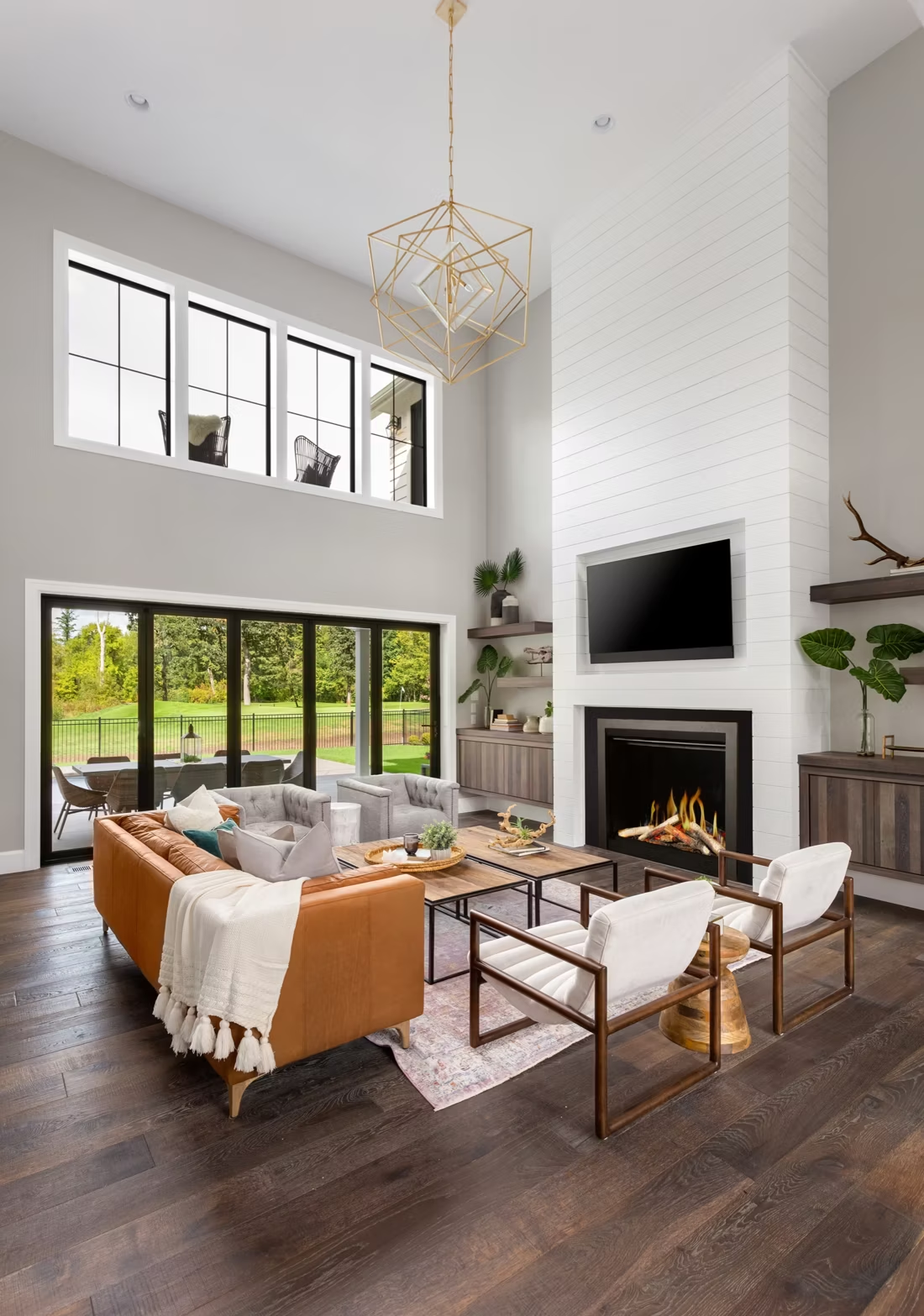
Yes—with an asterisk. Fireplaces are hot and TVs don't like heat. Either put a mantel between them to deflect rising warmth, or choose a fireplace with heat-management technology that creates a cool zone on the wall above—the wall stays around 125 degrees, barely warm, while the room still gets full heat. If you like clean lines and don't want a mantel, heat management is the answer.
Does an electric fireplace need a vent or chimney?
No—that's its superpower. An electric fireplace needs a wall and an outlet, period. No vent pipe, no gas line, no clearances to design around, which is why it works in bedrooms, offices, apartments, and walls where venting a gas or wood unit would be impractical or impossible. Installation is typically the simplest and least expensive of any fireplace type.
What is an in-home preview and do I need one?
It's a visit where a hearth professional measures your space, confirms the model you picked actually works in your home, and walks the specs—framing, gas line, venting, finish work—before anything is ordered. Some details you just can't know until you see the house. Never make a down payment without one; it's the single most-skipped step that burns buyers.
How much should I budget for a fireplace?
For an average home—covering the fireplace, the vent pipe, and basic installation—a budget between $3,900 and $5,500 gives you a lot of options across wood, gas, and pellet. By the time you add finish work, gas line, and electrical, the average complete installation lands between $5,000 and $12,000 all-in. In a remodel or new build, a good rule is to put about 2.5% of the total project cost toward the fireplace.
Stove and Fireplace Dealers in Trempealeau County
Listings include WhyFire partner dealers, dealers we have verified as authorized for the brands we recommend, and established local businesses that carry hearth products. Every listing shows which one it is. The ones marked Preferred run on WhyFire's software, so they can show you real pricing and book your appointment right here. No manufacturer pays for placement. How we verify dealers →
Area – La Crosse, Wi
Poolman
Ccs Services LLC
Find your electric fireplace in Trempealeau County.
Tell us a bit about your home and we'll match you with the right electric fireplace or insert, plus a free Project Guide & Parts List with your recommended local dealer in Trempealeau County.
Find Your Fireplace →