
Find your electric fireplace in Taylor County.
Zone heat and real ambiance for a county where winter lows average 2°F and the heating season runs long. Find the right unit for your home or cabin, and connect with a trusted local dealer.
Every Project Starts From One of These Five Situations
Zone heat and ambiance for Wisconsin's coldest winters.
Taylor County sits in north-central Wisconsin, in climate zone 7, with roughly 8,763 heating degree days a year—a heating load in the same range as Duluth, MN. Winter lows average 2°F, and stretches well below zero aren't unusual from Medford to Rib Lake to Gilman. Wood has long carried the primary heating load out here, with oak, maple, birch, and aspen cut locally and cutting permits available through the Chequamegon-Nicolet National Forest for $10 to $20 per cord during the May-through-October season. Electric fireplaces fit into that picture differently than they do in milder parts of the country—they're not usually the appliance keeping a Taylor County home warm through January.
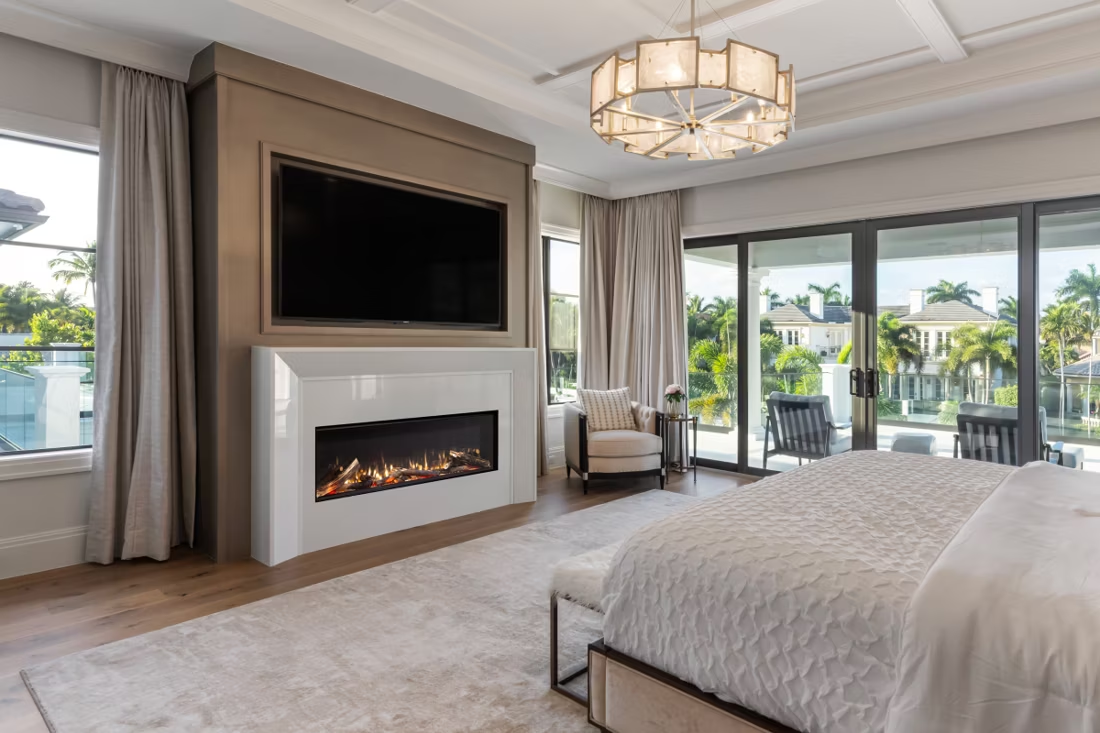
Where electric fireplaces earn their place is as supplemental zone heat and honest ambiance: a finished basement, a primary bedroom, an addition where running a chimney or gas line isn't practical, or a hunting cabin on forested land where full utility service never got extended. Taylor Electric Cooperative serves much of the rural county, and running resistance heat continuously through an 8,763-HDD winter adds up fast on a co-op bill—which is why most local homeowners pair an electric unit with an existing wood stove or propane furnace rather than asking it to do all the work. The right electric fireplace still delivers real, flip-a-switch heat for a single room, with none of the venting, ash, or chimney maintenance that wood or gas require.
Three steps. No salesperson until you're ready.
Tell us about your project
Your zip code, your situation, and the fuel you're leaning toward—or let the answers point you to one.
See what's actually available
The brands dealers within 100 miles genuinely carry—real options, never a catalog mirage.
Get your dealer & Project Guide
A trusted local dealer, plus the free Project Guide & Parts List that names every component of the job.
Frequently Asked Questions
How much does an electric fireplace installation cost in Taylor County?
Plug-in electric fireplaces and inserts that run on a standard 120V outlet typically run $300 to $1,200 installed, since there's no venting or chimney work involved—just placement and, for a built-in insert, some carpentry to frame the opening. Larger units or those requiring a dedicated 240V circuit run higher, often $1,200 to $2,500, once you factor in a licensed electrician running new wiring—a common scenario in older farmhouses around Medford and Gilman that weren't built with a spare circuit near the intended fireplace location. Compared to the $4,500-plus typical for a wood or gas installation in this climate, electric is the low-cost entry point into the hearth category.
Will an electric fireplace actually heat my home through a Taylor County winter?
Not on its own, and it's worth being direct about that. With winter lows averaging 2°F and roughly 8,763 heating degree days a year—a load comparable to Duluth, MN—a single electric fireplace's 1,500-watt heater element can comfortably warm one room, but it isn't sized to replace whole-home heat in this climate. Most Taylor County homeowners install an electric fireplace as supplemental heat for a specific room—a bedroom, den, or finished basement—while a wood stove, furnace, or propane system carries the main heating load. If you're hoping to offset a drafty room, it can genuinely help; if you're hoping to skip installing a real heat source, it won't.
What's the difference between an electric fireplace, insert, and wall-mounted unit?
An electric insert is built to slide into an existing wood or masonry fireplace opening, giving you flame visuals and heat without the chimney maintenance—a popular retrofit for older farmhouses around Medford that have an unused masonry fireplace. A freestanding electric fireplace or media-console style unit sits against a wall like furniture and plugs into a standard outlet, making it the easiest option for renters or cabins without any existing fireplace opening. A wall-mounted or built-in electric fireplace is recessed into a framed wall, similar to a flat-screen TV, and works well in new construction or additions where you're building the wall from scratch. All three heat the same way—an internal heater element—the difference is purely about how they fit your space.
Do I need a permit to install an electric fireplace in Taylor County?
Usually not for a plug-in unit—if it draws standard 120V household current and doesn't require new wiring, most Taylor County municipalities don't require a permit. If your unit needs a dedicated 240V circuit or new wiring run from the panel, that electrical work does require a permit and should be done by a licensed electrician, since it involves inspection by your local building department. This is a much lighter permitting process than wood or gas installations, which require chimney or venting work and, for wood stoves, EPA-certified appliances.
What's the best electric fireplace for supplemental heat in a cold Wisconsin home?
Look for a unit with a true forced-air or infrared heater element rated at the full 1,500 watts (roughly 5,100 BTU) rather than a decorative-only flame effect—brands like Dimplex and Napoleon build electric fireplaces specifically designed to function as real supplemental heaters, not just ambiance pieces. For a drafty bedroom or a finished basement in a Taylor County home, that distinction matters more than it does in milder climates. If you're trying to offset heat loss in a specific room during the shoulder seasons (October, April) when running the furnace feels like overkill, a well-built electric insert can meaningfully cut propane or wood use during those months, even if it can't replace them in January.
Electric vs. wood—which makes more sense for my Taylor County home?
Wood, cut from local oak, maple, birch, or aspen, delivers real primary heat, works with zero electricity—which matters when ice storms knock out rural co-op power lines through the forested parts of the county—and pairs with inexpensive Forest Service cutting permits through the Chequamegon-Nicolet National Forest. Electric offers instant on-off convenience, zero venting or ash cleanup, and no wood handling, but it depends entirely on the grid and costs more per BTU to run continuously at this climate's heating load. Most Taylor County homes that install electric use it for a specific room or ambiance, keeping wood or propane as the backbone heat source—treating the two as complementary rather than either-or.
Does an electric fireplace need venting or a chimney?
No—electric fireplaces produce heat and flame visuals without combustion, so there's no chimney, flue, or outside vent required at all. That's a major simplification compared to wood stoves, which need a full Class A chimney system, or gas units, which need direct-vent piping to the outside. It's part of why electric is the fastest and least expensive option to install in an addition, a finished basement, or a cabin where running a chimney isn't practical.
Where does an electric fireplace make the most sense in a Taylor County home or cabin?
Finished basements, primary bedrooms, and additions built without a chimney or gas line are the most common spots locally, since electric units need only a standard outlet or a dedicated circuit. They're also a strong fit for hunting cabins and seasonal properties scattered through the county's forested land that have electric service from Taylor Electric Cooperative but no propane tank or wood stove installed—an electric insert gives you heat and ambiance on weekend trips without the upkeep of a wood-burning appliance sitting idle most of the year.
How much does it cost to run an electric fireplace through a Taylor County winter?
A typical 1,500-watt electric fireplace run for 4 hours a night costs roughly $0.60 to $1.00 a day at typical Taylor Electric Cooperative residential rates, or about $20 to $30 a month if used as evening supplemental heat rather than around the clock. Running it as a full-time primary heat source through a Taylor County winter—given the 8,763 heating degree days and long season—gets expensive quickly compared to wood or propane per BTU delivered, which is the main reason most local installs are supplemental rather than whole-home.
Can I put a TV above my fireplace?
Yes—with an asterisk. Fireplaces are hot and TVs don't like heat. Either put a mantel between them to deflect rising warmth, or choose a fireplace with heat-management technology that creates a cool zone on the wall above—the wall stays around 125 degrees, barely warm, while the room still gets full heat. If you like clean lines and don't want a mantel, heat management is the answer.
Does an electric fireplace need a vent or chimney?
No—that's its superpower. An electric fireplace needs a wall and an outlet, period. No vent pipe, no gas line, no clearances to design around, which is why it works in bedrooms, offices, apartments, and walls where venting a gas or wood unit would be impractical or impossible. Installation is typically the simplest and least expensive of any fireplace type.
How much should I budget for a fireplace?
For an average home—covering the fireplace, the vent pipe, and basic installation—a budget between $3,900 and $5,500 gives you a lot of options across wood, gas, and pellet. By the time you add finish work, gas line, and electrical, the average complete installation lands between $5,000 and $12,000 all-in. In a remodel or new build, a good rule is to put about 2.5% of the total project cost toward the fireplace.
Can a fireplace actually lower my heating bill?
Yes—by creating a comfort zone. A furnace heats every square foot of the house just to warm the one room you're in; a gas fireplace on low burns roughly a sixth of the gas a typical furnace does. Set the furnace around 55–60 degrees as a baseline, then heat the rooms your family actually uses. Families who heat this way commonly save $20–$60 a month.
Stove and Fireplace Dealers in Taylor County
Listings include WhyFire partner dealers, dealers we have verified as authorized for the brands we recommend, and established local businesses that carry hearth products. Every listing shows which one it is. The ones marked Preferred run on WhyFire's software, so they can show you real pricing and book your appointment right here. No manufacturer pays for placement. How we verify dealers →
House Of Heating Inc.
Ferguson Enterprises
Find your electric fireplace in Taylor County.
Tell us about your room, your home, and what you're hoping the fireplace will do—we'll match you with a trusted local dealer and send over a free Project Guide & Parts List with the exact parts for your electric fireplace project in Taylor County.
Find Your Fireplace →