
Add Warmth Without a Woodpile in Seymour.
Zone heat and real ambiance for Outagamie County's long winters—no venting, no chimney, no gas line. Find the right unit and connect with a trusted local dealer.
Every Project Starts From One of These Five Situations
Supplemental heat for a 7,670-HDD winter.
Seymour sits in climate zone 6A with average winter lows near 10°F and roughly 7,670 heating degree days a year—a heating load in the same range as Minneapolis. Most homes in this part of the Fox Valley are built around natural gas furnaces for whole-house heat, which is a big reason wood and pellet stoves rarely show up here as primary heat sources; there's no local cutting-permit culture or regional pellet delivery infrastructure the way there is farther north, and air quality has never been a driver of solid-fuel installs in Outagamie County. Electric fireplaces fill a different, more targeted role: warmth in a converted garage or finished basement, ambiance in a living room remodel, or heat in a bedroom addition without extending ductwork.
Wisconsin Electric Power Co. (We Energies) serves Seymour at a residential rate of about $0.1923 per kWh—noticeably higher than the regional average, which is worth knowing before you count on an electric fireplace to meaningfully offset a gas furnace bill. Where electric units really earn their keep is speed and simplicity: no venting, no chimney, no gas line, and many plug-in models run on a standard 120-volt outlet with no structural work at all. For a city where new gas hookups and furnace replacements dominate most heating projects, that low-friction install is a real advantage.
Three steps. No salesperson until you're ready.
Tell us about your project
Your zip code, your situation, and the fuel you're leaning toward—or let the answers point you to one.
See what's actually available
The brands dealers within 100 miles genuinely carry—real options, never a catalog mirage.
Get your dealer & Project Guide
A trusted local dealer, plus the free Project Guide & Parts List that names every component of the job.
Frequently Asked Questions
How much does an electric fireplace installation cost in Seymour?
Plug-in electric inserts and freestanding units typically run $200 to $800 installed, since most just need an existing outlet and a few hours of carpentry to fit a mantel or surround. Built-in wall units or linear electric fireplaces that require a dedicated 120V or 240V circuit run higher, generally $1,500 to $4,000, once you add an electrician for the new circuit and finish carpentry to frame the opening. Because there's no gas line, no masonry, and no chimney involved, electric installs in Seymour are consistently the least expensive and least disruptive option on the market.
Will an electric fireplace actually lower my heating bill?
Mainly if you use it for zone heating—running it in the room you're actually sitting in while turning the furnace thermostat down a few degrees elsewhere in the house. At We Energies' residential rate of roughly $0.1923 per kWh, a typical 1,500-watt unit costs about 29 cents an hour to run at full heat, which adds up quickly if you treat it as whole-house heat. Given Seymour's 7,670 heating degree days, an electric fireplace makes more financial sense as a supplement to a gas furnace than as a replacement for one.
Will my electric fireplace work if the power goes out?
No—electric fireplaces require power to run the heater and, on most models, the flame-effect display, so they won't provide heat during an outage. That's a meaningful difference from a wood stove, which needs no electricity at all. If backup heat during Outagamie County ice storms or extended outages is a priority, a gas fireplace (natural gas is standard and widely available in Seymour) is the more resilient choice, since many gas units can run on battery-backed ignition even with the power out.
What's the difference between an electric insert, a built-in wall unit, and a freestanding electric fireplace?
An electric insert is sized to slide into an existing masonry fireplace opening, giving an old wood-burning firebox a heat source and flame effect without any venting work. A built-in wall unit is framed into new construction or a remodel, often as a linear, modern-looking feature wall. A freestanding electric fireplace is a self-contained cabinet or mantel unit that plugs in and can be placed almost anywhere, then moved later if needed. For Seymour homes with an old, unused masonry fireplace, an insert is usually the simplest upgrade; for a remodel or new build, a built-in wall unit gives the cleanest look.
Do I need a permit to install an electric fireplace in Seymour?
Most plug-in electric inserts and freestanding units don't require a permit since they use an existing outlet and involve no structural or electrical changes. Built-in units that need a new dedicated circuit typically require an electrical permit through the City of Seymour building department, and the wiring should be done by a licensed electrician regardless of whether a permit is pulled. There's no combustion involved, so unlike wood or gas installs, there's no venting inspection or air-quality review to worry about.
How much heat does an electric fireplace actually put out, and what size do I need?
Most residential electric fireplaces top out around 5,000 to 5,200 BTU on a 1,500-watt heater, which is enough to comfortably heat a single room of 400 to 600 square feet—not a whole house, especially not one dealing with Seymour's sub-zero overnight lows in January. Sizing here comes down to matching the unit to the specific room: a small bedroom or den does fine with a compact insert or mantel unit, while an open-concept living/kitchen space may need a wider linear unit or supplemental heat from the furnace to fully keep up.
Electric vs. gas fireplace—which makes more sense for my Seymour home?
Gas is the more common choice for homeowners who want a real flame and meaningful heat output, and it's a standard, well-supported option here since natural gas service runs through most of Seymour. Electric fireplaces cost less to install, require no gas line or venting, and are the faster project if you mainly want ambiance or light zone heat in a room that doesn't need much extra warmth. If you want something that can genuinely take the edge off a cold Outagamie County night, gas is the stronger performer; if you want low-cost, low-hassle ambiance with occasional supplemental warmth, electric fits better.
What about wood or pellet stoves—are those an option in Seymour?
They're uncommon here. Seymour doesn't have the local firewood-cutting culture, forest permit offices, or regional pellet delivery network that drive wood and pellet heat in other parts of Wisconsin, and most homes are already built around natural gas furnaces. A handful of rural properties outside city limits still burn wood for supplemental heat, but for most Seymour homeowners looking for a real flame indoors, gas is the more practical and better-supported local option, with electric covering the low-cost, no-venting end of the spectrum.
Where can I see electric fireplaces in person before I buy?
A handful of hearth and appliance retailers serving the greater Green Bay and Fox Valley area carry electric fireplace lines and can walk you through insert, wall-unit, and freestanding options in a showroom. Rather than guessing from online photos, it's worth seeing the flame effect and finish in person, since electric units vary a lot in realism and brightness control. We can match you with a trusted local dealer who carries units that are actually installable in your specific room and circuit setup, rather than whatever a big-box store happens to have in stock.
Do electric fireplaces actually produce heat?
Yes—most put out around 4,800–5,000 BTUs from a standard outlet, which comfortably warms a bedroom, office, or den as a comfort-zone heater. What they won't do is carry a whole house the way wood, gas, or pellet can. Think of electric as ambiance-first with honest supplemental heat: flames on with no heat in July, flames plus warmth in January.
Does an electric fireplace need a vent or chimney?
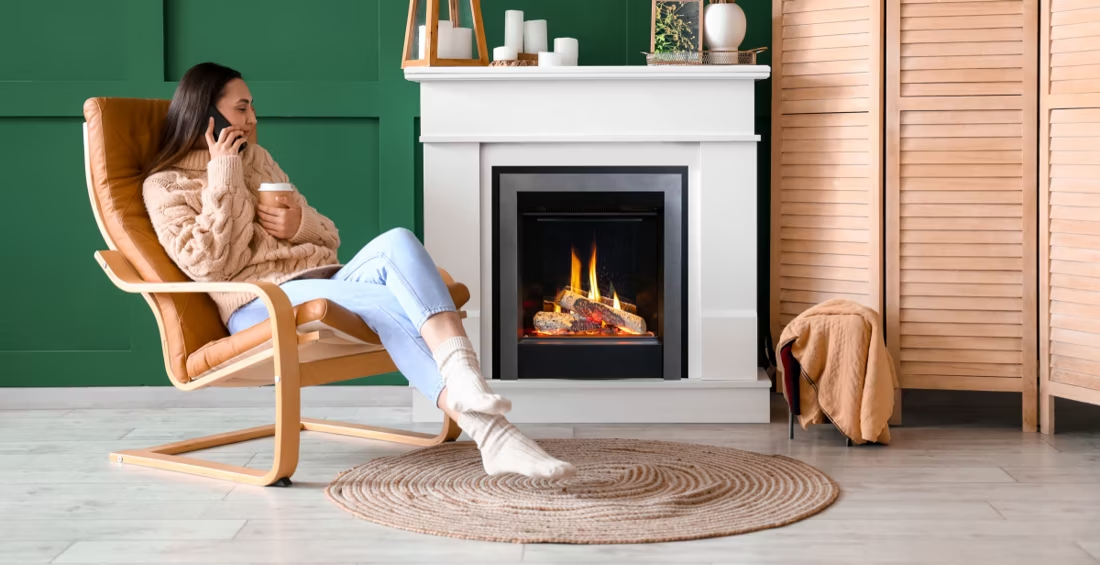
No—that's its superpower. An electric fireplace needs a wall and an outlet, period. No vent pipe, no gas line, no clearances to design around, which is why it works in bedrooms, offices, apartments, and walls where venting a gas or wood unit would be impractical or impossible. Installation is typically the simplest and least expensive of any fireplace type.
What is an in-home preview and do I need one?
It's a visit where a hearth professional measures your space, confirms the model you picked actually works in your home, and walks the specs—framing, gas line, venting, finish work—before anything is ordered. Some details you just can't know until you see the house. Never make a down payment without one; it's the single most-skipped step that burns buyers.
Can I install a fireplace myself?
If you're putting a fire in your house on purpose, it's best to work with an expert. Unless you're genuinely experienced in framing, gas line, vent pipe, and the national code on clearances to combustibles, have a professional do it—and ideally the same company that sells you the fireplace, so warranty, service, and liability all live under one roof.
Nearby Dealers
Hearth shops serving Seymour and the surrounding area. Every listing shows whether it is a WhyFire partner, a dealer we have verified as authorized for the brands we recommend, or a local business carrying hearth products. No manufacturer pays for placement. How we verify dealers →
Hockers Brick & Tile
Midwest Expansion
Energy Shop
Warm Sensations
Elite Fireplace LLC
Electric Service in Seymour
An electric fireplace's heater draws about 1,500 watts—pennies per hour at local rates.
Wisconsin Electric Power Co
Find your electric fireplace in Seymour.
Tell us a bit about your home and we'll put together a free Project Guide & Parts List—the right electric fireplace, the exact parts you'll need, and a trusted local dealer to install it.
Find Your Fireplace →