
Instant Warmth, Zero Mess, Any Room in the House.
No chimney, no gas line, no venting—just plug in or hardwire and go. Find the right electric unit for your Sauk City home and connect with a trusted local dealer.
Every Project Starts From One of These Five Situations
Supplemental warmth for a long Wisconsin heating season.
Sauk City sits along the Wisconsin River in climate zone 6A, where winter lows average 8°F and the region racks up roughly 7,463 heating degree days a year—a season length closer to Duluth, MN than to most of the Midwest. Wood remains the workhorse fuel here, with oak, maple, birch, and aspen readily available from Sauk County's farms and woodlots, but electric fireplaces have carved out a real role: zone heat for a finished basement, a bedroom addition without ductwork, or a den where running a flue simply isn't practical.
Electricity in Sauk City comes from a mix of sources—Wisconsin Power & Light (Alliant Energy) at roughly 16.89¢ per kWh, and the municipal utilities run by the Village of Sauk City and the Village of Prairie du Sac, both closer to 11.32¢ per kWh. That rate difference matters when you're running a 1,500-watt unit for hours at a stretch during a Wisconsin winter. Electric units won't replace a furnace or a wood stove as primary heat in a 7,400-HDD climate, but for zero-clearance installs, rental properties, or rooms where venting isn't an option, they're a clean, low-maintenance fit—and there's no smoke, no ash, and no chimney to inspect.
Three steps. No salesperson until you're ready.
Tell us about your project
Your zip code, your situation, and the fuel you're leaning toward—or let the answers point you to one.
See what's actually available
The brands dealers within 100 miles genuinely carry—real options, never a catalog mirage.
Get your dealer & Project Guide
A trusted local dealer, plus the free Project Guide & Parts List that names every component of the job.
Frequently Asked Questions
How much does an electric fireplace installation cost in Sauk City?
Plug-in electric fireplace inserts and freestanding stoves typically run $300 to $1,000 installed, since most just need a standard 120V outlet and a mantel or surround. Built-in wall units or larger linear fireplaces that require a dedicated 240V circuit and some carpentry can run $1,200 to $2,500 once an electrician is involved. Because there's no venting or gas line to run, electric is consistently the least expensive hearth option in Sauk City—local dealers can usually confirm your exact cost after seeing the room and your existing electrical panel.
Can an electric fireplace be my primary heat source in Sauk City's winters?
Not realistically. With winter lows averaging 8°F and roughly 7,463 heating degree days a year—a heating season on par with Duluth, MN—electric resistance heat is too costly per BTU to carry a whole house through a Wisconsin winter, especially at the 16.89¢/kWh rate charged by Wisconsin Power & Light. Electric fireplaces work best as zone heat: warming the room you're actually using while your furnace, wood stove, or pellet appliance handles the rest of the house. Homeowners on the Village of Sauk City or Village of Prairie du Sac municipal utility, at closer to 11.32¢/kWh, get somewhat better economics, but the same logic applies.
What's the difference between an electric fireplace, insert, and stove?
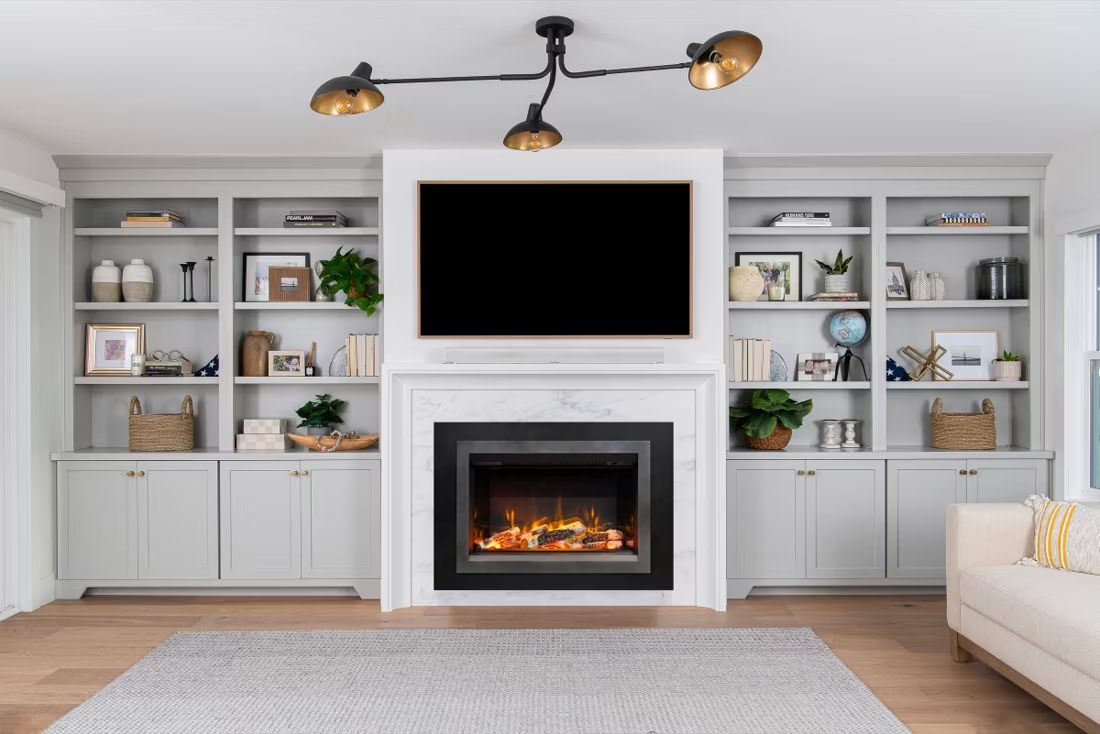
An electric fireplace is typically a built-in unit set into a wall or existing mantel surround—common in remodels where a family wants the look of a fireplace without any venting. An electric insert is sized to slide into an existing masonry or wood fireplace opening, giving an old, unused fireplace a heat source and a flame effect again. An electric stove is a freestanding cabinet-style unit that can sit anywhere with an outlet nearby—a popular option for a basement rec room or a converted porch in Sauk City homes that don't have an existing fireplace opening at all.
Do I need a permit to install an electric fireplace in Sauk City?
A simple plug-in electric fireplace or stove generally doesn't require a permit—it's treated like any other appliance. If you're having a unit hardwired on a dedicated circuit, or cutting into a wall for a built-in linear fireplace, that electrical work typically needs a permit through the Sauk County Building Department or the applicable village building inspector, depending on whether you're inside Sauk City or Prairie du Sac limits. Most licensed electricians handle that paperwork as part of the job.
Which electric utility rate applies to my home, and does it matter?
It depends on where you're located. Homes served by Wisconsin Power & Light (Alliant Energy) pay around 16.89¢ per kWh, while homes on the municipal utilities run by the Village of Sauk City or the Village of Prairie du Sac pay closer to 11.32¢ per kWh—a meaningful gap if you're running an electric fireplace several hours a day through a long Wisconsin heating season. Check a recent bill to confirm your provider before estimating operating costs on any unit you're considering.
What size or type of electric fireplace works best for a Sauk City home?
For a single room—a bedroom, den, or basement space—a 1,500-watt unit from a brand like Dimplex, Napoleon, or Touchstone will comfortably supplement the space's existing heat. Larger linear or wall-mount units can zone-heat an open living area, but they won't offset the whole-house heating bill during Sauk County's coldest stretches in January and February. Local dealers can walk through wattage, room size, and outlet or circuit requirements specific to your space.
Electric vs. wood—which makes more sense for a Sauk City home?
Wood—burning local oak, maple, birch, or aspen—remains the more cost-effective and storm-resilient choice for real heat output in this climate, and it keeps working when the power goes out, which happens during Wisconsin winter storms. Electric fireplaces can't provide backup heat during an outage since they require power to run, but they win on convenience: no ash, no chimney maintenance, no smoke, and installation in rooms where a flue simply isn't feasible. Many Sauk City homes end up with both—wood or a furnace for real heat, electric for ambiance and supplemental warmth in a room that doesn't get its own vent.
How much does it cost to run an electric fireplace per hour?
A typical 1,500-watt electric fireplace on high costs roughly 25 cents per hour on the Wisconsin Power & Light rate of 16.89¢/kWh, or about 17 cents per hour on the Village of Sauk City or Prairie du Sac municipal rate of 11.32¢/kWh. Most units let you run the flame effect without heat, which draws only a few watts—useful if you want the ambiance on a mild Sauk County evening without the added electric cost.
Electric vs. pellet stove—which is right for my home?
Pellet stoves, fed by bags from regional suppliers like Lignetics or Indeck Energy Services, put out significantly more heat per hour and can serve as a primary or near-primary heat source through a Sauk County winter—but they need electricity to run the auger and blower, so they go dark in a power outage unless backed up. Electric fireplaces need less maintenance, produce zero emissions or ash, and install in any room with an outlet, but they're realistically a supplemental heat source given the area's roughly 7,463 heating degree days. If you want meaningful whole-room heat with some fuel handling, pellet is the stronger option; if you want simplicity and flexibility with no venting, electric wins.
Do electric fireplaces actually produce heat?
Yes—most put out around 4,800–5,000 BTUs from a standard outlet, which comfortably warms a bedroom, office, or den as a comfort-zone heater. What they won't do is carry a whole house the way wood, gas, or pellet can. Think of electric as ambiance-first with honest supplemental heat: flames on with no heat in July, flames plus warmth in January.
Can I put a TV above my fireplace?
Yes—with an asterisk. Fireplaces are hot and TVs don't like heat. Either put a mantel between them to deflect rising warmth, or choose a fireplace with heat-management technology that creates a cool zone on the wall above—the wall stays around 125 degrees, barely warm, while the room still gets full heat. If you like clean lines and don't want a mantel, heat management is the answer.
Can a fireplace actually lower my heating bill?
Yes—by creating a comfort zone. A furnace heats every square foot of the house just to warm the one room you're in; a gas fireplace on low burns roughly a sixth of the gas a typical furnace does. Set the furnace around 55–60 degrees as a baseline, then heat the rooms your family actually uses. Families who heat this way commonly save $20–$60 a month.
Can I install a fireplace myself?
If you're putting a fire in your house on purpose, it's best to work with an expert. Unless you're genuinely experienced in framing, gas line, vent pipe, and the national code on clearances to combustibles, have a professional do it—and ideally the same company that sells you the fireplace, so warranty, service, and liability all live under one roof.
Nearby Dealers
Hearth shops serving Sauk City and the surrounding area. Every listing shows whether it is a WhyFire partner, a dealer we have verified as authorized for the brands we recommend, or a local business carrying hearth products. No manufacturer pays for placement. How we verify dealers →
Center Stove & Fireplace
Dischler Heating – Cooling & Fireplaces, Inc.
Shields Fireside Hearth & Home Of Baraboo
Fireside Hearth & Home - Madison
Electric Service in Sauk City
An electric fireplace's heater draws about 1,500 watts—pennies per hour at local rates.
Wisconsin Power & Light Co
Village Of Prairie Du Sac - (Wi)
Village Of Sauk City - (Wi)
Find your electric fireplace in Sauk City.
Tell us about your home and we'll match you with the right electric fireplace, insert, or stove—plus a free Project Guide & Parts List with the exact components and your recommended local dealer in Sauk City.
Find Your Fireplace →