
A simple plug-in option for Rio's long, cold season.
Rio sits in Columbia County at 927 feet with winter lows averaging 10°F and a heating season as long and harsh as Duluth's—colder than the rest of southern Wisconsin. An electric fireplace won't replace your furnace, but it's a fast, no-venting way to add real supplemental warmth to one room.
Every Project Starts From One of These Five Situations
Where electric heat fits in a climate as cold as Duluth, Minnesota.
Rio's winter climate matches Duluth, Minnesota in severity, even though the village sits at a modest 927 feet of elevation. With winter lows averaging 10°F and stretches well below that most years, most homes here lean on a furnace plus a backup source, and the backup is usually wood. Oak, maple, and birch split easily from local woodlots, with aspen filling in as a quick-burning option, and with no air quality restrictions on the books, there's no curtailment season to plan around the way there is in parts of the country with inversion problems.
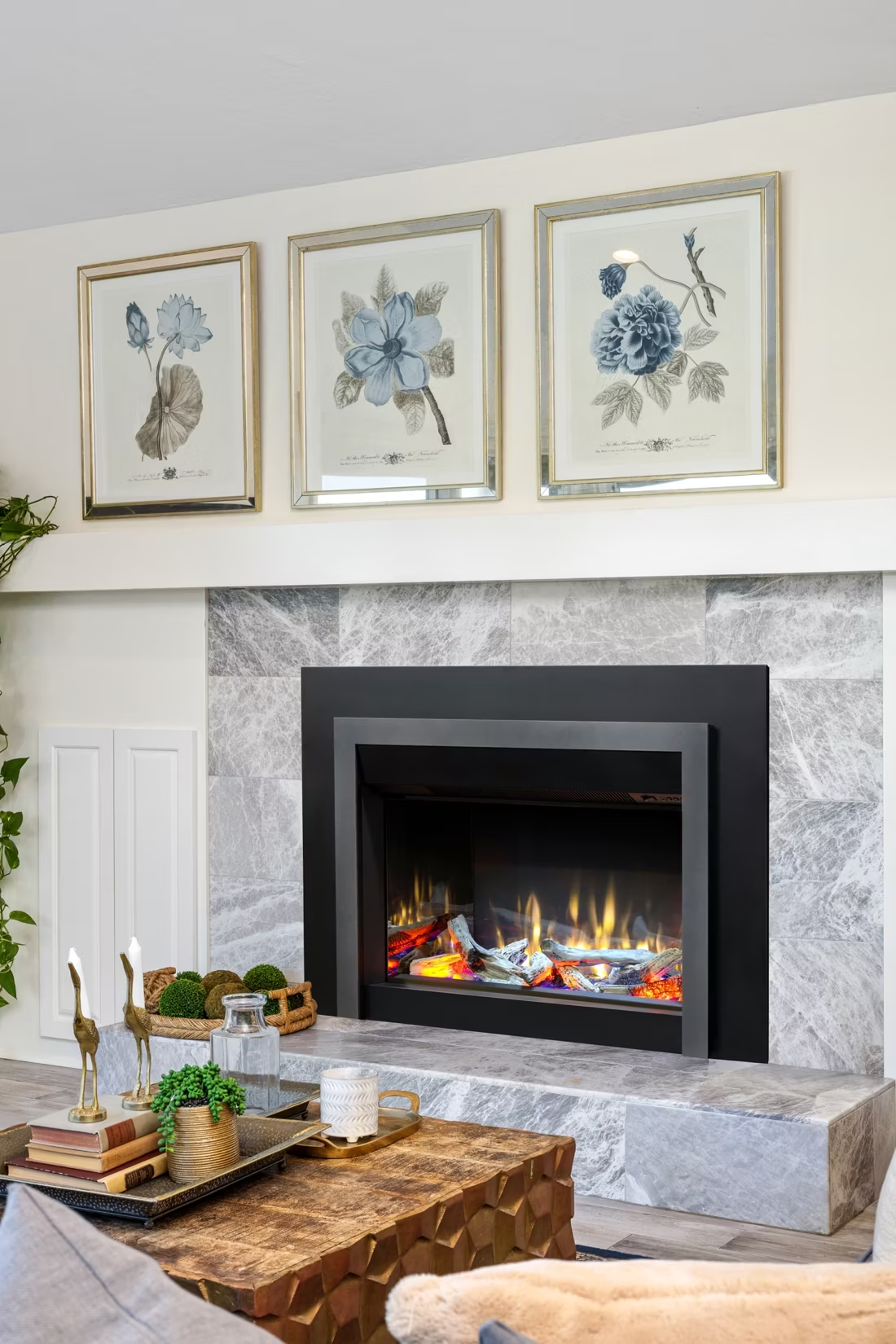
Electric fireplaces earn their place in that mix as a supplemental heater for a specific room—a finished basement, a sunroom addition, a bedroom without its own duct run—rather than as a whole-house solution. Most Rio addresses are served by Wisconsin Power & Light Co (Alliant Energy), though the Village of Pardeeville runs its own municipal electric utility just down the road, so it's worth checking your bill to confirm which provider serves your meter. At a residential rate around 16.89 cents per kWh, a typical 1,500-watt unit costs roughly $2 to run for eight hours—more per BTU than wood or propane, but with zero venting, no chimney, and an install that can be done in an afternoon.
Three steps. No salesperson until you're ready.
Tell us about your project
Your zip code, your situation, and the fuel you're leaning toward—or let the answers point you to one.
See what's actually available
The brands dealers within 100 miles genuinely carry—real options, never a catalog mirage.
Get your dealer & Project Guide
A trusted local dealer, plus the free Project Guide & Parts List that names every component of the job.
Frequently Asked Questions
How much does an electric fireplace installation cost in Rio?
Most electric fireplace projects in Rio run $500 to $2,500. A plug-in insert that drops into an existing wood-fireplace opening, or a wall-mounted linear unit hung above a mantel, sits toward the low end since it just needs a standard 120-volt outlet. A fully built-in unit with custom framing, tile or stone surround work, and sometimes a dedicated 240-volt circuit for a larger model pushes toward the top. Either way, there's no gas line, no masonry chimney, and no Class A venting to budget for—the biggest cost driver is finish work, not mechanicals.
Will an electric fireplace actually heat my house through a Rio winter?
Not the whole house—and that's the honest answer given how cold it gets here, with winter lows averaging 10°F and a heating season as long and harsh as Duluth, Minnesota's. A standard electric fireplace puts out around 4,600-5,000 BTUs, enough to noticeably warm a single room but not enough to replace a furnace in a climate this cold. Most Rio homeowners who install one use it to take the edge off a specific space—a finished basement, a converted porch, a bedroom addition—while sticking with a furnace, propane, or a wood stove burning local oak or maple for the bulk of the season.
Which electric utility serves Rio, and does it change my running cost?
Most of Rio is served by Wisconsin Power & Light Co, part of Alliant Energy, but the Village of Pardeeville operates its own municipal electric utility nearby, and rates and billing can differ slightly between the two. At the roughly 16.89 cents per kWh residential rate common in the area, a 1,500-watt fireplace running 6 to 8 hours a day costs somewhere around $1.50 to $2 daily. It's worth pulling up a recent bill before you buy—if you're on Pardeeville's municipal system rather than Alliant, your actual per-kWh rate may run a bit differently.
Do I need a permit to install an electric fireplace in Rio?
A plug-in insert or a unit that uses an existing outlet typically doesn't trigger a permit. If your install calls for a new dedicated 240-volt circuit or any panel work, that's electrical work that needs to be pulled and inspected—through the Village of Rio's building inspector for properties inside village limits, or Columbia County for addresses outside it. Most local electricians handling these installs are familiar with which jurisdiction applies to your address and will pull the permit as part of the job.
Electric fireplace vs. insert vs. wall-mount—what fits my house?
A built-in electric fireplace is framed into a wall like a traditional firebox, common in new construction or a remodel. An electric insert is sized to slide into an existing wood-fireplace opening—a common fit in Rio's older farmhouses that were originally built around a masonry firebox for burning oak or maple. A wall-mount is the simplest option: it hangs like a flat-screen TV and plugs into a standard outlet, which makes it popular for additions, rentals, and manufactured homes where there's no existing chimney to work with.
Electric vs. wood—which makes more sense for heating in Rio?
Wood still does most of the real heating lifting in this part of Columbia County—oak, maple, birch, and aspen are all locally available, and with no air quality restrictions on the books, there's no curtailment season limiting when you can burn. A wood stove or insert also keeps working if an ice storm knocks out power, which electric heat obviously can't do. Electric fireplaces fill a different need: instant ambiance and supplemental warmth in a specific room, with no stacking, no sweeping, and no chimney required—a good fit for a basement, a rental, or a room where running a flue isn't practical.
Can I install an electric fireplace in a rental or manufactured home in Rio?
Yes, and it's often the easiest fireplace option for exactly those situations. A plug-in insert or wall-mount unit needs no chimney, no gas line, and usually no permanent alteration to the structure, which matters for renters who can't modify a unit and for manufactured homes around Rio where adding a masonry chimney or gas line isn't realistic. Most models run on a standard 120-volt outlet, so it's genuinely a weekend project rather than a construction job.
How much does it cost to run an electric fireplace given Rio's electric rates?
At the local residential rate of about 16.89 cents per kWh through Wisconsin Power & Light Co, a typical 1,500-watt electric fireplace costs roughly 25 cents an hour to run. Used a few hours a night through a long Rio heating season, that adds up to noticeably more per BTU than burning oak or maple, or running a propane furnace—which is exactly why most households treat it as a supplemental heater for one room rather than a primary heat source for the house.
Electric vs. pellet—which is better for supplemental heat in Rio?
Pellet stoves, stocked locally through brands like Lignetics and Somerset Pellet Fuel, put out real heat—enough to serve as a primary source in a well-insulated Rio home—but they still need electricity to run the auger and blower, so a power outage shuts them down just like an electric fireplace would. Electric fireplaces skip the pellet storage and hopper-filling altogether and install in an afternoon with no venting, but they're strictly a room heater, not a furnace replacement. If you want backup heat that survives an outage, neither one does that job as well as a wood stove burning local oak or maple.
Do electric fireplaces actually produce heat?
Yes—most put out around 4,800–5,000 BTUs from a standard outlet, which comfortably warms a bedroom, office, or den as a comfort-zone heater. What they won't do is carry a whole house the way wood, gas, or pellet can. Think of electric as ambiance-first with honest supplemental heat: flames on with no heat in July, flames plus warmth in January.
How much does an electric fireplace cost to run?
With the heater on, a typical unit draws about 1,500 watts—at average electric rates that's roughly 20 cents an hour. Run the flame effect alone and it costs pennies; the flames are LED-driven and use about as much power as a light bulb. There's no pilot light, no fuel delivery, and essentially no maintenance.
What is an in-home preview and do I need one?
It's a visit where a hearth professional measures your space, confirms the model you picked actually works in your home, and walks the specs—framing, gas line, venting, finish work—before anything is ordered. Some details you just can't know until you see the house. Never make a down payment without one; it's the single most-skipped step that burns buyers.
Can I install a fireplace myself?
If you're putting a fire in your house on purpose, it's best to work with an expert. Unless you're genuinely experienced in framing, gas line, vent pipe, and the national code on clearances to combustibles, have a professional do it—and ideally the same company that sells you the fireplace, so warranty, service, and liability all live under one roof.
Nearby Dealers
Hearth shops serving Rio and the surrounding area. Every listing shows whether it is a WhyFire partner, a dealer we have verified as authorized for the brands we recommend, or a local business carrying hearth products. No manufacturer pays for placement. How we verify dealers →
We’ve paused dealer listings for this connection today. Enter your zip or postal code above to find dealers near you, or come back tomorrow.
Popular Electric Brands
Where each brand came from, what's inside it today, and every current model. No brand pays to be here. Not every dealer carries every brand, so enter your zip code to see what's sold near Rio.
Fireplace Xtrordinair
Fireplace Xtrordinair, now often called FireplaceX, is the fireplace brand of Travis Industries, Inc., of Mukilteo, Washington.
5 electric models →DaVinci
DaVinci Custom Fireplaces is a brand of Travis Industries, Inc., of Mukilteo, Washington, the company behind Lopi and Fireplace Xtrordinair.
5 electric models →Kozy Heat
Kozy Heat was founded in 1976 by Dudley Hussong in Lakefield, Minnesota, and incorporated as Hussong Manufacturing Co., Inc. in 1978.
3 electric models →Forge & Flame
Forge & Flame is the stove brand Hearth & Home Technologies introduced in August 2023 to bring Vermont Castings, Harman, and Quadra-Fire under one name.
1 electric model →Electric Service in Rio
An electric fireplace's heater draws about 1,500 watts—pennies per hour at local rates.
Wisconsin Power & Light Co
Village Of Pardeeville - (Wi)
Get your free Project Guide & Parts List for a Rio electric fireplace.
Tell us about your room, your outlet situation, and whether you're on Alliant Energy or the Village of Pardeeville's system, and we'll help you find a trusted local dealer and send a free Project Guide & Parts List with the exact unit and parts your space needs.
Find Your Fireplace →