
Clean, instant heat for Richland County's coldest nights.
No chimney, no gas line, no permit hassle—just plug-in or hardwired warmth for the hilly, unglaciated Driftless Region around Richland Center. Find the right unit and connect with a trusted local dealer.
Every Project Starts From One of These Five Situations
Supplemental warmth without the wood pile or the gas line.
Richland County sits in the Driftless Region of southwest Wisconsin—steep, unglaciated ridges and coulees carved by the Pine and Wisconsin Rivers, with Richland Center as the county seat. Climate zone 6A means genuinely cold winters, with lows that regularly drop into the single digits and stay there for days at a time. The county's oak, maple, birch, and aspen woodlots have fueled generations of wood stoves in farmhouses and cabins across the ridges, but not every room, addition, or rental unit is set up for a chimney or gas line—and that's exactly where electric fireplaces fit in.
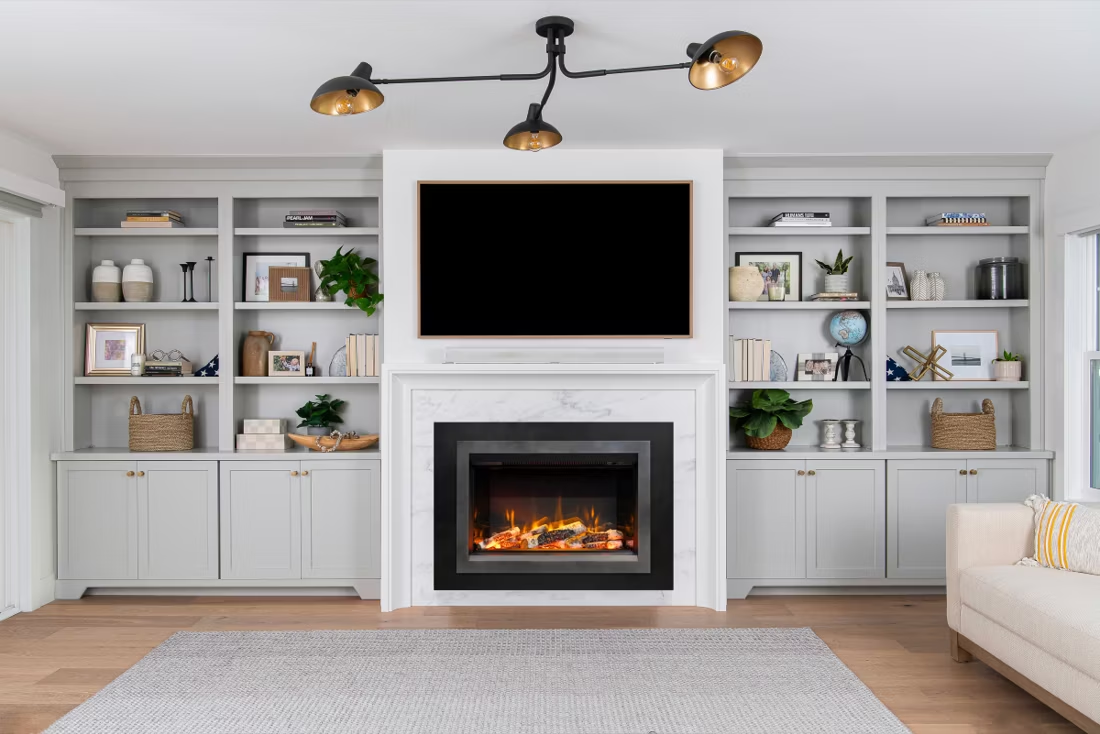
Homeowners across Richland County use electric fireplaces as supplemental heat in bedrooms, sunrooms, finished basements, and additions where running new venting isn't practical, as well as in mobile homes, apartments, and senior housing where an open flame isn't an option. Electric service throughout the county runs through Richland Electric Cooperative, based right in Richland Center, and most units plug into a standard household circuit—no combustion, no emissions, and none of the burn-ban concerns that can come with wood heat, though the county currently reports no air quality restrictions of that kind anyway.
Three steps. No salesperson until you're ready.
Tell us about your project
Your zip code, your situation, and the fuel you're leaning toward—or let the answers point you to one.
See what's actually available
The brands dealers within 100 miles genuinely carry—real options, never a catalog mirage.
Get your dealer & Project Guide
A trusted local dealer, plus the free Project Guide & Parts List that names every component of the job.
Frequently Asked Questions
How much does an electric fireplace installation cost in Richland County?
Plug-in electric inserts and freestanding stoves are the least expensive option, typically running $150 to $600 for the unit with no installation cost beyond plugging it into an existing outlet. Built-in wall units and mantel packages cost more—usually $1,500 to $4,000 installed—because they often call for a licensed electrician to run a dedicated 120V or 240V circuit, plus framing or trim work if you're recessing the unit into a wall. Farmhouses and older homes on the ridges around Richland Center sometimes need panel upgrades if the existing electrical service is older knob-and-tube or an undersized panel, which adds to the cost.
Do I need an electrician to install an electric fireplace?
For a plug-in insert or freestanding unit, no—it plugs into any standard 120V outlet just like a space heater. For a built-in or wall-mounted unit, most manufacturers recommend a dedicated circuit, which means a licensed electrician should run the wiring and tie into your panel. Richland Electric Cooperative serves most of the county outside the Richland Center city limits, and their standard residential service can typically accommodate an additional circuit without an upgrade—but older farmhouses on older panels sometimes need a service upgrade first. A local dealer can tell you which category your chosen unit falls into before you buy.
Do I need a permit for an electric fireplace in Richland County?
Most plug-in electric fireplaces need no permit at all since there's no venting, gas line, or structural change involved. Built-in units that require new electrical wiring typically need an electrical permit, and larger installations tied into new construction or a remodel may fall under Richland County's building permit process. There's no chimney inspection, no clearance-to-combustibles requirement like a wood stove, and no EPA certification to worry about—which is part of why electric is often the fastest option to get installed.
What size electric fireplace do I need for my room?
Electric fireplaces are rated by BTU output rather than square footage in the same way wood stoves are, and most models in the 4,000 to 5,000 BTU range will comfortably supplement heat in a 400 to 1,000 square foot space—plenty for a bedroom, sunroom, or finished basement room in a typical Richland County home. Because electric units are heaters first and ambiance second, oversizing doesn't cause the creosote or smoldering issues you'd see with an undersized wood stove—it just means you're paying to heat air you don't need. A local dealer can match wattage to your room size and insulation level.
Will an electric fireplace work during a power outage?
No—and this is worth being direct about. Every electric fireplace, whether it's a $200 plug-in insert or a $4,000 built-in unit, requires household electricity to run the heater and, in most models, the flame-effect display. In rural stretches of Richland County where winter storms can knock out power for hours or longer, an electric fireplace won't help you through the outage the way a wood stove will. Homes here that want both the convenience of electric heat day-to-day and a real backup for outages often pair an electric unit in a secondary room with a wood stove or insert as the primary heat source elsewhere in the house.
What's the difference between an electric fireplace insert, built-in, and mantel package?
An insert is a self-contained unit designed to slide into an existing fireplace opening—a popular choice for homeowners in Richland Center's older housing stock who want to retire a drafty, rarely-used masonry fireplace without tearing it out. A built-in is recessed into a wall during framing or a remodel, giving a flush, custom look but usually requiring an electrician for the dedicated circuit. A mantel package pairs a freestanding or wall-mounted electric unit with a surrounding mantel and surround, giving a traditional look with the simplest installation of the three. Which one fits depends on whether you're working with an existing fireplace opening, an open wall, or want something that can move with you.
Electric vs. wood—which is right for my home?
Wood offers real radiant heat, works with self-cut oak, maple, birch, or aspen from the county's woodlots, and keeps running when the power goes out—a real consideration on the exposed ridges around Richland Center where storms can knock out lines. Electric offers instant on-off convenience, zero ash or smoke, no chimney maintenance, and the ability to add heat to a room where venting isn't practical, like a finished basement or an addition. Many homes in the county end up with both: wood as the primary heat source in the main living area, electric in a bedroom, den, or secondary space where running a flue just doesn't make sense.
Electric vs. pellet stove—which should I choose?
Pellet stoves burn compressed wood pellets from regional suppliers like Indeck Energy Services, Lignetics, or Somerset Pellet Fuel, and produce real heat output—often 40,000 to 50,000 BTUs—while still needing electricity to run the auger and blower, plus periodic hopper loading and ash cleanout. Electric fireplaces produce less heat per unit (typically under 5,000 BTU) but need zero fuel handling, no venting, and no maintenance beyond an occasional dusting. For primary heat in a drafty farmhouse, pellet usually wins on raw output. For supplemental warmth and ambiance in a room that doesn't need much extra heat, electric is simpler and cheaper to run.
How much does it cost to run an electric fireplace day to day?
Most electric fireplaces draw around 1,500 watts on the heater setting, which works out to roughly 15 to 20 cents an hour under typical Richland Electric Cooperative residential rates—so running one for a few hours each evening during the coldest months adds maybe $10 to $20 a month to your bill. Running the flame effect alone, without the heater, draws only a few watts and costs pennies over a season. That makes electric fireplaces inexpensive to operate as supplemental heat, though they're not meant to replace a home's primary heating system in a zone 6A climate like Richland County's.
Do electric fireplaces actually produce heat?
Yes—most put out around 4,800–5,000 BTUs from a standard outlet, which comfortably warms a bedroom, office, or den as a comfort-zone heater. What they won't do is carry a whole house the way wood, gas, or pellet can. Think of electric as ambiance-first with honest supplemental heat: flames on with no heat in July, flames plus warmth in January.
Does an electric fireplace need a vent or chimney?
No—that's its superpower. An electric fireplace needs a wall and an outlet, period. No vent pipe, no gas line, no clearances to design around, which is why it works in bedrooms, offices, apartments, and walls where venting a gas or wood unit would be impractical or impossible. Installation is typically the simplest and least expensive of any fireplace type.
What is an in-home preview and do I need one?
It's a visit where a hearth professional measures your space, confirms the model you picked actually works in your home, and walks the specs—framing, gas line, venting, finish work—before anything is ordered. Some details you just can't know until you see the house. Never make a down payment without one; it's the single most-skipped step that burns buyers.
How much should I budget for a fireplace?
For an average home—covering the fireplace, the vent pipe, and basic installation—a budget between $3,900 and $5,500 gives you a lot of options across wood, gas, and pellet. By the time you add finish work, gas line, and electrical, the average complete installation lands between $5,000 and $12,000 all-in. In a remodel or new build, a good rule is to put about 2.5% of the total project cost toward the fireplace.
Stove and Fireplace Dealers in Richland County
Listings include WhyFire partner dealers, dealers we have verified as authorized for the brands we recommend, and established local businesses that carry hearth products. Every listing shows which one it is. The ones marked Preferred run on WhyFire's software, so they can show you real pricing and book your appointment right here. No manufacturer pays for placement. How we verify dealers →
Center Stove & Fireplace
Shields Fireside Hearth & Home Of Baraboo
Dischler Heating – Cooling & Fireplaces, Inc.
Find your electric fireplace in Richland County.
Tell us a bit about your home and we'll put together a free Project Guide & Parts List—the right unit, the wiring needs, and a trusted local dealer to install it.
Find Your Fireplace →