
Electric fireplace heat that fits Portage County's cold, snowy season.
Zone heat and real ambiance for Stevens Point, Plover, and every Portage County community—no chimney, no gas line, no venting required. Find the right electric fireplace or insert and connect with a trusted local dealer.
Every Project Starts From One of These Five Situations
Convenient warmth for a genuinely cold Wisconsin winter.
Portage County sits in the middle of Wisconsin's cranberry country, with Stevens Point as the county seat and home to UW-Stevens Point, plus Plover, Amherst, Rosholt, and Almond spread across the flat, sandy central plain. Winters here are long and legitimately cold—an average low near 7°F and roughly 8,037 heating degree days per year, a heating load in the same range as Duluth, Minnesota. Snow cover is reliable from December through March, and older farmhouses and newer subdivisions alike lean on wood (oak, maple, birch, and aspen are the common local species) or propane as primary heat, with electric fireplaces increasingly showing up as the easiest way to add warmth and ambiance to a specific room.
With 8,037 heating degree days, running electric resistance heat as your whole-home source gets expensive fast—Wisconsin Public Service territory rates make that math clear. That's why almost every electric fireplace install in Portage County is a zone-heat or ambiance play rather than a furnace replacement: a 1,500-watt insert in a living room, a rental unit near campus that can't have a wood-burning appliance, a finished basement, or a manufactured home where a chimney isn't an option. It's honest, low-commitment heat—plug it in or wire a dedicated circuit, and it earns its keep taking the edge off shoulder-season cold without firing up the whole heating system.
Three steps. No salesperson until you're ready.
Tell us about your project
Your zip code, your situation, and the fuel you're leaning toward—or let the answers point you to one.
See what's actually available
The brands dealers within 100 miles genuinely carry—real options, never a catalog mirage.
Get your dealer & Project Guide
A trusted local dealer, plus the free Project Guide & Parts List that names every component of the job.
Frequently Asked Questions
How much does an electric fireplace installation cost in Portage County?
Plug-in electric fireplaces and inserts—the kind that use a standard 120-volt outlet—typically run $150 to $800 installed, with most of that being the unit itself and a few hours of carpentry if it's going into an existing mantel or wall opening. Built-in electric fireplaces that require a dedicated 20-amp circuit run higher, generally $1,200 to $3,500, once you add an electrician to run new wiring and a finish carpenter to frame and trim the surround. Unlike a wood or gas install, there's no chimney, liner, or venting cost to factor in—the price difference mostly comes down to whether the unit needs new electrical work.
What size electric fireplace do I need for my Portage County home?
Most electric fireplaces top out around 1,500 watts (roughly 5,100 BTU) regardless of size, which is enough to noticeably warm a single room of 300 to 400 square feet but won't heat a whole house—especially with Portage County's 8,037 heating degree days pulling heat out of a home most of the year. Think of sizing in terms of the room, not the square footage of the house: a living room or bedroom is a good fit, an open-concept great room may need supplemental heat elsewhere, and a drafty older farmhouse outside Rosholt or Amherst will lose the benefit faster than a tightly built newer home in a Plover subdivision. A local dealer can walk through your specific room and insulation level before you buy.
Do I need a permit for an electric fireplace in Portage County?
A plug-in unit that just plugs into an existing wall outlet doesn't require a permit. If your project involves a built-in fireplace that needs a new dedicated circuit, that electrical work requires a permit—through the City of Stevens Point Building Inspection Division inside city limits, or the Portage County Zoning and Building Department for Plover, Amherst, and the rest of unincorporated Portage County. Most electricians and hearth dealers handle the permit application as part of the job, so you generally don't have to file it yourself.
Will my electric fireplace still work if the power goes out?
No—this is the honest trade-off with electric heat. Because the fireplace runs on electricity for both the flame effect and the heater fan, a power outage shuts it down along with everything else on the circuit. In a climate with 8,037 heating degree days and winter lows around 7°F, that matters more than in a milder region—a multi-day outage during a January cold snap is a real scenario in central Wisconsin. Homes that rely on electric fireplaces for meaningful supplemental heat should have a backup plan, whether that's a wood stove, a propane heater, or a generator, especially in rural parts of the county where outages tend to run longer.
What's the difference between an electric fireplace, insert, and stove?
An electric fireplace is typically a built-in unit set into a wall or mantel surround, often the centerpiece of a room's finish work. An electric insert is sized to slide into an existing masonry or wood-burning firebox, letting you keep the look of your existing fireplace while swapping out the fuel and stopping heat loss up an unused chimney. An electric stove is a freestanding cabinet-style unit that sits on the floor, similar in footprint to a wood or pellet stove, and works well in a spot without an existing fireplace opening. All three plug in or wire the same way—the choice comes down to what opening or space you're working with.
What's the best electric fireplace for a Portage County home?
Look for a model with a true 1,500-watt heater (not just an ambiance-only unit) and a built-in thermostat so it cycles on and off rather than running full-blast constantly—that matters when you're using it for real supplemental heat through a long central Wisconsin winter. Brands like Dimplex and Napoleon offer inserts with realistic flame effects and enough heating capacity for a 300-400 square foot room. If the goal is mostly ambiance in a three-season room or a space you don't need to heat hard, a lower-wattage or flame-only model is a fine and less expensive choice. A local dealer can match wattage to your specific room.
How much maintenance does an electric fireplace need?
Very little compared to wood or gas. There's no annual chimney sweep, no gas line inspection, and no creosote to manage. Basic upkeep is dusting the unit, occasionally vacuuming the fan intake to keep airflow clear, and replacing LED lights or a flame-effect bulb every several years as needed. That low-maintenance profile is part of why electric units are popular in rental properties near UW-Stevens Point and in condos and townhomes around Plover, where landlords and homeowners' associations want a fireplace amenity without the upkeep of a wood-burning appliance.
How much does it cost to run an electric fireplace in Portage County?
At typical Wisconsin Public Service residential rates, a 1,500-watt electric fireplace running on high for five hours a day costs roughly $10 to $15 a month, depending on current rates and how often the thermostat cycles the heater off. That's cheaper than running a whole-home furnace to heat a single room, which is exactly the use case it's built for. It's not a replacement for your primary heat source given Portage County's 8,037 heating degree days, but as a way to keep one room comfortable without touching the thermostat for the rest of the house, the operating cost is modest.
Electric vs. wood or pellet—which is right for my home?
Wood stoves burning local oak, maple, birch, or aspen and pellet stoves running on brands like Lignetics, Indeck Energy Services, or Somerset Pellet Fuel both put out far more heat than an electric unit and, in the case of wood, keep working during a power outage—a real advantage in a climate this cold. Electric fireplaces can't touch that heat output or outage resilience, but they win on convenience: no wood to stack, no pellets to haul, no chimney or venting to install or maintain, and they're the only option for many campus-area rentals and condos where an open flame or wood-burning appliance isn't allowed. For a primary heat source in a rural Portage County home, wood or pellet usually makes more sense. For ambiance and supplemental warmth in a specific room—especially in town—electric is often the simpler, cleaner fit.
Do electric fireplaces actually produce heat?
Yes—most put out around 4,800–5,000 BTUs from a standard outlet, which comfortably warms a bedroom, office, or den as a comfort-zone heater. What they won't do is carry a whole house the way wood, gas, or pellet can. Think of electric as ambiance-first with honest supplemental heat: flames on with no heat in July, flames plus warmth in January.
Can I put a TV above my fireplace?
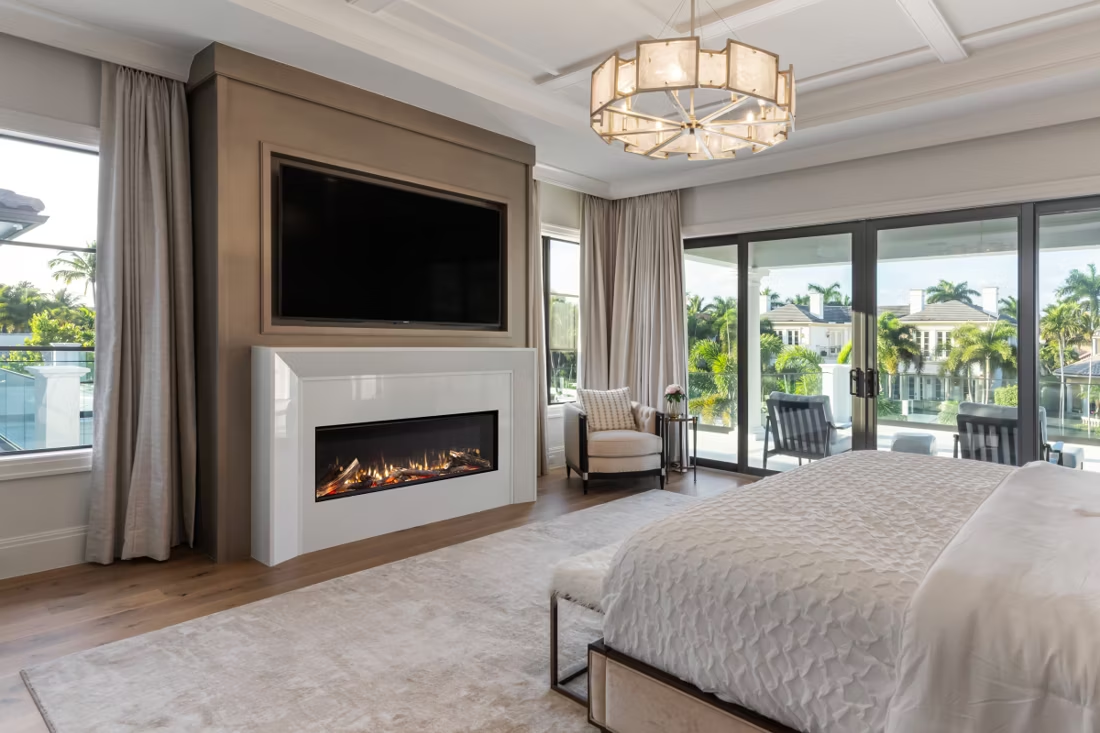
Yes—with an asterisk. Fireplaces are hot and TVs don't like heat. Either put a mantel between them to deflect rising warmth, or choose a fireplace with heat-management technology that creates a cool zone on the wall above—the wall stays around 125 degrees, barely warm, while the room still gets full heat. If you like clean lines and don't want a mantel, heat management is the answer.
Does a fireplace add value to my home?
On average, a fireplace adds back to the home about the same amount you spent installing it. Add the monthly savings from heating the rooms you actually use instead of the whole house—often hundreds of dollars a year—and the value case is strong before you even count what a fire does for how your family uses the room.
Can I install a fireplace myself?
If you're putting a fire in your house on purpose, it's best to work with an expert. Unless you're genuinely experienced in framing, gas line, vent pipe, and the national code on clearances to combustibles, have a professional do it—and ideally the same company that sells you the fireplace, so warranty, service, and liability all live under one roof.
Stove and Fireplace Dealers in Portage County
Listings include WhyFire partner dealers, dealers we have verified as authorized for the brands we recommend, and established local businesses that carry hearth products. Every listing shows which one it is. The ones marked Preferred run on WhyFire's software, so they can show you real pricing and book your appointment right here. No manufacturer pays for placement. How we verify dealers →
Snow Belt Fireplace & Stove Shop
Rapids Sheet Metal
Find your electric fireplace in Portage County.
Tell us about your room and how you plan to use it, and we'll match you with a trusted local dealer and send over a free Project Guide & Parts List for your electric fireplace or insert in Portage County.
Find Your Fireplace →