
Electric warmth that installs in an afternoon, not a season.
Zone heat and real ambiance for Polk County homes and lake cabins, from Balsam Lake to Osceola to St. Croix Falls—no chimney, no gas line, no venting. Find the right unit and connect with a trusted local dealer.
Every Project Starts From One of These Five Situations
Real warmth without a flue, in a county built on wood heat.
Polk County sits along the St. Croix River in far northwestern Wisconsin, home to about 15,437 people spread across Balsam Lake, Amery, St. Croix Falls, Osceola, Milltown, Luck, Centuria, and Dresser. This is climate zone 6A country—8,288 heating degree days a year and winter lows that average 4°F, closer to Duluth, Minnesota's brutal winters than to the Twin Cities just down the highway. Wood heat runs deep here, with local oak, maple, birch, and aspen supplying woodstoves across the county. Electric fireplaces don't replace that tradition, but they've become a common addition for the rooms wood heat can't easily reach—a finished basement, a lake cabin bedroom at Wapogasset or McKenzie Lake, a rental unit, or an addition where running a chimney flue isn't practical or affordable.
Electricity in Polk County comes from Xcel Energy in and around the larger towns and Polk-Burnett Electric Cooperative across most of the rural county—the co-op that many lake-property and farm owners already rely on. A plug-in electric fireplace runs on a standard 120-volt outlet, while larger built-in units may call for a dedicated 20-amp circuit an electrician can add in an afternoon. What electric heat won't do, honestly, is replace a furnace or wood stove as primary heat in an 8,288-HDD climate—resistance heat is efficient at the plug but expensive to run whole-home in a county this cold. What it does well is deliver instant, clean, thermostatically controlled zone heat and real fire ambiance in a single room, with none of the venting or masonry work wood and gas require.
Three steps. No salesperson until you're ready.
Tell us about your project
Your zip code, your situation, and the fuel you're leaning toward—or let the answers point you to one.
See what's actually available
The brands dealers within 100 miles genuinely carry—real options, never a catalog mirage.
Get your dealer & Project Guide
A trusted local dealer, plus the free Project Guide & Parts List that names every component of the job.
Frequently Asked Questions
How much does an electric fireplace installation cost in Polk County?
A plug-in electric insert or wall-mounted unit typically runs $300 to $1,200 installed in Polk County, since there's no chimney, flue, or gas line involved—often it's just mounting the unit and plugging it in. Built-in models that need a dedicated 20-amp circuit run higher, generally $800 to $2,500, once an electrician runs new wiring from the panel, which is common in older farmhouses and lake cabins around Balsam Lake and Osceola that weren't wired for a second heat source. Either way, electric installs come in well below the venting and chimney costs of a wood or gas project.
What size electric fireplace do I need for my room?
Most electric fireplaces put out 4,000 to 5,000 BTUs—enough to comfortably heat a single room of 400 to 600 square feet, which covers most bedrooms, dens, and finished basement spaces common in Polk County homes. Given the county's 8,288 heating degree days, don't expect an electric unit to carry a whole floor on its own; it's built for zone heat and ambiance layered on top of your furnace, wood stove, or propane system, not to replace it. For larger open rooms, some homeowners install two smaller units rather than one oversized unit, since electric fireplaces don't gain efficiency from being bigger the way a wood stove does.
What's the difference between an electric insert, stove, and wall-mounted unit?
An electric insert is built to slide into an existing masonry fireplace opening, using the existing surround and mantel while replacing the firebox with an electric heater and flame effect—a popular option for older Polk County homes with an unused wood fireplace. An electric stove is a freestanding cabinet-style unit that mimics a classic wood stove and can go almost anywhere with an outlet nearby. A wall-mounted or built-in unit is a slim, framed-in unit for new construction, additions, or lake cabin remodels where you're not working around an existing opening. All three plug into standard household power; none require venting of any kind.
Do I need a permit to install an electric fireplace in Polk County?
In most cases, no separate fireplace permit is needed—there's no chimney or gas line to inspect. If your installation requires a new dedicated electrical circuit, that wiring work typically falls under standard electrical permitting through Polk County's building inspection process, and most licensed electricians pull that permit as part of the job. Compare that to wood or gas installations, which require chimney or venting inspections on top of any electrical work—electric is by far the simplest path through code compliance.
Will my electric fireplace work during a power outage?
No—electric fireplaces require power to run the heater, fan, and flame effect, so they go dark the moment the power does. That matters in Polk County, where winter storms occasionally knock out service for Polk-Burnett Electric Cooperative members in rural parts of the county for hours or longer. If backup heat during outages is a real concern for your household, pair an electric fireplace for daily ambiance and zone heat with a wood stove, propane heater, or generator for outage coverage—many local homes run exactly that combination.
Is it expensive to run an electric fireplace in Polk County?
At typical Xcel Energy or Polk-Burnett Electric Cooperative residential rates, running a 1,500-watt electric fireplace on high for several hours a day costs somewhere in the range of a dollar or two, making it inexpensive for the zone heat and ambiance it provides in one room. It's a different story if you tried to heat an entire home with electric resistance units through a Polk County winter—with 8,288 heating degree days, that approach gets expensive fast compared to wood, propane, or a heat pump. Most local homeowners use electric fireplaces to supplement an existing heat source rather than replace one.
Are electric fireplaces a good fit for lake cabins in Polk County?
Yes, and it's one of the more common uses locally. Seasonal cabins around Balsam Lake, Wapogasset Lake, and McKenzie Lake often don't have the chimney infrastructure or year-round demand to justify a wood or gas installation, but owners still want reliable warmth and ambiance for shoulder-season weekends. A plug-in or wall-mounted electric unit handles that well, with no venting to weatherproof and no chimney to maintain between visits—you can shut off the water and walk away from an electric fireplace all winter with zero concern.
Electric vs. wood—which is right for my Polk County home?
Wood offers real heat output, works during power outages, and taps into the local oak, maple, birch, and aspen that's cut and split across the county every fall—it's the traditional answer for primary heat here. Electric offers instant on-off convenience, zero ash or chimney maintenance, and installs in rooms where venting isn't practical, but it depends entirely on grid power and isn't meant to be a primary heat source in a climate this cold. Pellet stoves, using regional brands like Lignetics or Somerset Pellet Fuel, sit in between—real heat output with easier loading than cordwood, though they still need electricity to run the auger. Many Polk County homes end up with a mix: wood or pellet for serious winter heat, electric fireplace for the room where a chimney doesn't make sense.
How much maintenance does an electric fireplace need?
Very little, which is a big part of the appeal. There's no chimney to sweep, no ash to haul, and no annual gas line inspection. Basic upkeep is dusting the unit, occasionally cleaning the glass front, and checking that the flame-effect LEDs are working—most LED light engines are rated for well over 20,000 hours of use. If the fan or heater element ever stops working, it's usually a straightforward component swap rather than a full teardown, which is another reason electric units are popular for rental properties and cabins around the county that don't get checked on daily.
Can I put a TV above my fireplace?
Yes—with an asterisk. Fireplaces are hot and TVs don't like heat. Either put a mantel between them to deflect rising warmth, or choose a fireplace with heat-management technology that creates a cool zone on the wall above—the wall stays around 125 degrees, barely warm, while the room still gets full heat. If you like clean lines and don't want a mantel, heat management is the answer.
Does an electric fireplace need a vent or chimney?
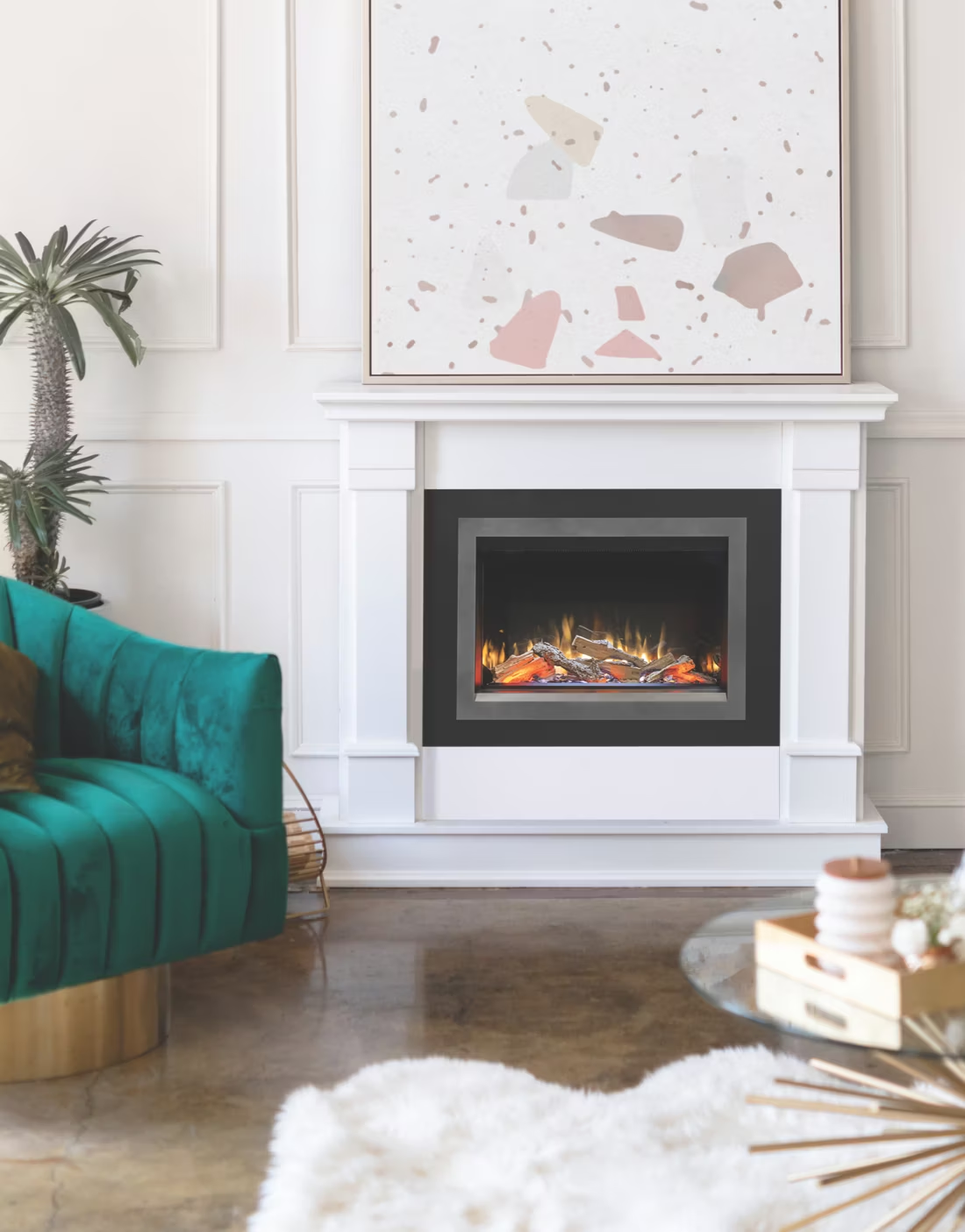
No—that's its superpower. An electric fireplace needs a wall and an outlet, period. No vent pipe, no gas line, no clearances to design around, which is why it works in bedrooms, offices, apartments, and walls where venting a gas or wood unit would be impractical or impossible. Installation is typically the simplest and least expensive of any fireplace type.
What is an in-home preview and do I need one?
It's a visit where a hearth professional measures your space, confirms the model you picked actually works in your home, and walks the specs—framing, gas line, venting, finish work—before anything is ordered. Some details you just can't know until you see the house. Never make a down payment without one; it's the single most-skipped step that burns buyers.
Can a fireplace actually lower my heating bill?
Yes—by creating a comfort zone. A furnace heats every square foot of the house just to warm the one room you're in; a gas fireplace on low burns roughly a sixth of the gas a typical furnace does. Set the furnace around 55–60 degrees as a baseline, then heat the rooms your family actually uses. Families who heat this way commonly save $20–$60 a month.
Stove and Fireplace Dealers in Polk County
Listings include WhyFire partner dealers, dealers we have verified as authorized for the brands we recommend, and established local businesses that carry hearth products. Every listing shows which one it is. The ones marked Preferred run on WhyFire's software, so they can show you real pricing and book your appointment right here. No manufacturer pays for placement. How we verify dealers →
Comfort By Design- Osceola
Find your electric fireplace in Polk County.
Tell us a bit about your home or cabin and we'll put together a free Project Guide & Parts List—the right insert, stove, or wall-mounted unit, the wiring specs, and a recommended local Polk County dealer to install it.
Find Your Fireplace →