
A safe, clean flame for Pepin County's long winters.
From the bluffs above Lake Pepin to the farm fields around Durand, Stockholm, and Arkansaw, winter here runs long and cold. An electric fireplace adds instant warmth and ambiance to a single room—no chimney, no venting, no wood pile—and we'll connect you with a local dealer who installs it right.
Every Project Starts From One of These Five Situations
Zone heat where a flue isn't practical.
Pepin County is one of Wisconsin's smallest counties by population—just over 3,000 people spread across river-bluff farmland along the Mississippi and Lake Pepin, from the county seat in Durand to the villages of Pepin, Stockholm, and Arkansaw. It's Laura Ingalls Wilder country, and the same oak, maple, birch, and aspen woodlots that supplied the Ingalls family still heat plenty of local homes today. With a long, hard winter and lows averaging 4°F—roughly the same heating load as Minneapolis, just eighty miles downriver—this is genuine cold-climate territory, and wood and pellet stoves remain the backbone of home heating for most rural properties here.
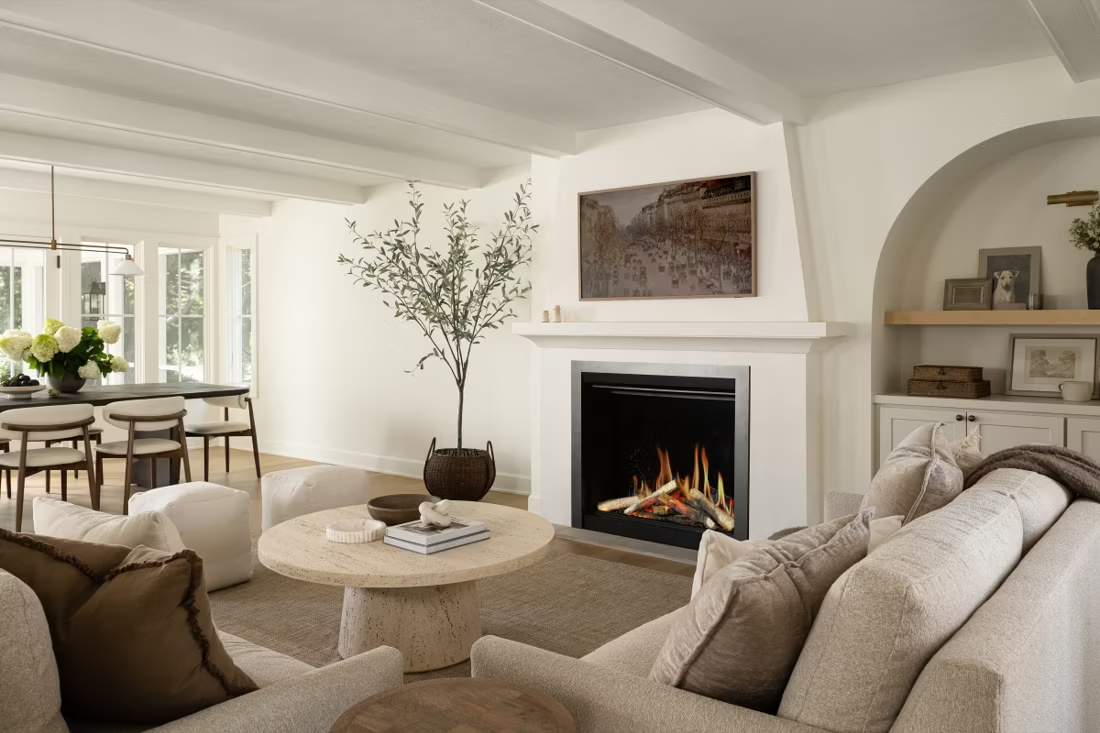
Electric fireplaces fill a different role. They show up in Pepin County living rooms, dens, and additions where running a chimney or gas line isn't practical—a converted porch in Stockholm, a finished basement in Durand, a bluff-top second home overlooking the lake where the owners want fire without the upkeep. Because there's no venting to size and no combustion to manage, a local electrician or hearth dealer can usually have a unit running in an afternoon. What an electric fireplace won't do, in a county with this heating load, is replace your furnace, wood stove, or propane system as the primary heat source—think of it as supplemental warmth and ambiance for one room at a time, not a whole-home solution.
Three steps. No salesperson until you're ready.
Tell us about your project
Your zip code, your situation, and the fuel you're leaning toward—or let the answers point you to one.
See what's actually available
The brands dealers within 100 miles genuinely carry—real options, never a catalog mirage.
Get your dealer & Project Guide
A trusted local dealer, plus the free Project Guide & Parts List that names every component of the job.
Frequently Asked Questions
How much does an electric fireplace installation cost in Pepin County?
Because electric units don't require a chimney, gas line, or exterior venting, installation costs run far lower than wood or gas projects. A basic plug-in insert or wall-mount unit typically costs $300 to $1,500 installed, while a larger built-in electric fireplace set into a wall or existing mantel—with a dedicated 120V or 240V circuit run by an electrician—can run $1,500 to $3,500. Homes in older Durand and Pepin village housing stock with dated wiring sometimes need a panel upgrade or new circuit, which adds to the electrician's portion of the bill. A local dealer can walk your specific wall and wiring situation before you buy.
What size electric fireplace do I need?
Electric fireplaces are sized by room, not by whole-home square footage—most residential units top out around 4,600 to 5,200 BTUs (roughly 1,500 watts), enough to noticeably warm a 400 to 600 square foot room but not a whole floor. For a farmhouse living room or a bluff-view sunroom, that's usually plenty as supplemental heat alongside your existing furnace or wood stove. If you're trying to heat a larger open-concept space, plan on either a wider unit with a stronger blower or accept that it will be ambiance-first, heat-second—Pepin County's cold snaps below zero call for backup from a real heating system regardless of the electric unit's rated output.
Where can I find electric fireplace dealers near Pepin County?
With a population under 3,100 spread across Durand, Pepin, Stockholm, and Arkansaw, Pepin County itself has limited retail hearth showrooms. Most residents shop with hearth and appliance dealers based in Eau Claire or Menomonie, about 30 to 45 minutes east, who deliver and install throughout the county. A handful of local electricians and general contractors also handle straightforward plug-in unit installs. We match you with a trusted dealer who actually covers your address rather than pointing you at a big-box shelf model.
What's the difference between an electric fireplace, insert, and stove?
An electric fireplace is typically a built-in unit set into a wall or existing mantel opening. An electric insert is sized to slide into an existing masonry or wood-fireplace firebox—a common upgrade for Durand and Stockholm homes with an old, rarely-used wood fireplace the owners want to convert to something maintenance-free. An electric stove is a freestanding cabinet-style unit that mimics a wood stove's look and can sit against nearly any wall since it needs only a standard outlet. All three plug into household power and produce the same type of resistance or infrared heat—the choice comes down to your existing opening and the look you want.
Do I need a permit to install an electric fireplace in Pepin County?
Most plug-in electric fireplaces that use an existing standard outlet don't require a permit since there's no venting or gas work involved. If your installation requires a new dedicated circuit, a 240V line, or any panel work, Wisconsin's electrical code requires that work be pulled under permit and performed by a licensed electrician—check with your township or the Pepin County Zoning office for the specific process in your jurisdiction. A local dealer or electrician handling the install will typically manage this for you.
What's the best electric fireplace for Pepin County's climate?
Look for a unit with a dual heat setting and a real thermostat rather than a single high/low switch—with winter lows averaging 4°F and a heating load on par with Minneapolis, you'll want the flexibility to run the flame effect without the heater on mild days and full output on the coldest ones. Infrared-style units tend to feel warmer at a given wattage than standard fan-forced resistance heaters, which matters when you're using one to take the edge off a chilly bluff-top sunroom or farmhouse addition. Beyond that, any electric fireplace's real limitation in this climate is wattage—1,500 watts is 1,500 watts no matter the brand, so match your expectations to a single room, not the whole house.
Will my electric fireplace work during a power outage?
No—unlike a wood stove, an electric fireplace has no function without utility power, and rural Pepin County does see occasional outages during winter ice storms and high-wind events. If backup heat during an outage matters to you, an electric fireplace should be a second unit alongside a wood stove, pellet stove, or propane appliance that doesn't depend on the grid—not your only heat source. Pierce-Pepin Cooperative Services, which serves much of the county's electric load, generally restores power quickly, but plan for at least a few hours without it during a bad storm.
How much does it cost to run an electric fireplace?
A typical 1,500-watt electric fireplace running on the heat setting costs a few cents per hour at residential electric rates—roughly $0.15 to $0.30 per hour depending on whether your address is served by Pierce-Pepin Cooperative Services or another regional provider. Running the flame effect alone without heat costs almost nothing, since the LED light draws only a few watts. For most Pepin County households using one as supplemental heat in a single room a few hours a night, the cost is modest compared to running the furnace longer or buying more firewood.
Electric vs. wood or pellet—which is right for my home?
In a county where oak, maple, birch, and aspen woodlots are part of daily life and regional pellet brands like Indeck Energy Services, Lignetics, and Somerset Pellet Fuel are available locally, wood and pellet stoves remain the practical choice for anyone who wants real whole-room heat, including during outages. Electric fireplaces don't compete on heat output or independence from the grid—their advantage is zero maintenance, no ash or chimney sweeping, and the ability to add a fire feature to a room where venting isn't an option, like a finished basement or an addition on a slab. Many Pepin County homeowners end up with both: a wood or pellet stove for real heat, and an electric unit for a bedroom, den, or second home that doesn't need serious BTUs.
Does an electric fireplace need a vent or chimney?
No—that's its superpower. An electric fireplace needs a wall and an outlet, period. No vent pipe, no gas line, no clearances to design around, which is why it works in bedrooms, offices, apartments, and walls where venting a gas or wood unit would be impractical or impossible. Installation is typically the simplest and least expensive of any fireplace type.
Can I put a TV above my fireplace?
Yes—with an asterisk. Fireplaces are hot and TVs don't like heat. Either put a mantel between them to deflect rising warmth, or choose a fireplace with heat-management technology that creates a cool zone on the wall above—the wall stays around 125 degrees, barely warm, while the room still gets full heat. If you like clean lines and don't want a mantel, heat management is the answer.
Can a fireplace actually lower my heating bill?
Yes—by creating a comfort zone. A furnace heats every square foot of the house just to warm the one room you're in; a gas fireplace on low burns roughly a sixth of the gas a typical furnace does. Set the furnace around 55–60 degrees as a baseline, then heat the rooms your family actually uses. Families who heat this way commonly save $20–$60 a month.
What is an in-home preview and do I need one?
It's a visit where a hearth professional measures your space, confirms the model you picked actually works in your home, and walks the specs—framing, gas line, venting, finish work—before anything is ordered. Some details you just can't know until you see the house. Never make a down payment without one; it's the single most-skipped step that burns buyers.
Stove and Fireplace Dealers in Pepin County
Listings include WhyFire partner dealers, dealers we have verified as authorized for the brands we recommend, and established local businesses that carry hearth products. Every listing shows which one it is. The ones marked Preferred run on WhyFire's software, so they can show you real pricing and book your appointment right here. No manufacturer pays for placement. How we verify dealers →
Ccs Services LLC
Comfort By Design Inc.
Poolman
Scotts Heating And Ac
Find your electric fireplace in Pepin County.
Tell us about your room, your wiring, and what you're hoping to add—we'll match you with a trusted local dealer and send over a free Project Guide & Parts List with the exact unit, mounting hardware, and electrical requirements for your Pepin County home.
Find Your Fireplace →