
Zone heat and real ambiance for Muskego winters.
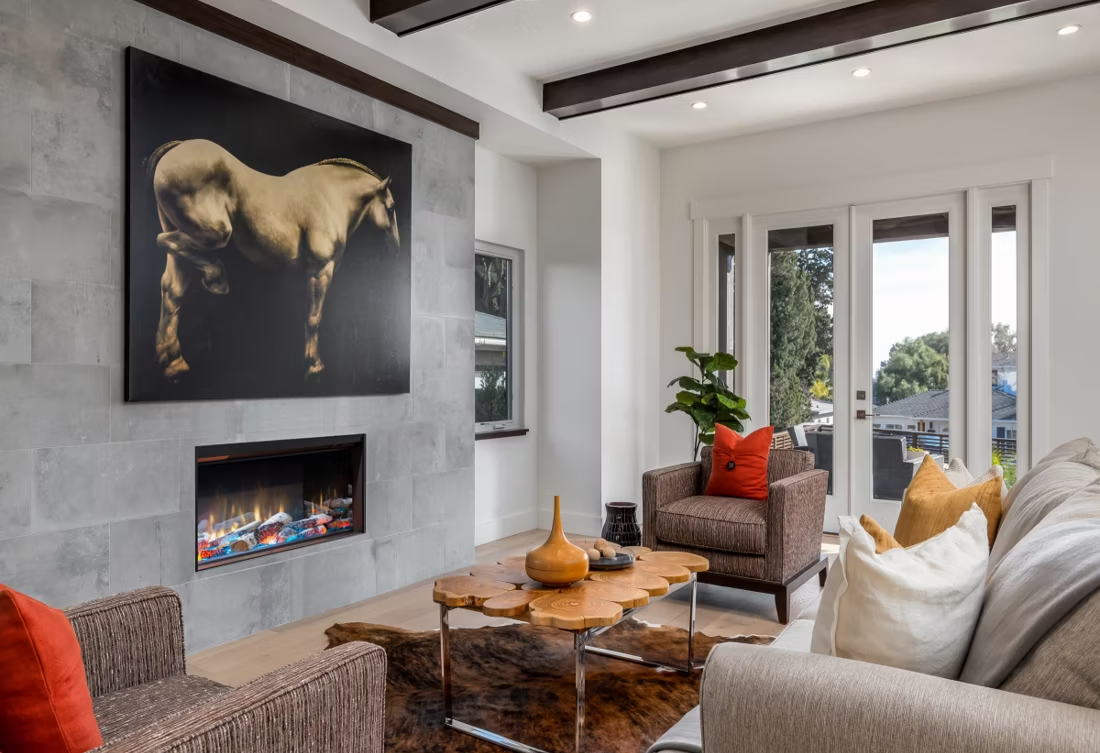
No chimney, no gas line, no venting—just plug-in warmth for the rooms that need it most, in a city with a long, demanding winter heating season.
Every Project Starts From One of These Five Situations
The simplest way to add heat where you actually need it.
Muskego sits in Waukesha County at 774 feet, with winter lows averaging 12°F and a long, cold winter heating season—a cold-climate load in the same range as Madison, about an hour west. That's a long, real heating season, and it's exactly why so many Muskego homeowners look at electric fireplaces not as a whole-house solution, but as a fast, no-venting way to warm a finished basement, a bonus room over the garage, or a lakeside den near Muskego Lake or Bass Bay that the furnace never quite reaches.
Wisconsin Electric Power Co. (We Energies) serves the area at a residential rate around 19.23 cents per kWh—on the higher side nationally, which is worth factoring in if you're weighing an electric unit as a primary heat source versus a supplemental one. Where electric genuinely wins is installation simplicity: no chimney, no gas line, no combustion air requirements, and often no permit at all for a plug-in unit. For older Muskego homes with an existing but rarely-used masonry fireplace, an electric insert is frequently the lowest-friction upgrade available—no sweep, no liner, no annual inspection.
Three steps. No salesperson until you're ready.
Tell us about your project
Your zip code, your situation, and the fuel you're leaning toward—or let the answers point you to one.
See what's actually available
The brands dealers within 100 miles genuinely carry—real options, never a catalog mirage.
Get your dealer & Project Guide
A trusted local dealer, plus the free Project Guide & Parts List that names every component of the job.
Frequently Asked Questions
How much does an electric fireplace installation cost in Muskego?
Costs vary a lot by unit type since there's no venting or gas work involved. A plug-in wall-mount or freestanding electric stove typically runs $400 to $1,200 installed, since it just needs a standard outlet. An insert that fits into an existing masonry firebox runs $800 to $2,500 depending on trim and whether it needs a dedicated circuit. A full built-in linear electric fireplace with wall framing, a custom surround, and a dedicated 20-amp circuit can run $2,500 to $5,000. Because there's no chimney, flue liner, or gas line to install, electric is consistently the least expensive fireplace category to get into in Muskego.
Do I need a permit to install an electric fireplace in Muskego?
In most cases, no. A plug-in electric fireplace or stove that draws from a standard household outlet doesn't require a permit through the City of Muskego Building Inspection Department, since there's no gas line, venting, or structural work involved. If you're adding a dedicated electrical circuit for a larger built-in unit, an electrical permit is typically required and should be pulled by a licensed electrician. Framing a new surround around an existing wall generally doesn't trigger a permit unless you're altering a load-bearing wall—your installer can confirm based on the specific project.
How much does it cost to run an electric fireplace with We Energies rates?
At the Wisconsin Electric Power Co. residential rate of about 19.23 cents per kWh, a typical 1,500-watt electric fireplace running on its heat setting costs roughly 29 cents an hour to operate. Used for five hours a day as supplemental heat in a family room or basement—a common pattern given Muskego's long heating season—that works out to around $1.44 a day, or roughly $40 to $45 a month during peak winter use. Running it on flame-only mode with the heater off costs a fraction of that, since the LED effect draws very little power.
Can an electric fireplace heat my whole house?
No—electric fireplaces are built as zone heaters, not whole-home heating systems. Given Muskego's average winter lows around 12°F and a heating load of over 7,000 degree days a year, relying on electric resistance heat for the whole house would be both underpowered and expensive compared to a furnace or heat pump. Where electric fireplaces genuinely earn their keep is heating a single room—a basement, sunroom, or bedroom—that your main HVAC system struggles to keep comfortable, without the cost of extending ductwork or gas lines to that space.
What's the difference between an electric insert, wall-mount, and freestanding stove?
An electric insert is built to slide into an existing masonry firebox, sealing off the old chimney opening and instantly upgrading a rarely-used wood fireplace. A wall-mount (or linear) unit hangs flush against the wall for a modern, low-profile look and works in rooms with no existing fireplace at all. A freestanding electric stove sits on the floor and mimics the look of a traditional cast-iron wood stove—a popular choice for cabins and lake homes around Muskego Lake where owners want stove styling without the wood handling or chimney maintenance. All three plug into a standard outlet unless you're going with a larger built-in model that needs a dedicated circuit.
Can I convert my existing wood-burning fireplace to electric?
Yes, and it's one of the more common electric projects in Muskego, particularly in homes built in the 1970s through 1990s near the lakes that still have an old masonry fireplace sitting mostly unused. An electric insert slides into the existing firebox opening, and because there's no combustion involved, you don't need to line the chimney, sweep it, or worry about creosote buildup. Many owners simply cap the flue above the insert for draft control and never think about the chimney again. It's typically the fastest and least expensive way to bring a dead fireplace back into daily use.
How do electric fireplaces compare to gas fireplaces in Muskego?
Gas fireplaces are also common in the area—WEC Energy Group, We Energies' parent company, supplies both electricity and natural gas locally—and a vented gas unit puts out real heat, typically 25,000 to 40,000 BTUs, enough to meaningfully warm a larger room on a sub-zero night. Electric units top out around 5,000 BTU-equivalent and cost more per unit of heat delivered over time given We Energies' 19.23-cent rate, but they install in an afternoon with zero venting, work in condos and rentals where gas lines aren't an option, and carry a much lower upfront cost. For a converted basement rec room or a rental property near Muskego's apartment corridor along Janesville Road, electric is often the practical choice. For a primary living space that needs to hold real heat through a Wisconsin winter, gas tends to win.
What maintenance does an electric fireplace need?
Very little compared to wood or gas. There's no chimney to sweep and no annual gas-line inspection required. Basic upkeep is limited to occasionally vacuuming dust out of the heater vents, wiping down the glass front, and replacing the LED light strip after several years of use—most are rated for 10,000+ hours before they dim noticeably. Because there's no combustion, there's also no carbon monoxide risk to monitor, which is part of why electric units are popular in finished basements and bedrooms where ventilation is limited.
Are there rebates available for electric fireplaces in Wisconsin?
Generally, no—Focus on Energy, Wisconsin's statewide efficiency program, offers rebates for heat pumps, smart thermostats, and insulation upgrades, but electric fireplaces are classified as supplemental or decorative heating rather than a home efficiency measure, so they typically don't qualify. If you're already planning a heat pump installation for whole-home efficiency, it's worth asking your contractor whether that project unlocks a Focus on Energy rebate separately—but budget for the electric fireplace itself as a standalone purchase rather than counting on incentives.
Can I put a TV above my fireplace?
Yes—with an asterisk. Fireplaces are hot and TVs don't like heat. Either put a mantel between them to deflect rising warmth, or choose a fireplace with heat-management technology that creates a cool zone on the wall above—the wall stays around 125 degrees, barely warm, while the room still gets full heat. If you like clean lines and don't want a mantel, heat management is the answer.
What fireplace styles should I know before shopping?
Four cover most of the market: screen-front traditional (mesh front, open feel, fits craftsman homes), traditional door set (the classic look you grew up with), modern linear (wide, low, the statement piece for entertaining), and clean face contemporary (no trim—your tile or stone runs right to the fire's edge). Walk in knowing those four terms and you're ahead of most buyers.
Can a fireplace actually lower my heating bill?
Yes—by creating a comfort zone. A furnace heats every square foot of the house just to warm the one room you're in; a gas fireplace on low burns roughly a sixth of the gas a typical furnace does. Set the furnace around 55–60 degrees as a baseline, then heat the rooms your family actually uses. Families who heat this way commonly save $20–$60 a month.
Should the dealer who sells my fireplace also install it?
Ideally, yes. A fireplace project involves vent pipe, gas line, electrical, and often tile or stone. Hire three or four separate trades and you own the liability and the game of telephone between them. One company selling and installing means one accountable party, start to finish—ask about factory training, on-time completion records, and what happens if an inspection fails.
Nearby Dealers
Hearth shops serving Muskego and the surrounding area.
Electric Service in Muskego
An electric fireplace's heater draws about 1,500 watts—pennies per hour at local rates.
Wisconsin Electric Power Co
Find your electric fireplace in Muskego.
Tell us a bit about your home and we'll put together a free Project Guide & Parts List for your Muskego electric fireplace project, then match you with a trusted local dealer who can install it right.
Find Your Fireplace →