
Real Warmth for Wisconsin Winters, No Wood Required.
With a heating season on par with Minneapolis-St. Paul and winter lows averaging 12°F, Mukwonago homes need heat that works on demand. Find the right gas fireplace or insert and connect with a trusted local dealer.
Every Project Starts From One of These Five Situations
Instant heat for a genuinely long Waukesha County winter.
Mukwonago sits along the Mukwonago River in Waukesha County, about 25 miles southwest of Milwaukee, at a modest 780 feet of elevation. That location doesn't spare it from a hard winter—with average lows around 12°F, the village runs a heating season on par with Minneapolis-St. Paul, stretching from late October well into March. Furnaces do the bulk of the work here, but a gas fireplace or insert adds zone heat to the rooms people actually live in, without the split-and-stack routine.
We Energies (the parent of Wisconsin Electric Power Company, which also handles natural gas distribution across the Milwaukee and Waukesha metro) serves most of the village core, making a direct-vent gas fireplace a relatively simple retrofit for homes already on the line. Outlying parcels in unincorporated Mukwonago Township or near Eagle Spring Lake that sit off the main gas distribution often rely on propane instead, which any local installer can configure a unit for. Either way, a gas unit means real heat at the flip of a switch during a January cold snap, and—with the right ignition system—heat that keeps running even if the power doesn't.
Three steps. No salesperson until you're ready.
Tell us about your project
Your zip code, your situation, and the fuel you're leaning toward—or let the answers point you to one.
See what's actually available
The brands dealers within 100 miles genuinely carry—real options, never a catalog mirage.
Get your dealer & Project Guide
A trusted local dealer, plus the free Project Guide & Parts List that names every component of the job.
Frequently Asked Questions
How much does a gas fireplace installation cost in Mukwonago?
Most gas fireplace and insert installations in the Mukwonago area run $4,000 to $10,000, depending on the unit, whether a gas line already reaches the install location, and how much venting work is involved. A direct-vent insert going into an existing masonry fireplace with gas already nearby sits toward the lower end. A new built-in unit for a remodel—with framing, a fresh gas line run from the meter, and venting through an exterior wall—runs toward the middle to upper end. Homes needing a propane tank set because they're off the We Energies gas line typically land near the top of that range. A local dealer will give you a firm number after seeing the space.
Can I convert my existing wood fireplace to gas?
Yes, and it's a common project in Mukwonago's older neighborhoods near downtown and along the river, where many homes still have the original masonry fireplace. A gas insert typically drops into that opening and uses a stainless liner run through your existing chimney for venting, so you keep the look of the original fireplace while gaining real, controllable heat. Conversions usually run $4,500 to $8,500 locally, with the final number depending mostly on whether a gas line already reaches the fireplace or needs to be extended from elsewhere in the house.
Do I need natural gas, or can I run a fireplace on propane?
Both work fine. If your home is on the We Energies natural gas system—which covers most of the village of Mukwonago—a fireplace installer can typically tap into your existing gas service, especially if you already have a gas furnace, range, or water heater. If you're on a larger rural lot in Mukwonago Township or near one of the area's lakes where gas mains don't reach, propane is the standard fallback, either from an existing tank or a new one set by a local propane supplier. Nearly every gas fireplace model on the market can be configured for either fuel—it just changes which orifice and regulator your installer uses.
Will a gas fireplace still work if the power goes out?
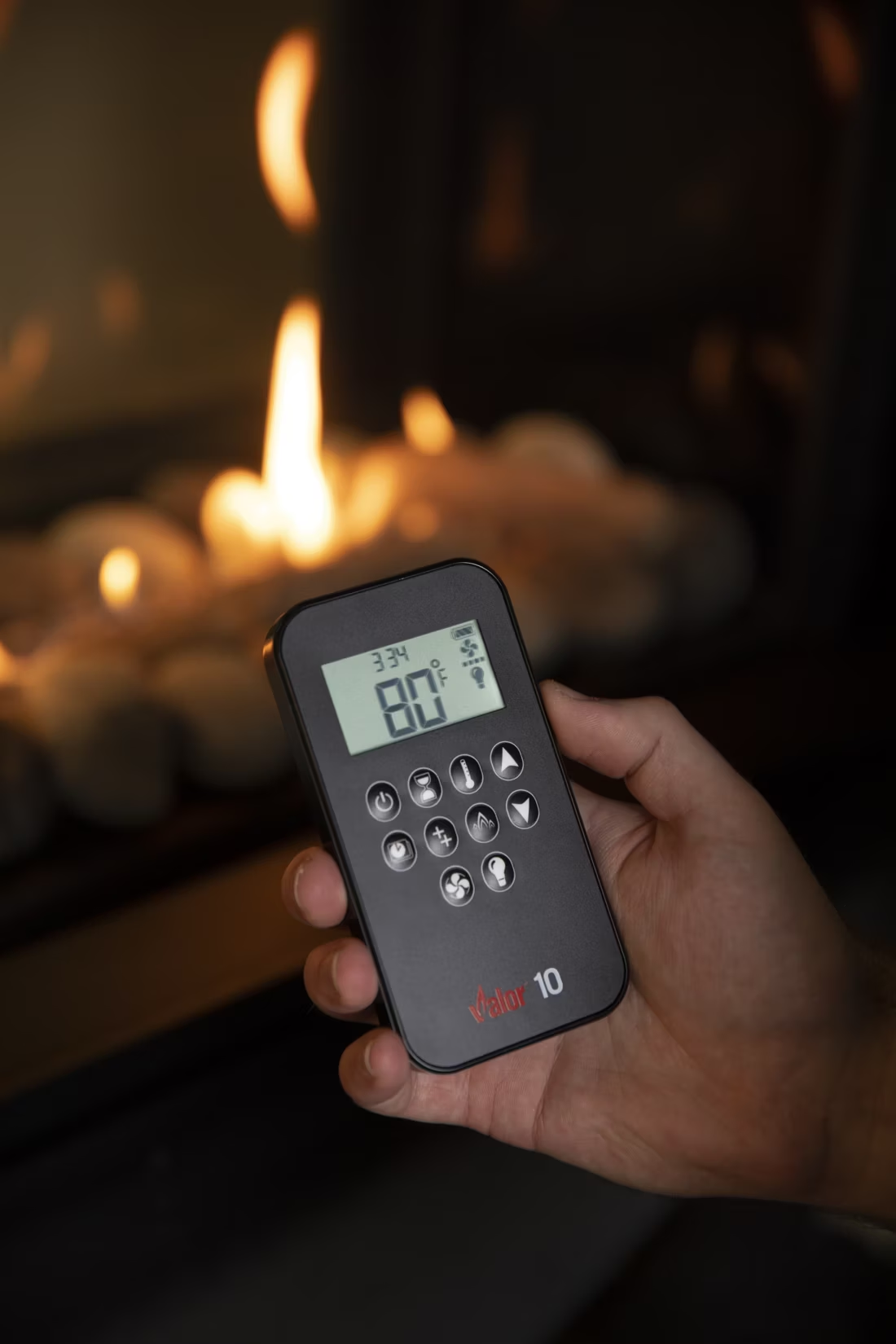
Most will, with the right ignition system. Units with IPI (intermittent pilot ignition) run on a set of AA batteries inside the unit that kick in automatically the moment power drops, so the fireplace still lights on command. Valor's gas fireplaces go a step further—the pilot's thermocouple generates its own electricity, so there's no battery to remember or replace, ever. Given how many Wisconsin winter storms bring down power lines for hours or days at a time, that detail matters more here than it does in milder climates. Ask your local dealer about the ignition system before you buy.
What's the difference between a gas fireplace, insert, and stove?
A gas fireplace is a fully built-in unit framed into a wall—the right call for new construction or a remodel where there's no existing chimney. A gas insert is built to slide into an existing masonry firebox, which is common in Mukwonago's older housing stock, and it uses that chimney as its venting path. A gas stove is a freestanding cast-iron or steel unit that sits on the floor like a wood stove but burns gas—a good fit for a room that never had a fireplace at all, like a finished basement or three-season porch. Most homeowners here with an existing wood-burning fireplace end up choosing an insert.
Do I need a permit to install a gas fireplace in Mukwonago?
Yes. The Village of Mukwonago Building Inspection Department requires a building permit for a new gas fireplace or insert, and the gas line work itself has to be done or signed off by a licensed gas fitter. Most hearth dealers in the area handle the permit application and inspection scheduling as part of the install price, so you're not stuck coordinating separate trades between the fireplace installer and a plumber.
What's the difference between vented and vent-free gas fireplaces?
Vented (direct-vent) gas fireplaces pull combustion air from outside and exhaust it back outside through a sealed pipe—they run cleaner and put out serious heat, which matters when your heating season stretches from October to April. Vent-free units burn without any outside venting at all, releasing some water vapor and combustion byproducts into the room; Wisconsin permits them but with strict rules on room size and required oxygen depletion sensors. For a climate zone 6A location like Mukwonago, where a fireplace is often doing real heating work and not just ambiance, most local dealers steer homeowners toward direct-vent units—they don't come with the room-size restrictions and they hold up better as a genuine secondary heat source.
How often does a gas fireplace need to be serviced?
Plan on an annual inspection, ideally before the heating season starts in October. A technician checks the burner, pilot assembly, venting, and gas connections, and cleans the glass and interior—a much quicker visit than a wood-stove chimney sweep, but just as important, since a fireplace that runs daily through a long Wisconsin winter accumulates dust and spider webs in the burner ports that can affect the flame pattern. Local service providers typically charge $150 to $250 for this visit.
Gas vs. wood vs. electric—which fits a Mukwonago home best?
Wood-burning appliances are genuinely uncommon in this market—most newer Mukwonago-area homes are set up for gas or electric, and the older masonry fireplaces that do exist downtown and along the river are more often converted to gas than kept burning cordwood. Electric fireplaces (running on We Energies' residential rate, currently around 19 cents/kWh) are a low-cost, no-venting option for supplemental warmth and ambiance in a bedroom or basement, though they won't match a gas unit's heat output on a sub-zero night. For a home that needs a real secondary heat source through a 7,000-plus-degree-day winter, gas is usually the answer local dealers steer people toward, with electric reserved for rooms where installing gas line or venting isn't practical.
Is my gas fireplace wasting gas?
If it was installed more than 15 years ago, probably. Older gas fireplaces keep a standing pilot light burning all the time, and that little flame can cost a couple hundred dollars a year. Newer models use pilot-on-demand ignition—the pilot lights only when you use the fireplace and goes out when you turn it off.
What's the difference between an insert and a zero-clearance fireplace?
An insert is a fireplace that slides into a pre-existing wood-burning fireplace—if you don't have one, there's nothing to insert it into. A zero-clearance fireplace is built into a framed wall, which makes it the answer for remodels and new construction. Simple test: existing masonry fireplace means insert; blank or framed wall means zero-clearance.
What is an in-home preview and do I need one?
It's a visit where a hearth professional measures your space, confirms the model you picked actually works in your home, and walks the specs—framing, gas line, venting, finish work—before anything is ordered. Some details you just can't know until you see the house. Never make a down payment without one; it's the single most-skipped step that burns buyers.
Can a fireplace actually lower my heating bill?
Yes—by creating a comfort zone. A furnace heats every square foot of the house just to warm the one room you're in; a gas fireplace on low burns roughly a sixth of the gas a typical furnace does. Set the furnace around 55–60 degrees as a baseline, then heat the rooms your family actually uses. Families who heat this way commonly save $20–$60 a month.
Nearby Dealers
Hearth shops serving Mukwonago and the surrounding area. Every listing shows whether it is a WhyFire partner, a dealer we have verified as authorized for the brands we recommend, or a local business carrying hearth products. No manufacturer pays for placement. How we verify dealers →
James R. Tayler & Sons
Stonecraft Studios
Lakeside Fireplace
Chimney Doctors
Alaskan Fireplace Co
Get matched with a gas fireplace dealer in Mukwonago.
Tell us about your home and heating goals, and we'll pair you with a trusted local dealer and send over a free Project Guide & Parts List—the exact equipment, venting, and installer recommendation for your gas fireplace project.
Find Your Fireplace →