
Instant Warmth for Merrill's Long Northwoods Winters.
No venting, no chimney, no wait—just flip a switch. Find the right electric fireplace for supplemental warmth and connect with a trusted local dealer.
Every Project Starts From One of These Five Situations
Electric fills the gaps a woodstove or furnace leaves behind.
Merrill sits in Lincoln County in Wisconsin's north woods, at Climate Zone 7 with a cold, long heating season and an average winter low around 3°F—a cold load in the same league as International Falls, MN. Winters here run long, from early November well into April, and most homes lean on wood (oak, maple, birch, and aspen are the local staples, much of it cut under Chequamegon-Nicolet National Forest permits for $10 to $20 a cord) or a gas furnace as the primary heat source. Running electric resistance heat as a whole-home solution through a winter this long and cold gets expensive fast at local residential rates of 15.83 to 16.23 cents per kWh from Northern States Power (Xcel Energy) and Wisconsin Public Service.
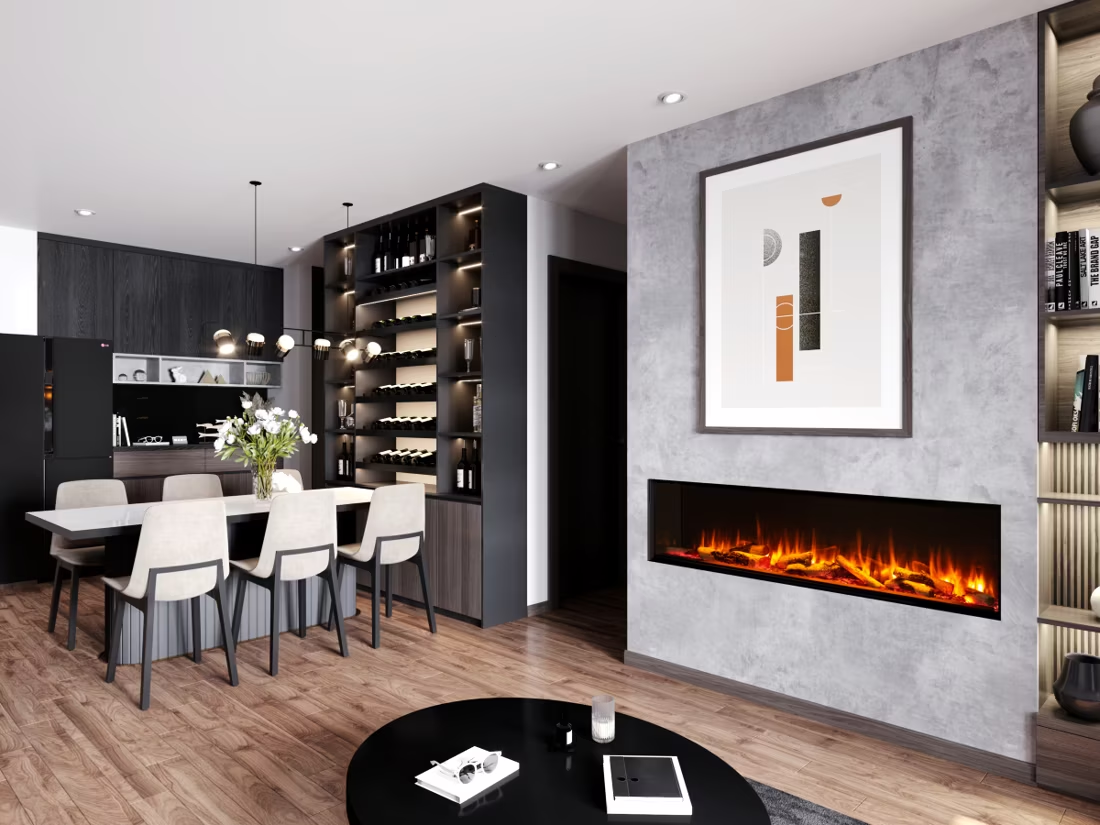
That's exactly why electric fireplaces have a real place in Merrill homes—not as the furnace replacement, but as targeted zone heat and ambiance. A finished basement, a three-season porch, a bedroom addition without ductwork, or a living room that just needs a focal point: an electric insert or built-in unit handles it without a chimney, gas line, or masonry work. It plugs into an existing outlet or a simple dedicated circuit, drops into an existing mantel surround, and gives you flame effect and heat on demand—a practical complement to whatever's doing the heavy lifting against Lincoln County's cold.
Three steps. No salesperson until you're ready.
Tell us about your project
Your zip code, your situation, and the fuel you're leaning toward—or let the answers point you to one.
See what's actually available
The brands dealers within 100 miles genuinely carry—real options, never a catalog mirage.
Get your dealer & Project Guide
A trusted local dealer, plus the free Project Guide & Parts List that names every component of the job.
Frequently Asked Questions
How much does an electric fireplace installation cost in Merrill?
Plug-in electric inserts and freestanding stove units typically run $300 to $1,200 installed, since they just need a standard 120V outlet and some trim work if going into an existing mantel opening. Built-in wall units or full mantel packages with custom framing, a dedicated circuit, and finish carpentry run closer to $2,500 to $6,000, with electrician labor being the main cost driver. Given Merrill's long, cold heating season, most homeowners here are budgeting for a supplemental unit, not a whole-house heat source, which keeps most projects toward the lower end of that range.
Can an electric fireplace be my only source of heat in Merrill?
It's not a good fit as your sole heat source. With an average winter low around 3°F and a winter climate in the same range as International Falls, MN, Lincoln County winters put a heavy load on any heating system, and electric resistance heat at Northern States Power and Wisconsin Public Service's residential rates (roughly 15.8 to 16.2 cents per kWh) gets costly running around the clock. Most Merrill homes pair an electric fireplace for zone heat and ambiance with a wood stove—oak, maple, birch, and aspen are all common local firewood—or a gas furnace as the primary system.
Do I need an electrician to install an electric fireplace?
Plug-in models generally don't require one—they run off a standard household outlet like any large appliance. Built-in units, especially larger models over 1,500 watts or ones installed in a new wall location, often need a dedicated 120V or 240V circuit, which requires a licensed electrician to run per Wisconsin electrical code. Most local hearth dealers either employ an electrician or coordinate directly with one as part of the install, so you're not left managing two separate contractors.
Do I need a permit to install an electric fireplace in Merrill?
Most plug-in electric fireplace installs don't require a building permit since there's no venting, gas line, or structural chimney work involved. If your project adds a new dedicated electrical circuit or involves reframing a wall opening, your electrician will typically pull an electrical permit as part of that work. It's worth confirming with your installer, since requirements can vary depending on whether the unit is going into an existing opening or a new build-out.
What electric fireplace brands are worth looking at for a Merrill home?
Dimplex, Napoleon, and Amantii all make well-regarded electric inserts and built-ins with realistic flame technology and solid heater output for zone heating a room. For a straightforward drop-in replacement into an existing masonry fireplace opening, a plug-in insert from any of those three is a common, reliable choice. A local dealer can match unit size and heater wattage to your specific room dimensions during an in-home or in-showroom consultation.
Is an electric fireplace good for supplemental heat in a Wisconsin winter?
Yes, within its limits. Most electric fireplace heaters output around 4,600 to 5,000 BTU, enough to comfortably take the edge off a single room—a finished basement, an addition, a bedroom without good duct coverage—but not enough to offset a home's total heat loss during a Lincoln County cold snap. Think of it as zone heating that lets you turn down the thermostat in the room you're actually using, which can meaningfully reduce reliance on whole-home heating during shoulder-season cold rather than the depths of a January stretch at 3°F.
Will my electric fireplace work during a power outage?
No—electric fireplaces require power to run both the heater and the flame effect, so they'll go dark along with everything else on the circuit during an outage. For Merrill homes concerned about extended winter outages, a wood stove burning local oak, maple, or birch, or a battery-backed gas unit, is the more reliable option for emergency heat. Many households here keep an electric fireplace for everyday ambiance and convenience while relying on a separate wood or gas appliance for storm backup.
What's the difference between an electric fireplace, insert, and stove?
An electric fireplace is typically a built-in unit designed for a wall opening or custom mantel surround, often used in new construction or remodels. An electric insert is sized to drop into an existing masonry fireplace opening, giving you flame and heat without touching your existing chimney or hearth. An electric stove is a freestanding cabinet-style unit that sits on the floor, styled to resemble a wood stove but requiring no venting at all. For Merrill homes with an old wood-burning fireplace that's no longer in regular use, an insert is usually the simplest upgrade.
Electric vs. wood—which makes more sense for my Merrill home?
Wood, cut locally under Chequamegon-Nicolet National Forest permits for $10 to $20 a cord, delivers real BTU output capable of carrying a home through Lincoln County's coldest stretches and keeps working when the power's out—a meaningful advantage given how long winter runs here. Electric wins on convenience: no ash, no wood handling, no chimney maintenance, and instant on-off operation, but it depends entirely on the grid and costs more per BTU at local Xcel and WPS electric rates if you lean on it heavily. Most Merrill households land on wood or gas for primary heat and add an electric unit where a chimney isn't practical or where they just want push-button ambiance.
Do electric fireplaces actually produce heat?
Yes—most put out around 4,800–5,000 BTUs from a standard outlet, which comfortably warms a bedroom, office, or den as a comfort-zone heater. What they won't do is carry a whole house the way wood, gas, or pellet can. Think of electric as ambiance-first with honest supplemental heat: flames on with no heat in July, flames plus warmth in January.
Does an electric fireplace need a vent or chimney?
No—that's its superpower. An electric fireplace needs a wall and an outlet, period. No vent pipe, no gas line, no clearances to design around, which is why it works in bedrooms, offices, apartments, and walls where venting a gas or wood unit would be impractical or impossible. Installation is typically the simplest and least expensive of any fireplace type.
How much should I budget for a fireplace?
For an average home—covering the fireplace, the vent pipe, and basic installation—a budget between $3,900 and $5,500 gives you a lot of options across wood, gas, and pellet. By the time you add finish work, gas line, and electrical, the average complete installation lands between $5,000 and $12,000 all-in. In a remodel or new build, a good rule is to put about 2.5% of the total project cost toward the fireplace.
What is an in-home preview and do I need one?
It's a visit where a hearth professional measures your space, confirms the model you picked actually works in your home, and walks the specs—framing, gas line, venting, finish work—before anything is ordered. Some details you just can't know until you see the house. Never make a down payment without one; it's the single most-skipped step that burns buyers.
Nearby Dealers
Hearth shops serving Merrill and the surrounding area. Every listing shows whether it is a WhyFire partner, a dealer we have verified as authorized for the brands we recommend, or a local business carrying hearth products. No manufacturer pays for placement. How we verify dealers →
Ferguson Enterprises
Electric Service in Merrill
An electric fireplace's heater draws about 1,500 watts—pennies per hour at local rates.
Northern States Power Co
Wisconsin Public Service Corp
Find your electric fireplace in Merrill.
Tell us a bit about your home and we'll put together a free Project Guide & Parts List—the right electric fireplace or insert for your space, plus a trusted local dealer who can install it.
Find Your Fireplace →