
Find dependable gas heat for Menominee County's long, cold winters.
With winter lows averaging 6°F and a long, demanding heating season, Menominee County homes need heat that works the moment it's needed. Find the right propane or gas unit for Keshena, Neopit, Zoar, or anywhere on the reservation, and connect with a trusted local dealer.
Every Project Starts From One of These Five Situations
Clean heat for a county built on wood and forest life.
Menominee County sits almost entirely within the Menominee Indian Reservation, one of the largest contiguous blocks of managed forest in the Midwest, sustained for generations by Menominee Tribal Enterprises' FSC-certified forestry practices. With a population under 4,000 spread across Keshena, Neopit, Zoar, and the surrounding township land, winters here run long and hard—Climate Zone 6A, an average winter low of 6°F, and a heating season as demanding as anywhere in the region, putting the county in the same cold-climate tier as Duluth, Minnesota. Oak, maple, birch, and aspen from the surrounding stands have kept wood stoves burning here for generations, but gas heat has steadily found its place too, especially as a low-maintenance option for homes that want reliable warmth without daily wood handling.
Because Menominee County is rural and mostly unserved by natural gas mains, propane is the dominant 'gas' fuel here rather than piped natural gas—homeowners typically run a propane tank feeding a direct-vent fireplace, insert, or freestanding stove. That setup delivers instant heat at the flip of a switch, works well as zone heating alongside a wood stove or forced-air furnace, and—with the right ignition system—can keep running through the ice storms and extended power outages that aren't uncommon this far north. A trusted local dealer will size the tank, the unit, and the venting correctly for your home rather than leaving you to guess.
Three steps. No salesperson until you're ready.
Tell us about your project
Your zip code, your situation, and the fuel you're leaning toward—or let the answers point you to one.
See what's actually available
The brands dealers within 100 miles genuinely carry—real options, never a catalog mirage.
Get your dealer & Project Guide
A trusted local dealer, plus the free Project Guide & Parts List that names every component of the job.
Frequently Asked Questions
How much does a gas fireplace installation cost in Menominee County?
Most propane fireplace and insert installations in Menominee County run in the $4,000 to $10,000 range, with the spread driven mostly by whether you already have a propane tank and line in place. A direct-vent insert going into an existing masonry fireplace, feeding off an existing tank, sits toward the lower end. A new freestanding gas stove or built-in fireplace that requires a new propane tank installation, a longer line run out to Neopit or Zoar-area properties, and fresh venting through an exterior wall will land toward the higher end. Because there's no natural gas main serving most of the county, factor the tank and line work into your budget from the start—a local dealer will walk through this during an in-home visit.
Can I convert my existing wood fireplace to gas?
Yes, and it's a common project for older homes around Keshena and the reservation that were originally built around a wood-burning hearth. A propane insert typically slides into the existing masonry opening, using a stainless liner run up the existing chimney for venting. The bigger variable locally is the propane setup itself—if there's already a tank serving the house (many rural properties here run propane for the range or water heater), the conversion is straightforward; if not, a new tank and line run adds to the project. Either way, you keep the look of the original fireplace while gaining instant, thermostat-controlled heat that doesn't need feeding through a Wisconsin winter night.
Do I need natural gas, or does propane work fine here?
Propane is the standard choice throughout Menominee County—there's no natural gas distribution network reaching Keshena, Neopit, or Zoar, so nearly every gas fireplace, insert, or stove installed here runs on propane from a dedicated tank. This isn't a compromise: modern propane units perform identically to natural gas versions once the orifice and regulator are set correctly for the fuel. If you already have a propane tank for your furnace, water heater, or range, adding a fireplace or stove to that supply is usually simple. If not, your dealer will coordinate a new tank installation with a local propane supplier as part of the project.
Will my gas fireplace work during a power outage?
Most units with intermittent pilot ignition (IPI) include a battery backup that automatically takes over when the power drops, so the fireplace still lights on demand. That matters in Menominee County—extended outages aren't rare during heavy lake-effect snow or ice events this far north, and a fireplace that only works with grid power isn't much of a backup plan. Valor fireplaces take a different approach: their pilot generates its own electricity through a thermocouple, so there's no battery to remember or replace at all. If backup heat during an outage is a priority for your home, ask your local dealer about the ignition system before choosing a model.
What's the difference between a gas fireplace, gas insert, and gas stove?
A gas fireplace is a fully built-in unit framed into a wall, typically used in new construction or a remodel. A gas insert is sized to slide into an existing masonry fireplace opening, turning a drafty old wood hearth into a sealed, efficient heat source using the existing chimney as a chase. A gas stove is a freestanding cabinet unit, similar in footprint to a wood stove, that can go almost anywhere with the right clearances and venting. For the many older homes around Keshena and Neopit built with a traditional wood fireplace, an insert is usually the most direct upgrade path. Homes without an existing fireplace, or new builds on reservation or county land, are typically better suited to a built-in fireplace or freestanding stove.
Do I need a permit to install a gas fireplace in Menominee County?
Generally yes—new gas fireplace, insert, or stove installations require a building permit, and because a propane tank and line are usually part of the project, a separate LP-gas permit is often needed as well. Most properties in Menominee County fall within the Menominee Indian Reservation, so depending on where the home sits, permitting may run through Menominee County zoning and building offices, tribal building code review, or both—a local installer who works regularly in the county will know which office applies to your address and typically handles the paperwork as part of the install.
What's the difference between vented and vent-free gas units?
Vented (direct-vent) gas fireplaces draw combustion air from outside and exhaust it back outside through sealed venting—they're the cleanest, safest option and the standard recommendation for Menominee County's tightly built, cold-climate homes. Vent-free units burn fuel directly into the room without external venting; they're technically legal in Wisconsin but require careful attention to room size, oxygen depletion sensors, and ventilation, and they release some combustion byproducts indoors. Given how long homes here stay sealed up during a long, demanding winter heating season, direct-vent units are almost always the better call for indoor air quality—most local dealers will steer you that direction by default.
How often should my gas fireplace be serviced?
Plan on an annual inspection, ideally before the heating season starts in late fall. A technician will check the burner, pilot assembly, propane line connections, and venting, and clean the glass and interior components. This matters more in a county like Menominee, where propane lines and outdoor tank connections are exposed to real winter weather—freeze-thaw cycles and settling can loosen fittings over time. An annual check typically runs $150 to $250 and is far less involved than a wood chimney sweep, but just as important for safe operation.
Gas vs. wood—which makes more sense for a Menominee County home?
Wood has deep roots here—the county's oak, maple, birch, and aspen stands, managed through the Menominee Tribal Enterprises forestry program, have supplied heating wood for generations, and a wood stove keeps working straight through a power outage with no propane delivery required. Gas, on the other hand, offers instant on-off heat with no wood handling, no ash, and consistent output on demand—appealing for a primary living space or for homeowners who want heat without daily tending. Many households in Keshena, Neopit, and Zoar run both: a wood stove for deep-winter backup and everyday ambiance, and a propane fireplace or insert in the main living area for convenience. A local dealer can help you weigh which role each fuel should play in your specific home.
Can I put a TV above my fireplace?
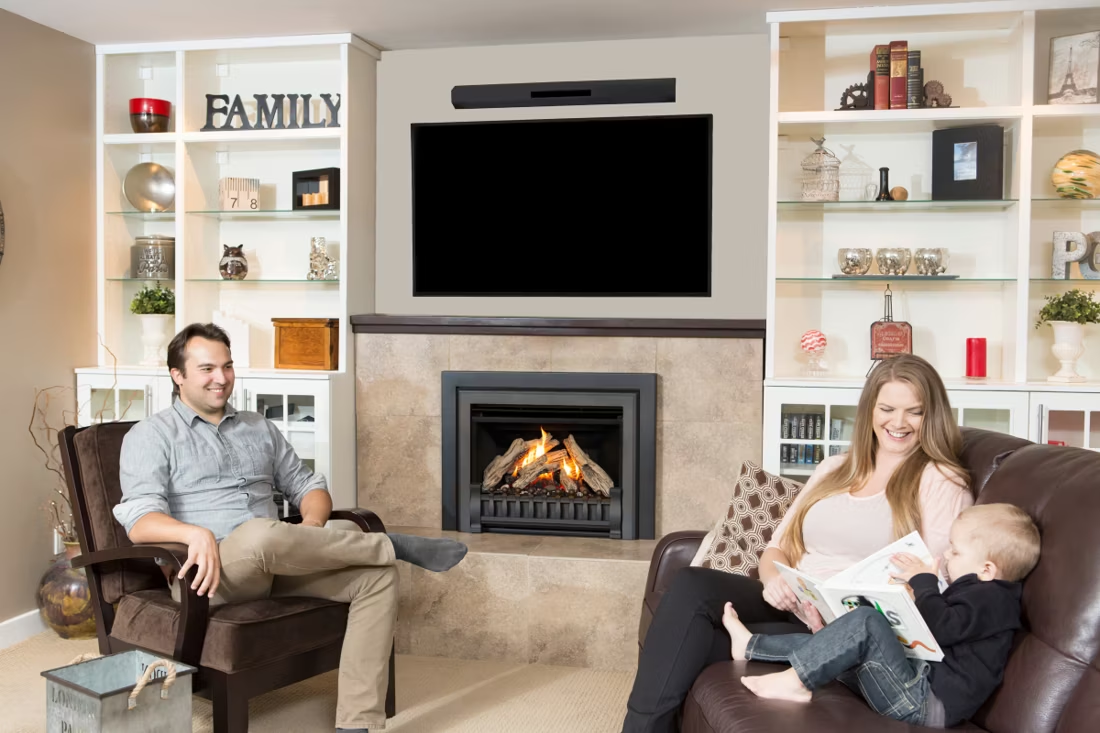
Yes—with an asterisk. Fireplaces are hot and TVs don't like heat. Either put a mantel between them to deflect rising warmth, or choose a fireplace with heat-management technology that creates a cool zone on the wall above—the wall stays around 125 degrees, barely warm, while the room still gets full heat. If you like clean lines and don't want a mantel, heat management is the answer.
What's the difference between an insert and a zero-clearance fireplace?
An insert is a fireplace that slides into a pre-existing wood-burning fireplace—if you don't have one, there's nothing to insert it into. A zero-clearance fireplace is built into a framed wall, which makes it the answer for remodels and new construction. Simple test: existing masonry fireplace means insert; blank or framed wall means zero-clearance.
Does a fireplace add value to my home?
On average, a fireplace adds back to the home about the same amount you spent installing it. Add the monthly savings from heating the rooms you actually use instead of the whole house—often hundreds of dollars a year—and the value case is strong before you even count what a fire does for how your family uses the room.
What is an in-home preview and do I need one?
It's a visit where a hearth professional measures your space, confirms the model you picked actually works in your home, and walks the specs—framing, gas line, venting, finish work—before anything is ordered. Some details you just can't know until you see the house. Never make a down payment without one; it's the single most-skipped step that burns buyers.
Stove and Fireplace Dealers in Menominee County
Listings include WhyFire partner dealers, dealers we have verified as authorized for the brands we recommend, and established local businesses that carry hearth products. Every listing shows which one it is. The ones marked Preferred run on WhyFire's software, so they can show you real pricing and book your appointment right here. No manufacturer pays for placement. How we verify dealers →
Midwest Expansion
Home Comfort Of New England
Antigo Fireplace
Energy Shop
Hockers Brick & Tile
Find your gas fireplace in Menominee County.
Tell us a bit about your home and we'll match you with the right propane fireplace, insert, or stove for Menominee County's long winters—plus a free Project Guide & Parts List with the exact parts, vent kit, and a recommended local dealer.
Find Your Fireplace →