
Plug-in comfort for Marinette County's long, cold winters.
Instant ambiance and zone heat for Marinette County homes, cabins, and lake cottages—no chimney, no venting, no permit headaches. Find the right electric unit and connect with a trusted local dealer.
Every Project Starts From One of These Five Situations
The easiest heat source in a hard-heating climate.
Marinette County stretches across roughly 1,400 square miles of far northeastern Wisconsin, from the Green Bay shoreline up through forest and farmland along the Michigan border. It's a climate zone 6A county with 7,808 heating degree days and average winter lows around 10 degrees—the kind of cold where most households rely on a primary heat source that can run all night without help. Wood has always been part of that picture here; oak, maple, birch, and aspen are common in local woodlots, and Forest Service cutting permits through the Hiawatha National Forest run $10 to $20 per cord during the May-through-October season. Electric fireplaces fit a different, more supplemental role.
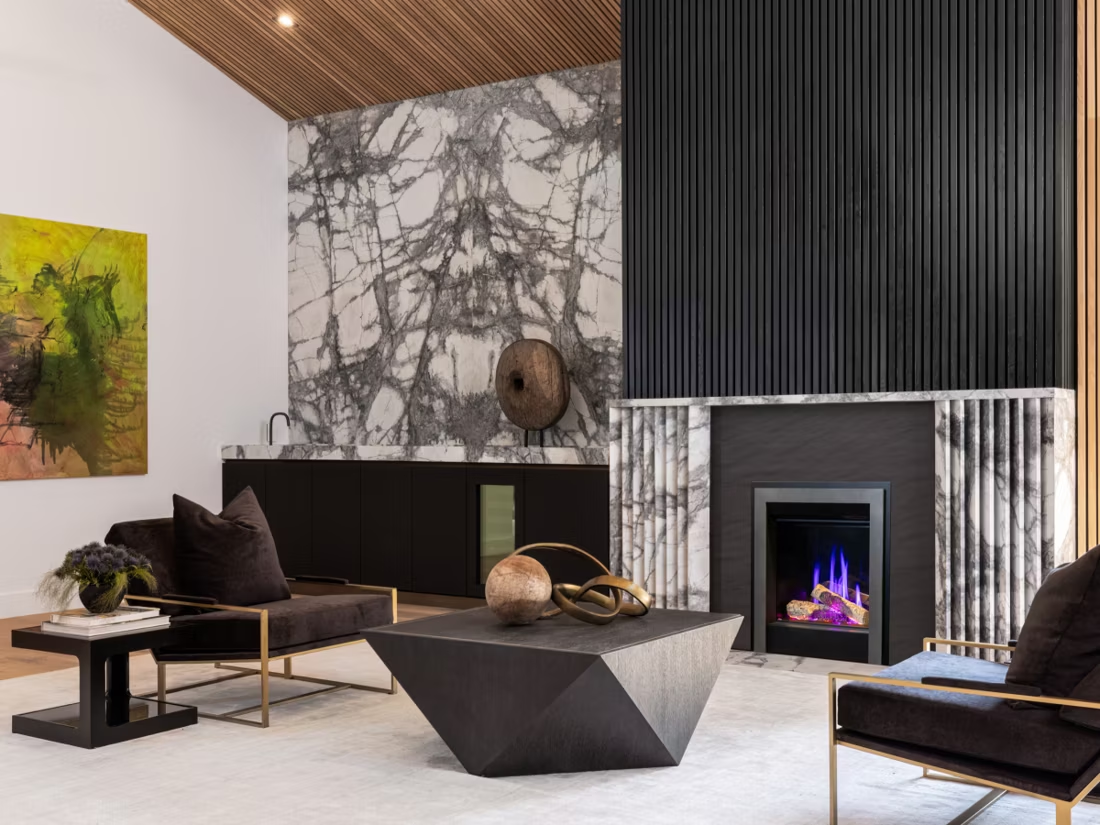
Where a full masonry chimney or gas line isn't practical—a finished basement, a three-season porch converted for winter use, a seasonal cabin near the Menominee River, a rental cottage where a code inspector won't approve an open flame—an electric fireplace adds real ambiance and localized warmth without any combustion, venting, or building permit for standard plug-in models. Wisconsin Public Service (WPS) serves most of the county's grid, and running an electric insert costs pennies compared to heating an entire home, which is exactly the point: it's zone heat for a room, not a replacement for the wood stove or furnace carrying the load through a Marinette County winter.
Three steps. No salesperson until you're ready.
Tell us about your project
Your zip code, your situation, and the fuel you're leaning toward—or let the answers point you to one.
See what's actually available
The brands dealers within 100 miles genuinely carry—real options, never a catalog mirage.
Get your dealer & Project Guide
A trusted local dealer, plus the free Project Guide & Parts List that names every component of the job.
Frequently Asked Questions
How much does an electric fireplace installation cost in Marinette County?
A plug-in electric fireplace or insert typically costs $300 to $1,500 for the unit itself, with essentially no installation cost since most models simply plug into a standard 120V outlet—no electrician, no permit, no venting. Larger built-in units or 240V models, which homeowners often choose for additions, garages, or year-round cabins along the Menominee River or Green Bay shoreline, run higher—generally $1,500 to $4,000 once an electrician runs a dedicated circuit and the unit is set into a wall or mantel surround. Because there's no combustion involved, you're not pricing out chimney liners or masonry work the way you would with wood or gas—the cost is almost entirely the unit and, for hardwired models, the electrical work.
What size electric fireplace do I need?
Most electric fireplace inserts put out 4,000 to 5,000 BTUs, enough to noticeably warm a single room of 200 to 400 square feet, but not enough to serve as a home's primary heat source on a night when temperatures drop toward the county's 10-degree average low or below. That's an important distinction in Marinette County, where 7,808 heating degree days mean sustained heating demand for most of the year. Electric works best sized to the specific room—a bedroom, a converted porch, a basement family room—while a wood stove burning local oak or maple, a furnace, or a propane system carries the whole-home load. A local dealer can match wattage to your room dimensions during a quick walkthrough.
Where can I find electric fireplace dealers near me in Marinette County?
Hearth retailers and licensed electricians serving Marinette County handle most electric fireplace installations—plug-in units from a hearth shop, hardwired 240V units from an electrician familiar with Wisconsin Public Service's residential service standards. Dealers based in or near the city of Marinette typically cover Peshtigo, Crivitz, Wausaukee, and Pembine without a significant travel charge; more remote installations near Niagara or Amberg may include a small trip fee. Because electric units involve no chimney or gas line, the installer pool is broader than for wood or gas projects—but for hardwired models, always confirm the installer is a licensed electrician, not just a hearth salesperson.
What's the difference between an electric fireplace, insert, and stove?
An electric fireplace is typically a wall-mounted or built-in unit designed to look like a traditional fireplace, often with a mantel surround—common in living rooms and additions. An electric insert is sized to slide into an existing masonry fireplace opening, giving an old, unused wood fireplace a clean, no-mess heat source and flame effect without touching the chimney. An electric stove is a freestanding cabinet-style unit that mimics a wood or pellet stove's look and can sit anywhere near an outlet. For Marinette County homes with an existing but unused fireplace, an insert is usually the simplest upgrade; for new spaces without a fireplace opening, a wall-mount unit or freestanding stove works better.
Do I need a permit to install an electric fireplace in Marinette County?
Plug-in electric fireplace units generally don't require a permit since they use a standard household outlet, just like any other appliance. If you're installing a larger, hardwired 240V unit—which requires a dedicated circuit run from your panel—an electrical permit is typically required, and the work should be done by a licensed electrician who will handle the permitting with the local building or electrical inspector for your township. Because Marinette County includes both incorporated cities and unincorporated townships, the specific permitting office can vary by location; your electrician or dealer will know which jurisdiction applies to your address.
What's the best electric fireplace for Marinette County's climate?
Given average winter lows around 10 degrees and nearly 7,800 heating degree days, no electric fireplace should be relied on as a Marinette County home's primary heat source—the wattage simply isn't there. Where electric units genuinely shine locally are cabins and cottages that get used year-round but don't have a chimney, additions and bonus rooms that need supplemental warmth, and rental properties where an open flame isn't an option. In those cases, a 5,000-BTU insert or wall unit with a built-in thermostat is a practical, low-maintenance choice. For the home's actual winter heat load, most local households still lean on a wood stove burning oak, maple, birch, or aspen, a furnace, or propane.
How much does it cost to run an electric fireplace day to day?
A typical 1,500-watt electric fireplace running on high draws about 1.5 kWh per hour. At Wisconsin Public Service's residential rates, that works out to roughly 20 to 25 cents an hour of continuous use—inexpensive for occasional evening use in a single room, but not cost-competitive with wood or propane if you tried to run it around the clock through a Marinette County winter. Most owners use the heat setting only when the room is occupied and rely on the flame-only mode (which draws just a few watts) for ambiance without the heating cost. That's part of why electric works best as supplemental, zone-specific heat rather than a whole-home solution here.
Electric vs. wood—which makes more sense for my Marinette County home?
Wood remains the backbone of home heating for a lot of Marinette County households, and for good reason: cutting permits through the Hiawatha National Forest run just $10 to $20 per cord during the May-to-October season, oak and maple are abundant locally, and a wood stove keeps producing heat during winter power outages—which happen more often in the county's rural, wooded areas than in town. Electric fireplaces can't do that; they go dark the moment the power does. Where electric wins is convenience and cleanliness for supplemental spaces—no ash, no chimney maintenance, no wood stacking. Many local homes use both: wood or a furnace for the real heating load, electric for ambiance in a bedroom or den.
Electric vs. gas fireplace—which is right for my home?
Gas fireplaces (running on propane in most of rural Marinette County, since natural gas service is limited outside the city) put out real heat—enough to serve as supplemental or even primary zone heat in a cold Wisconsin winter—and many models keep working during a power outage with a battery-backup ignition system. Electric fireplaces can't match that heat output and stop working the instant power is lost, but they install in minutes, need no fuel tank or gas line, and cost far less upfront. For a cabin or add-on room where you mainly want ambiance and light supplemental warmth, electric is simpler. For a space where you want the unit to genuinely help carry the heating load, a propane or gas insert is usually the better investment.
Does an electric fireplace need a vent or chimney?
No—that's its superpower. An electric fireplace needs a wall and an outlet, period. No vent pipe, no gas line, no clearances to design around, which is why it works in bedrooms, offices, apartments, and walls where venting a gas or wood unit would be impractical or impossible. Installation is typically the simplest and least expensive of any fireplace type.
Can I put a TV above my fireplace?
Yes—with an asterisk. Fireplaces are hot and TVs don't like heat. Either put a mantel between them to deflect rising warmth, or choose a fireplace with heat-management technology that creates a cool zone on the wall above—the wall stays around 125 degrees, barely warm, while the room still gets full heat. If you like clean lines and don't want a mantel, heat management is the answer.
How much should I budget for a fireplace?
For an average home—covering the fireplace, the vent pipe, and basic installation—a budget between $3,900 and $5,500 gives you a lot of options across wood, gas, and pellet. By the time you add finish work, gas line, and electrical, the average complete installation lands between $5,000 and $12,000 all-in. In a remodel or new build, a good rule is to put about 2.5% of the total project cost toward the fireplace.
Should the dealer who sells my fireplace also install it?
Ideally, yes. A fireplace project involves vent pipe, gas line, electrical, and often tile or stone. Hire three or four separate trades and you own the liability and the game of telephone between them. One company selling and installing means one accountable party, start to finish—ask about factory training, on-time completion records, and what happens if an inspection fails.
Stove and Fireplace Dealers in Marinette County
Listings include WhyFire partner dealers, dealers we have verified as authorized for the brands we recommend, and established local businesses that carry hearth products. Every listing shows which one it is. The ones marked Preferred run on WhyFire's software, so they can show you real pricing and book your appointment right here. No manufacturer pays for placement. How we verify dealers →
A & M Heating Cooling & Fireplace Sales
Wulf Brothers-Sister Bay, Wi
Universal Plumbing Heating & Ac
Laughlin Chimney & Fireplace
Wulf Brothers- Sturgeon Bay, Wi
Find your electric fireplace in Marinette County.
Tell us a bit about your space and we'll put together a free Project Guide & Parts List for your Marinette County electric fireplace project—sized right and matched to a trusted local dealer.
Find Your Fireplace →