
Real heat for Lake Wisconsin's cabins—no chimney required.
Zone heat for lake cottages, additions, and sunrooms around the Wisconsin River reservoir—no venting, no gas line, no masonry work. Find the right unit and get matched with a trusted local dealer.
Every Project Starts From One of These Five Situations
Simple, code-free heat for lake cabins and additions.
Lake Wisconsin sits along the Wisconsin River in Columbia County, and a large share of the homes around the reservoir are seasonal cabins, lake cottages, and additions built without a masonry chimney—sunrooms, finished garages, and lakeside great rooms tacked onto older cottages. Winters here are genuinely cold: average lows near 10°F and a winter heating load that puts this stretch of Columbia County in the same territory as Duluth, Minnesota for winter severity. Plenty of local homes still burn oak, maple, birch, and aspen for primary or backup heat, but for a cabin addition, dock house, or guest bedroom, running a chimney or gas line just to add heat rarely makes sense.
That's where electric fireplaces and inserts earn their keep. There's no venting to size, no gas permit to pull, and most units plug into a standard outlet or a single dedicated circuit an electrician can add in an afternoon. Wisconsin Power & Light (Alliant Energy) serves the area at roughly $0.169 per kWh—a rate worth knowing before you decide between a plug-in insert and a larger built-in unit, since a bigger heater run all evening costs more to operate. For weekend cabins and rental cottages around the lake, the appeal is straightforward: flip a switch, get real supplemental warmth, and don't worry about a flue when the place sits empty for weeks at a time.
Three steps. No salesperson until you're ready.
Tell us about your project
Your zip code, your situation, and the fuel you're leaning toward—or let the answers point you to one.
See what's actually available
The brands dealers within 100 miles genuinely carry—real options, never a catalog mirage.
Get your dealer & Project Guide
A trusted local dealer, plus the free Project Guide & Parts List that names every component of the job.
Frequently Asked Questions
How much does it cost to install an electric fireplace near Lake Wisconsin?
Plug-in electric inserts and freestanding stoves that use an existing outlet typically run $300 to $900 installed, since there's no venting or framing involved beyond mounting the unit. Built-in wall units or larger mantel packages usually land between $1,200 and $2,500 once you account for a dedicated 20-amp circuit, which most Columbia County electricians need to run for units pulling more than 1,500 watts. Cabins and additions without existing wiring in that room will sit toward the higher end. A local dealer can tell you within a few hundred dollars once they know the unit and whether new wiring is needed.
What does it cost to actually run an electric fireplace here?
At Wisconsin Power & Light's residential rate of about $0.169 per kWh, a standard 1,500-watt electric fireplace costs roughly 25 cents an hour to run on high heat. Left on for a full evening—say six hours on a cold night—that's about $1.50, and running it as ambiance-only with the heater off costs a fraction of that. Compared to propane, which many homes around the lake use for primary heat, electric fireplaces are inexpensive to operate for supplemental warmth in one room, but not cheap enough to heat an entire cottage as a full-time furnace replacement.
Do I need a permit to install an electric fireplace in Lake Wisconsin?
A simple plug-in unit that uses an existing outlet doesn't require a permit. If you're adding a built-in unit that needs a new dedicated circuit, that electrical work falls under your township's building permit process—the towns bordering the lake (West Point, Dekorra, and Merrimac among them) route electrical permits through the Columbia County Planning & Zoning Department or the local town building inspector, depending on jurisdiction. Most licensed electricians handle that paperwork as part of the job, so it's rarely something a homeowner has to manage directly.
What's the best type of electric fireplace for a lake cabin?
For a seasonal cottage or an addition without an existing fireplace, a freestanding electric stove or a wall-mount unit is usually the easiest fit—both plug in, need no structural changes, and can be unplugged and left off all winter if the cabin sits vacant. For a cottage with an old, unused masonry fireplace, an electric insert slides into the existing opening and gives you flame effect and heat without touching the flue. Given how many properties around Lake Wisconsin are used seasonally, remote-control units with a timer or app control are worth asking a local dealer about—you can have heat waiting when you arrive without leaving anything running unattended.
Electric vs. wood—which makes more sense around Lake Wisconsin?
Wood is deeply practical here: oak, maple, birch, and aspen are all common locally, wood heat works without power during outages, and a lot of full-time residents already burn wood as primary or backup heat through a long, hard Wisconsin winter. Electric fireplaces don't compete with that as a heat source—they're better suited to rooms where a chimney isn't practical, like a lakeside addition, a converted porch, or a cabin bedroom that just needs supplemental warmth. Many homeowners around the lake end up with both: a wood stove or fireplace for the main living space, and a plug-in electric unit for a room that would otherwise stay cold.
Electric vs. gas or propane fireplace—what's the tradeoff?
Most homes around Lake Wisconsin that aren't on wood heat run propane, since natural gas mains don't reach much of the rural lakefront. A propane fireplace delivers more heat output and can double as backup heat during a power outage, but it requires a gas line or tank hookup and venting work. Electric fireplaces skip all of that—no tank, no line, no flue—at the cost of lower maximum heat output and total dependence on grid power. For a cabin that's already wired but not plumbed for propane, or for a room where running gas line isn't worth the cost, electric is usually the simpler and cheaper install.
Can an electric fireplace serve as my primary heat source in this climate?
Not really, and it's worth being upfront about that. With average lows around 10°F and a winter heating season as demanding as Duluth, Minnesota's, a 1,500-watt electric unit can comfortably supplement one room but won't keep a whole cabin warm through a Wisconsin cold snap on its own. Most homeowners here pair an electric fireplace with a propane furnace, electric baseboard, or a wood stove as the actual primary heat source, and use the electric unit for zone heat in the room where it's installed—a den, a bedroom addition, or a lakeside sitting room.
What size electric fireplace do I need for my space?
Electric fireplace heaters are generally rated to comfortably heat 400 to 1,000 square feet, depending on ceiling height and how well-insulated the room is—and cabin additions around Lake Wisconsin often run drafty compared to newer construction, so err toward the higher end of a unit's rated capacity. If you mainly want the flame visual with occasional heat, sizing is less critical; if you're counting on it to keep a converted porch or three-season room usable into the fall, a local dealer can walk through your square footage and insulation before you buy.
Is an electric fireplace a good fit for a seasonal or rental cabin?
Yes—this is one of the more common uses around the lake. Electric units have no pilot light, no flue to inspect before opening the cabin for the season, and no risk of a chimney fire if the place sits empty for months. Many owners choose models with a timer or remote start so the cabin can warm up before guests arrive, and because there's no combustion, there's no carbon monoxide concern to manage in a property that isn't checked on daily. The main thing to plan for is having an electrician confirm the circuit can handle the unit if it's a larger built-in model rather than a small plug-in stove.
Can I put a TV above my fireplace?
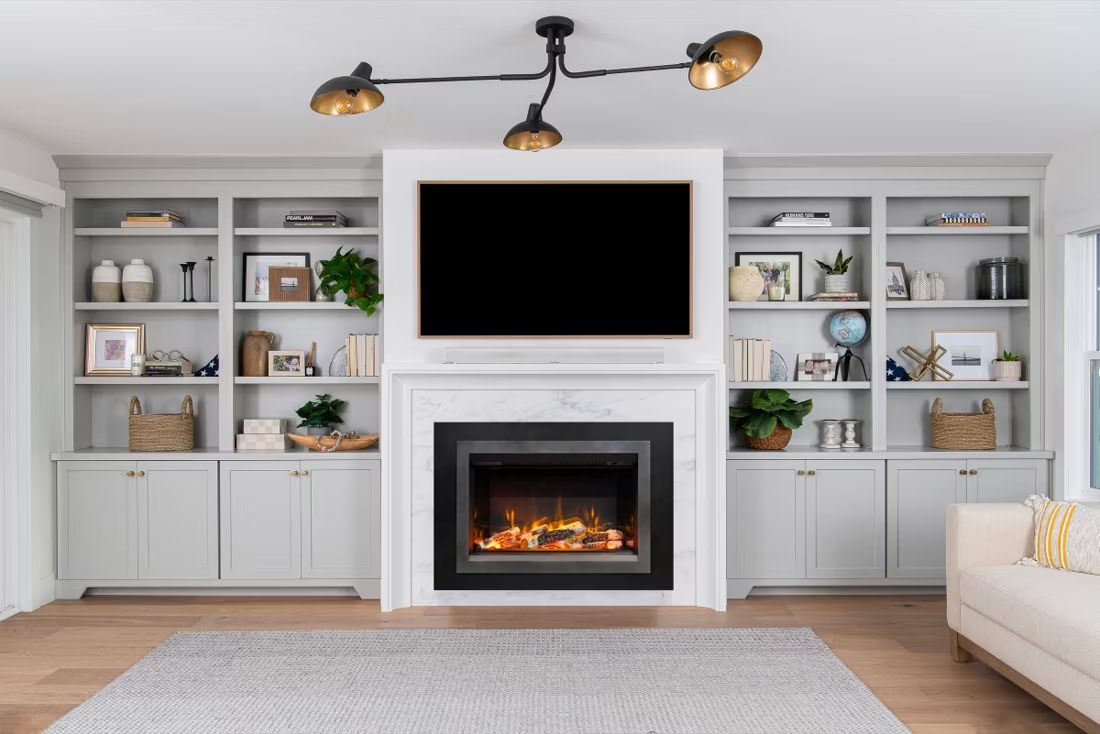
Yes—with an asterisk. Fireplaces are hot and TVs don't like heat. Either put a mantel between them to deflect rising warmth, or choose a fireplace with heat-management technology that creates a cool zone on the wall above—the wall stays around 125 degrees, barely warm, while the room still gets full heat. If you like clean lines and don't want a mantel, heat management is the answer.
Does an electric fireplace need a vent or chimney?
No—that's its superpower. An electric fireplace needs a wall and an outlet, period. No vent pipe, no gas line, no clearances to design around, which is why it works in bedrooms, offices, apartments, and walls where venting a gas or wood unit would be impractical or impossible. Installation is typically the simplest and least expensive of any fireplace type.
What is an in-home preview and do I need one?
It's a visit where a hearth professional measures your space, confirms the model you picked actually works in your home, and walks the specs—framing, gas line, venting, finish work—before anything is ordered. Some details you just can't know until you see the house. Never make a down payment without one; it's the single most-skipped step that burns buyers.
Does a fireplace add value to my home?
On average, a fireplace adds back to the home about the same amount you spent installing it. Add the monthly savings from heating the rooms you actually use instead of the whole house—often hundreds of dollars a year—and the value case is strong before you even count what a fire does for how your family uses the room.
Nearby Dealers
Hearth shops serving Lake Wisconsin and the surrounding area. Every listing shows whether it is a WhyFire partner, a dealer we have verified as authorized for the brands we recommend, or a local business carrying hearth products. No manufacturer pays for placement. How we verify dealers →
Dischler Heating – Cooling & Fireplaces, Inc.
Shields Fireside Hearth & Home Of Baraboo
Fireside Hearth & Home - Madison
Electric Service in Lake Wisconsin
An electric fireplace's heater draws about 1,500 watts—pennies per hour at local rates.
Wisconsin Power & Light Co
Find your electric fireplace in Lake Wisconsin.
Tell us about your cabin, addition, or main living space and we'll put together a free Project Guide & Parts List—the right electric fireplace or insert, the wiring it needs, and a trusted local dealer to install it.
Find Your Fireplace →