
Instant heat built for Chippewa County's long winters.
With over 7,500 heating degree days and average winter lows near 8°F, Lake Hallie homes need heat that comes on the moment you flip a switch. Find the right gas fireplace and get matched with a trusted local dealer.
Every Project Starts From One of These Five Situations
Consistent warmth without tending a fire.
Lake Hallie sits in west-central Wisconsin's Chippewa County, just outside Chippewa Falls and Eau Claire, in climate zone 6A. Winters here run long and cold—average lows around 8°F and roughly 7,500 heating degree days a year, a heating load comparable to Minneapolis, about 90 miles west. That kind of sustained cold is exactly where a gas fireplace earns its keep: no waiting for a fire to catch, no hauling wood in from the shed at 6 a.m. before work.
Many homes in and around Lake Hallie have access to piped natural gas, while propane remains the standard fallback in the more rural stretches of Chippewa County outside the service footprint. Either fuel works in a modern direct-vent fireplace or insert—your local dealer will confirm what's already run to your home and size the unit and gas line accordingly. For a town where a lot of the housing stock is older ranch and farmhouse construction, gas also pairs well as a second heat source alongside a wood stove, giving you push-button warmth in the living room without giving up the wood heat many Chippewa County families rely on.
Three steps. No salesperson until you're ready.
Tell us about your project
Your zip code, your situation, and the fuel you're leaning toward—or let the answers point you to one.
See what's actually available
The brands dealers within 100 miles genuinely carry—real options, never a catalog mirage.
Get your dealer & Project Guide
A trusted local dealer, plus the free Project Guide & Parts List that names every component of the job.
Frequently Asked Questions
How much does a gas fireplace installation cost in Lake Hallie?
Expect a typical gas fireplace or insert installation in the Lake Hallie area to run roughly $4,000 to $10,000, with the spread driven mostly by venting and gas line work. A direct-vent insert going into an existing masonry fireplace that already has a gas line nearby sits toward the lower end. A new built-in unit for a remodel or an addition—where a gas fitter has to run new line and an installer frames a new direct-vent chase through an exterior wall—lands toward the higher end. A local dealer will walk your home before quoting a firm number.
Can I convert my existing wood fireplace to gas?
Yes, and it's a common project in this part of Chippewa County, where a lot of homes were built with a traditional masonry fireplace decades ago. A gas insert typically slides into that opening, running a stainless liner up the existing chimney for venting. If the home is already set up for natural gas or has an existing propane tank, the job is mostly about the insert and the liner. If there's no gas service to the house yet, a propane tank or a new gas line becomes part of the cost. Either way, you keep the look of the original fireplace and gain real, controllable heat instead of an open hearth that pulls warm air up the flue.
Do I need natural gas, or can I use propane in Lake Hallie?
Both are used locally. Where piped natural gas reaches a home, adding a fireplace is usually the simpler path since the appliance just taps into existing service. Outside that footprint—which describes a fair amount of rural Chippewa County—propane is the standard alternative, either from an existing tank shared with a furnace or water heater, or a new tank set specifically for the fireplace. Nearly every gas fireplace on the market can be configured for either fuel; your installer sets the correct orifice and regulator, so the choice comes down to what's actually available at your address, not the fireplace itself.
Will my gas fireplace still work if the power goes out?
Most will, with one caveat worth knowing. Units with standing pilot or IPI (intermittent pilot ignition) systems run on millivolt power generated by the pilot flame itself, so they'll light and heat with no household electricity at all—genuinely useful in Lake Hallie during a January ice storm that knocks out the grid. Units that rely on a blower for circulation will still light, but you'll lose the fan-driven heat distribution until power returns. If backup heat during outages matters to you, ask your local dealer specifically about millivolt or battery-backed ignition when you're comparing models—not every unit on the showroom floor is built the same way.
What's the difference between a gas fireplace, gas insert, and gas stove?
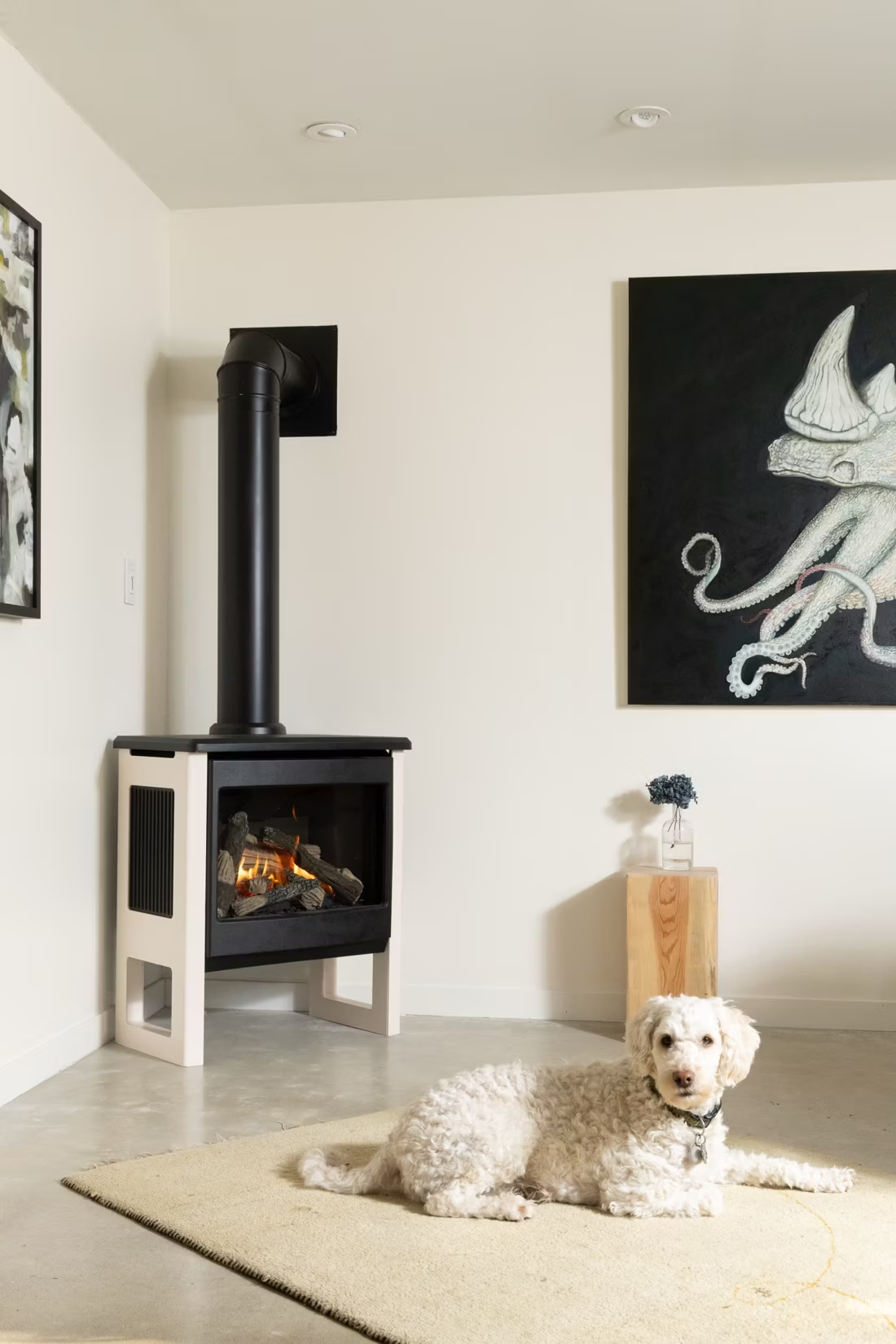
A gas fireplace is a fully built-in, zero-clearance unit framed into a wall—the right call for new construction or a full remodel. A gas insert is sized to drop into an existing masonry fireplace opening and vent through the chimney with a liner, which fits a lot of the older housing stock around Lake Hallie and Chippewa Falls. A gas stove is a freestanding cast-iron or steel unit that sits on the floor like a wood stove but burns gas—a good option for a room with no existing fireplace and no interest in framing one in. Most homeowners here with an existing hearth go the insert route; new builds usually go built-in.
Do I need a permit to install a gas fireplace in Lake Hallie?
Yes. Gas fireplace installations require both a building permit through the local jurisdiction and a licensed gas fitter to make the fuel line connection—Wisconsin's Uniform Dwelling Code requires this for one- and two-family homes regardless of municipality. In practice, a reputable local hearth dealer coordinates the permit, the gas hookup, and the final inspection as part of the install, so you're not left managing separate trades yourself.
Should I get a vented or vent-free gas fireplace?
Vented, direct-vent units are the standard recommendation for Lake Hallie and almost anywhere in this climate zone. They draw combustion air from outside and exhaust it back outside through a sealed pipe, which matters more in a place with 7,500+ heating degree days, because homes here tend to be built tight for efficiency—there's less natural air exchange to dilute combustion byproducts from a vent-free unit. Vent-free fireplaces are legal in Wisconsin under specific room-sizing and ventilation rules, but most local dealers steer customers toward direct-vent for both safety and heat performance in a cold-climate home.
How often does a gas fireplace need to be serviced?
Plan on an annual inspection, ideally in early fall before the unit sees heavy use through a Chippewa County winter. A technician checks the burner, pilot assembly, venting, and gas connections, and cleans the glass and interior—usually a $150–$250 visit. It's a shorter, less involved appointment than a wood chimney sweep, but skipping it is how you end up with a sooted-up glass panel or, worse, a venting issue you don't catch until the unit starts short-cycling.
Gas vs. wood—which makes more sense for a Lake Hallie home?
Wood is still common here—oak, maple, birch, and aspen are all readily available regionally, and a wood stove keeps working through a power outage, which matters when an ice storm rolls through in January. Gas trades that self-sufficiency for convenience: instant on-off heat, no ash, no wood stacking, and steadier output for a primary living space. A lot of Chippewa County homes end up running both—gas for daily use in the main room, wood as backup heat and for the nights when a real fire is worth the extra effort. If you already have a chimney and burn wood occasionally, a gas insert as a second unit is worth discussing with a local dealer rather than treating it as an either-or decision.
Is my gas fireplace wasting gas?
If it was installed more than 15 years ago, probably. Older gas fireplaces keep a standing pilot light burning all the time, and that little flame can cost a couple hundred dollars a year. Newer models use pilot-on-demand ignition—the pilot lights only when you use the fireplace and goes out when you turn it off.
What's the difference between an insert and a zero-clearance fireplace?
An insert is a fireplace that slides into a pre-existing wood-burning fireplace—if you don't have one, there's nothing to insert it into. A zero-clearance fireplace is built into a framed wall, which makes it the answer for remodels and new construction. Simple test: existing masonry fireplace means insert; blank or framed wall means zero-clearance.
How much should I budget for a fireplace?
For an average home—covering the fireplace, the vent pipe, and basic installation—a budget between $3,900 and $5,500 gives you a lot of options across wood, gas, and pellet. By the time you add finish work, gas line, and electrical, the average complete installation lands between $5,000 and $12,000 all-in. In a remodel or new build, a good rule is to put about 2.5% of the total project cost toward the fireplace.
What is an in-home preview and do I need one?
It's a visit where a hearth professional measures your space, confirms the model you picked actually works in your home, and walks the specs—framing, gas line, venting, finish work—before anything is ordered. Some details you just can't know until you see the house. Never make a down payment without one; it's the single most-skipped step that burns buyers.
Nearby Dealers
Hearth shops serving Lake Hallie and the surrounding area. Every listing shows whether it is a WhyFire partner, a dealer we have verified as authorized for the brands we recommend, or a local business carrying hearth products. No manufacturer pays for placement. How we verify dealers →
Ccs Services LLC
Poolman
Find your gas fireplace in Lake Hallie.
Tell us about your home and we'll match you with a trusted local dealer and send over a free Project Guide & Parts List—the exact equipment, venting, and next steps for a gas fireplace project in Lake Hallie.
Find Your Fireplace →