
Find the right gas fireplace for a Lake Michigan winter.
Instant, reliable heat for Kewaunee County's long heating season—from Kewaunee and Algoma to Luxemburg and the townships in between. We match you with a trusted local dealer and hand you a free plan for the project.
Every Project Starts From One of These Five Situations
Nearly 7,900 heating degree days call for heat you can flip on and trust.
Kewaunee County sits along Lake Michigan's western shore in climate zone 6A, where winter lows average 11°F and the region racks up roughly 7,871 heating degree days a year—a load in the same range as Duluth or Fargo, and enough that furnaces run for most of six months. Lake-effect snow and biting northeast winds off the water add to the demand on any heating system, and homeowners from Kewaunee and Algoma out to the rural townships around Luxemburg and Casco increasingly turn to gas fireplaces and inserts as either a primary zone-heat source or a dependable backup to central heat.
Much of the county still relies on a mix of natural gas service near the incorporated towns and propane out in the more rural stretches, so which fuel you use often comes down to where your home sits. Either way, a properly sized direct-vent gas fireplace or insert gives you heat at the flip of a switch, no wood to split or haul, and—with the right ignition system—the ability to keep running through a winter power outage along the lakeshore. I match Kewaunee County homeowners with a trusted local dealer who knows the venting requirements and gas-line realities of this specific area, rather than a big-box guess.
Three steps. No salesperson until you're ready.
Tell us about your project
Your zip code, your situation, and the fuel you're leaning toward—or let the answers point you to one.
See what's actually available
The brands dealers within 100 miles genuinely carry—real options, never a catalog mirage.
Get your dealer & Project Guide
A trusted local dealer, plus the free Project Guide & Parts List that names every component of the job.
Frequently Asked Questions
How much does a gas fireplace installation cost in Kewaunee County?
Gas fireplace and insert installations in Kewaunee County typically run in the neighborhood of $4,000 to $10,000, with the spread driven mostly by venting complexity and whether new gas line work is required. A direct-vent insert going into an existing masonry fireplace with gas already run to that wall sits toward the lower end. A new built-in gas fireplace for a remodel or new construction—with framing, a fresh gas line, and through-wall venting—runs higher. Homes on propane rather than natural gas sometimes add the cost of a tank if one isn't already on the property. A local dealer will give you a firm number after seeing your home in person.
Can I convert my existing wood fireplace to gas?
Yes, and it's a common upgrade in the older housing stock around Kewaunee and Algoma. A gas insert typically drops into your existing masonry firebox with a stainless liner run up the same chimney, so you keep the look of your fireplace but gain real, consistent heat output and lose the ash and creosote upkeep. Cost depends on whether the home already has a gas line nearby and whether you're on natural gas or propane—homes already plumbed for gas near town tend to land on the lower end of the typical range.
Is natural gas available in Kewaunee County, or do I need propane?
It depends on where in the county you're located. Natural gas service reaches the more built-up areas in and around towns like Kewaunee and Algoma, but a meaningful share of the county—particularly the rural townships—relies on propane delivered and stored in a tank on the property. Most gas fireplace models can be set up for either fuel with the correct orifice and regulator, so the fuel type mainly affects your ongoing cost and whether you need a tank installed, not which fireplace you can choose.
Will my gas fireplace work if the power goes out?
Most direct-vent gas fireplaces with intermittent pilot ignition (IPI) run on a small battery backup that automatically takes over when the power drops, so the fireplace lights and operates normally off those batteries. That matters along the Lake Michigan shoreline, where winter storms and lake-effect events can knock out power for stretches. Some manufacturers, like Valor, go a step further and generate their own power through the pilot's thermocouple, so there are no batteries to remember at all. Worth asking your local dealer about when comparing units, especially if you want the fireplace to double as emergency heat.
What's the difference between a gas fireplace, gas insert, and gas stove?
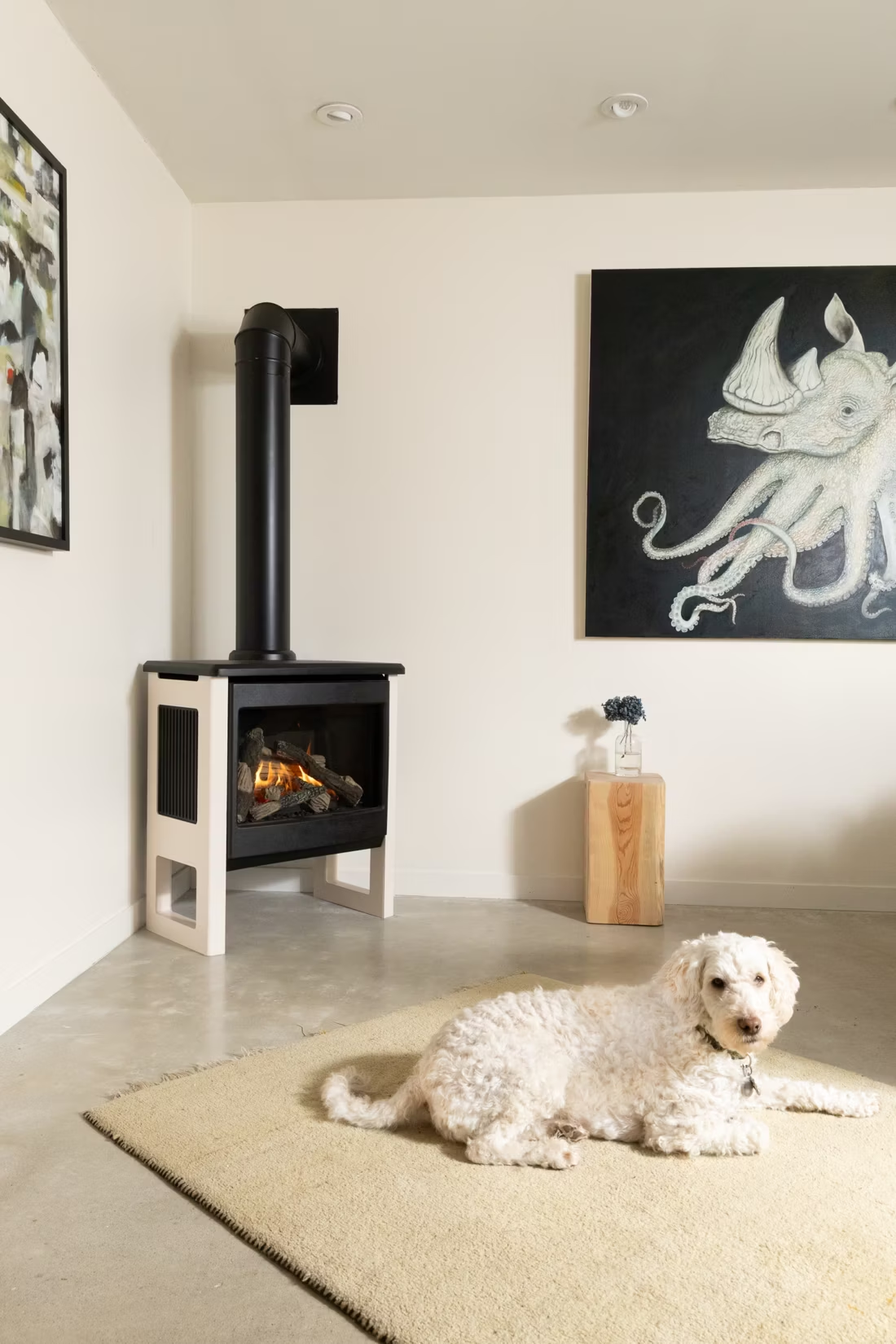
A gas fireplace is a built-in unit framed into a wall, typically chosen for new construction or a larger remodel. A gas insert is built to slide into an existing masonry firebox, turning a drafty old wood fireplace into a sealed, efficient heat source using the same chimney for venting. A gas stove is a freestanding cabinet-style unit that sits on the floor, similar in footprint to a wood stove but burning gas. For most Kewaunee County homes with an older fireplace already in place, an insert is usually the straightforward answer; homes without an existing firebox are better suited to a built-in fireplace or a freestanding stove.
Do I need a permit to install a gas fireplace in Kewaunee County?
Generally, yes—new gas fireplace installations require both a building permit and gas line work performed or inspected by a licensed installer, with permitting handled at the local municipal or county level depending on where the property sits. Most established hearth dealers in the area fold this into the installation process, coordinating the gas line, venting, and any required inspections so you're not left managing separate trades yourself.
Vented vs. vent-free gas fireplaces—what's the difference, and which should I choose?
Vented (direct-vent) gas fireplaces pull combustion air from outside and exhaust the byproducts back outdoors through sealed venting—they're the cleanest and most universally code-accepted option. Vent-free units burn gas directly into the room air without outside venting; they're legal in Wisconsin but come with strict room-size and ventilation requirements, and some states restrict them outright. Given Kewaunee County's long heating season and the amount of time these units run each winter, direct-vent models are the more common and generally recommended choice locally—they deliver strong heat without any indoor air quality tradeoffs. A local dealer can walk you through both if you want to weigh the options yourself.
How often does a gas fireplace need to be serviced?
Plan on an annual inspection, ideally before the heating season starts in earnest. A technician checks the burner, pilot assembly, venting, and gas connections, and cleans the glass and interior—a much smaller job than sweeping a wood chimney, but still important given how many hours these units run through a Kewaunee County winter. Local service providers typically charge somewhere in the $150–$250 range for a standard annual visit.
Gas vs. wood—which makes more sense for a Kewaunee County home?
Wood is still a strong option here—oak, maple, birch, and aspen are all common locally, air quality isn't a limiting factor for burning, and a wood stove keeps working with zero electricity during an outage. Gas trades that self-sufficiency for convenience: instant on-off operation, no hauling or splitting wood, and steadier heat output for the long 7,871-degree-day season. A lot of homeowners around Kewaunee end up with both—gas in the main living space for daily use and convenience, wood as backup heat or for a cabin or garage. Which one wins usually comes down to whether you value the ritual of tending a fire or the simplicity of flipping a switch.
Why is my open fireplace making my house colder?
Open fireplaces suck—literally. As the fire burns, it consumes air your furnace already paid to heat and pulls it out through the chimney, so the house is actually colder after the fire goes out than before you lit it. An insert fixes this: it seals the chimney, puts fixed glass across the front, and turns that hole in your house into a real heat source.
What's the difference between an insert and a zero-clearance fireplace?
An insert is a fireplace that slides into a pre-existing wood-burning fireplace—if you don't have one, there's nothing to insert it into. A zero-clearance fireplace is built into a framed wall, which makes it the answer for remodels and new construction. Simple test: existing masonry fireplace means insert; blank or framed wall means zero-clearance.
Can I install a fireplace myself?
If you're putting a fire in your house on purpose, it's best to work with an expert. Unless you're genuinely experienced in framing, gas line, vent pipe, and the national code on clearances to combustibles, have a professional do it—and ideally the same company that sells you the fireplace, so warranty, service, and liability all live under one roof.
Can a fireplace actually lower my heating bill?
Yes—by creating a comfort zone. A furnace heats every square foot of the house just to warm the one room you're in; a gas fireplace on low burns roughly a sixth of the gas a typical furnace does. Set the furnace around 55–60 degrees as a baseline, then heat the rooms your family actually uses. Families who heat this way commonly save $20–$60 a month.
Stove and Fireplace Dealers in Kewaunee County
Listings include WhyFire partner dealers, dealers we have verified as authorized for the brands we recommend, and established local businesses that carry hearth products. Every listing shows which one it is. The ones marked Preferred run on WhyFire's software, so they can show you real pricing and book your appointment right here. No manufacturer pays for placement. How we verify dealers →
Wulf Brothers- Sturgeon Bay, Wi
Laughlin Chimney & Fireplace
Energy Shop
Get your free Project Guide & Parts List for a gas fireplace in Kewaunee County.
Tell us a bit about your home and heating goals, and I'll match you with a trusted local dealer and send over a free Project Guide & Parts List—the exact parts, vent kit included, plus who to call to get it installed right.
Find Your Fireplace →