
Real ambiance and zone heat for Jefferson County winters.
With a long, demanding heating season and average winter lows near 10°F, Jefferson County homes need more than looks from a fireplace. Find the right electric unit and get matched with a trusted local installer.
Every Project Starts From One of These Five Situations
Zone heat that plugs in and works everywhere from Watertown to Fort Atkinson.
Jefferson County sits in climate zone 6A, with average winter lows around 10°F and a heating season about as demanding as Madison or Fond du Lac—a heating load closer to those cities than the milder parts of the Midwest. Homeowners here lean hard on central heat all winter, and electric fireplaces have become a popular way to add supplemental warmth to a specific room—a finished basement in Fort Atkinson, a sunroom addition in Watertown, a bedroom in one of Jefferson's older farmhouses—without running new gas lines or building a chimney.
Unlike wood or gas, electric units need no venting, no combustion air, and no annual chimney inspection—just a standard or dedicated circuit. That makes them a strong fit for condos, apartments, and rental properties throughout the county where a real wood or gas installation isn't practical. They won't replace a furnace on a 10-below night, but for zone heating a single room, or adding fireplace ambiance to a space that never had one, a properly sized electric insert or built-in does real work at a fraction of the installation cost and complexity of a vented appliance.
Three steps. No salesperson until you're ready.
Tell us about your project
Your zip code, your situation, and the fuel you're leaning toward—or let the answers point you to one.
See what's actually available
The brands dealers within 100 miles genuinely carry—real options, never a catalog mirage.
Get your dealer & Project Guide
A trusted local dealer, plus the free Project Guide & Parts List that names every component of the job.
Frequently Asked Questions
How much does an electric fireplace installation cost in Jefferson County?
Most electric fireplace installations in Jefferson County run between $400 and $1,200. A plug-in electric insert that slides into an existing masonry fireplace or a freestanding unit is on the low end—often just the cost of the unit itself with no electrical work needed. Built-in electric fireplaces or units requiring a dedicated 20-amp circuit run higher, especially if a licensed electrician needs to run new wiring to a finished basement or an addition. Local dealers can walk you through which option fits your room and your panel capacity.
Will an electric fireplace actually heat a room in a Wisconsin winter?
It depends on the room and your expectations. Most electric fireplaces put out around 4,600–5,000 BTUs, enough to comfortably supplement a well-insulated room of 400–1,000 square feet—think a Fort Atkinson bedroom, a Watertown den, or a finished basement rec room. With average winter lows near 10°F and a long, demanding heating season in Jefferson County, an electric unit isn't going to replace your furnace on the coldest nights, but it does a good job of letting you turn the thermostat down in one room while keeping that space genuinely warm. For whole-room primary heat in a drafty older home, wood or gas will outperform electric.
Do I need an electrician to install an electric fireplace?
Many models plug into a standard 120V outlet and need no electrician at all—you can plug it in and go. Larger built-in units, especially ones drawing 1,500 watts continuously, often call for a dedicated circuit to avoid tripping breakers, particularly in older Jefferson County homes with older electrical panels common in the county's 19th-century housing stock in towns like Jefferson and Lake Mills. A local dealer can tell you during a consultation whether your intended spot needs new wiring, and can coordinate a licensed electrician as part of the install.
Do I need a permit to install an electric fireplace in Jefferson County?
Typically no permit is required for a plug-in electric insert or a freestanding unit, since there's no venting or gas work involved. If your installation requires a new dedicated electrical circuit, that wiring work generally does require an electrical permit through your local municipality's building department, whether that's the City of Watertown, City of Fort Atkinson, or Jefferson County's building department for unincorporated areas. Most licensed electricians pull this permit as a routine part of the job.
What's the difference between an electric insert and a built-in electric fireplace?
An electric insert is sized to slide into an existing fireplace opening, whether that's an old wood-burning masonry firebox or a factory-built zero-clearance unit—it's a fast way to convert a fireplace you already have into something you'll actually use daily. A built-in electric fireplace is designed to be framed into a wall from scratch, which is common in Jefferson County during basement finishing projects or additions where there's no existing fireplace opening. Both plug in and need no venting; the difference is really about what opening you're working with.
How does an electric fireplace compare to a gas fireplace for Jefferson County homes?
Gas fireplaces put out considerably more heat—often 20,000+ BTUs from a direct-vent unit—enough to serve as legitimate supplemental heat for an entire living room during a Jefferson County winter. Electric fireplaces top out around 5,000 BTUs and are better suited to ambiance plus light zone heating in a single room. Gas also requires venting and a gas line, which means a more involved and costly installation; electric is a same-day plug-in project in most cases. If you're trying to meaningfully offset furnace use in a cold winter, gas is the stronger performer. If you want fireplace ambiance in a room without construction, electric is the practical choice.
Can I put an electric fireplace anywhere in my house?
Pretty much, which is one of the format's biggest advantages. Since there's no venting or combustion air requirement, electric fireplaces work in interior rooms, apartments, condos, and rental units throughout Jefferson County where a wood or gas installation would be impossible or against a lease agreement. The main constraint is electrical: make sure the outlet or circuit can handle the draw, and keep clearances from combustible materials per the manufacturer's spec, even though there's no open flame.
Are electric fireplaces expensive to run?
Running costs depend on your electric utility's rate, but a typical 1,500-watt electric fireplace run for several hours a day adds a modest amount to a monthly bill—often less than the cost of running space heaters, since most units let you separate the heat function from the flame-effect light show. Many owners run the flame effect year-round for ambiance without the heater engaged, which draws very little power. For actual heat, running it during the coldest stretch of a Jefferson County winter alongside your furnace, rather than instead of it, tends to be the most cost-effective approach.
Electric vs. wood—which is right for my Jefferson County home?
Wood stoves, common locally in oak, maple, birch, and aspen-burning setups, put out serious heat—enough to serve as primary heat in a drafty farmhouse—and keep working during a power outage, which matters when winter storms roll through the county. Electric fireplaces need power to run at all, so they're not a backup heat source, but they install in an afternoon with no chimney, no permits in most cases, and no wood handling or ash cleanup. For a rural property that loses power occasionally and wants real backup heat, wood is the better fit. For a condo, apartment, or a specific room where convenience and clean installation matter most, electric is usually the right call.
Do electric fireplaces actually produce heat?
Yes—most put out around 4,800–5,000 BTUs from a standard outlet, which comfortably warms a bedroom, office, or den as a comfort-zone heater. What they won't do is carry a whole house the way wood, gas, or pellet can. Think of electric as ambiance-first with honest supplemental heat: flames on with no heat in July, flames plus warmth in January.
Can I put a TV above my fireplace?
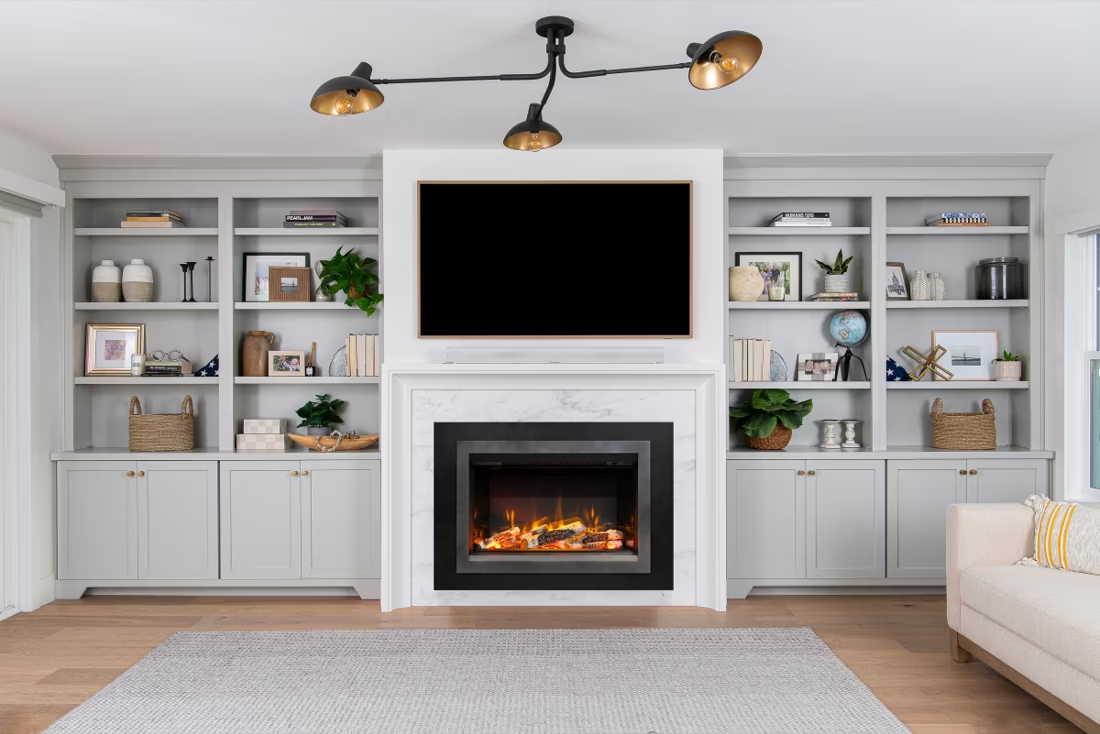
Yes—with an asterisk. Fireplaces are hot and TVs don't like heat. Either put a mantel between them to deflect rising warmth, or choose a fireplace with heat-management technology that creates a cool zone on the wall above—the wall stays around 125 degrees, barely warm, while the room still gets full heat. If you like clean lines and don't want a mantel, heat management is the answer.
Can a fireplace actually lower my heating bill?
Yes—by creating a comfort zone. A furnace heats every square foot of the house just to warm the one room you're in; a gas fireplace on low burns roughly a sixth of the gas a typical furnace does. Set the furnace around 55–60 degrees as a baseline, then heat the rooms your family actually uses. Families who heat this way commonly save $20–$60 a month.
Does a fireplace add value to my home?
On average, a fireplace adds back to the home about the same amount you spent installing it. Add the monthly savings from heating the rooms you actually use instead of the whole house—often hundreds of dollars a year—and the value case is strong before you even count what a fire does for how your family uses the room.
Stove and Fireplace Dealers in Jefferson County
Listings include WhyFire partner dealers, dealers we have verified as authorized for the brands we recommend, and established local businesses that carry hearth products. Every listing shows which one it is. The ones marked Preferred run on WhyFire's software, so they can show you real pricing and book your appointment right here. No manufacturer pays for placement. How we verify dealers →
Al Beyers Indoor Comfort System-Cambridge, Wi
R & W Heating
Find your electric fireplace in Jefferson County.
Tell us a bit about your home and room, and we'll put together your free Project Guide & Parts List—the right electric fireplace or insert for your space, matched with a trusted local dealer in Jefferson County who can get it installed correctly.
Find Your Fireplace →