
Warm up a room in Janesville without cutting a vent or hauling wood.
Zone heat and real ambiance for Rock County homes, condos, and additions where running a chimney or gas line isn't practical. Find the right unit and connect with a trusted local dealer.
Every Project Starts From One of These Five Situations
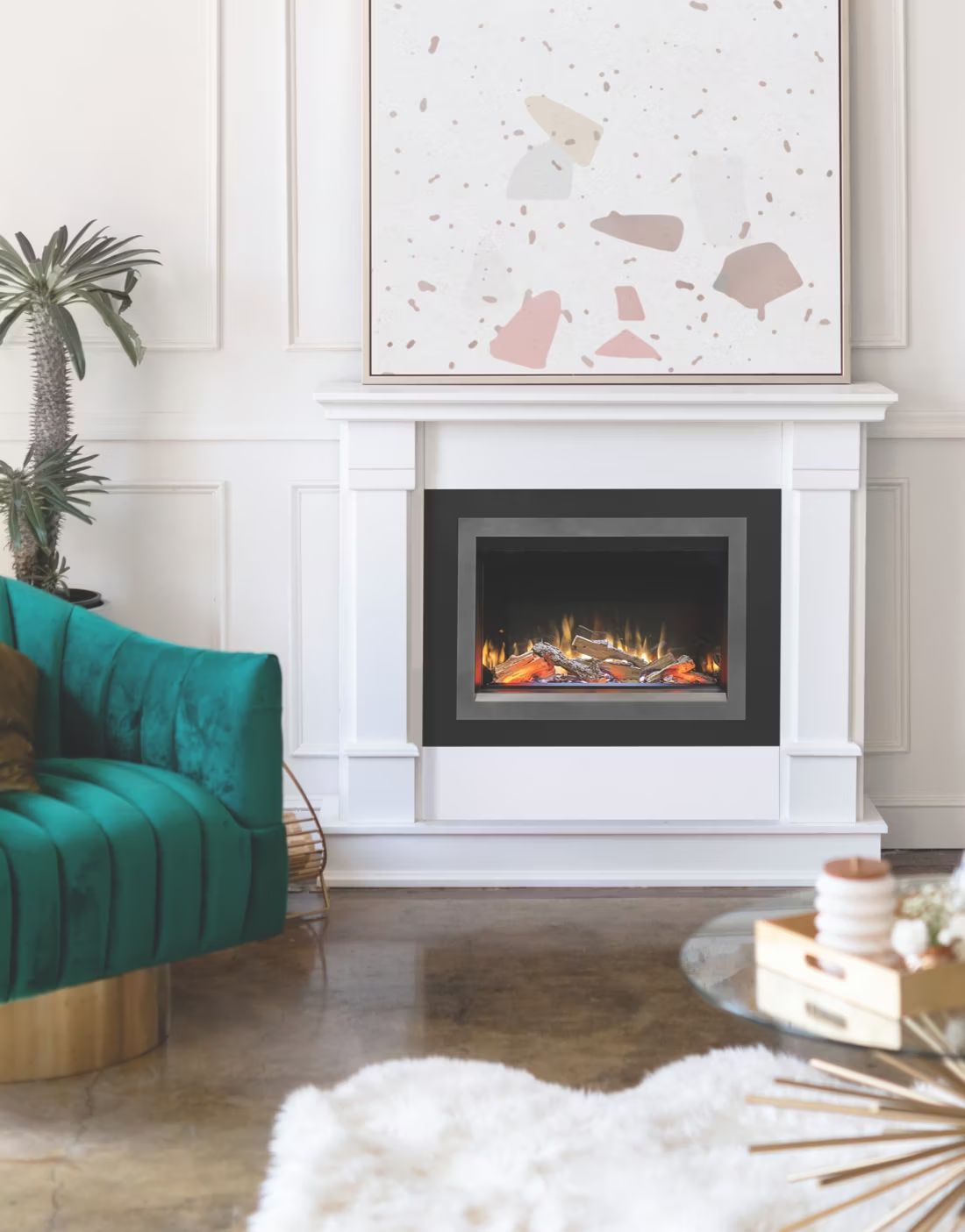
Electric heat that installs almost anywhere in the house.
Janesville sits along the Rock River in south-central Wisconsin, in climate zone 6A with roughly 6,947 heating degree days a year and average winter lows around 12°F—heating demand on par with nearby Madison and not far off from Duluth, MN in the harshest stretches of January. With that much cold to cover, electric fireplaces here aren't marketed as whole-home heat; they're the go-to for supplemental warmth in a specific room, finished basement, condo, or addition where a gas line or masonry chimney isn't in the cards.
Rock County homes are split between two electric providers—Wisconsin Power & Light Co. (Alliant Energy) inside city limits and Rock Energy Cooperative in the surrounding rural parts of the county—so your actual per-kWh cost depends on which side of that line you're on. Either way, the appeal is the same: no venting, no combustion byproducts, no annual chimney sweep, and an install that in many cases is as simple as a licensed electrician adding a dedicated circuit. For renters, condo owners, and anyone adding heat to a room that never had a hearth, electric is often the only realistic option—and a good one for ambiance plus a real BTU boost on the coldest nights.
Three steps. No salesperson until you're ready.
Tell us about your project
Your zip code, your situation, and the fuel you're leaning toward—or let the answers point you to one.
See what's actually available
The brands dealers within 100 miles genuinely carry—real options, never a catalog mirage.
Get your dealer & Project Guide
A trusted local dealer, plus the free Project Guide & Parts List that names every component of the job.
Frequently Asked Questions
How much does an electric fireplace installation cost in Janesville?
Plug-in electric fireplace inserts and mantel units are the cheapest path—often $300 to $1,200 installed, since they run off a standard 120V outlet and need no electrician if one's already nearby. Built-in, wall-recessed, or larger linear units typically need a dedicated 20-amp circuit, which runs the total to roughly $1,500 to $3,500 once you factor in an electrician's labor, a new circuit run from the panel, and any surround or mantel carpentry. Homes with an older panel that's already near capacity can see costs climb further if a subpanel or panel upgrade is needed—worth asking a local dealer or electrician to check before you buy.
Do I need a permit or licensed electrician for an electric fireplace in Janesville?
A basic plug-in unit needs no permit at all—it's no different than plugging in a space heater. But any built-in or wall-mounted electric fireplace that requires a new dedicated circuit does need an electrical permit, since it's new wiring tied into your panel. In Rock County that permit is typically pulled through the City of Janesville's Building Services Division for in-city addresses, or the Rock County electrical inspector for homes outside city limits. Most hearth dealers work with a licensed electrician who handles the permit and inspection as part of the install, so you're not coordinating it yourself.
Can an electric fireplace actually heat a room during a Janesville winter?
For a single room, yes—most residential electric fireplaces put out 4,600 to 5,200 BTU (roughly the equivalent of a 1,500-watt space heater) which is enough to noticeably warm a 300-400 sq ft room, especially with the fan-forced models common in colder climates. What it won't do is replace your furnace at 12°F outdoor lows, which is the average winter low here. Think of it as zone heat: it lets you turn the thermostat down a couple degrees in the rest of the house while the room you're actually sitting in stays comfortable. That's the honest use case in a 6A climate zone with nearly 7,000 heating degree days.
What's the difference between a plug-in electric fireplace and a built-in electric insert?
A plug-in unit—a freestanding stove-style heater, a mantel package, or a simple insert that slides into an existing firebox—runs off a standard outlet and can be unplugged and moved if you relocate. A built-in electric fireplace is recessed into a wall or custom surround, typically wired to a dedicated circuit, and installed as a permanent fixture, often with a linear or widescreen flame display. For Janesville renters or anyone in a condo through a Rock Energy Cooperative-served address, plug-in units are usually the simpler, lease-friendly choice. Homeowners doing a basement remodel or fireplace-free addition more often go with a built-in for the cleaner, framed-in look.
Will my electric fireplace still work if the power goes out?
No—and this is the one honest tradeoff worth knowing before you buy. Unlike a gas fireplace with battery-backup ignition or a wood stove that needs no power at all, an electric fireplace goes dark the moment the grid does, whether you're served by Alliant Energy or Rock Energy Cooperative. If backup heat during winter storm outages is a priority for your household, pair the electric unit (for daily convenience and ambiance) with a wood stove or a battery/generator-backed gas unit elsewhere in the home rather than relying on electric alone.
How much will running an electric fireplace add to my utility bill?
It depends on which utility serves your address. Wisconsin Power & Light Co. (Alliant Energy) customers pay about 16.9¢/kWh, while Rock Energy Cooperative customers pay closer to 14.5¢/kWh. A typical 1,500-watt unit running on high costs roughly 22 to 25 cents per hour to operate—call it $15 to $30 a month if you run it a few hours most evenings through a Wisconsin winter. Most units also have a flame-only mode with the heater off, which draws only 30-50 watts, so you can run the ambiance year-round for pennies and save the heat setting for when you actually need it.
What's a good electric fireplace for supplemental heat in a Janesville home?
Look for a unit with a true fan-forced heating element rated for 400+ sq ft rather than a decorative-only flame effect. Brands like Dimplex and Napoleon build linear and insert models with dual-stage heat settings that let you dial back output on milder days and run full 1,500W on the coldest ones—useful given how much the temperature swings here between a 30°F January thaw and a 12°F average low. For a straightforward insert into an existing but unused masonry firebox, a plug-in electric insert from a local dealer is usually the simplest upgrade—no chimney work, no venting, and it's typically ready to run the same day.
Electric vs. wood vs. gas—which is right for my Janesville home?
Wood—commonly oak, maple, birch, or aspen split from Rock County's hardwood stands—delivers the most heat per dollar and keeps working through a power outage, but it means chimney maintenance and hauling fuel. Gas offers instant, consistent heat and can be set up with battery-backup ignition for outages, but requires a gas line and venting. Electric skips both the venting and the fuel handling entirely, installs in almost any room, and costs the least upfront, but it can't function as whole-home heat in a 6,947-HDD climate and goes dark with the grid. Many Janesville homes end up with a hybrid approach: a wood stove or gas insert as the real heat source, and an electric unit in a bedroom, basement, or den for supplemental warmth and instant ambiance.
How much maintenance does an electric fireplace actually need?
Very little compared to wood or gas. There's no chimney to sweep and no annual gas-line inspection required. Maintenance is mostly dusting the heating element and glass a couple times a season, occasionally replacing the LED ember bed light (rated for 20,000+ hours on most models, so this is rare), and checking that the unit's dedicated circuit and outlet show no signs of wear if it's a high-draw built-in. Most units carry a 2-3 year manufacturer's warranty on parts, and a local dealer can usually diagnose an issue over the phone before you'd need a service call.
Can I put a TV above my fireplace?
Yes—with an asterisk. Fireplaces are hot and TVs don't like heat. Either put a mantel between them to deflect rising warmth, or choose a fireplace with heat-management technology that creates a cool zone on the wall above—the wall stays around 125 degrees, barely warm, while the room still gets full heat. If you like clean lines and don't want a mantel, heat management is the answer.
Does an electric fireplace need a vent or chimney?
No—that's its superpower. An electric fireplace needs a wall and an outlet, period. No vent pipe, no gas line, no clearances to design around, which is why it works in bedrooms, offices, apartments, and walls where venting a gas or wood unit would be impractical or impossible. Installation is typically the simplest and least expensive of any fireplace type.
What is an in-home preview and do I need one?
It's a visit where a hearth professional measures your space, confirms the model you picked actually works in your home, and walks the specs—framing, gas line, venting, finish work—before anything is ordered. Some details you just can't know until you see the house. Never make a down payment without one; it's the single most-skipped step that burns buyers.
Can I install a fireplace myself?
If you're putting a fire in your house on purpose, it's best to work with an expert. Unless you're genuinely experienced in framing, gas line, vent pipe, and the national code on clearances to combustibles, have a professional do it—and ideally the same company that sells you the fireplace, so warranty, service, and liability all live under one roof.
Nearby Dealers
Hearth shops serving Janesville and the surrounding area.
Electric Service in Janesville
An electric fireplace's heater draws about 1,500 watts—pennies per hour at local rates.
Wisconsin Power & Light Co
Rock Energy Cooperative
Find your electric fireplace in Janesville.
Tell us a bit about your home and we'll match you with the right electric fireplace or insert, then send over a free Project Guide & Parts List with the exact unit, circuit requirements, and surround—plus your recommended local dealer.
Find Your Fireplace →