
Add cozy, chimney-free warmth to your Iowa County home.
Iowa County sees average winter lows near 9°F and a long, demanding heating season stretching over seven months—plenty of nights to justify a second heat source in the room you actually live in. No masonry, no venting, no cutting a hole through your roof. Find the right unit and connect with a trusted local dealer.
Every Project Starts From One of These Five Situations
Modern warmth for a county still built on woodstoves.
Iowa County is farm country—rolling hills between Dodgeville and Mineral Point, with Highland, Barneveld, and a scatter of small townships filling in the rest. A lot of the older farmhouses and outbuildings out here were heated with oak, maple, birch, and aspen long before anyone thought about a thermostat, and plenty of households still burn wood as a primary or backup heat source through a Wisconsin winter that runs cold and long. Electric fireplaces aren't trying to replace that tradition—they're solving a different problem: adding real, immediate warmth and ambiance to a specific room without touching the chimney, the roofline, or the gas line.
Most of Iowa County gets its electricity from Alliant Energy, with Scenic Rivers Energy Cooperative serving a good share of the more rural farmsteads and township roads outside Dodgeville and Mineral Point proper. That matters for electric fireplaces because, unlike wood or gas, there's no combustion, no permit for the appliance itself in most cases, and no air-quality question to sort through—Iowa County has no listed air quality concerns to begin with. What you're deciding instead is whether you need a simple plug-in insert or a hardwired built-in unit tied to its own circuit, and a local dealer who actually installs these in this climate is the fastest way to get that right.
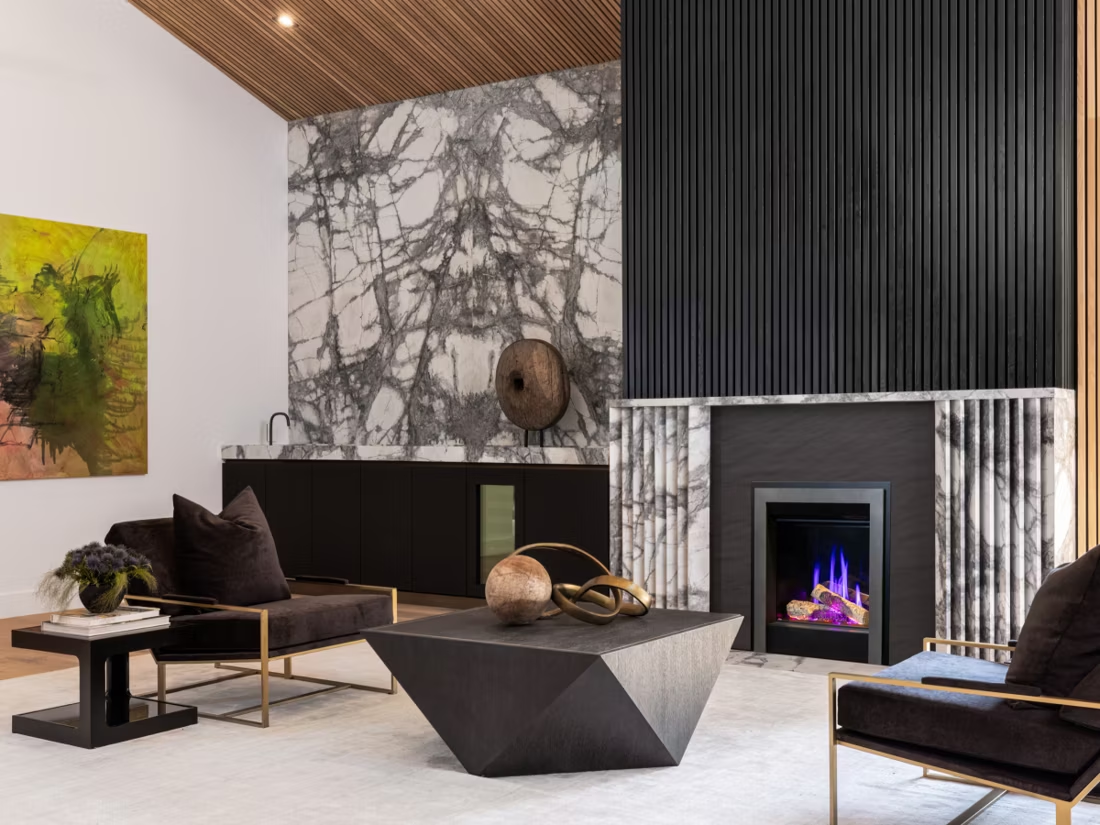
Three steps. No salesperson until you're ready.
Tell us about your project
Your zip code, your situation, and the fuel you're leaning toward—or let the answers point you to one.
See what's actually available
The brands dealers within 100 miles genuinely carry—real options, never a catalog mirage.
Get your dealer & Project Guide
A trusted local dealer, plus the free Project Guide & Parts List that names every component of the job.
Frequently Asked Questions
How much does an electric fireplace installation cost in Iowa County?
A plug-in electric insert or freestanding unit is the least expensive route—often $300 to $1,200 including the unit, since it runs off a standard household outlet and needs no electrician. A built-in wall unit or a linear fireplace set into a renovated hearth typically runs $800 to $2,500 once you add a dedicated 20-amp circuit, a licensed electrician's time, and any surrounding cabinetry or mantel work. Farmhouse renovations around Mineral Point and Dodgeville that are converting an old, unused masonry fireplace into a clean electric insert tend to land in the middle of that range, since the opening usually needs some framing or trim work to finish properly.
Will an electric fireplace actually heat a room in an Iowa County winter?
It depends on what you're asking it to do. Most electric fireplaces put out 1,500 to 5,000 BTU of supplemental heat—enough to noticeably warm a bedroom, den, or finished basement, but not enough to be your primary heat source on a night when the outside temperature is sitting at 9°F, which is the average winter low across the county. Think of it as zone heat that lets you turn the furnace down in the room you're actually using, not a replacement for your furnace or wood stove. For a whole-home primary heat source in a climate with a long, demanding heating season stretching over seven months, you're better served by a properly sized wood or gas system, with electric handling the room-by-room comfort layer.
Do I need a permit to install an electric fireplace in Iowa County?
Plug-in units generally don't require any permit—you're just plugging into an existing outlet. If you're installing a built-in or wall-mounted unit that needs a new dedicated circuit, that electrical work should go through a licensed electrician and, depending on your township, may need an electrical permit coordinated with your local building inspector or the town clerk's office. Iowa County's rural towns handle permitting individually more often than through a single centralized county office, so it's worth confirming with your installer, who will typically know the right process for your specific township.
Electric vs. wood—which makes more sense for my Iowa County home?
Wood remains the practical choice for real heat output in this county—oak, maple, and birch are widely available locally, burn hot and long, and keep a home warm even when the power's out, which matters given how storms roll through rural co-op territory in a hard winter. Electric fireplaces win on convenience and placement: no chimney, no ash, no wood stacked in the mudroom, and instant on-off operation from a wall switch or remote. A lot of Iowa County homeowners end up with both—a wood stove or insert doing the real heavy lifting through January, and an electric unit in a bedroom, office, or finished basement where running a flue just isn't practical.
Will my electric fireplace still work if the power goes out?
No—electric fireplaces need power to run, both for the heater element and the flame effect, so they go dark the moment the outage does. In parts of Iowa County served by Scenic Rivers Energy Cooperative, rural outages after ice or windstorms can run longer than in town, which is exactly why most households out here keep a wood stove, propane heater, or generator as backup rather than relying on an electric unit alone. If backup heat during outages is a real concern for your household, that's a conversation worth having with a local dealer before you commit to electric as your only supplemental source in a given room.
What size electric fireplace do I need?
Sizing an electric fireplace is mostly about the room, not the whole house, since these units are built for zone heating rather than whole-home output. A 30-to-40-inch insert or linear unit comfortably handles most bedrooms and dens common in Iowa County's older farmhouses and newer builds alike, while larger living rooms or open-concept additions often look and perform better with a 50-inch-plus unit or a multi-sided model. Ceiling height and how open the room is to adjoining spaces both affect how much heat you'll actually feel—a local dealer can walk your space and recommend a size instead of you guessing off a spec sheet.
What's the difference between an electric insert, a wall-mount, and a mantel package?
An electric insert is built to drop into an existing fireplace opening—the most common upgrade for the old masonry fireboxes found in a lot of Iowa County's older homes around Mineral Point and Dodgeville. A wall-mount unit hangs flush on the wall like a large flat-screen TV, popular in newer builds and additions where there's no existing hearth to work with. A mantel package pairs an electric insert or linear unit with a surrounding cabinet or shelf unit, giving you a furniture-style fireplace that doesn't require any wall or masonry work at all—a good option for renters or anyone not ready to modify the house.
What's a good electric fireplace for a cold-climate Iowa County home?
Look at units with a true heater element rated for the square footage of the specific room, not just the flame effect—brands like Dimplex, Napoleon, and Amantii build linear and insert models with realistic flame technology and heaters sized for actual supplemental warmth rather than novelty. For a drafty older farmhouse room or an uninsulated basement, pay attention to the unit's rated coverage area and consider sizing up, since older Iowa County housing stock often loses heat faster than a newer, tightly built home. A local dealer who's installed these in similar homes locally can steer you toward a model that will actually hold its own in that specific room.
Electric vs. pellet—which is the better fit?
Pellet stoves, using pellets from regional suppliers like Lignetics or Somerset Pellet Fuel, deliver real, substantial heat output—enough to serve as a primary or major supplemental heat source through an Iowa County winter—but they still need electricity to run the auger and blower, so they're not a backup option during an outage either. Electric fireplaces trade heat output for simplicity: no hopper to fill, no venting, no ash, and instant on-off control, but they're strictly a zone-heat and ambiance appliance. If you want meaningful whole-room heat with minimal daily fuss, pellet is the stronger performer; if you want low-maintenance warmth and atmosphere in a specific space without any combustion at all, electric is the simpler answer.
Can I put a TV above my fireplace?
Yes—with an asterisk. Fireplaces are hot and TVs don't like heat. Either put a mantel between them to deflect rising warmth, or choose a fireplace with heat-management technology that creates a cool zone on the wall above—the wall stays around 125 degrees, barely warm, while the room still gets full heat. If you like clean lines and don't want a mantel, heat management is the answer.
Do electric fireplaces actually produce heat?
Yes—most put out around 4,800–5,000 BTUs from a standard outlet, which comfortably warms a bedroom, office, or den as a comfort-zone heater. What they won't do is carry a whole house the way wood, gas, or pellet can. Think of electric as ambiance-first with honest supplemental heat: flames on with no heat in July, flames plus warmth in January.
What is an in-home preview and do I need one?
It's a visit where a hearth professional measures your space, confirms the model you picked actually works in your home, and walks the specs—framing, gas line, venting, finish work—before anything is ordered. Some details you just can't know until you see the house. Never make a down payment without one; it's the single most-skipped step that burns buyers.
Can I install a fireplace myself?
If you're putting a fire in your house on purpose, it's best to work with an expert. Unless you're genuinely experienced in framing, gas line, vent pipe, and the national code on clearances to combustibles, have a professional do it—and ideally the same company that sells you the fireplace, so warranty, service, and liability all live under one roof.
Stove and Fireplace Dealers in Iowa County
Listings include WhyFire partner dealers, dealers we have verified as authorized for the brands we recommend, and established local businesses that carry hearth products. Every listing shows which one it is. The ones marked Preferred run on WhyFire's software, so they can show you real pricing and book your appointment right here. No manufacturer pays for placement. How we verify dealers →
Center Stove & Fireplace
Risley Pellet Solutions, LLC
Dischler Heating – Cooling & Fireplaces, Inc.
Fireside Hearth & Home - Madison
Lanz Furnace And Fireplace
Find your electric fireplace in Iowa County.
Tell us about your room, your home, and what you're trying to heat—we'll match you with a trusted local dealer and put together a free Project Guide & Parts List for your electric fireplace project, including the exact parts and their recommendation for your space.
Find Your Fireplace →