
Instant Heat for Greendale's Coldest Nights.
With winter lows averaging 12°F and a long, demanding heating season each year, Greendale homes need heat that turns on the moment you need it. Find the right gas fireplace or insert, and connect with a trusted local dealer.
Every Project Starts From One of These Five Situations
A Garden Village Built for Community, Not for Cutting Firewood.
Greendale was laid out in 1938 as one of three federal 'Greenbelt' towns built during the New Deal—a planned garden village of curving streets, shared greens, and modest lots designed around community, not acreage. That original plan still shapes the housing stock today: homes sit close together on tree-lined blocks with little room for a woodpile, and Milwaukee County has no adjacent national forest or public cutting land the way rural parts of Wisconsin do. Combine that with winter lows that average 12°F across a heating season of more than 7,000 degree days—on par with what Minneapolis sees most winters—and it's clear why wood heat never took hold here the way it did further north.
Natural gas service across the village comes from We Energies (Wisconsin Electric Power Co.), which also supplies the electric side for blower motors and standby power on many units. For a village built around walkable blocks and shared common land instead of big rural lots, a direct-vent gas fireplace or insert fits the way people actually live here—it heats a room fast, needs no fuel storage, and keeps running through a stretch of single-digit January nights without anyone tending it.
Three steps. No salesperson until you're ready.
Tell us about your project
Your zip code, your situation, and the fuel you're leaning toward—or let the answers point you to one.
See what's actually available
The brands dealers within 100 miles genuinely carry—real options, never a catalog mirage.
Get your dealer & Project Guide
A trusted local dealer, plus the free Project Guide & Parts List that names every component of the job.
Frequently Asked Questions
How much does a gas fireplace installation cost in Greendale?
Most gas fireplace and insert installations in Greendale run between $3,800 and $9,500. A direct-vent insert going into an existing masonry fireplace—common in Greendale's original 1938 colonials and capes—sits toward the lower end, especially if a gas line is already run to that wall. A new built-in gas fireplace for a remodel or addition, where framing, venting, and a fresh gas line all have to be installed, lands toward the higher end. Village of Greendale permit fees are a small add-on to either project, and local dealers typically build those into the quote.
Can I convert my existing wood fireplace to gas?
Yes, and it's one of the more common requests from Greendale homeowners with an original wood-burning fireplace. A gas insert is fitted into the existing masonry opening with a stainless liner run up your current chimney, typically costing $4,000 to $8,500 depending on the model and whether new gas piping is needed. Given how little storage space most Greendale lots have for a season's worth of firewood, converting an old hearth to gas is often less about upgrading heat output and more about reclaiming the yard.
Do I need natural gas to install a gas fireplace, or can I use propane?
Nearly every home inside Greendale village limits has natural gas service through We Energies, so most installations simply tie into the existing gas meter. Propane is more common on unincorporated properties elsewhere in Milwaukee County that fall outside the natural gas footprint, but that's rare within Greendale itself. Either fuel works in most fireplace models—your installer sets the correct orifice and regulator for whichever you have.
Will my gas fireplace work during a power outage?
Most modern gas fireplaces will, which matters in a region where a late-winter ice storm can knock out power for a day or more. Units with intermittent pilot ignition (IPI) run on a small battery backup that kicks in the moment the power drops, so the fireplace lights on demand just like normal. Valor's lineup skips batteries entirely—their pilot assembly generates its own electricity through a thermopile, so the fireplace works whether the power's been out five minutes or five days. Worth asking about directly if outage backup matters to you.
What's the difference between a gas fireplace, gas insert, and gas stove?
A gas fireplace is a fully built-in unit framed into a wall—the right call for a newer addition or a great room without an existing hearth. A gas insert slides into an existing masonry fireplace opening, which describes a lot of Greendale's original 1938-era homes. A gas stove is a freestanding cast-iron or steel unit that sits on the floor on its own hearth pad, useful in a basement rec room or a home without a fireplace opening at all. Local dealers can walk your specific room and tell you which fits.
Do I need a permit to install a gas fireplace in Greendale?
Yes. The Village of Greendale Building Inspection Department requires a permit for the appliance installation, and any new or modified gas line needs a licensed plumber or gas fitter and a separate gas permit. Most hearth dealers coordinate both permits as part of the installation, along with the final inspection, so you're not stuck managing two trades and two sets of paperwork on your own.
What's the difference between vented and vent-free gas fireplaces?
Vented (direct-vent) fireplaces pull combustion air from outside and exhaust it back outside through sealed venting—they're the standard choice and the one nearly every Greendale installer will recommend. Vent-free units burn directly into the room without external venting; they're legal in Wisconsin under strict room-sizing and ventilation rules, but they're a harder sell in tightly built, energy-efficient homes where indoor air already has less room to circulate. For Greendale's newer, well-insulated construction, direct-vent units are the more common and more comfortable choice.
How often should my gas fireplace be serviced?
Plan on an annual inspection, typically before the heating season ramps up in October or November. A technician checks the burner, pilot assembly, venting, and gas connections, and cleans the glass and interior—usually $150 to $250. It's a quick visit compared to wood-stove chimney sweeping, but skipping it is how minor pilot or ignition issues turn into no-heat calls on the coldest night of the year.
Why don't more homes in Greendale use wood or pellet stoves?
Between Greendale's compact, close-set lots from its original 1938 village plan and the lack of any nearby national forest or public land for cutting firewood, wood heat never became practical here the way it did in more rural parts of Wisconsin. Pellet stoves face a similar issue—while regional brands like Indeck Energy Services, Lignetics, and Somerset Pellet Fuel supply pellets to homes further out in the state, there's little local infrastructure or demand for it inside the village. Gas, backed by existing We Energies service to nearly every home, is the fuel that actually fits how Greendale is built.
Why is a fireplace insert so efficient?
An insert does two things: it seals the chimney completely, so you stop losing air you already paid to heat, and it radiates warmth into the room through the firebox and glass. Most add a heat-exchange fan that pulls cool room air underneath, wraps it around the hot firebox, and pushes it back out warm. Your home is more efficient before you've even lit the first fire.
Can I put a TV above my fireplace?
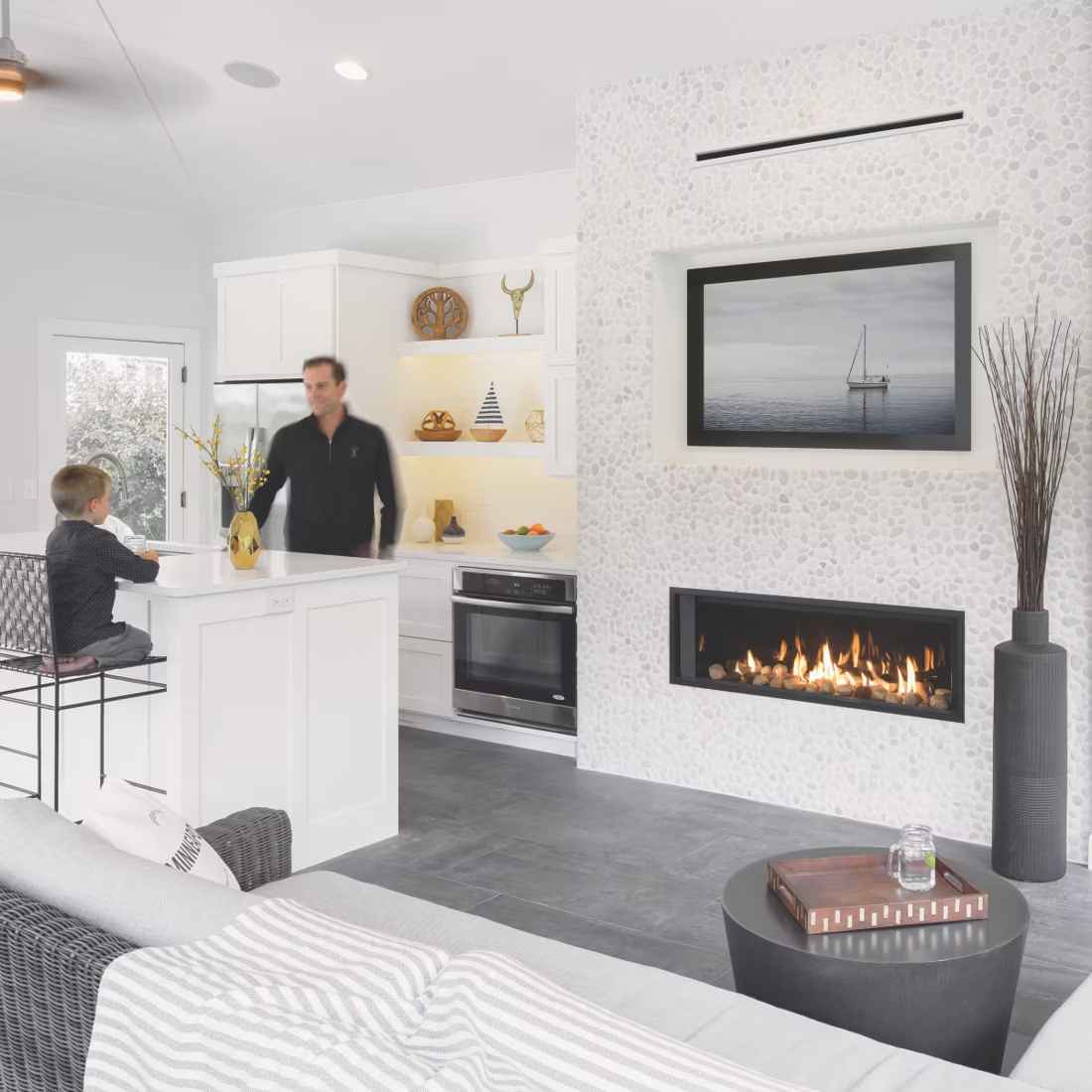
Yes—with an asterisk. Fireplaces are hot and TVs don't like heat. Either put a mantel between them to deflect rising warmth, or choose a fireplace with heat-management technology that creates a cool zone on the wall above—the wall stays around 125 degrees, barely warm, while the room still gets full heat. If you like clean lines and don't want a mantel, heat management is the answer.
How much should I budget for a fireplace?
For an average home—covering the fireplace, the vent pipe, and basic installation—a budget between $3,900 and $5,500 gives you a lot of options across wood, gas, and pellet. By the time you add finish work, gas line, and electrical, the average complete installation lands between $5,000 and $12,000 all-in. In a remodel or new build, a good rule is to put about 2.5% of the total project cost toward the fireplace.
Can a fireplace actually lower my heating bill?
Yes—by creating a comfort zone. A furnace heats every square foot of the house just to warm the one room you're in; a gas fireplace on low burns roughly a sixth of the gas a typical furnace does. Set the furnace around 55–60 degrees as a baseline, then heat the rooms your family actually uses. Families who heat this way commonly save $20–$60 a month.
Nearby Dealers
Hearth shops serving Greendale and the surrounding area. Every listing shows whether it is a WhyFire partner, a dealer we have verified as authorized for the brands we recommend, or a local business carrying hearth products. No manufacturer pays for placement. How we verify dealers →
Stonecraft Studios
Chimney Doctors
Alaskan Fireplace Co
Bbq Grills Of Wisconsin
David J. Frank Landscape Contracting, Inc.
James R. Tayler & Sons
Find your gas fireplace in Greendale.
Tell us a bit about your home and we'll put together a free Project Guide & Parts List—the right gas fireplace or insert, the exact venting it needs, and a trusted local dealer to install it.
Find Your Fireplace →