
Add real warmth to your Green Lake County home—no chimney required.
From lake cottages on Green Lake to condos in Berlin and Markesan, electric fireplaces bring flame and warmth without gas lines, chimneys, or permits. Find the right unit and connect with a trusted local dealer.
Every Project Starts From One of These Five Situations
A clean, flexible option for lake homes and modern remodels.
Green Lake County sits in south-central Wisconsin around Green Lake itself—the deepest natural inland lake in the state—with winters that land squarely in Climate Zone 6A: a long, demanding heating season and an average winter low around 8°F, in the same range as Madison. That's a serious heating season, and most homes here—in Berlin, Markesan, Princeton, Kingston, and the lake communities in between—rely on a furnace or boiler as the primary heat source. Wood remains popular for supplemental heat using local oak, maple, birch, and aspen, and gas is common where propane service reaches. Electric fits in alongside those, not instead of them.
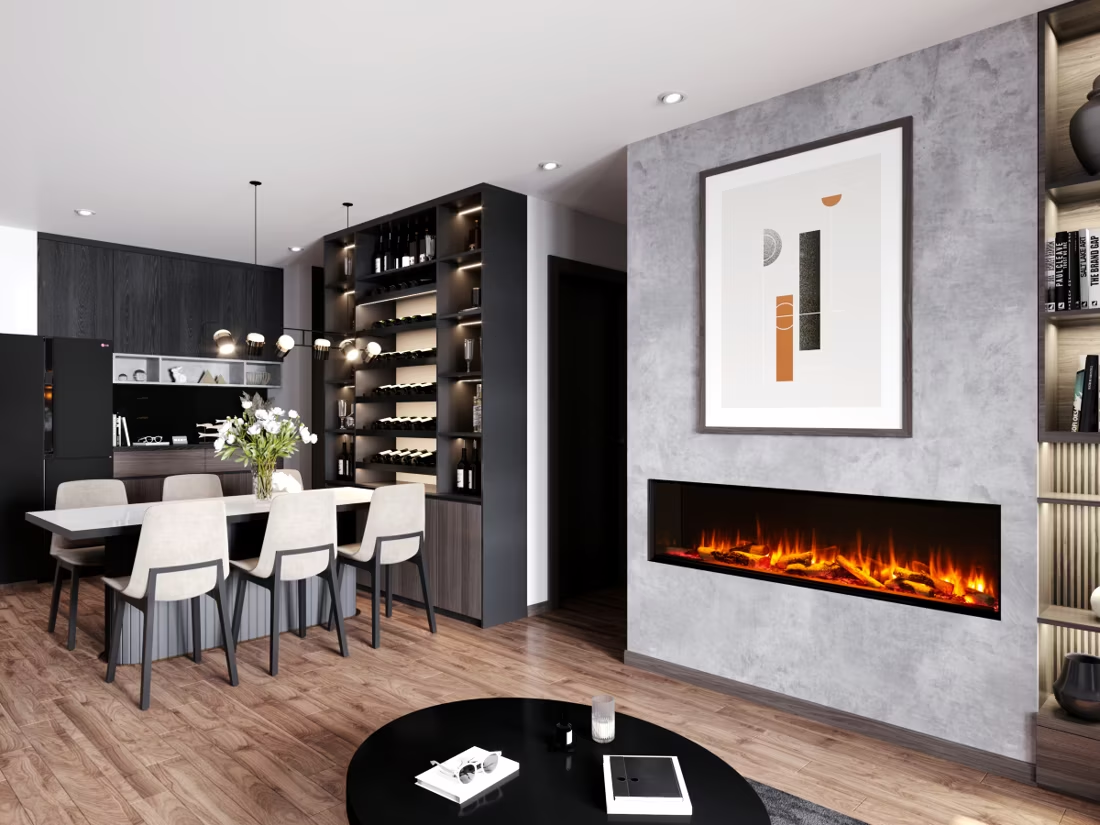
Where electric fireplaces really earn their place in Green Lake County is the seasonal lake cottage around Green Lake or Puckaway Lake that gets closed up half the year, the condo or apartment in Berlin or Markesan where a chimney or gas line isn't an option, and the finished basement or bedroom that just needs supplemental zone heat. A plug-in electric insert needs nothing more than an outlet; a built-in linear unit needs a licensed electrician and a dedicated circuit, but still skips the venting, gas permitting, and chimney work that wood and gas installs require. Most homes here get service through Alliant Energy or a municipal utility like Berlin Water & Light—either way, an electric fireplace installs in hours, not weeks.
Three steps. No salesperson until you're ready.
Tell us about your project
Your zip code, your situation, and the fuel you're leaning toward—or let the answers point you to one.
See what's actually available
The brands dealers within 100 miles genuinely carry—real options, never a catalog mirage.
Get your dealer & Project Guide
A trusted local dealer, plus the free Project Guide & Parts List that names every component of the job.
Frequently Asked Questions
How much does an electric fireplace installation cost in Green Lake County?
A plug-in electric insert or freestanding stove runs $150 to $600 for the unit itself, with no installation cost beyond plugging it into an existing outlet. A built-in wall unit or linear electric fireplace with framing, trim, and a dedicated 120V or 240V circuit run by a licensed electrician typically lands between $1,500 and $4,000, depending on the size of the unit and how much carpentry or drywall work is involved. Lake cottages around Green Lake that need new wiring run to a remote wall often sit at the higher end of that range.
Will an electric fireplace actually heat my home through a Green Lake County winter?
Not on its own—and any honest dealer will tell you that. With a long, demanding heating season and average winter lows around 8°F, Green Lake County needs a real furnace or boiler as primary heat. A typical 1,500-watt electric fireplace puts out roughly 5,000 BTU, enough to comfortably heat one room or supplement a zone, but not enough to offset a whole-home heating load in a Wisconsin January. Think of it as zone heat and ambiance for a living room, bedroom, or lake cottage—not a furnace replacement.
Do I need a permit to install an electric fireplace in Green Lake County?
A plug-in unit that uses an existing outlet doesn't require a permit anywhere in the county. A built-in unit that needs new wiring or a dedicated circuit typically does require an electrical permit, issued through your town's building inspector—Green Lake County townships each handle their own permitting, so check with Berlin, Brooklyn, or whichever township you're in before work starts. A licensed electrician handling the installation will usually pull the permit as part of the job.
What types of electric fireplaces are available for Green Lake County homes?
Plug-in inserts fit into existing masonry or zero-clearance fireplace openings and are the simplest retrofit for older Green Lake County homes with a fireplace that's no longer functional or wanted for wood burning. Wall-mount and linear units are popular in condos, remodels, and lake cottages where a low-profile, modern look is the goal. Freestanding electric stoves mimic a wood stove's shape and work well in a cabin or den. Mantel packages combine an electric insert with surrounding cabinetry for a more traditional living-room look. A local dealer can walk through which fits your space and wiring situation.
Electric vs. wood—which makes more sense for my Green Lake County home?
Wood—burning local oak, maple, birch, or aspen—keeps working when the power goes out, which matters in a rural county where lake-effect ice storms can knock out lines for hours at a time. It also puts out real, sustained heat for a whole room on a cold night. Electric offers instant on-off convenience, zero maintenance, no chimney, and no smoke, but it goes dark the moment the power does, so it's not a backup heat source. Many homeowners here run wood or gas as their real heat and add an electric unit somewhere a chimney isn't practical—a basement, a bedroom, a rental unit.
Are electric fireplaces a good fit for lake cottages around Green Lake?
Yes, often the best fit. Seasonal cottages around Green Lake and Puckaway Lake that sit closed up for stretches of the year benefit from a unit with no chimney to maintain, no ash or creosote to deal with when you reopen the place in spring, and no risk of a flue backing up moisture during a shut-down winter. A plug-in insert or wall-mount unit gives a cottage instant ambiance and some supplemental warmth for shoulder-season weekends without any of the upkeep a wood or gas system needs when the place sits empty.
Electric vs. propane—which is better for a Green Lake County home without natural gas service?
Much of Green Lake County is outside municipal natural gas territory, which pushes gas fireplace options toward propane—meaning a tank, a supplier, and ongoing fuel deliveries. Electric skips all of that: no tank, no delivery schedule, no combustion byproducts to vent. For condos in Berlin or Markesan, rentals, or homeowners' associations that restrict fuel-burning appliances, electric is often the only option that clears the rules. The tradeoff is heat output—propane units put out real BTUs for a cold room, while electric stays in the supplemental-heat category.
What does it cost to run an electric fireplace in Green Lake County?
A typical 1,500-watt electric fireplace costs roughly 15 to 20 cents an hour to run at Alliant Energy's residential rates, or about $1.50 to $2 for a 10-hour evening of use. That's inexpensive for occasional ambiance or spot heating a single room, but it adds up quickly if you're trying to use it as a primary heat source through a full Green Lake County winter—which is exactly why it's best treated as a supplement to your furnace rather than a replacement.
Where can I get an electric fireplace installed near me in Green Lake County?
Plug-in units can be set up by any homeowner in minutes. For a built-in wall unit or linear fireplace, you'll want a licensed electrician for the wiring and, often, a hearth or home-improvement retailer to handle the surround and trim. Find My Fireplace matches you with a trusted local dealer who knows what's realistic for your specific space and wiring setup—not a big-box guess—and sends over a free Project Guide & Parts List with the exact parts for your project and a recommended local installer.
Can I put a TV above my fireplace?
Yes—with an asterisk. Fireplaces are hot and TVs don't like heat. Either put a mantel between them to deflect rising warmth, or choose a fireplace with heat-management technology that creates a cool zone on the wall above—the wall stays around 125 degrees, barely warm, while the room still gets full heat. If you like clean lines and don't want a mantel, heat management is the answer.
Do electric fireplaces actually produce heat?
Yes—most put out around 4,800–5,000 BTUs from a standard outlet, which comfortably warms a bedroom, office, or den as a comfort-zone heater. What they won't do is carry a whole house the way wood, gas, or pellet can. Think of electric as ambiance-first with honest supplemental heat: flames on with no heat in July, flames plus warmth in January.
Does a fireplace add value to my home?
On average, a fireplace adds back to the home about the same amount you spent installing it. Add the monthly savings from heating the rooms you actually use instead of the whole house—often hundreds of dollars a year—and the value case is strong before you even count what a fire does for how your family uses the room.
Can a fireplace actually lower my heating bill?
Yes—by creating a comfort zone. A furnace heats every square foot of the house just to warm the one room you're in; a gas fireplace on low burns roughly a sixth of the gas a typical furnace does. Set the furnace around 55–60 degrees as a baseline, then heat the rooms your family actually uses. Families who heat this way commonly save $20–$60 a month.
Stove and Fireplace Dealers in Green Lake County
Listings include WhyFire partner dealers, dealers we have verified as authorized for the brands we recommend, and established local businesses that carry hearth products. Every listing shows which one it is. The ones marked Preferred run on WhyFire's software, so they can show you real pricing and book your appointment right here. No manufacturer pays for placement. How we verify dealers →
Find your electric fireplace in Green Lake County.
Tell us a bit about your home and we'll match you with the right electric fireplace or insert—plus a free Project Guide & Parts List and a trusted local dealer to install it.
Find Your Fireplace →