
Steady Heat for DeForest's Long Wisconsin Winters.
With a heating season heavy enough to rival Duluth, Minnesota and winter lows averaging 9°F, DeForest homes need heat that starts instantly and keeps working. Find the right gas fireplace or insert and connect with a trusted local dealer.
Every Project Starts From One of These Five Situations
Reliable warmth for a 7,400-degree-day winter.
DeForest sits in Dane County just north of Madison, at 909 feet in elevation, where Climate Zone 6A brings a heating season heavy enough to rival Duluth, Minnesota more than most of the Midwest. Winter lows average 9°F, and stretches of single-digit and below-zero nights aren't unusual between December and February. Generations of local homes burned oak, maple, birch, and aspen for heat, but in DeForest's newer subdivisions and remodeled older homes, gas has become the practical choice for primary and supplemental heat alike.
Alliant Energy (Wisconsin Power & Light Co.) provides natural gas service across most of DeForest, with Rock Energy Cooperative serving electric needs in parts of the surrounding township. There are no air quality non-attainment restrictions or burn-ban curtailment periods here, so a gas fireplace or insert runs whenever you need it—no waiting on advisory days. For a village where new construction and young families are the norm, gas delivers the instant, thermostat-controlled heat that fits a modern home without the wood storage, ash cleanup, or chimney maintenance.
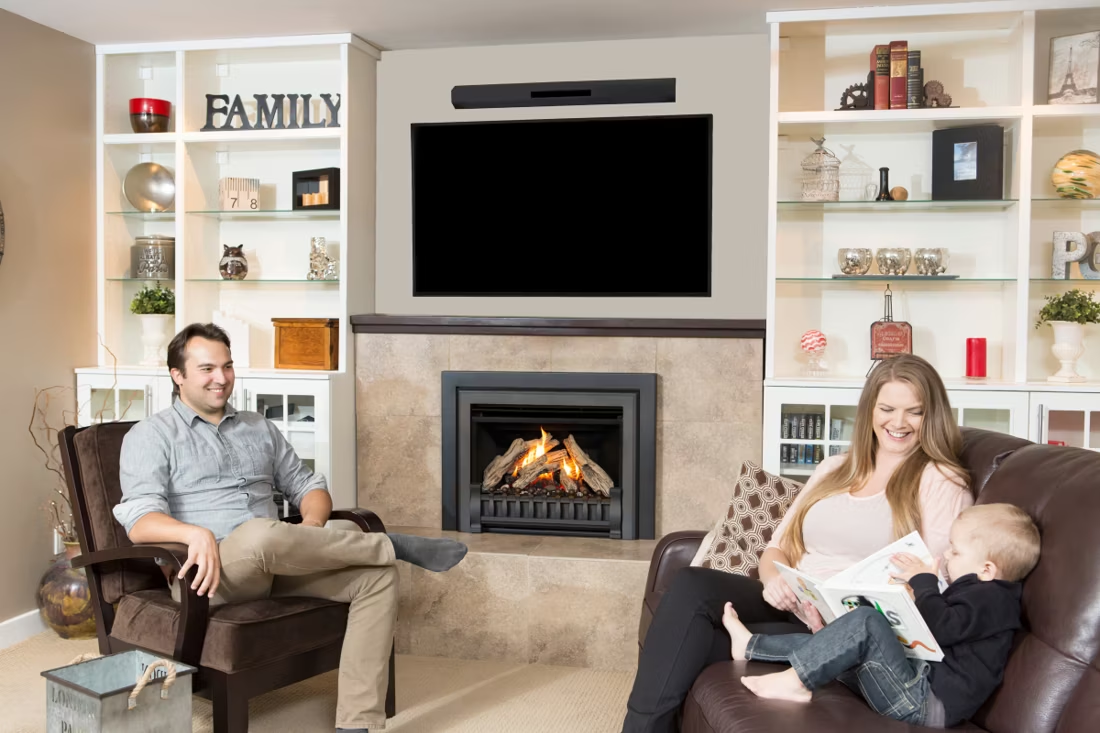
Three steps. No salesperson until you're ready.
Tell us about your project
Your zip code, your situation, and the fuel you're leaning toward—or let the answers point you to one.
See what's actually available
The brands dealers within 100 miles genuinely carry—real options, never a catalog mirage.
Get your dealer & Project Guide
A trusted local dealer, plus the free Project Guide & Parts List that names every component of the job.
Frequently Asked Questions
How much does a gas fireplace installation cost in DeForest?
Costs vary with the unit, the venting path, and whether new gas line work is needed, but a typical direct-vent gas fireplace or insert installation in DeForest runs roughly $3,500 to $9,500. Homes in DeForest's newer subdivisions that already have a gas line stubbed to the area where the fireplace will go tend to land on the lower end. Older farmhouses on the edges of the village, or homes needing a new gas line run from the meter, push toward the higher end. A local dealer will give you a firm number after seeing your home.
Can I convert an existing wood-burning fireplace to gas?
Yes, and it's a common project in DeForest's older homes, many of which have masonry fireplaces originally built to burn local oak or maple. A gas insert typically drops into the existing firebox and vents through a stainless liner run up your current chimney, which keeps the look of the fireplace while eliminating the wood handling and ash cleanup. Expect $3,500 to $8,000 depending on whether the home already has gas service nearby or needs a new line run from the street.
Do I need natural gas, or can I use propane?
Either works. Alliant Energy runs natural gas lines through most of the developed parts of DeForest, so homes in the village core typically have gas service available. If you're on a larger rural parcel outside the village limits, or on the fringes where gas mains haven't been extended, propane from a local supplier with an above- or below-ground tank is the standard fallback. Most gas fireplace models can be set up for either fuel—your installer just changes the orifice and regulator to match.
Will a gas fireplace still work if the power goes out?
Most will, with the right ignition system. Units with intermittent pilot ignition (IPI) run on a battery backup that automatically kicks in and lights the fireplace on demand when power drops—worth checking since rural stretches served by Rock Energy Cooperative can see longer outage times after a Wisconsin ice storm than in-town Alliant Energy service. Valor fireplaces go a step further: their pilot assembly generates its own electricity through the thermocouple, so there's no battery to remember or replace. Ask your local dealer which ignition system is in the model you're considering.
What's the difference between a gas fireplace, gas insert, and gas stove?
A gas fireplace is a fully built-in unit framed into a wall, typically used in new construction or a remodel. A gas insert is sized to slide into an existing masonry firebox, which is common in DeForest's older housing stock along Main Street and the historic village core. A gas stove is a freestanding cast-iron or steel unit that sits on the floor like a wood stove but burns gas—a good fit for a basement, three-season room, or a home without an existing chimney. Most DeForest homeowners upgrading an existing fireplace go with an insert; new builds usually call for a built-in unit.
Do I need a permit to install a gas fireplace in DeForest?
Yes. The Village of DeForest requires a building permit for new gas fireplace installations, and any gas line work needs to be done by a licensed plumber or gas fitter and inspected before it's covered. Most established hearth dealers in the area handle the permit application and coordinate the gas line and building inspections as part of the installation, so you're not left managing multiple trades and two separate permit offices yourself.
Should I choose a vented or vent-free gas fireplace?
Vented (direct-vent) gas fireplaces pull combustion air from outside and exhaust it back outside through a sealed pipe—they're the standard choice for DeForest homes and put out real, sustained heat without affecting indoor air quality. Vent-free units burn without external venting and are legal in Wisconsin, but they're restricted by room-size and ventilation requirements, and some states like California and Colorado prohibit them outright. Given DeForest's tightly built, well-insulated newer homes, most local dealers steer homeowners toward direct-vent units for both comfort and long-term air quality.
How often does a gas fireplace need to be serviced?
Plan on an annual inspection, ideally before the heating season starts in the fall. A technician checks the burner, pilot assembly, venting, and gas connections, and cleans the glass and interior—usually a $150 to $250 visit. It's a much shorter appointment than a wood-stove chimney sweep, but skipping it is how minor issues like a dirty pilot or a cracked gasket turn into a fireplace that won't light on the coldest night of the year.
Should I go with gas instead of a wood-burning fireplace in DeForest?
For most DeForest homeowners, yes. While oak, maple, birch, and aspen are all available regionally and plenty of people still enjoy a backyard fire pit, new wood-burning fireplace installations are increasingly uncommon in the village's newer subdivisions, where lot sizes, HOA guidelines, and modern building codes generally favor gas or electric appliances. Gas gives you instant, thermostat-level heat control with no wood storage or ash cleanup, and it pairs naturally with the tight, well-insulated construction typical of DeForest's newer homes. If you already have a wood-burning fireplace, converting it to a gas insert is usually simpler than starting a new wood installation from scratch.
Is my gas fireplace wasting gas?
If it was installed more than 15 years ago, probably. Older gas fireplaces keep a standing pilot light burning all the time, and that little flame can cost a couple hundred dollars a year. Newer models use pilot-on-demand ignition—the pilot lights only when you use the fireplace and goes out when you turn it off.
Why is my open fireplace making my house colder?
Open fireplaces suck—literally. As the fire burns, it consumes air your furnace already paid to heat and pulls it out through the chimney, so the house is actually colder after the fire goes out than before you lit it. An insert fixes this: it seals the chimney, puts fixed glass across the front, and turns that hole in your house into a real heat source.
Can a fireplace actually lower my heating bill?
Yes—by creating a comfort zone. A furnace heats every square foot of the house just to warm the one room you're in; a gas fireplace on low burns roughly a sixth of the gas a typical furnace does. Set the furnace around 55–60 degrees as a baseline, then heat the rooms your family actually uses. Families who heat this way commonly save $20–$60 a month.
Can I install a fireplace myself?
If you're putting a fire in your house on purpose, it's best to work with an expert. Unless you're genuinely experienced in framing, gas line, vent pipe, and the national code on clearances to combustibles, have a professional do it—and ideally the same company that sells you the fireplace, so warranty, service, and liability all live under one roof.
Nearby Dealers
Hearth shops serving DeForest and the surrounding area. Every listing shows whether it is a WhyFire partner, a dealer we have verified as authorized for the brands we recommend, or a local business carrying hearth products. No manufacturer pays for placement. How we verify dealers →
Fireside Hearth & Home - Madison
Dischler Heating – Cooling & Fireplaces, Inc.
Al Beyers Indoor Comfort System-Cambridge, Wi
Find your gas fireplace in DeForest.
Tell us about your home and we'll match you with a trusted local dealer and send you a free Project Guide & Parts List—the exact parts, vent kit, and recommended installer for your DeForest gas fireplace project.
Find Your Fireplace →