
Electric heat for the rooms your furnace can't quite reach.
With average winter lows near 3°F and a long, demanding winter heating season, Chippewa County homes lean on the furnace to survive winter—electric fireplaces fill in the gaps, warming a finished basement, a bonus room, or a Chippewa Falls condo with zero venting and zero mess. Find the right unit and connect with a trusted local dealer.
Every Project Starts From One of These Five Situations
A second layer of warmth, not a replacement for the furnace.
Chippewa County sits in climate zone 6A, with a long, cold heating season and average winter lows around 3°F—cold enough to sit in the same bracket as Duluth, Minnesota, just across the state line. From Chippewa Falls and Lake Hallie down through Bloomer, Cornell, and Stanley, the primary heat source in nearly every home is a gas or propane furnace, run through the long stretch of below-freezing nights from November into March. Nobody's heating a Chippewa County house with an electric fireplace alone, and no honest local dealer will tell you otherwise.
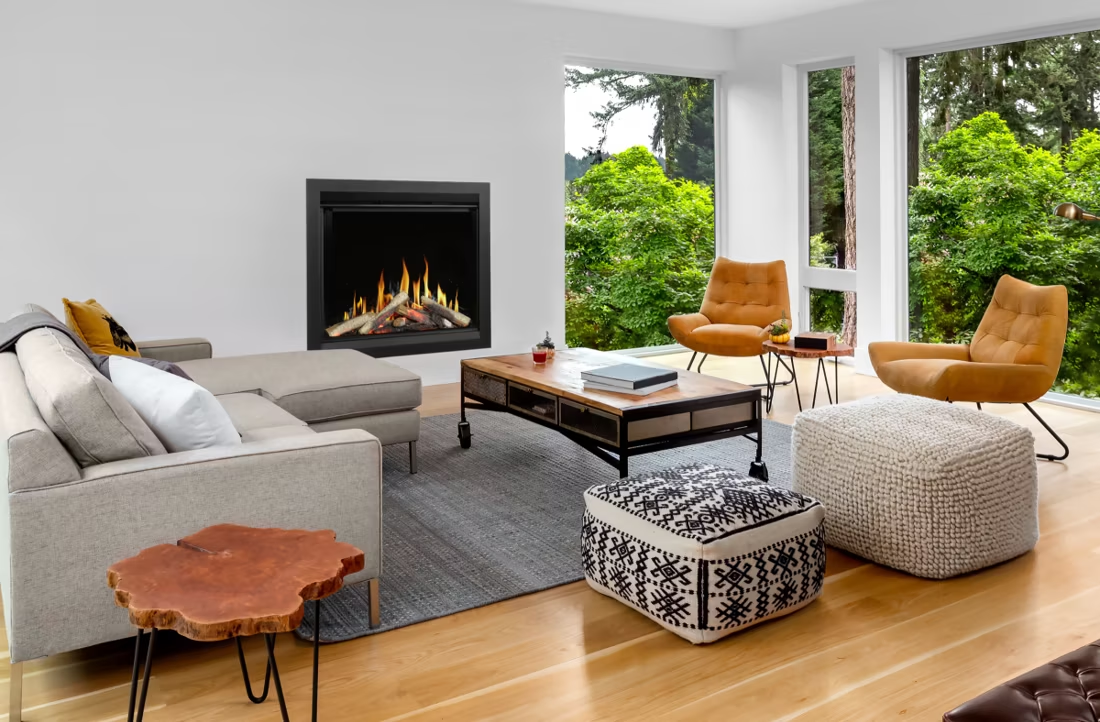
Where electric fireplaces earn their place is everywhere the furnace ductwork doesn't quite reach or where running a flue isn't practical—a finished basement rec room, a converted garage, a primary bedroom that runs cold, or a rental or condo unit in Chippewa Falls where a wood or gas installation isn't an option. They also show up as pure ambiance: a mantel-style unit or built-in wall insert that adds glow and a bit of radiant heat to a living room without touching the chimney, the gas line, or the wood species piled in the shed out back—oak, maple, birch, and aspen, the same cordwood that heats plenty of homes on the county's rural edges. A trusted local dealer can size a unit correctly for the specific room you're trying to warm, and steer you away from underpowered units that look the part but don't move enough heat for a Wisconsin winter.
Three steps. No salesperson until you're ready.
Tell us about your project
Your zip code, your situation, and the fuel you're leaning toward—or let the answers point you to one.
See what's actually available
The brands dealers within 100 miles genuinely carry—real options, never a catalog mirage.
Get your dealer & Project Guide
A trusted local dealer, plus the free Project Guide & Parts List that names every component of the job.
Frequently Asked Questions
How much does an electric fireplace cost to install in Chippewa County?
A plug-in electric insert or mantel unit that runs off a standard 120V outlet typically costs $300 to $900 installed, since there's no venting or gas line involved—most of that cost is the unit itself plus a couple hours of carpentry if it's going into an existing opening. A built-in wall unit or larger linear electric fireplace that requires a dedicated 240V circuit and some framing or drywall work runs closer to $1,200 to $3,500 once an electrician is involved. Homes in older Chippewa Falls neighborhoods with dated panels sometimes need a panel upgrade before a larger unit can be added, which adds to the total. Local dealers will give you a firm number after seeing the room and the electrical panel.
Will an electric fireplace actually heat a room in a Chippewa County winter?
Most electric fireplaces put out around 4,000 to 5,000 BTU on the high heat setting—enough to noticeably warm a single room (bedroom, den, finished basement space) but not enough to carry a whole house through a Chippewa County cold snap when temperatures drop into single digits. Think of it as zone heat: it can take the edge off a cold room and let you turn the thermostat down a degree or two elsewhere in the house, and it works well for spaces the furnace's ductwork struggles to reach evenly. For whole-home heat in this climate, a furnace, wood stove, or gas fireplace is doing the real work; the electric unit is a supplement, not the plan.
Do I need a permit or an electrician to install an electric fireplace?
A basic plug-in electric fireplace that uses an existing outlet doesn't require a permit—you can plug it in yourself. If you're installing a built-in unit that needs a new dedicated circuit (common for larger 240V models), that electrical work should be done by a licensed electrician and typically requires a permit through the Chippewa County Building Inspection Department for work outside city limits, or your local municipality's building department if you're inside Chippewa Falls, Bloomer, or Stanley. Most local dealers either employ a licensed electrician or work with one regularly, so this gets handled as part of the install rather than becoming a separate project you have to manage.
What's the difference between a plug-in electric insert and a built-in wall unit?
A plug-in insert or freestanding electric stove runs off a standard household outlet, can go almost anywhere, and can be unplugged and moved if you relocate—it's the lower-cost, lower-commitment option. A built-in wall unit is recessed into the wall (often requiring some framing and a dedicated circuit), giving a cleaner, more architectural look similar to a flat-screen TV mount, but it's a fixed installation. For Chippewa County homes with an existing fireplace opening that's no longer used for wood or gas, an electric insert sized to fit that opening is often the simplest upgrade—no chimney work, no venting, just a cleaner look and some supplemental warmth.
Does an electric fireplace still work during a power outage?
No—and this is worth being direct about. Electric fireplaces need power to run both the heater and the flame effect, so during a Chippewa County winter storm outage, an electric unit goes dark along with everything else on the grid. If backup heat during outages matters to you—and in a climate with such a long, hard winter, ice storms and extended outages do happen—a wood stove is the only option that keeps working with no power at all, and a battery-backup gas fireplace is a middle ground. Electric fireplaces are best understood as everyday zone heat and ambiance, not emergency heat.
Electric vs. wood vs. gas—which is right for my Chippewa County home?
Wood stoves, burning local oak, maple, birch, or aspen, deliver serious heat output and keep working with no power—the right call for rural Chippewa County properties or anyone wanting real backup heat through winter outages. Gas fireplaces offer instant, thermostat-controlled heat with real BTU output, either on natural gas where available through Xcel Energy in Chippewa Falls and Eau Claire, or propane in outlying townships. Electric fireplaces offer the easiest install, no venting, and no fuel to manage, but the lowest heat output of the three and no function during outages. Many Chippewa County homeowners land on a furnace for primary heat, a wood stove or gas unit for real supplemental heat and backup, and an electric fireplace for the specific rooms where looks and light supplemental warmth matter more than raw BTUs.
What size electric fireplace do I need?
Size is mostly about the room, not the whole house—electric fireplaces are rated for a single space, typically 400 to 1,000 square feet on the high setting, and manufacturers list a square-footage rating for each model. For a Chippewa County bedroom or den in the 150-250 square foot range, most standard 30- to 50-inch units are plenty. For an open-concept basement or living room, you'll want to check the BTU rating carefully rather than just the width, since a wide unit with a weak heater will look good but underheat the space on a cold night. A local dealer measuring the actual room will get this right faster than guessing from an online chart.
Can I install an electric fireplace in an apartment, condo, or mobile home in Chippewa County?
Yes—this is one of the most common reasons homeowners in Chippewa County choose electric in the first place. Apartments and condos in Chippewa Falls and the Lake Wissota area often can't accommodate a chimney or gas line, and many mobile and manufactured homes have restrictions on venting or structural modifications. A plug-in electric insert or freestanding unit sidesteps all of that—no venting, no gas line, no roof penetration, just an outlet (or a dedicated circuit for larger models). Renters should check with a landlord or HOA before any built-in installation, but a freestanding plug-in unit is almost always fair game.
How much does it cost to run an electric fireplace in Chippewa County?
Most electric fireplaces draw around 1,500 watts on the heat setting. Running that for a typical evening (say 4-5 hours) costs somewhere in the range of 60 cents to a dollar at current Xcel Energy residential rates for homes in the Chippewa Falls and Eau Claire service area, or slightly more for homes served by rural electric cooperatives elsewhere in the county. Used as occasional supplemental heat in one room rather than around-the-clock, most homeowners see a modest bump on the electric bill—nowhere near what running electric resistance heat as a primary source would cost across a whole house.
Can I put a TV above my fireplace?
Yes—with an asterisk. Fireplaces are hot and TVs don't like heat. Either put a mantel between them to deflect rising warmth, or choose a fireplace with heat-management technology that creates a cool zone on the wall above—the wall stays around 125 degrees, barely warm, while the room still gets full heat. If you like clean lines and don't want a mantel, heat management is the answer.
How much does an electric fireplace cost to run?
With the heater on, a typical unit draws about 1,500 watts—at average electric rates that's roughly 20 cents an hour. Run the flame effect alone and it costs pennies; the flames are LED-driven and use about as much power as a light bulb. There's no pilot light, no fuel delivery, and essentially no maintenance.
Does a fireplace add value to my home?
On average, a fireplace adds back to the home about the same amount you spent installing it. Add the monthly savings from heating the rooms you actually use instead of the whole house—often hundreds of dollars a year—and the value case is strong before you even count what a fire does for how your family uses the room.
Can a fireplace actually lower my heating bill?
Yes—by creating a comfort zone. A furnace heats every square foot of the house just to warm the one room you're in; a gas fireplace on low burns roughly a sixth of the gas a typical furnace does. Set the furnace around 55–60 degrees as a baseline, then heat the rooms your family actually uses. Families who heat this way commonly save $20–$60 a month.
Stove and Fireplace Dealers in Chippewa County
Listings include WhyFire partner dealers, dealers we have verified as authorized for the brands we recommend, and established local businesses that carry hearth products. Every listing shows which one it is. The ones marked Preferred run on WhyFire's software, so they can show you real pricing and book your appointment right here. No manufacturer pays for placement. How we verify dealers →
Ccs Services LLC
Poolman
Find your electric fireplace in Chippewa County.
Tell us about the room you're trying to warm and we'll match you with a trusted local Chippewa County dealer and a free Project Guide & Parts List—sized right for your space, with no venting guesswork.
Find Your Fireplace →