
Warm, Reliable Heat for Cedarburg's Long Winters.
From the limestone storefronts of downtown to the newer subdivisions along Washington Avenue, Cedarburg homeowners are turning to gas for instant, dependable heat through Ozaukee County's long winters. Find the right fireplace or insert and connect with a trusted local dealer.
Every Project Starts From One of These Five Situations
Instant heat built for a historic town.
Cedarburg sits at just under 800 feet in Ozaukee County, a few miles inland from Lake Michigan, in climate zone 6A. With a winter heating load in the same range as Madison, about 80 miles south—winters here mean average lows near 17°F and a heating season that stretches from October well into April. Many of the city's homes, especially the 19th-century cream city brick and limestone buildings around the Cedar Creek Settlement historic district, were built decades before central heating existed and still rely on supplemental zone heat to keep specific rooms comfortable.
Natural gas service in Cedarburg runs through We Energies (the utility behind Wisconsin Electric Power Co.), which serves most of the city and much of Ozaukee County, while Cedarburg Light & Water Commission handles electric service within city limits. That combination makes gas fireplaces and inserts a practical, mainstream choice here—a flip-of-a-switch flame that doesn't require splitting or hauling firewood, works well as backup heat during a winter power outage with the right ignition system, and fits naturally into both the historic downtown homes and the newer construction spreading toward Highway 60.
Three steps. No salesperson until you're ready.
Tell us about your project
Your zip code, your situation, and the fuel you're leaning toward—or let the answers point you to one.
See what's actually available
The brands dealers within 100 miles genuinely carry—real options, never a catalog mirage.
Get your dealer & Project Guide
A trusted local dealer, plus the free Project Guide & Parts List that names every component of the job.
Frequently Asked Questions
How much does a gas fireplace installation cost in Cedarburg?
Most gas fireplace and insert installations in Cedarburg run somewhere between $3,800 and $9,500, with the final number driven mostly by venting and gas line work. A direct-vent insert dropped into an existing masonry fireplace in one of the historic homes near downtown—where a chimney and often a gas line are already in place—tends to land on the lower end. A new direct-vent fireplace built into a wall for a room addition or a newer subdivision home, where a fresh gas line has to be run from the meter, sits higher. Local dealers will give you a firm number after walking the space and checking your existing gas service.
Can I convert an old wood-burning fireplace to gas?
Yes, and it's a common project in Cedarburg's older housing stock, particularly the cream city brick homes and the properties around the Cedar Creek Settlement historic district that were built with a working masonry fireplace as the original heat source. A gas insert typically slides into that existing firebox and vents through a stainless liner run up the original chimney, so the exterior appearance stays untouched—a real consideration if your home falls inside the historic overlay district. Expect the conversion itself, insert included, to fall in a similar $3,800–$8,500 range, with the low end for homes already on natural gas service.
Is Cedarburg on natural gas, or do I need propane?
Most of Cedarburg is within the We Energies natural gas distribution area, so homes inside city limits typically already have gas service or can tie into an existing main. If you're further out in unincorporated Ozaukee County or on a rural lot without a nearby gas main, propane from a local supplier and a buried or above-ground tank is the standard workaround—nearly every gas fireplace and insert on the market can be set up for either fuel, it's just a matter of the orifice and regulator your installer sets.
Will a gas fireplace still work if the power goes out?
Most will, with a caveat worth checking before you buy. Units with intermittent pilot ignition (IPI) run on a small battery backup—usually AA batteries built into the control valve—so they'll still light and run the fireplace when Cedarburg Light & Water's grid goes down in an ice storm. The batteries just need to be fresh; it's easy to forget them until you actually need the fireplace. A handful of brands, Valor among them, skip batteries entirely and generate the ignition current straight off the pilot's thermocouple, so there's genuinely nothing to maintain. Worth asking about directly if reliable backup heat matters to you here.
What's the difference between a gas fireplace, insert, and stove?
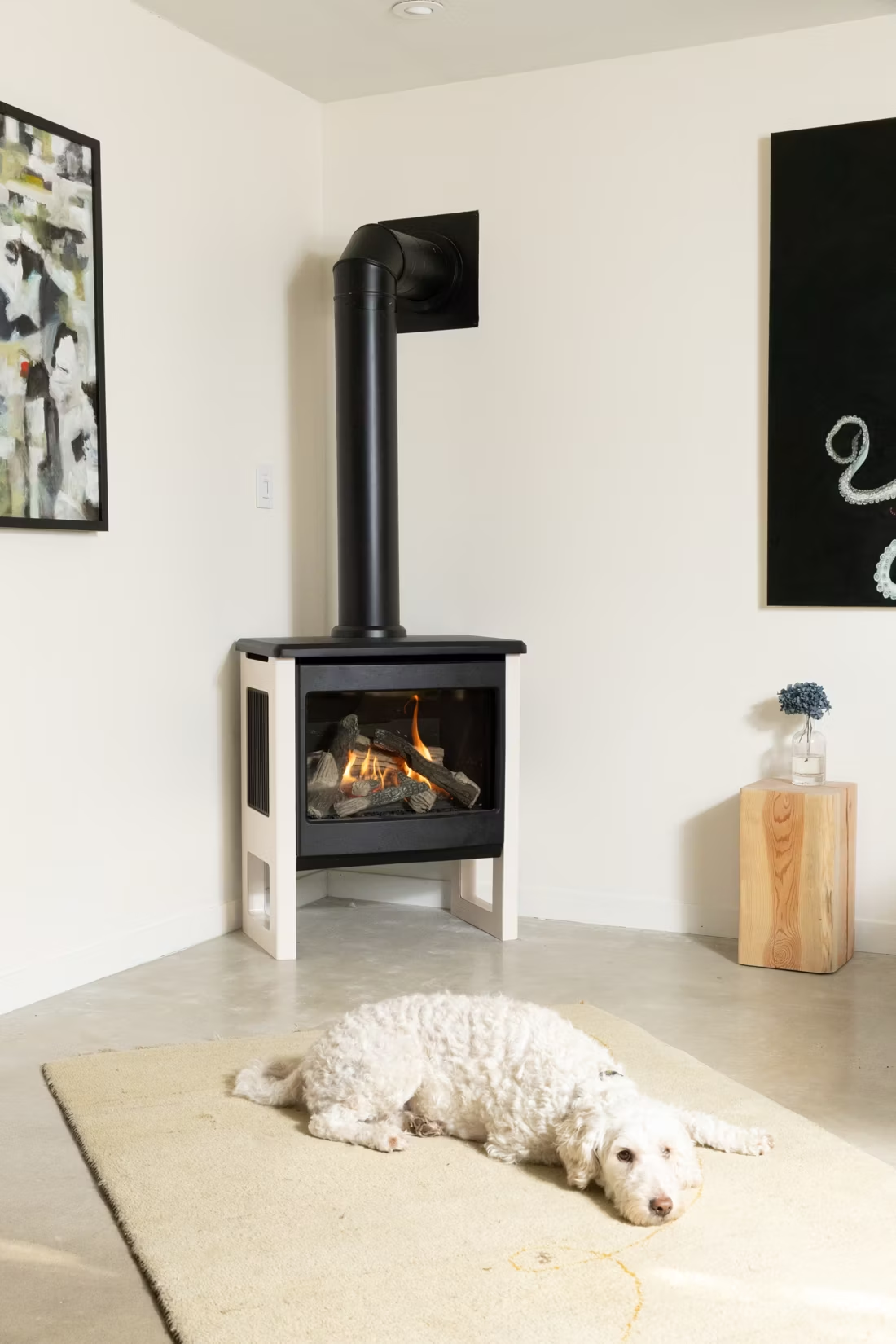
A gas fireplace is a fully built-in unit framed into a wall—the right call for new construction or a remodel that doesn't already have a hearth. A gas insert is sized to slide into an existing masonry firebox, which describes a lot of the older homes downtown and around Washington Avenue. A gas stove is a freestanding cast-iron or steel unit that sits out in the room on its own hearth pad, often chosen for a den, basement, or three-season room that doesn't have a chimney at all. Local dealers will walk your space and tell you which category actually fits.
Do I need a permit to install a gas fireplace in Cedarburg?
Yes. The City of Cedarburg Building Inspection Department requires a building permit for the appliance installation and a separate gas permit for any new or modified gas line, and that gas line work has to be done by a licensed plumber or gas fitter. Most hearth dealers coordinate all of this as part of the installation quote, including scheduling the inspection, so you're not left managing multiple contractors and permit applications yourself.
Should I get a vented or vent-free gas fireplace?
Vented (direct-vent) units draw combustion air from outside and exhaust it back outside through a sealed pipe—they're the standard recommendation almost everywhere, including Cedarburg, because they don't put any combustion byproducts into the room. Vent-free units are permitted in Wisconsin but come with real restrictions: minimum room size requirements, an oxygen depletion sensor, and, per state law, a carbon monoxide detector installed in the room. For a well-sealed newer home or a historic house with tight walls, direct-vent is almost always the better fit—ask your local dealer to walk through both if you're weighing the tradeoff.
How often does a gas fireplace need to be serviced?
Once a year is the standard recommendation, ideally before the heating season starts. A technician checks the burner, pilot assembly, venting, and gas connections, and cleans the glass and interior—a much smaller job than a wood chimney sweep, but it matters for both safety and keeping the glass from clouding over. Local service providers in the Cedarburg area typically charge somewhere between $125 and $225 for an annual inspection and cleaning.
Should I consider a wood-burning fireplace instead of gas?
For most Cedarburg homeowners, no—wood-burning fireplaces are genuinely rare here now. Many of the historic homes downtown that originally had wood fireplaces have already converted to gas, and the historic district's fire and preservation guidelines make new wood-burning installations complicated in that part of town. Outside the district, oak and maple are the traditional local firewood species, but very few new installations in Cedarburg are wood-burning today—gas has become the default for both the convenience and the fact that it doesn't require the storage, splitting, or chimney maintenance that comes with burning cordwood. If you're set on a real wood fire, a local dealer can tell you what's realistic for your specific property.
What's the difference between an insert and a zero-clearance fireplace?
An insert is a fireplace that slides into a pre-existing wood-burning fireplace—if you don't have one, there's nothing to insert it into. A zero-clearance fireplace is built into a framed wall, which makes it the answer for remodels and new construction. Simple test: existing masonry fireplace means insert; blank or framed wall means zero-clearance.
Why is my open fireplace making my house colder?
Open fireplaces suck—literally. As the fire burns, it consumes air your furnace already paid to heat and pulls it out through the chimney, so the house is actually colder after the fire goes out than before you lit it. An insert fixes this: it seals the chimney, puts fixed glass across the front, and turns that hole in your house into a real heat source.
What is an in-home preview and do I need one?
It's a visit where a hearth professional measures your space, confirms the model you picked actually works in your home, and walks the specs—framing, gas line, venting, finish work—before anything is ordered. Some details you just can't know until you see the house. Never make a down payment without one; it's the single most-skipped step that burns buyers.
Does a fireplace add value to my home?
On average, a fireplace adds back to the home about the same amount you spent installing it. Add the monthly savings from heating the rooms you actually use instead of the whole house—often hundreds of dollars a year—and the value case is strong before you even count what a fire does for how your family uses the room.
Nearby Dealers
Hearth shops serving Cedarburg and the surrounding area. Every listing shows whether it is a WhyFire partner, a dealer we have verified as authorized for the brands we recommend, or a local business carrying hearth products. No manufacturer pays for placement. How we verify dealers →
David J. Frank Landscape Contracting, Inc.
The Fire Factory
Bbq Grills Of Wisconsin
Chimney Doctors
Stonecraft Studios
Find your gas fireplace in Cedarburg.
Tell us about your home and heating goals, and we'll match you with a trusted local dealer and send over a free Project Guide & Parts List—sized venting, the right insert or fireplace, and a plan built for your Cedarburg home.
Find Your Fireplace →