
Instant heat built for Calumet County's long winters.
From Chilton to Kiel to the Lake Winnebago shoreline, gas fireplaces deliver reliable warmth through Calumet County's 7,600-plus heating degree day winters. Find the right unit and connect with a trusted local dealer.
Every Project Starts From One of These Five Situations
Consistent warmth for a climate zone 6A winter.
Calumet County sits along the east shore of Lake Winnebago in northeastern Wisconsin, running from the county seat of Chilton through Kiel, New Holstein, Sherwood, Stockbridge, and the Calumet County portion of Kaukauna. At climate zone 6A with an average winter low near 10°F and roughly 7,622 heating degree days a year—a heating load closer to Duluth, Minnesota than to Milwaukee—homes here need a heat source that can run steadily for months, not just take the edge off a cold evening.
Oak, maple, birch, and aspen firewood have long been the backbone of heating in this part of the Fox Valley, and plenty of Calumet County households still burn wood by choice. But gas fireplaces and inserts have become the default for primary living spaces, especially in newer construction and remodels around Chilton and New Holstein. Wisconsin Public Service (WPS) runs natural gas mains through most of the county's incorporated areas; homes in the outlying townships—Harrison, Woodville, Charlestown—more often rely on propane from regional suppliers. Either way, a gas fireplace gives you heat at the flip of a switch, no ash to haul, and—with the right ignition system—a backup source of heat if a winter storm off the lake knocks out power.
Three steps. No salesperson until you're ready.
Tell us about your project
Your zip code, your situation, and the fuel you're leaning toward—or let the answers point you to one.
See what's actually available
The brands dealers within 100 miles genuinely carry—real options, never a catalog mirage.
Get your dealer & Project Guide
A trusted local dealer, plus the free Project Guide & Parts List that names every component of the job.
Frequently Asked Questions
How much does a gas fireplace installation cost in Calumet County?
Most gas fireplace and insert installations in Calumet County run somewhere between $4,000 and $10,000, with the final number driven by the unit itself, how far the gas line has to run, and whether you're venting through an existing masonry chimney or framing new venting through an exterior wall. A direct-vent insert into an existing fireplace with a gas line already nearby sits at the lower end. New construction, propane tank installation, or a fireplace going into a wall with no existing venting path pushes toward the higher end. Local dealers serving Chilton, Kiel, and New Holstein will walk your home before giving a firm number.
Can I convert my existing wood fireplace to gas?
Yes, and it's a common request from older homes around Chilton and along the Lake Winnebago shoreline where masonry fireplaces are common but rarely used. A gas insert slides into the existing firebox and vents through the same chimney using a stainless liner, so you keep the look of the fireplace while gaining real, consistent heat output. Whether you're on WPS natural gas or running propane, most inserts can be configured for either fuel—the main variable in cost is whether a new gas line needs to be run to the fireplace location.
Do I need natural gas, or does propane work too?
Either works fine. Wisconsin Public Service (WPS) natural gas mains cover most of Chilton, Kiel, New Holstein, and the more built-up parts of the county, so if your home already has gas appliances, adding a fireplace is straightforward. Outside those service areas—much of Harrison, Stockbridge, Woodville, and the rural townships—propane is the standard, either from an existing tank or a new one set by a local propane supplier. Nearly every gas fireplace and insert on the market can be set up for either fuel; your installer just configures the correct orifice and regulator.
Will a gas fireplace still work if the power goes out?
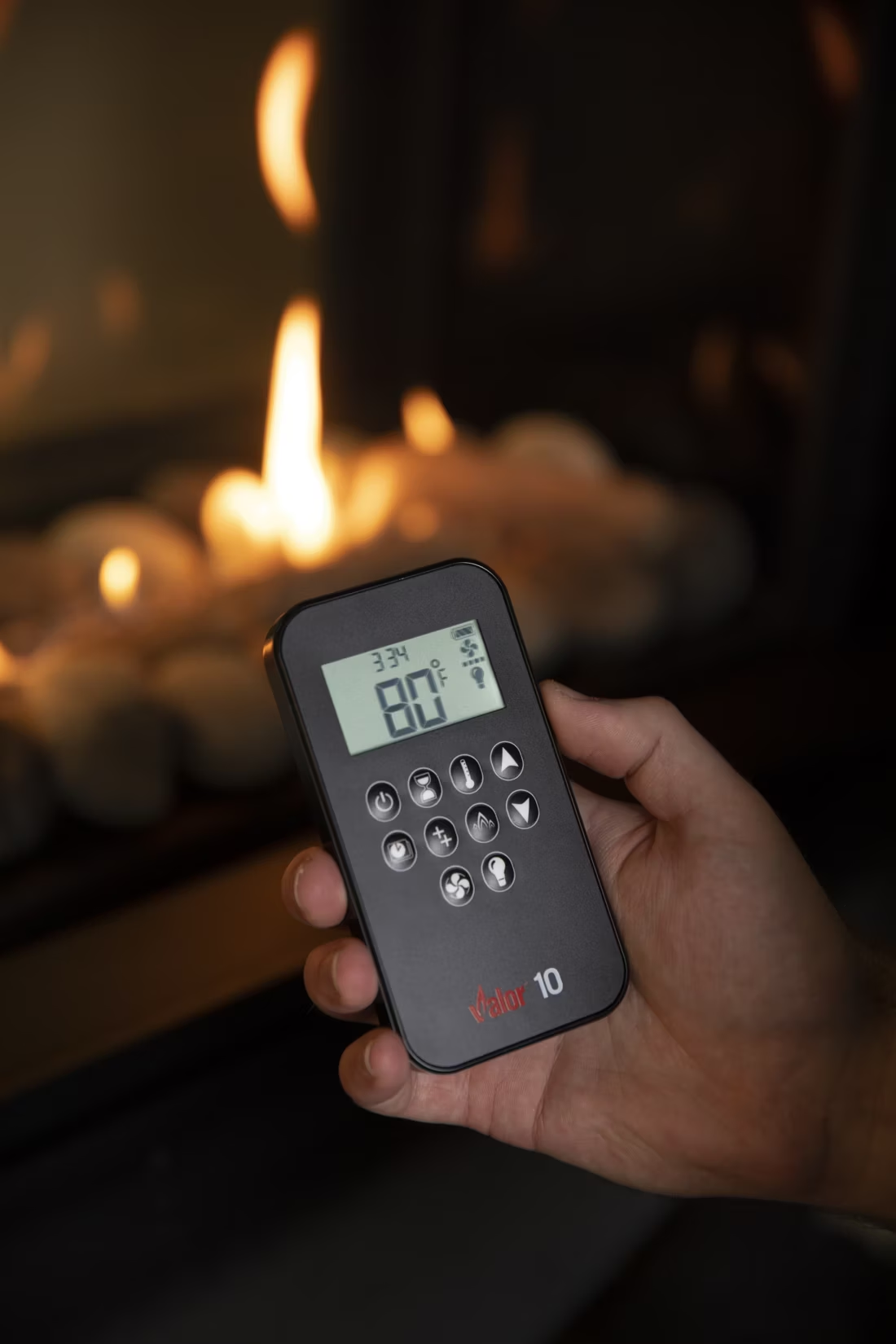
Most modern gas fireplaces will, which matters in a county that sees its share of lake-effect snow and ice storms off Winnebago. Units with intermittent pilot ignition (IPI) run on a small battery backup that kicks in automatically when the power drops, so the fireplace still lights on demand. Valor's gas fireplaces take it a step further—they generate their own electricity from the pilot's thermocouple, so there's no battery to remember to replace. If having heat during an outage matters to you, ask your local dealer about the ignition system before you settle on a model.
What's the difference between a gas fireplace, gas insert, and gas stove?
A gas fireplace is a fully framed-in unit built for new construction or a remodel where there's no existing masonry to work with. A gas insert is sized to slide into an existing wood-burning fireplace, using the existing chimney for venting once a liner is added. A gas stove is a freestanding cabinet-style unit that sits on the floor, similar in footprint to a wood stove, and works well in homes without a fireplace opening at all. For most Calumet County homes with an older masonry fireplace—common in the housing stock around Chilton and New Holstein—an insert is the straightforward upgrade.
Do I need a permit to install a gas fireplace in Calumet County?
In most cases, yes—both a building permit and a permit for the gas line work. If your home is within Chilton, Kiel, New Holstein, or another incorporated municipality, that city's building inspection department issues the permit; homes in the townships typically go through the Calumet County Planning, Zoning & Land Information Department. The gas line connection itself needs to be handled by a licensed gas-fitter regardless of jurisdiction. A dealer who installs gas fireplaces regularly in the county will already know which office to file with and usually manages the paperwork for you.
Should I get a vented or vent-free gas fireplace?
Vented (direct-vent) units draw combustion air from outside and exhaust it back outside through a sealed pipe—they're the safer, more universally recommended choice, and they're what most Calumet County dealers install. Vent-free units burn gas directly into the room without outside venting; they're legal in Wisconsin but come with strict room-size and ventilation requirements, and they add moisture to the indoor air—a real consideration in a climate zone 6A county where homes are built tight to hold in heat. For most homes here, a direct-vent fireplace or insert is the better fit.
How often should a gas fireplace be serviced?
Plan on an annual inspection, ideally before heating season starts in the fall. A technician checks the burner, pilot assembly, venting, and gas connections, and cleans the glass and interior. It's a shorter visit than a wood chimney sweep—usually $150 to $250—but it matters just as much for a unit that's going to run daily through a Calumet County winter that stretches from October into April.
Gas vs. wood—which makes more sense for my home?
Wood has deep roots in this part of Wisconsin—oak, maple, birch, and aspen are all burned locally, and a wood stove keeps working when the power's out, which is worth something during a lake-effect ice storm. Gas trades that self-sufficiency for convenience: instant on-off operation, no wood to split or stack, and a cleaner-looking room with no soot or ash. For a primary living space where you want heat without the maintenance, gas is usually the better call. A lot of Calumet County homes end up with both—gas for daily use in the main room, wood or a wood insert elsewhere for backup and ambiance.
Is my gas fireplace wasting gas?
If it was installed more than 15 years ago, probably. Older gas fireplaces keep a standing pilot light burning all the time, and that little flame can cost a couple hundred dollars a year. Newer models use pilot-on-demand ignition—the pilot lights only when you use the fireplace and goes out when you turn it off.
What's the difference between an insert and a zero-clearance fireplace?
An insert is a fireplace that slides into a pre-existing wood-burning fireplace—if you don't have one, there's nothing to insert it into. A zero-clearance fireplace is built into a framed wall, which makes it the answer for remodels and new construction. Simple test: existing masonry fireplace means insert; blank or framed wall means zero-clearance.
How much should I budget for a fireplace?
For an average home—covering the fireplace, the vent pipe, and basic installation—a budget between $3,900 and $5,500 gives you a lot of options across wood, gas, and pellet. By the time you add finish work, gas line, and electrical, the average complete installation lands between $5,000 and $12,000 all-in. In a remodel or new build, a good rule is to put about 2.5% of the total project cost toward the fireplace.
Can I install a fireplace myself?
If you're putting a fire in your house on purpose, it's best to work with an expert. Unless you're genuinely experienced in framing, gas line, vent pipe, and the national code on clearances to combustibles, have a professional do it—and ideally the same company that sells you the fireplace, so warranty, service, and liability all live under one roof.
Stove and Fireplace Dealers in Calumet County
Listings include WhyFire partner dealers, dealers we have verified as authorized for the brands we recommend, and established local businesses that carry hearth products. Every listing shows which one it is. The ones marked Preferred run on WhyFire's software, so they can show you real pricing and book your appointment right here. No manufacturer pays for placement. How we verify dealers →
Warm Sensations
Fox Valley Stone & Brick Co., Inc.
Elite Fireplace LLC
Match with a gas fireplace dealer in Calumet County.
Tell us about your home and we'll match you with a trusted local dealer and put together a free Project Guide & Parts List—the exact parts, including the vent kit, for your gas fireplace project in Calumet County.
Find Your Fireplace →