
Electric heat and ambiance, built for Lake Superior's coldest months.
Ashland County sits on the south shore of Lake Superior in climate zone 7, with 8,882 heating degree days and winter lows that average 4°F. An electric fireplace won't replace your furnace here—but it's an easy, no-venting way to add real zone heat and ambiance to a bedroom, sunroom, or finished basement. We'll match you with a local dealer who installs it right.
Every Project Starts From One of These Five Situations
A supplemental heat source for one of Wisconsin's coldest counties.
Ashland County stretches along Chequamegon Bay on Lake Superior's south shore, with the city of Ashland as its hub and roughly 10,445 residents spread across small towns and forested townships toward the Bayfield Peninsula and the Chequamegon-Nicolet National Forest. At 8,882 heating degree days and a climate zone 7 designation, this is genuinely severe-winter territory—on par with Duluth, Minnesota, just across the lake, or International Falls further north. Winters here run long, and most homes lean on a furnace or boiler, often backed up by wood or propane.
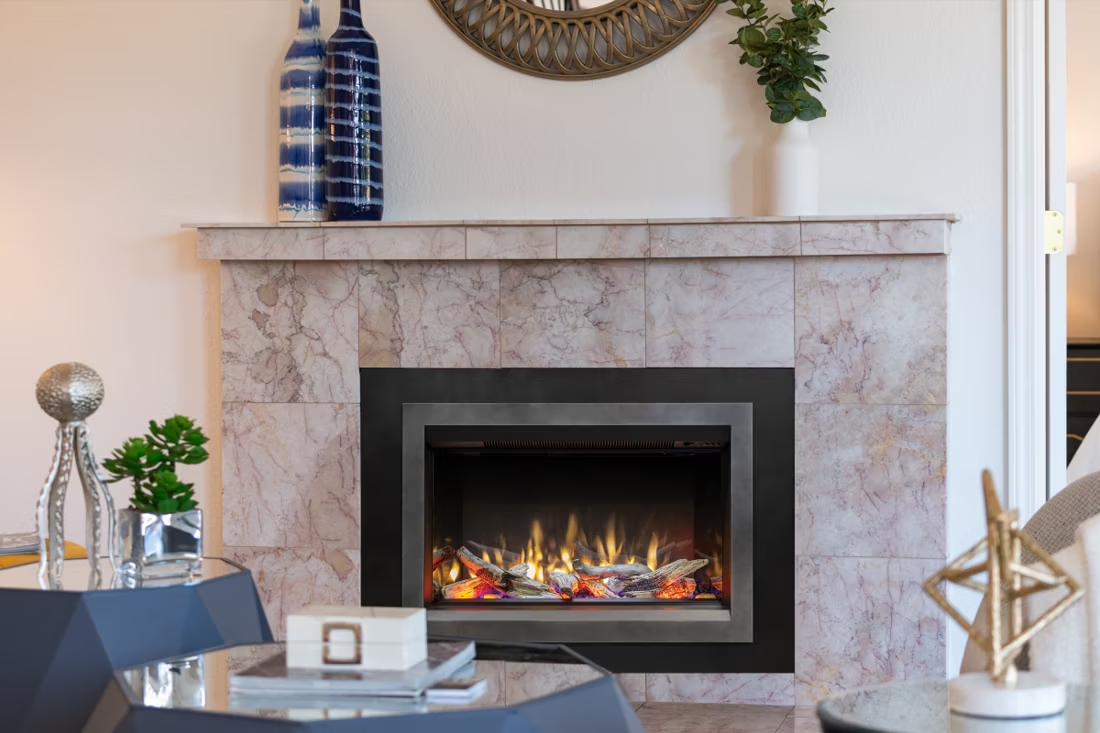
Electric fireplaces earn their place in Ashland County as a supplemental, not primary, heat source. A 1,500-watt insert or built-in unit puts out roughly 5,000 BTU—plenty to take the chill off a single room, but not designed to carry a whole house through a January stretch of single-digit lows. Where they shine here: converting an unused fireplace opening in an older Ashland home, adding heat and glow to a room addition without running gas line or a chimney, or outfitting a lake cabin or rental where a real wood or gas installation isn't practical. Most electric fireplace installs need nothing more than a dedicated outlet or circuit, and homes here are served primarily by Xcel Energy (Northern States Power-Wisconsin), so operating cost is a straightforward line item on a familiar bill.
Three steps. No salesperson until you're ready.
Tell us about your project
Your zip code, your situation, and the fuel you're leaning toward—or let the answers point you to one.
See what's actually available
The brands dealers within 100 miles genuinely carry—real options, never a catalog mirage.
Get your dealer & Project Guide
A trusted local dealer, plus the free Project Guide & Parts List that names every component of the job.
Frequently Asked Questions
How much does an electric fireplace installation cost in Ashland County?
Plug-in electric inserts and mantel packages typically run $200 to $1,200 installed, since there's no venting, gas line, or chimney work involved—often just placement and, for a wall-mounted or built-in unit, a dedicated circuit run by an electrician. Built-in electric fireplaces set into new framing or a remodeled wall run higher, generally $1,500 to $3,000 once carpentry and surround finishing are included. Compared to a wood or propane install in a climate this cold, electric is by far the lowest-cost way to add a fireplace feature to a room.
Will an electric fireplace actually heat my home during an Ashland County winter?
Not as a primary system, and any dealer worth working with will tell you that upfront. With 8,882 heating degree days and average winter lows around 4°F, the county's heating load is among the highest in Wisconsin, and most electric fireplaces top out around 5,000 BTU per unit—enough for a bedroom, den, or sunroom, not a whole house. Homes here rely on a furnace, boiler, or wood/propane stove for primary heat, with an electric fireplace layered in for supplemental warmth in one room and for the ambiance a forced-air furnace can't provide.
Do I need a permit to install an electric fireplace in Ashland County?
Most plug-in electric fireplaces need no permit at all since there's no venting, gas line, or structural chimney work involved. If your unit requires a new dedicated 120V or 240V circuit, that electrical work typically does need a permit through your local building department—your installer or a licensed electrician will usually pull that as part of the job. Because there's no combustion involved, electric fireplaces also sidestep the emissions and clearance rules that apply to wood and pellet appliances in the county.
What happens to my electric fireplace during a power outage?
It goes dark, along with everything else on the circuit—electric fireplaces have no battery backup and no ability to run without grid power. This matters more in Ashland County than in milder climates: winter storms off Lake Superior can knock out power for hours or days at a time. If backup heat during an outage is a real concern for your household, pair an electric fireplace for daily ambiance with a wood stove for true off-grid heat—cordwood from oak, maple, birch, or aspen is abundant locally, and Forest Service cutting permits through Chequamegon-Nicolet, Ottawa, or Superior National Forest run about $10 to $20 per cord during the May-to-October season.
What size electric fireplace or insert do I need?
Sizing is mostly about the room, not the whole house, since electric units are supplemental heat. A 26- to 33-inch insert or wall-mounted unit comfortably heats a bedroom or den up to about 400 square feet in a well-insulated Ashland County home. Larger great rooms or open-concept living areas may call for a wider 40-plus-inch unit or two smaller units in different zones. Because Ashland County's older housing stock often has less insulation than newer construction, a local dealer will factor in your specific room's insulation and ceiling height rather than going purely by square footage.
Electric insert vs. electric stove vs. wall-mounted unit—what's the difference?
An electric insert is built to slide into an existing fireplace opening, making it the natural choice if you already have a masonry fireplace you want to modernize without chimney maintenance. An electric stove is a freestanding cabinet-style unit that mimics a wood stove's look and can sit anywhere near an outlet, good for rooms without an existing fireplace. A wall-mounted or built-in unit is the most minimal, framed directly into a wall like a flat-screen television, and works well in newer construction or remodels where you're designing the wall around it. For most Ashland County homes with an old, rarely-used fireplace, an insert is the simplest upgrade.
What are the best electric fireplace brands for a cold-climate home?
Look for units with a well-rated flame effect and a genuinely quiet heater fan, since you'll likely run it often during Ashland County's long heating season. Dimplex and Napoleon are widely available and well-regarded for both inserts and built-ins, with realistic flame technology that holds up to daily use. Amantii is a common choice for larger built-in and linear units in remodels. Whatever brand you land on, prioritize a model with a true thermostat rather than just high/low settings—it makes the supplemental heat far more efficient in a room that's also getting some warmth from your main furnace.
How much does it cost to run an electric fireplace in Ashland County?
A typical 1,500-watt electric fireplace running on heat mode costs roughly 15 to 25 cents per hour at standard Xcel Energy (Northern States Power-Wisconsin) residential rates, depending on your specific rate plan. Run several hours a night through a long Ashland County winter and that adds up, but it's still generally cheaper than running electric baseboard heat in the same room, since the fireplace only heats where you're actually sitting rather than the whole house. Flame-only mode with the heater off uses only a few watts, so ambiance without heat is essentially free to run.
Electric vs. pellet stove—which makes more sense for my Ashland County home?
A pellet stove, fed by pellets from regional suppliers like Indeck Energy Services, Lignetics, or Somerset Pellet Fuel, puts out real heat—enough to serve as a primary or near-primary source for a room or even a modest home, and it's a meaningful contributor against 8,882 heating degree days. An electric fireplace is lower heat output but dramatically simpler: no hopper to fill, no venting, no annual service. Both require grid power to run their blowers, so neither is a true off-grid backup during an outage. If you want a serious heat contributor for a cold winter and don't mind the pellet-loading routine, go pellet. If you want low-maintenance ambiance and modest supplemental warmth in a specific room, electric is the easier path.
Do electric fireplaces actually produce heat?
Yes—most put out around 4,800–5,000 BTUs from a standard outlet, which comfortably warms a bedroom, office, or den as a comfort-zone heater. What they won't do is carry a whole house the way wood, gas, or pellet can. Think of electric as ambiance-first with honest supplemental heat: flames on with no heat in July, flames plus warmth in January.
Does an electric fireplace need a vent or chimney?
No—that's its superpower. An electric fireplace needs a wall and an outlet, period. No vent pipe, no gas line, no clearances to design around, which is why it works in bedrooms, offices, apartments, and walls where venting a gas or wood unit would be impractical or impossible. Installation is typically the simplest and least expensive of any fireplace type.
What is an in-home preview and do I need one?
It's a visit where a hearth professional measures your space, confirms the model you picked actually works in your home, and walks the specs—framing, gas line, venting, finish work—before anything is ordered. Some details you just can't know until you see the house. Never make a down payment without one; it's the single most-skipped step that burns buyers.
Can I install a fireplace myself?
If you're putting a fire in your house on purpose, it's best to work with an expert. Unless you're genuinely experienced in framing, gas line, vent pipe, and the national code on clearances to combustibles, have a professional do it—and ideally the same company that sells you the fireplace, so warranty, service, and liability all live under one roof.
Stove and Fireplace Dealers in Ashland County
Listings include WhyFire partner dealers, dealers we have verified as authorized for the brands we recommend, and established local businesses that carry hearth products. Every listing shows which one it is. The ones marked Preferred run on WhyFire's software, so they can show you real pricing and book your appointment right here. No manufacturer pays for placement. How we verify dealers →
Stove & Fireplace Works
Find your electric fireplace in Ashland County.
Tell us about your room and your Ashland County home, and we'll put together a free Project Guide & Parts List—the right electric fireplace or insert, the exact parts, and a trusted local dealer to install it.
Find Your Fireplace →