
Reliable Heat for Altoona's Long, Cold Winters.
With a long, seven-month heating season and winter lows near 8°F, Altoona homes need heat that starts instantly. Find the right gas fireplace or insert, and connect with a trusted local dealer.
Every Project Starts From One of These Five Situations
Heat you can count on when it's eight below.
Altoona sits in Eau Claire County in Wisconsin's Chippewa Valley, where climate zone 6A brings a long, seven-month heating season and average lows around 8°F—cold enough to rival Duluth, Minnesota, a few hours north. Wood heat has deep roots here, with oak, maple, birch, and aspen all common in local woodlots, but a growing share of Altoona homeowners are choosing gas for the simple reason that it starts at the flip of a switch on the coldest mornings, no kindling required.
Natural gas service reaches much of Altoona and the surrounding Eau Claire area through Xcel Energy (the utility behind Northern States Power Co.), while propane remains the standard fallback for homes further out in Eau Claire County's rural townships. Either way, a properly sized direct-vent gas fireplace or insert gives you zone heat that keeps a single room comfortable without running the furnace harder, and—with the right ignition system—heat that keeps working even if a winter storm knocks out the power.
Three steps. No salesperson until you're ready.
Tell us about your project
Your zip code, your situation, and the fuel you're leaning toward—or let the answers point you to one.
See what's actually available
The brands dealers within 100 miles genuinely carry—real options, never a catalog mirage.
Get your dealer & Project Guide
A trusted local dealer, plus the free Project Guide & Parts List that names every component of the job.
Frequently Asked Questions
How much does a gas fireplace installation cost in Altoona?
Most gas fireplace and insert installations in Altoona run $4,000 to $10,000, depending on the unit, the venting path, and whether a new gas line needs to be run. A direct-vent insert dropped into an existing masonry fireplace with gas already nearby sits toward the lower end. New construction or a fireplace installed where no gas line exists—common in older Altoona and Eau Claire homes built before natural gas reached the block—pushes toward the higher end once trenching and line work are added. A local dealer will walk your home before quoting a firm number.
Can I convert my wood-burning fireplace to gas?
Yes, and it's a common project for Altoona homes with older masonry fireplaces originally built for oak or maple cordwood. A gas insert typically slides into the existing firebox with a stainless liner run up the current chimney, so you keep the look of the fireplace while gaining instant on-off heat. Expect $4,000 to $8,500 for the conversion in this area, with the final number depending on whether the home already has a gas line nearby or needs one extended from the street.
Is natural gas available in Altoona, or do I need propane?
Much of Altoona has natural gas service through Xcel Energy, the same utility that supplies electricity to the area under the Northern States Power Co. name—so many homes already have a gas line for a furnace or water heater that an installer can tap into. Homes on the edges of town or out in Eau Claire County's rural townships, where the gas main doesn't reach, typically run on propane instead. Nearly every gas fireplace and insert on the market can be configured for either fuel; your installer just sets the correct orifice and regulator.
Will my gas fireplace still work if the power goes out?
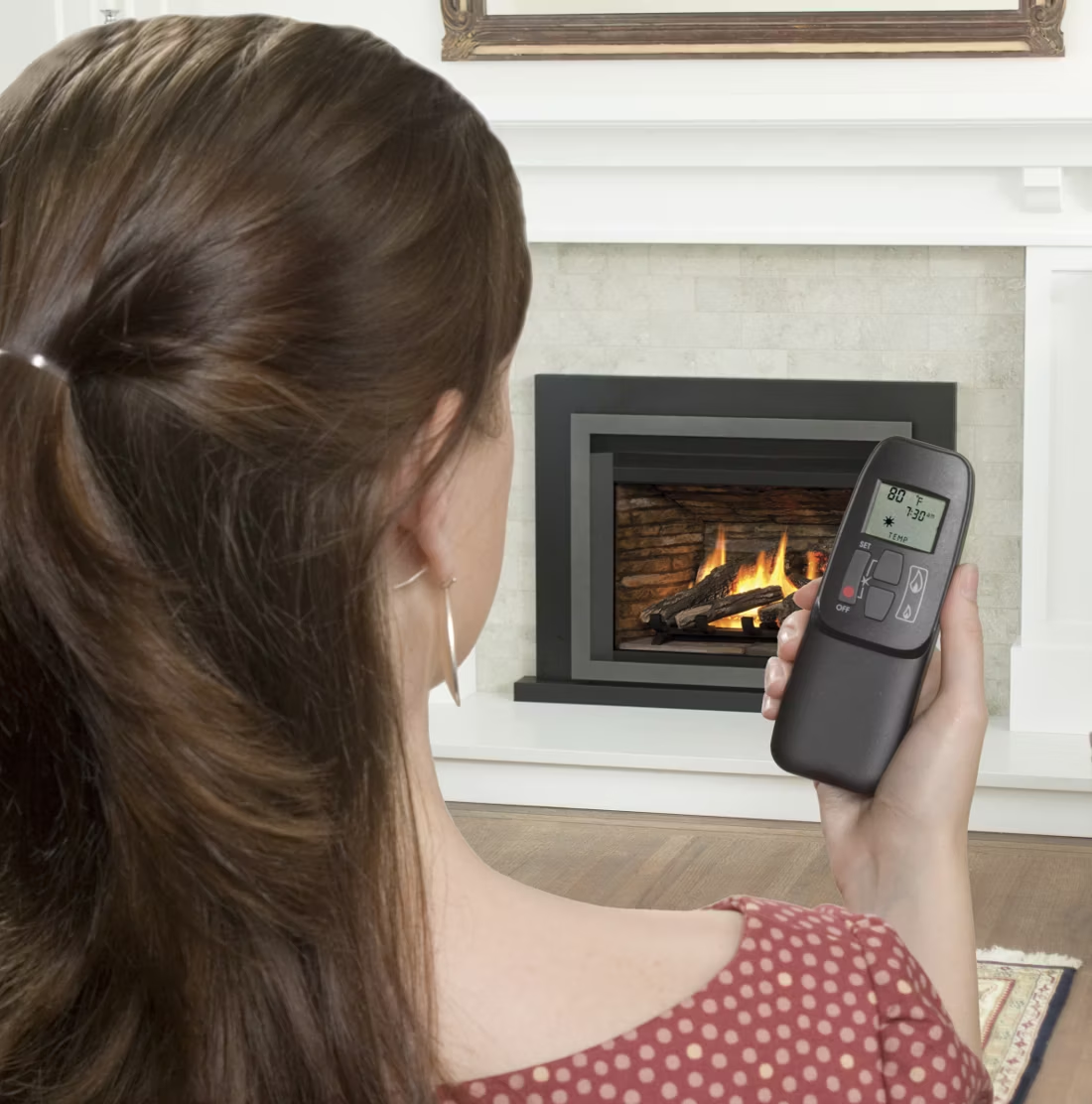
It can, if you choose the right ignition system. Units with intermittent pilot ignition (IPI) run on AA batteries that kick in automatically when the power drops, so the fireplace lights on demand just like normal—worth knowing given how a hard winter storm out of the northwest can knock out power in Eau Claire County for hours at a time. Valor fireplaces go a step further: their pilot assembly generates its own electricity through the thermocouple, so there are no batteries to maintain at all. At Xcel Energy's residential rate of roughly 15.8 cents per kWh, running a blower motor off the grid is cheap under normal conditions—but during an outage, ignition type is what actually matters.
What's the difference between a gas fireplace, insert, and stove?
A gas fireplace is a fully built-in unit framed into a wall—the right choice for new construction or a remodel with no existing chimney. A gas insert is built to slide into an existing masonry firebox, which describes a lot of the older housing stock around Altoona and Eau Claire, and it uses your current chimney as the vent path with a liner. A gas stove is a freestanding cabinet-style unit that sits on the floor and vents through a wall or existing flue, similar in footprint to a wood stove. Homeowners with an existing wood fireplace usually go with an insert; homes without one typically choose a built-in fireplace or a freestanding stove.
Do I need a permit to install a gas fireplace in Altoona?
Yes. The City of Altoona's building inspection department requires a permit for the fireplace installation itself, and any new or modified gas line requires a separate permit pulled by a licensed gas-fitter or plumber. Most hearth dealers serving Eau Claire County coordinate both permits and the required inspection as part of the installation, so you're not left managing separate trades yourself.
Should I get a vented or vent-free gas fireplace?
Vented (direct-vent) units draw combustion air from outside and exhaust it back outside through a sealed pipe, so they're the cleanest and most universally recommended option—and what most Altoona homeowners end up choosing. Vent-free units burn without any outside venting and release some moisture and combustion byproducts into the room; they're legal in Wisconsin but come with room-size and ventilation requirements. In a climate zone 6A house built tight for a long, seven-month heating season, that extra humidity from a vent-free unit can actually be a problem rather than a benefit through a long, sealed-up winter. Direct-vent is the safer default here.
How often does a gas fireplace need to be serviced?
Plan on an annual inspection, ideally in early fall before the heating season ramps up. A technician checks the burner, pilot assembly, venting, and gas connections, and cleans the glass and interior—a service that typically runs $150 to $250 in the Eau Claire area. Given how many burn hours a gas fireplace sees as supplemental heat through an Altoona winter, skipping a season isn't worth the risk to the ignition components or the venting seal.
Gas, wood, or pellet—which makes the most sense for my Altoona home?
Wood is the traditional choice here, with oak, maple, birch, and aspen all readily available locally, and it keeps working with zero electricity during an outage—a real consideration given how exposed Eau Claire County can be to winter storms. Pellet stoves, stocked with bagged fuel from regional producers like Indeck Energy Services, Lignetics, or Somerset Pellet Fuel, offer cleaner, more automated burning but need electricity to run the auger and blower. Gas splits the difference on convenience: no wood handling or ash, instant on-off operation, and, with the right ignition system, it can still run during a power outage. For a primary living space where you want heat without daily tending, gas is usually the easiest fit; many Altoona homes still keep a wood stove in the background for true off-grid backup.
What's the difference between an insert and a zero-clearance fireplace?
An insert is a fireplace that slides into a pre-existing wood-burning fireplace—if you don't have one, there's nothing to insert it into. A zero-clearance fireplace is built into a framed wall, which makes it the answer for remodels and new construction. Simple test: existing masonry fireplace means insert; blank or framed wall means zero-clearance.
Why is a fireplace insert so efficient?
An insert does two things: it seals the chimney completely, so you stop losing air you already paid to heat, and it radiates warmth into the room through the firebox and glass. Most add a heat-exchange fan that pulls cool room air underneath, wraps it around the hot firebox, and pushes it back out warm. Your home is more efficient before you've even lit the first fire.
Can a fireplace actually lower my heating bill?
Yes—by creating a comfort zone. A furnace heats every square foot of the house just to warm the one room you're in; a gas fireplace on low burns roughly a sixth of the gas a typical furnace does. Set the furnace around 55–60 degrees as a baseline, then heat the rooms your family actually uses. Families who heat this way commonly save $20–$60 a month.
Does a fireplace add value to my home?
On average, a fireplace adds back to the home about the same amount you spent installing it. Add the monthly savings from heating the rooms you actually use instead of the whole house—often hundreds of dollars a year—and the value case is strong before you even count what a fire does for how your family uses the room.
Nearby Dealers
Hearth shops serving Altoona and the surrounding area. Every listing shows whether it is a WhyFire partner, a dealer we have verified as authorized for the brands we recommend, or a local business carrying hearth products. No manufacturer pays for placement. How we verify dealers →
Poolman
Ccs Services LLC
Find your gas fireplace in Altoona.
Tell us about your home and we'll put together a free Project Guide & Parts List—the right gas fireplace or insert, the exact venting parts, and a trusted local dealer to install it.
Find Your Fireplace →