
Reliable gas heat for Adams County's cold-lake winters.
From the shores of Petenwell and Castle Rock Lakes to the villages of Adams and Friendship, gas fireplaces give cottages and year-round homes instant heat without a wood pile. Find the right unit and get matched with a trusted local dealer.
Every Project Starts From One of These Five Situations
Heat that's ready the moment you walk in the door.
Adams County is lake country—Petenwell and Castle Rock Lakes, the Necedah National Wildlife Refuge, and hundreds of cranberry marshes spread across a county with barely 6,200 year-round residents but a much larger population of seasonal cottage owners. Winters here are genuinely severe: climate zone 6A, an average winter low around 6°F, and a winter heating load closer to Minneapolis than to most of southern Wisconsin. Wood heat has deep roots in this landscape, with oak, maple, birch, and aspen all common in local woodlots, but for a lot of cabin and lake-home owners, gas has become the more practical choice.
Natural gas mains are limited outside the villages of Adams and Friendship, so most of the county—including the lake and forest properties where second homes cluster—runs on propane. That reality actually favors gas fireplaces: a propane-fed direct-vent unit lets you flip a switch and have real heat within minutes of arriving at a cottage that's sat closed up all week, no kindling or flue warm-up required. For homes that sit vacant for stretches during Adams County's long heating season, that convenience—plus battery-backed ignition on many models—matters more than it does in a house someone occupies every day.
Three steps. No salesperson until you're ready.
Tell us about your project
Your zip code, your situation, and the fuel you're leaning toward—or let the answers point you to one.
See what's actually available
The brands dealers within 100 miles genuinely carry—real options, never a catalog mirage.
Get your dealer & Project Guide
A trusted local dealer, plus the free Project Guide & Parts List that names every component of the job.
Frequently Asked Questions
How much does a gas fireplace installation cost in Adams County?
Most gas fireplace and insert installations run somewhere between $4,000 and $11,000, with the range driven mainly by whether you're on propane or natural gas, how much venting and framing the job needs, and whether a propane tank has to be installed or upsized. Because so much of Adams County runs on propane rather than piped natural gas, tank sizing and delivery access are worth discussing with your installer up front, especially for lake and cabin properties down gravel roads. A local retailer will give you a firm number after seeing the space in person.
Can I convert my existing wood fireplace to gas?
Yes, and it's a common project on the older cabins and cottages scattered around Petenwell and Castle Rock Lakes. A gas insert typically drops into the existing masonry opening and vents through a stainless liner run up the original chimney, so you keep the look of the fireplace while gaining instant, thermostat-controlled heat. For propane-served properties—the majority of the county outside Adams and Friendship—the installer sets the insert's orifice for propane rather than natural gas, which is a straightforward adjustment most hearth dealers handle routinely.
Do I need natural gas, or is propane the standard here?
Propane is the standard fuel for most of Adams County. Piped natural gas service is concentrated in and near the villages of Adams and Friendship; the lake communities, rural townships, and cranberry marsh area that make up most of the county rely on propane, either from an existing tank shared with a furnace or water heater, or a new tank set specifically for the fireplace. Gas fireplaces are built to run on either fuel—your installer configures the unit for whichever you have—so being off the natural gas grid doesn't rule out a gas fireplace, it just determines the setup.
Will my gas fireplace still work if the power goes out?
Most units with intermittent pilot ignition (IPI) include a battery backup that keeps the fireplace fully operational during an outage—the flame lights on demand off the batteries just like normal. That matters in Adams County, where a lot of properties are unoccupied cabins for stretches of the winter and a storm-related outage might not get noticed right away. Valor fireplaces take a different approach: the pilot's thermocouple generates the small amount of electricity the unit needs on its own, so there's no battery to check or replace, ever—a detail worth asking about if you're heating a property you don't visit every week.
What's the difference between a gas fireplace, gas insert, and gas stove?
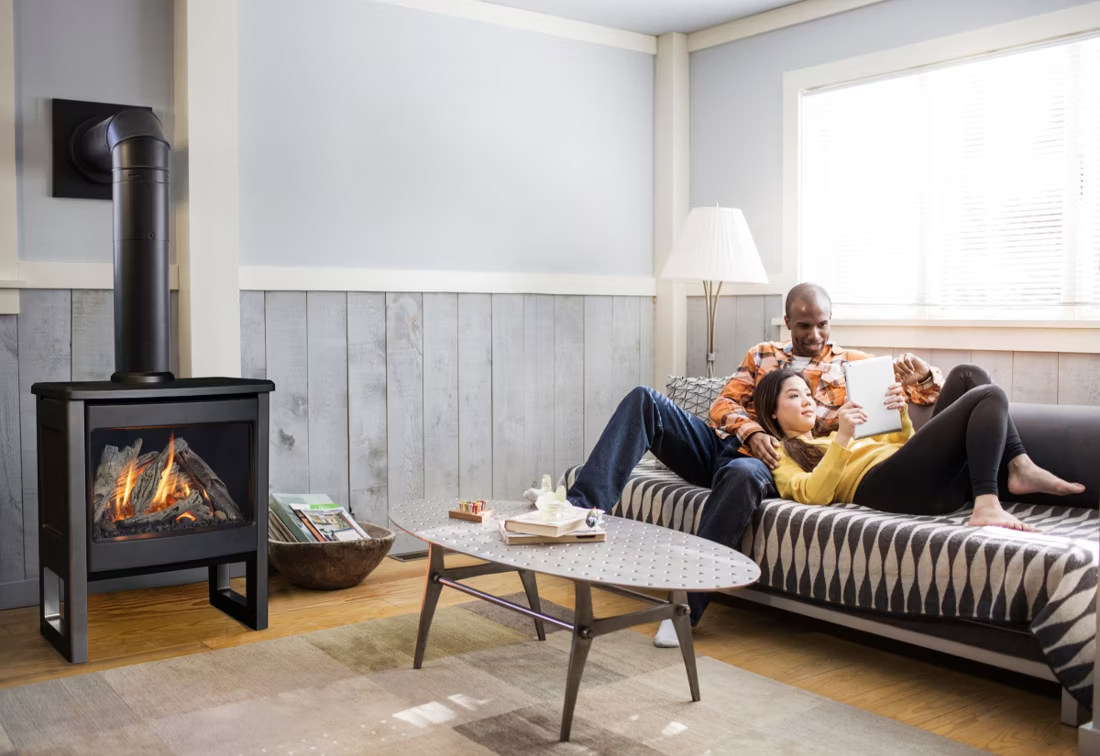
A gas fireplace is a fully built-in, framed unit suited to new construction or a remodel. A gas insert slides into an existing masonry fireplace opening and uses the existing chimney as its vent path—the most common upgrade for older lake cottages and farmhouses around the county. A gas stove is a freestanding cabinet-style unit that sits on the floor, often a good fit for a smaller cabin or a bunkhouse where there's no existing fireplace to work with. Which one makes sense depends mostly on whether you're starting with an existing masonry opening or an open floor plan.
Do I need a permit to install a gas fireplace in Adams County?
Generally yes—a new gas fireplace installation typically requires a building permit and, if new gas or propane line work is involved, a separate mechanical permit, coordinated through your local township or the Adams County Planning & Zoning office depending on where the property sits. Most established hearth dealers pull these permits as part of the installation, which is one good reason to work with a dealer rather than a handyman for the gas line and venting portion of the job.
What's the difference between vented and vent-free gas fireplaces?
Vented (direct-vent) fireplaces draw combustion air from outside and exhaust the byproducts back outside through a sealed pipe—they're the cleanest option and the most common choice for full-time heating. Vent-free units burn without any outside venting, releasing some moisture and combustion byproducts into the room, and are legal in Wisconsin within specific room-size and ventilation limits. For a property that's only occupied intermittently—a lot of Adams County's lake cottages fit that description—a sealed direct-vent unit is usually the safer, lower-maintenance choice since there's no one there to monitor indoor air quality day to day.
How often should a gas fireplace be serviced?
Once a year is the standard recommendation, covering the burner, pilot or ignition system, venting, and gas connections, along with a glass cleaning. For cottages that sit closed for part of the winter, it's worth scheduling that service in the fall before the property goes into regular weekend use, so any pilot or ignition issue gets caught before you're relying on the fireplace during a cold visit.
Gas vs. wood—which makes more sense for an Adams County property?
Wood remains a strong option here—oak, maple, birch, and aspen are all readily available locally, and a wood stove keeps working with zero electricity, which matters for a cabin during a winter power outage. Gas wins on convenience: no hauling or splitting wood, no ash, and heat that's available the instant you arrive at a property that's been sitting empty. A lot of owners around the lakes end up with both—wood for ambiance and backup heat, gas for the fast, low-maintenance option on a quick weekend trip.
Is my gas fireplace wasting gas?
If it was installed more than 15 years ago, probably. Older gas fireplaces keep a standing pilot light burning all the time, and that little flame can cost a couple hundred dollars a year. Newer models use pilot-on-demand ignition—the pilot lights only when you use the fireplace and goes out when you turn it off.
Can I put a TV above my fireplace?
Yes—with an asterisk. Fireplaces are hot and TVs don't like heat. Either put a mantel between them to deflect rising warmth, or choose a fireplace with heat-management technology that creates a cool zone on the wall above—the wall stays around 125 degrees, barely warm, while the room still gets full heat. If you like clean lines and don't want a mantel, heat management is the answer.
Does a fireplace add value to my home?
On average, a fireplace adds back to the home about the same amount you spent installing it. Add the monthly savings from heating the rooms you actually use instead of the whole house—often hundreds of dollars a year—and the value case is strong before you even count what a fire does for how your family uses the room.
Can a fireplace actually lower my heating bill?
Yes—by creating a comfort zone. A furnace heats every square foot of the house just to warm the one room you're in; a gas fireplace on low burns roughly a sixth of the gas a typical furnace does. Set the furnace around 55–60 degrees as a baseline, then heat the rooms your family actually uses. Families who heat this way commonly save $20–$60 a month.
Stove and Fireplace Dealers in Adams County
Listings include WhyFire partner dealers, dealers we have verified as authorized for the brands we recommend, and established local businesses that carry hearth products. Every listing shows which one it is. The ones marked Preferred run on WhyFire's software, so they can show you real pricing and book your appointment right here. No manufacturer pays for placement. How we verify dealers →
Bolder Services LLC
Find your gas fireplace in Adams County.
Tell us about your home or cottage and we'll match you with a trusted local dealer and send over a free Project Guide & Parts List—the exact parts, including the vent kit, for your gas fireplace project in Adams County.
Find Your Fireplace →