
Real fireplace ambiance, without the chimney.
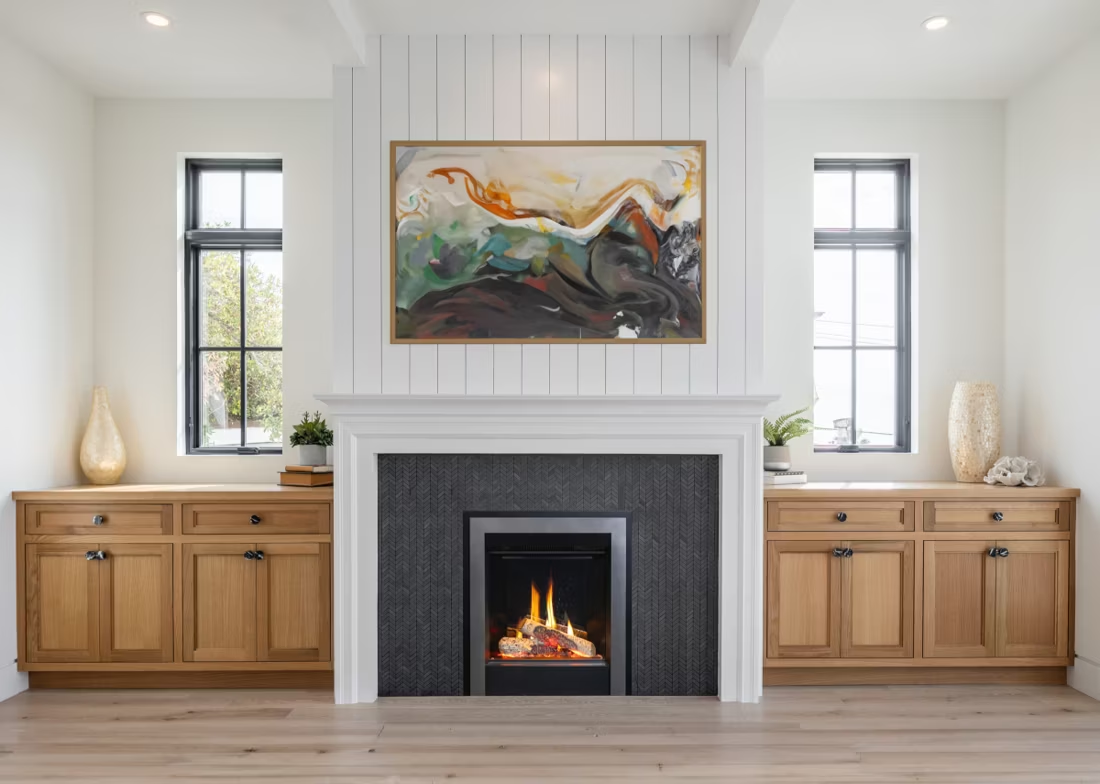
From the historic homes of Parkersburg to newer builds in Vienna and Williamstown, electric fireplaces bring instant zone heat and real flame-effect ambiance without gas lines or venting. Find the right unit and connect with a trusted local dealer.
Every Project Starts From One of These Five Situations
Heat where you need it, install almost anywhere.
Wood County sits at the confluence of the Ohio and Little Kanawha Rivers, around 615 feet in elevation, in a climate zone 4A mixed-humid region with roughly 4,814 heating degree days a year and average winter lows near 24°F. That's a moderate heating load compared to colder climates like Burlington, VT—real winter, with occasional ice storms and cold snaps common in the Ohio Valley, but not the sustained sub-zero stretches that push homeowners toward a wood stove as primary heat. A lot of Parkersburg's older Victorian-era housing stock has fireplace openings that no longer draft properly or were bricked up decades ago, and plenty of newer construction and additions around Vienna and Williamstown have no chimney at all.
That's where electric fireplaces fit. There's no gas line to run, no masonry to inspect, no chimney to maintain—a licensed electrician can wire a dedicated circuit for a larger built-in, or a smaller unit can plug straight into an existing outlet. Mon Power serves most of Wood County's electric accounts, and running a 1,500-watt unit as supplemental zone heat in a living room or finished basement costs a fraction of what it takes to heat the whole house. It's a practical option for renters, condo owners in Vienna, and homeowners restoring an old firebox opening who want the look of a fire without the upkeep of wood or gas.
Three steps. No salesperson until you're ready.
Tell us about your project
Your zip code, your situation, and the fuel you're leaning toward—or let the answers point you to one.
See what's actually available
The brands dealers within 100 miles genuinely carry—real options, never a catalog mirage.
Get your dealer & Project Guide
A trusted local dealer, plus the free Project Guide & Parts List that names every component of the job.
Frequently Asked Questions
How much does an electric fireplace installation cost in Wood County?
A plug-in electric insert or wall-mounted unit typically runs $400 to $2,500 installed, since most models don't require any new wiring—you're just fitting the unit into an existing opening or mounting it to a wall. If you want a larger built-in or a mantel package with a dedicated 20-amp circuit, add $150 to $400 for an electrician to run that line, pushing total project cost to roughly $2,000-$5,000 depending on the mantel surround and finish work. Homeowners converting an old, non-functioning masonry fireplace in a Parkersburg historic home into an electric insert usually land on the lower end, since there's no chimney relining or gas line work involved.
Do I need a permit to install an electric fireplace in Wood County?
Usually not for the fireplace itself. Because electric units don't vent and don't burn fuel, they skip the chimney and gas-line inspections that wood and gas installations require. Where a permit does come into play is the electrical work—if your installer is adding a new dedicated circuit or a subpanel to support a larger built-in unit, that circuit work may require an electrical permit through the local building department depending on whether the home is inside Parkersburg city limits or unincorporated Wood County. Most licensed electricians handle that paperwork as part of the job.
What's the difference between an electric insert, wall-mount, and mantel package?
An electric insert is built to slide into an existing fireplace opening, which makes it the go-to choice for Wood County homes with an old masonry firebox that no longer functions. A wall-mount unit hangs flush on any wall like a large TV and needs no existing opening at all—popular in newer construction and finished basements. A mantel package pairs an electric firebox with a surrounding cabinet or mantel surround, giving you a furniture-style centerpiece for a room that never had a fireplace. All three plug into standard household current or a dedicated circuit, and none require venting.
How much space can an electric fireplace actually heat?
Most residential electric fireplaces are rated around 4,600 to 5,200 BTU on a 1,500-watt heater element, which comfortably heats a 400 to 1,000 square foot zone depending on ceiling height and insulation. That's a good match for supplemental heat in a Wood County living room or den during shoulder-season chill or a mild cold snap, but with 4,814 heating degree days a year, it isn't sized to be a home's sole heat source through a full winter. Most homeowners here pair an electric fireplace with existing central heat and use it to warm the room they're actually sitting in, saving on furnace runtime.
Will my electric fireplace still work if the power goes out?
No—and this is worth planning for. Electric fireplaces require power to run both the heater element and the flame-effect display, so during an outage they shut down completely, unlike a wood stove or a gas unit with battery-backup ignition. The Ohio Valley sees occasional ice storms that can knock out power in Wood County for a day or more, so if backup heat during outages is a priority, a wood stove or gas insert paired with your electric unit is worth considering for at least one room in the house.
How much does it cost to run an electric fireplace day to day?
At Mon Power's typical residential rate, running a 1,500-watt electric fireplace on the heat setting costs roughly 17 to 20 cents per hour. Used a few hours an evening as supplemental heat in a family room, that adds up to somewhere around $15 to $30 a month during heating season—considerably less than running a whole-house furnace for the same comfort in one room. Running it on ambiance-only mode with the heater off costs only a few cents an hour, since the flame effect itself uses very little power.
What electric fireplace brands are available through local Wood County dealers?
Dimplex, Napoleon, Amantii, and Touchstone are the brands most commonly stocked and installed by hearth dealers serving Wood County. Dimplex and Napoleon tend to dominate the insert and built-in categories with realistic flame technology, while Touchstone and Amantii are popular for slimmer wall-mount units in smaller rooms or condos. A local dealer can show you the flame effect and heater performance in person before you commit, which matters more with electric units than with wood or gas, since the visual quality varies a lot between brands.
Can I convert my old, non-working fireplace into an electric fireplace?
Yes, and it's one of the most common projects for older homes in Parkersburg's historic neighborhoods. An electric insert is sized to slide into a standard masonry firebox opening, so there's no need to address a cracked flue, deteriorated chimney liner, or the local oak, hickory, and cherry that would otherwise need splitting and stacking for a wood-burning setup. It's largely a cosmetic and electrical project rather than a structural one, which is why it's often the fastest and least expensive way to bring a dead fireplace back into use.
Electric vs. wood or gas—which fireplace fits my Wood County home?
Wood is the traditional choice in this part of the Ohio Valley—oak, hickory, maple, and cherry are all locally abundant, and a wood stove keeps working during a power outage, which matters given the region's occasional ice storms. Gas offers instant, consistent heat with a real flame and, with the right ignition system, some backup capability during outages. Electric wins on installation simplicity and running cost for supplemental, zone-based heat, and it's the easiest option for renters, condos, or homeowners who just want ambiance without smoke, ash, or a gas line. Many Wood County households end up with gas or wood as their real backup heat source and electric in secondary rooms purely for convenience and looks.
Do electric fireplaces actually produce heat?
Yes—most put out around 4,800–5,000 BTUs from a standard outlet, which comfortably warms a bedroom, office, or den as a comfort-zone heater. What they won't do is carry a whole house the way wood, gas, or pellet can. Think of electric as ambiance-first with honest supplemental heat: flames on with no heat in July, flames plus warmth in January.
Does an electric fireplace need a vent or chimney?
No—that's its superpower. An electric fireplace needs a wall and an outlet, period. No vent pipe, no gas line, no clearances to design around, which is why it works in bedrooms, offices, apartments, and walls where venting a gas or wood unit would be impractical or impossible. Installation is typically the simplest and least expensive of any fireplace type.
What is an in-home preview and do I need one?
It's a visit where a hearth professional measures your space, confirms the model you picked actually works in your home, and walks the specs—framing, gas line, venting, finish work—before anything is ordered. Some details you just can't know until you see the house. Never make a down payment without one; it's the single most-skipped step that burns buyers.
How much should I budget for a fireplace?
For an average home—covering the fireplace, the vent pipe, and basic installation—a budget between $3,900 and $5,500 gives you a lot of options across wood, gas, and pellet. By the time you add finish work, gas line, and electrical, the average complete installation lands between $5,000 and $12,000 all-in. In a remodel or new build, a good rule is to put about 2.5% of the total project cost toward the fireplace.
Stove and Fireplace Dealers in Wood County
Listings include WhyFire partner dealers, dealers we have verified as authorized for the brands we recommend, and established local businesses that carry hearth products. Every listing shows which one it is. The ones marked Preferred run on WhyFire's software, so they can show you real pricing and book your appointment right here. No manufacturer pays for placement. How we verify dealers →
Bob's Fireplace
The Fore Timber Company Inc.
Hardman's Hardware
Apex Feed & Supply, Inc.
Contractor’s Building Center
Find your electric fireplace in Wood County.
Tell us a bit about your home and we'll match you with the right electric insert, wall-mount, or mantel package—plus a free Project Guide & Parts List and a trusted local dealer to install it.
Find Your Fireplace →