
Instant heat, no chimney required, for Weston homes.
A plug-in or hardwired electric fireplace warms a room in Lewis County without touching an old chimney or running a gas line. Find the right unit and connect with a trusted local dealer.
Every Project Starts From One of These Five Situations
The simplest way to add heat to an old Lewis County home.
Weston sits along the West Fork River at just over 1,000 feet, in a 5A climate zone with roughly 5,086 heating degree days and average winter lows around 22°F—cold enough to want supplemental heat in a back bedroom or sunroom, but not the kind of extreme cold that demands a whole-home wood-burning setup. Much of the housing stock here dates to the late 1800s and early 1900s, including homes near the old Trans-Allegheny Lunatic Asylum grounds, and many still have a disused masonry fireplace that was capped off decades ago rather than repaired.
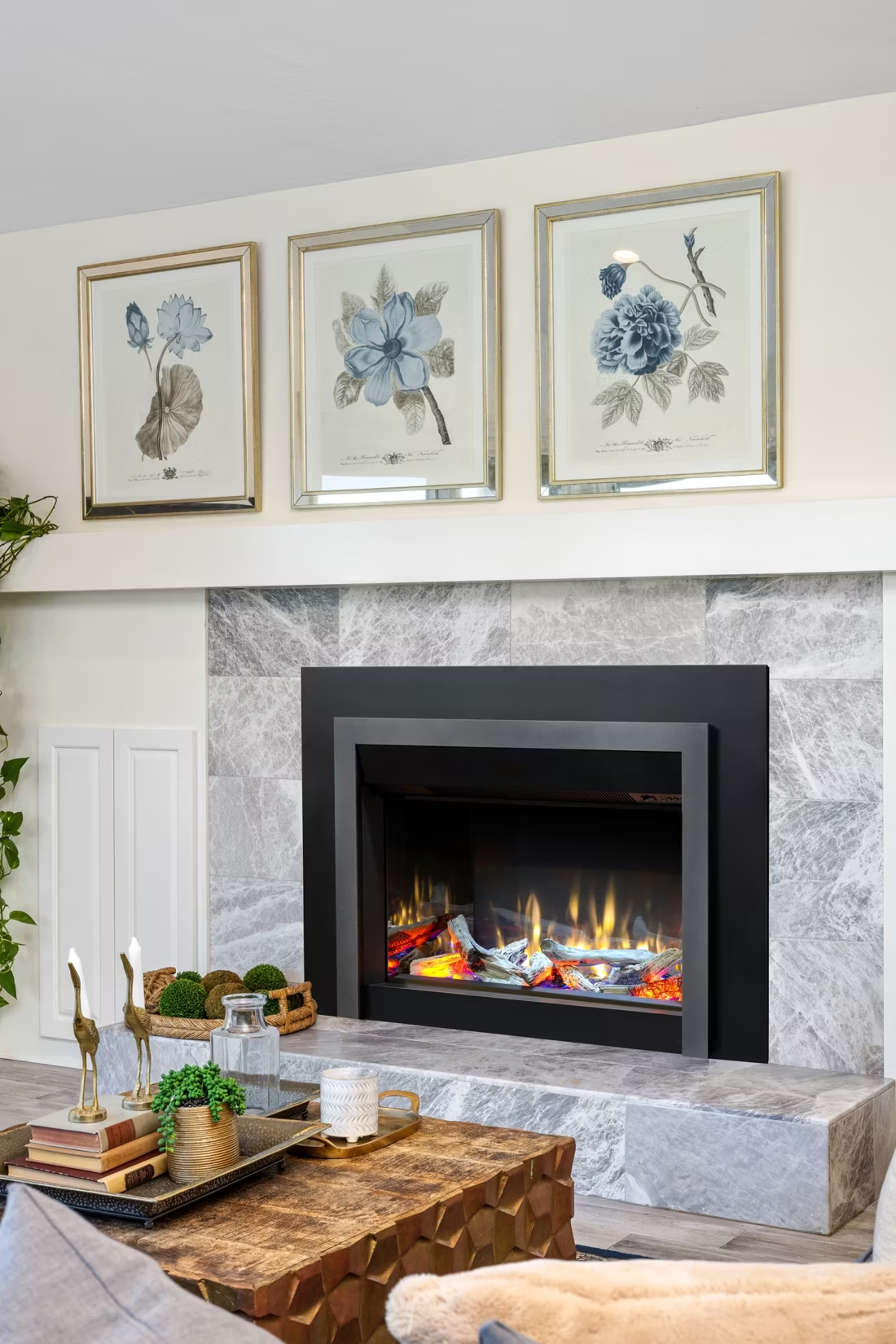
That's where electric makes sense. An electric insert drops into that existing fireplace opening—or a linear unit mounts flush to a wall—without a chimney liner, gas line, or venting of any kind. Power comes from either Monongahela Power Co. in town or Harrison Rural Electric Cooperative out in the county, at a residential rate around $0.14 per kWh, so running one is inexpensive even for daily use. For renters, historic properties where the county wants the original masonry left alone, or anyone who just wants ambiance and a little heat without dealing with wood or propane, electric is often the least complicated option in Lewis County.
Three steps. No salesperson until you're ready.
Tell us about your project
Your zip code, your situation, and the fuel you're leaning toward—or let the answers point you to one.
See what's actually available
The brands dealers within 100 miles genuinely carry—real options, never a catalog mirage.
Get your dealer & Project Guide
A trusted local dealer, plus the free Project Guide & Parts List that names every component of the job.
Frequently Asked Questions
How much does an electric fireplace installation cost in Weston?
Most electric fireplace projects in Weston run $300 to $2,500. A plug-in insert or freestanding stove-style unit that uses a standard 120-volt outlet sits at the low end—no electrician needed, just slide it into the fireplace opening or set it against a wall. A built-in linear electric fireplace set into a wall or new mantel surround, especially one that needs a dedicated 20-amp circuit run by a licensed electrician, lands toward the higher end. Because there's no venting or chimney work involved, electric is consistently the least expensive hearth option available to Lewis County homeowners.
Can I put an electric insert into my old masonry fireplace?
Yes, and it's one of the more common projects for older Weston homes. If your fireplace has been capped, damaged, or simply unused for years, an electric insert slides into the existing opening and gives you heat and flame effect without repairing the chimney, relining a flue, or touching the original masonry—which matters for the town's older housing stock where preserving the original brickwork is often preferred. Local dealers can measure your opening and recommend an insert sized to fit without modification.
Do I need a permit to install an electric fireplace in Weston?
In most cases, no. A plug-in or cord-connected unit that uses an existing outlet doesn't trigger a building or electrical permit. If you're having a licensed electrician run a new dedicated circuit for a hardwired built-in unit, that electrical work typically does need a permit, which the electrician usually pulls as part of the job. There's no chimney, gas line, or combustion venting involved, so electric fireplaces avoid most of the inspection steps that come with wood or gas installations.
What will it cost to run an electric fireplace in Weston each month?
At the local residential rate of roughly $0.14 per kWh through Monongahela Power or Harrison Rural Electric, a typical 1,500-watt unit costs about 21 cents an hour to run on heat mode. Used for 4 to 5 hours a day as supplemental heat in a bedroom or living room, that works out to roughly $25 to $32 a month. Running it flame-only, without the heater engaged, costs only a few cents an hour since the light effect itself draws very little power.
Will my electric fireplace still work if the power goes out?
No—electric fireplaces need power to run, and winter ice storms occasionally knock out lines along Harrison Rural Electric's rural feeders and Monongahela Power's Weston circuits alike. If reliable heat during outages matters to you, an electric fireplace should be treated as a comfort and ambiance feature rather than your only heat source, and it's worth having a backup plan—a propane heater, generator, or a working chimney elsewhere in the house—for extended outages.
What size electric fireplace do I need for my room?
Electric fireplaces are rated for heating a specific square footage, usually up to 400–1,000 square feet depending on the model, but most homeowners choose based on the visual size that fits their wall or fireplace opening first, then confirm the heater output covers the room. For a single bedroom or den in a typical Weston home, a smaller 1,000–1,500-watt unit is usually plenty. For an open living/dining area, look for a model rated closer to 1,500 watts with a larger stated coverage area, and don't count on it to heat much beyond that one room.
Electric vs. gas—which makes more sense for my Weston home?
Gas fireplaces produce more real heat and can run for hours on a fixed fuel cost, but they require either a natural gas line or a propane tank, plus venting and a professional install—a bigger project and a bigger bill. Electric fireplaces install in an afternoon, cost far less upfront, and work in any room with an outlet, but they're better suited to supplemental warmth in one space than to heating a whole house. In Lewis County, where propane is the common alternative to piped gas in most rural areas, electric is frequently the simpler choice for anyone adding a second heat source rather than replacing a primary furnace.
Are electric fireplaces a good fit if I already have a wood stove?
Wood heat is far less common now among Weston homeowners than it once was, even though the surrounding hills—full of oak, hickory, and cherry—made cutting your own firewood practical for generations. Plenty of households here still keep a wood stove for backup heat or tradition, and an electric fireplace in another room is a common pairing: wood for serious cold-weather heat and outage backup, electric for effortless everyday ambiance in a living room or bedroom where running a stove isn't practical.
Do electric fireplaces need any maintenance?
Very little. There's no chimney to sweep, no gas line to inspect, and no combustion byproducts to worry about. Occasionally dust the heating element and vent grille, and every few years check that the LED light strips and heater fan are running smoothly—most units last 10+ years without any service call. That low-maintenance profile is part of why electric appeals to owners of older Weston properties who don't want an annual inspection added to their to-do list.
Can I put a TV above my fireplace?
Yes—with an asterisk. Fireplaces are hot and TVs don't like heat. Either put a mantel between them to deflect rising warmth, or choose a fireplace with heat-management technology that creates a cool zone on the wall above—the wall stays around 125 degrees, barely warm, while the room still gets full heat. If you like clean lines and don't want a mantel, heat management is the answer.
Do electric fireplaces actually produce heat?
Yes—most put out around 4,800–5,000 BTUs from a standard outlet, which comfortably warms a bedroom, office, or den as a comfort-zone heater. What they won't do is carry a whole house the way wood, gas, or pellet can. Think of electric as ambiance-first with honest supplemental heat: flames on with no heat in July, flames plus warmth in January.
Can I install a fireplace myself?
If you're putting a fire in your house on purpose, it's best to work with an expert. Unless you're genuinely experienced in framing, gas line, vent pipe, and the national code on clearances to combustibles, have a professional do it—and ideally the same company that sells you the fireplace, so warranty, service, and liability all live under one roof.
How much should I budget for a fireplace?
For an average home—covering the fireplace, the vent pipe, and basic installation—a budget between $3,900 and $5,500 gives you a lot of options across wood, gas, and pellet. By the time you add finish work, gas line, and electrical, the average complete installation lands between $5,000 and $12,000 all-in. In a remodel or new build, a good rule is to put about 2.5% of the total project cost toward the fireplace.
Nearby Dealers
Hearth shops serving Weston and the surrounding area. Every listing shows whether it is a WhyFire partner, a dealer we have verified as authorized for the brands we recommend, or a local business carrying hearth products. No manufacturer pays for placement. How we verify dealers →
Mike's Kitchen, Bath, Fireplace
Hardman's Hardware
Electric Service in Weston
An electric fireplace's heater draws about 1,500 watts—pennies per hour at local rates.
Monongahela Power Co
Harrison Rural Elec Assn, Inc
Find your electric fireplace in Weston.
Tell us a bit about your home and we'll put together a free Project Guide & Parts List for your Weston electric fireplace project, and match you with a trusted local dealer who can get it installed right.
Find Your Fireplace →