
Warmth on demand for Tucker County's mountain cabins and rentals.
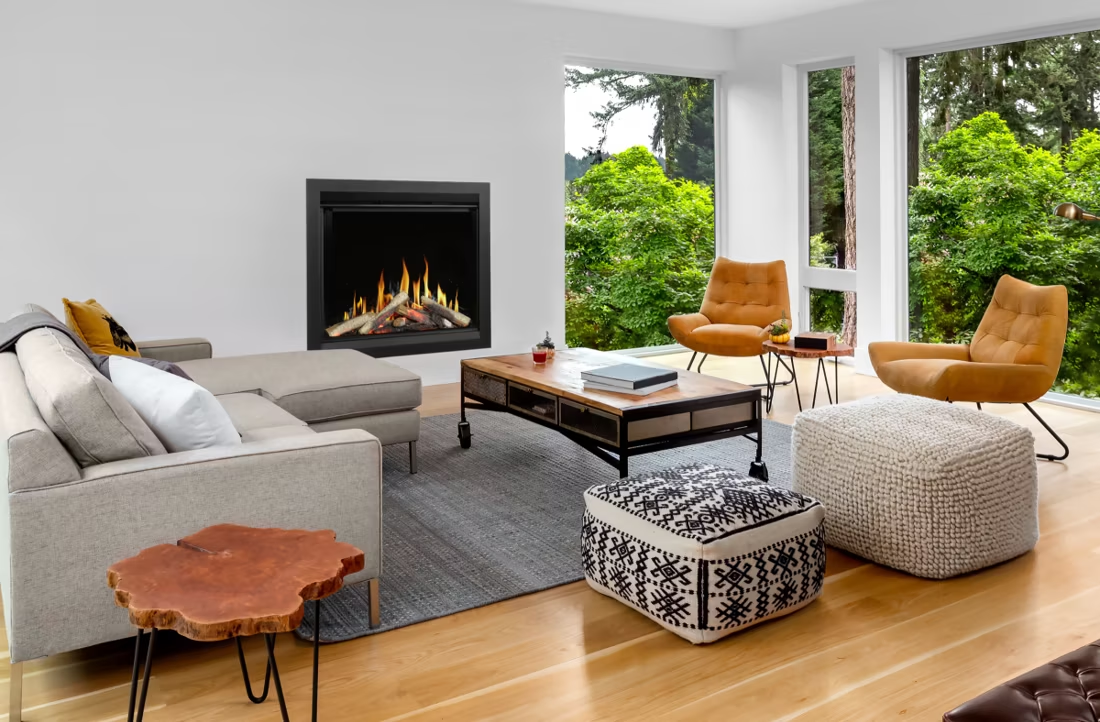
From Davis and Thomas down to Parsons, and out into the vacation cabins ringing Canaan Valley and Blackwater Falls, electric fireplaces give Tucker County homes and rentals real ambiance and zone heat with no chimney, no venting, and no wood to split. Find the right unit and connect with a trusted local dealer.
Every Project Starts From One of These Five Situations
Heat and ambiance without a flue—built for how this county actually lives.
Tucker County sits high in the Allegheny Mountains—Davis, at roughly 3,100 feet, is one of the highest incorporated towns east of the Mississippi, and the Canaan Valley floor below it is a well-known cold pocket where frost has been recorded in every month of the year. With 5,308 heating degree days and winter lows averaging in the low 20s, this is genuine cold-climate country, even though the population is barely 3,600 people spread across Parsons, Davis, Thomas, and Hambleton. What the county lacks in year-round residents it makes up for in visitors: Canaan Valley Resort, Timberline, and Blackwater Falls State Park draw a steady stream of ski and hiking traffic, and much of the housing stock is second homes and short-term rentals rather than primary residences.
That mix shapes how electric fireplaces get used here. There's no natural gas infrastructure in most of Tucker County, so full-time heat leans on wood, propane, and Mon Power electric service. An electric fireplace rarely replaces that primary heat source, but it's an easy, code-simple way to add real ambiance and supplemental warmth to a cabin, guest room, or rental unit—no chimney, no venting, no gas line, and no wood to stock for a property you might visit six weekends a year. For rental owners near the Valley, that install simplicity—plug it in, or run one 120v circuit—is a real advantage over a wood stove that needs a tenant who knows how to run it.
Three steps. No salesperson until you're ready.
Tell us about your project
Your zip code, your situation, and the fuel you're leaning toward—or let the answers point you to one.
See what's actually available
The brands dealers within 100 miles genuinely carry—real options, never a catalog mirage.
Get your dealer & Project Guide
A trusted local dealer, plus the free Project Guide & Parts List that names every component of the job.
Frequently Asked Questions
How much does it cost to install an electric fireplace in Tucker County?
Most plug-in electric fireplace inserts and freestanding units run $200 to $1,200 for the unit itself and need nothing more than an existing outlet—no permit, no electrician. Built-in electric fireplaces or wall units that need a dedicated 120v or 240v circuit run higher, typically $800 to $2,500 installed, especially in older Davis and Thomas homes where the electrical panel may need a subpanel or added circuit before an electrician will sign off. Cabin and rental owners around Canaan Valley often choose the built-in route for a more finished look, since the unit is a selling point in listing photos.
What size electric fireplace do I need for a Tucker County home or cabin?
Electric fireplaces are rated by heater wattage, not by the whole-home BTU output a wood or propane stove uses—most units top out around 5,000 BTU (roughly 1,500 watts), enough to comfortably supplement one room of 400 to 600 square feet. That's realistic for a bedroom, living room, or den in a Canaan Valley cabin, but it won't carry a whole house through a 5,308-HDD winter on its own. Size the unit to the room you actually want warm—a 26 to 30 inch insert for a bedroom or den, a 50-inch-plus linear unit for a great room where the visual impact matters as much as the heat.
Can an electric fireplace actually heat a room, or is it just for looks?
Both, depending on the model. Every electric fireplace has a built-in 1,500-watt heater (the max allowed on a standard 15-amp circuit) that will noticeably warm a closed room of a few hundred square feet—genuinely useful as zone heat on a cold Tucker County evening when you don't want to fire up the wood stove for the whole house. Some owners buy flame-effect-only or low-wattage units purely for visual ambiance in three-season rooms or basement rec rooms where full heat isn't the point. Ask which mode you're buying for before you shop—the flame effect looks the same either way.
What's the difference between a plug-in electric fireplace and a built-in insert?
A plug-in electric fireplace is a self-contained unit—freestanding stove, mantel package, or insert—that runs off a standard outlet and can be moved or removed without any wiring work. A built-in electric fireplace or wall unit is designed to be recessed into a framed wall or cabinetry, usually wired to its own circuit for a cleaner look with no visible cord. For rental cabins around the Valley, plug-in units are popular because they need zero electrical work and can be swapped out between guests; for a primary residence in Parsons or Hambleton where a finished, built-in look matters, the wired option is worth the extra step.
Do I need a permit to install an electric fireplace in Tucker County?
A basic plug-in electric fireplace needs no permit at all—it's treated like any other appliance you plug into the wall. If you're installing a built-in unit that requires a new dedicated circuit, that electrical work should be pulled by a licensed electrician and typically requires an electrical permit, though it's a far simpler process than the building and venting permits required for a wood stove or gas fireplace. There's no chimney, no clearance-to-combustibles inspection, and no venting to size—a big part of why electric is the low-friction option for a second home you're not visiting every week.
Will my electric fireplace work during a power outage?
No—and this matters in Tucker County, where ice storms and mountain power interruptions aren't rare, especially up around Canaan Valley and Blackwater Falls. An electric fireplace depends entirely on grid power from Mon Power; when the lines go down, so does the fireplace. That's the honest tradeoff for the convenience: no chimney to maintain, but no backup heat either. Most full-time Tucker County residents who rely on electric for supplemental heat still keep a wood stove, propane heater, or generator as their real outage backup—electric is for daily comfort, not for the week the power's out after a February ice storm.
Electric vs. wood—which is right for my Tucker County home?
Wood is the traditional backbone of heat in this county—oak, hickory, maple, and cherry are all abundant locally, and a Monongahela National Forest personal-use cutting permit runs about $20 a cord during the May-through-October season. Wood also keeps working when the power doesn't, which matters at elevation in Davis and Thomas. Electric can't replace that, but it wins on convenience: no ash, no chimney sweep, no wood to split and stack, and it can go anywhere there's an outlet—a guest bedroom, a basement, a rental unit where you don't want a tenant tending a fire. Most full-time households here end up with wood or propane for real heat and electric for the rooms where convenience matters more than raw BTUs.
Are electric fireplaces a good fit for vacation rentals and second homes near Canaan Valley?
Yes—this is where electric fireplaces do their best work in Tucker County. With so much of the local housing stock built around ski season and weekend visitors to Canaan Valley Resort, Timberline, and Blackwater Falls, owners want ambiance that photographs well on a listing, needs no guest instruction, and can't be misused by a renter who's never run a wood stove. A plug-in or built-in electric unit delivers that: flip a switch, adjustable flame and heat settings, no fire risk between guest turnovers, and no ash to clean out before the next check-in.
What's the best electric fireplace for an older Tucker County home with older wiring?
For homes in Davis, Thomas, or Hambleton with older electrical service, start with a standard plug-in unit on its own outlet rather than a built-in model that demands a new circuit—it sidesteps panel capacity questions entirely. If you do want a built-in wall unit, have an electrician check panel capacity first; many older mountain homes here were wired well before central air or large electric appliances were common, and a fireplace heater running at 1,500 watts on an already-loaded circuit is a common source of tripped breakers. A local dealer can point you to models with adjustable wattage settings, some as low as 750 watts, that ease the load on an older panel.
Can I put a TV above my fireplace?
Yes—with an asterisk. Fireplaces are hot and TVs don't like heat. Either put a mantel between them to deflect rising warmth, or choose a fireplace with heat-management technology that creates a cool zone on the wall above—the wall stays around 125 degrees, barely warm, while the room still gets full heat. If you like clean lines and don't want a mantel, heat management is the answer.
How much does an electric fireplace cost to run?
With the heater on, a typical unit draws about 1,500 watts—at average electric rates that's roughly 20 cents an hour. Run the flame effect alone and it costs pennies; the flames are LED-driven and use about as much power as a light bulb. There's no pilot light, no fuel delivery, and essentially no maintenance.
How much should I budget for a fireplace?
For an average home—covering the fireplace, the vent pipe, and basic installation—a budget between $3,900 and $5,500 gives you a lot of options across wood, gas, and pellet. By the time you add finish work, gas line, and electrical, the average complete installation lands between $5,000 and $12,000 all-in. In a remodel or new build, a good rule is to put about 2.5% of the total project cost toward the fireplace.
Does a fireplace add value to my home?
On average, a fireplace adds back to the home about the same amount you spent installing it. Add the monthly savings from heating the rooms you actually use instead of the whole house—often hundreds of dollars a year—and the value case is strong before you even count what a fire does for how your family uses the room.
Stove and Fireplace Dealers in Tucker County
Listings include WhyFire partner dealers, dealers we have verified as authorized for the brands we recommend, and established local businesses that carry hearth products. Every listing shows which one it is. The ones marked Preferred run on WhyFire's software, so they can show you real pricing and book your appointment right here. No manufacturer pays for placement. How we verify dealers →
Shirers Tin Shop
Manor Building Supply Inc.
Spike’s Chimney Sweep LLC
Streets Hardware Store
Cam-Rock
Hardman's Hardware - Moorefield
Mike's Kitchen, Bath, Fireplace
Find your electric fireplace in Tucker County.
Tell us about your home or cabin and we'll match you with the right electric fireplace or insert, plus a free Project Guide & Parts List with your recommended local dealer.
Find Your Fireplace →