
Warm a room in Roane County without a wood pile or a gas line.
Zone heat for the additions, basements, and manufactured homes scattered across Roane County's hollows and ridges—no chimney, no propane tank, no venting. Find the right unit and get matched with a local dealer.
Every Project Starts From One of These Five Situations
A simple option in a county that runs on wood and propane.
Roane County sits in the hill country around Spencer, with a heating season that runs long even if it isn't brutal—climate zone 4A, a winter heating load comparable to places like Columbus, OH, and average winter lows around 22°F. Most homes here lean on wood cut from the county's oak, hickory, maple, and cherry stands, or on propane where piped natural gas hasn't reached. Electric fireplaces fill a different niche: they're the practical answer for a finished basement, a mobile or manufactured home addition, a rental, or any room where running a flue or a gas line isn't realistic.
Because Roane County is served by a mix of rural electric providers and Mon Power/Potomac Edison territory depending on where you sit in the county, an electric fireplace's running cost tracks whatever your household already pays per kilowatt-hour—there's no separate fuel delivery, no cutting and hauling, and no tank to keep filled. The tradeoff is honest: an electric unit won't run without grid power, so in a county where ice storms and downed lines aren't rare, most homeowners here pair one with a wood stove or propane heater for backup rather than relying on it as the sole heat source.
Three steps. No salesperson until you're ready.
Tell us about your project
Your zip code, your situation, and the fuel you're leaning toward—or let the answers point you to one.
See what's actually available
The brands dealers within 100 miles genuinely carry—real options, never a catalog mirage.
Get your dealer & Project Guide
A trusted local dealer, plus the free Project Guide & Parts List that names every component of the job.
Frequently Asked Questions
How much does an electric fireplace installation cost in Roane County?
Costs split into two tiers. A plug-in electric insert or freestanding unit that just needs a standard 120V outlet typically runs $300 to $900 installed, since there's no venting or gas line to run. A built-in wall unit or a larger insert that requires a dedicated 240V circuit, framing, or an electrician to run new wiring runs higher, often $1,200 to $3,000, depending on how much electrical work is involved. Because Roane County has a fair number of manufactured and mobile homes, installers here are used to working around existing electrical panels that may need a load calculation before adding a larger unit.
Do I need a permit to install an electric fireplace in Roane County?
A simple plug-in electric fireplace that draws on an existing outlet generally doesn't trigger a permit—there's no gas line, no flue, and no structural change. If you're having a dedicated circuit run for a larger built-in unit, that electrical work should go through a licensed electrician and, depending on scope, may need to be reviewed by the county building department. Most local dealers and electricians will tell you up front whether your specific install crosses that line.
What size electric fireplace do I need for my room?
Electric fireplaces are rated for supplemental zone heat, typically covering 400 to 1,000 square feet with a standard 1,500-watt heater element—enough to noticeably warm a living room, den, or finished basement space, but not sized to replace a home's primary heat source. For a larger open room or a poorly insulated older farmhouse common in rural Roane County, you may want a unit with a higher-wattage heater or plan to run it alongside your existing wood stove or propane furnace rather than expecting it to carry the whole space.
What's the difference between an electric fireplace, insert, and stove?
An electric fireplace is usually a built-in or wall-mounted unit designed to look like a framed hearth. An electric insert is sized to slide into an existing masonry fireplace opening, giving an old unused fireplace a heat source again without touching the chimney. An electric stove is a freestanding cabinet-style unit meant to sit on the floor like a wood stove, often used in mobile homes or rooms without a fireplace opening at all. For Roane County homes with an old wood-burning fireplace that's no longer in regular use, an insert is often the easiest upgrade since it uses the existing opening.
Will an electric fireplace work during a power outage?
No—electric fireplaces require grid power to run the heater and the flame effect, so they go dark along with everything else in an outage. That matters in Roane County, where ice storms and downed lines can knock out power for a day or more in the hollows outside Spencer. Most homeowners here treat an electric fireplace as everyday convenience heat and keep a wood stove or propane heater as the fallback for actual outages, rather than relying on electric as the only heat source in the house.
How much does an electric fireplace cost to run?
A typical 1,500-watt electric fireplace heater costs roughly 15 to 25 cents an hour to run at full heat, depending on your household's electric rate—whether you're served by Mon Power, Potomac Edison, or a rural electric cooperative in your part of the county. Unlike a furnace, you can run it only in the room you're using, which is where the savings usually show up: heating one living room instead of the whole house during shoulder-season evenings in spring and fall.
Electric vs. propane—which is right for my Roane County home?
Propane, still the default whole-home heat source across much of rural Roane County where piped natural gas isn't available, delivers higher heat output and keeps running as long as the tank has fuel and the furnace has a way to ignite—some models even work through a power outage with battery backup. Electric fireplaces can't match that as a primary heat source and go dark without grid power, but they cost far less to install, need no tank or delivery, and work well for zone heating a specific room. Most Roane County homes that add an electric unit are supplementing an existing propane or wood system, not replacing it.
Electric vs. wood—which makes more sense here?
Wood heat runs deep in Roane County, where oak, hickory, maple, and cherry are common on private land and cutting your own firewood is still a normal part of getting through winter. Wood keeps a house warm through outages and costs little if you're cutting it yourself, but it means hauling, splitting, and tending a fire. Electric fireplaces flip that trade: instant on-off heat with no maintenance or ash cleanup, but they stop the moment the power does and cost more per BTU than free or low-cost firewood. Many households here end up with both—wood as the workhorse, electric for a quick-heat room that doesn't have chimney access.
What's the best electric fireplace for a manufactured or mobile home?
Look for a slim-profile insert or wall-mount unit rated for the room's actual square footage rather than an oversized model—manufactured homes common throughout rural Roane County often have lighter framing and smaller electrical panels, so a unit that plugs into an existing 120V circuit is usually the simplest fit. If you want a larger built-in look, have a local dealer or electrician check your panel's available capacity before committing to a 240V unit, since older mobile home panels can be tighter than a typical site-built house.
Can I put a TV above my fireplace?
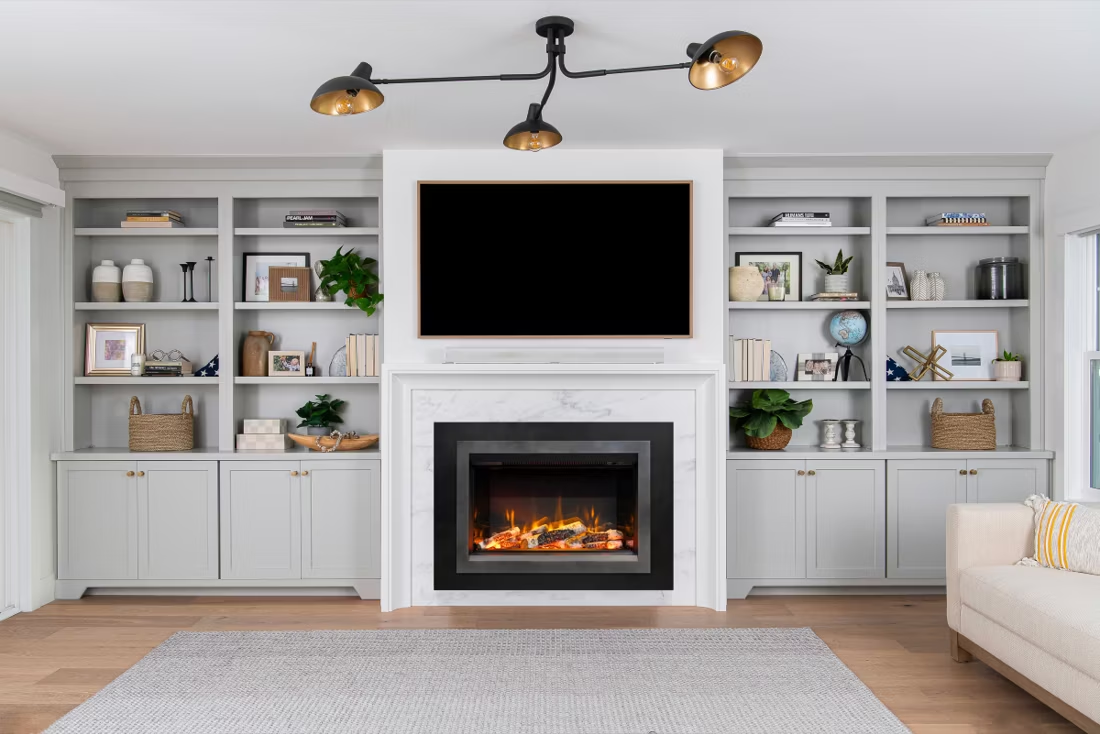
Yes—with an asterisk. Fireplaces are hot and TVs don't like heat. Either put a mantel between them to deflect rising warmth, or choose a fireplace with heat-management technology that creates a cool zone on the wall above—the wall stays around 125 degrees, barely warm, while the room still gets full heat. If you like clean lines and don't want a mantel, heat management is the answer.
Do electric fireplaces actually produce heat?
Yes—most put out around 4,800–5,000 BTUs from a standard outlet, which comfortably warms a bedroom, office, or den as a comfort-zone heater. What they won't do is carry a whole house the way wood, gas, or pellet can. Think of electric as ambiance-first with honest supplemental heat: flames on with no heat in July, flames plus warmth in January.
What is an in-home preview and do I need one?
It's a visit where a hearth professional measures your space, confirms the model you picked actually works in your home, and walks the specs—framing, gas line, venting, finish work—before anything is ordered. Some details you just can't know until you see the house. Never make a down payment without one; it's the single most-skipped step that burns buyers.
Does a fireplace add value to my home?
On average, a fireplace adds back to the home about the same amount you spent installing it. Add the monthly savings from heating the rooms you actually use instead of the whole house—often hundreds of dollars a year—and the value case is strong before you even count what a fire does for how your family uses the room.
Stove and Fireplace Dealers in Roane County
Listings include WhyFire partner dealers, dealers we have verified as authorized for the brands we recommend, and established local businesses that carry hearth products. Every listing shows which one it is. The ones marked Preferred run on WhyFire's software, so they can show you real pricing and book your appointment right here. No manufacturer pays for placement. How we verify dealers →
Walton Thriftway
Hardman's Hardware
Hardman's Hardware
Find your electric fireplace in Roane County.
Tell us about your room and your home, and we'll put together a free Project Guide & Parts List—the right electric fireplace or insert for your space, plus a trusted local dealer to install it.
Find Your Fireplace →