
Instant heat for Pleasants County homes, no chimney required.
From St. Marys along the Ohio River to the farmhouses out toward Belmont and Waverly, electric fireplaces give Pleasants County homeowners real supplemental warmth without venting, gas lines, or masonry work. Find the right unit and get matched with a trusted local dealer.
Every Project Starts From One of These Five Situations
Simple heat for a small, spread-out county.
Pleasants County is one of West Virginia's smallest counties by population—just over 3,000 people spread across river-bottom farmland and hillside communities along the Ohio. Winters here sit in climate zone 4A, with an average low around 22°F and a moderate, several-month heating season—cold enough to matter, but nowhere near the brutal stretch you'd see in a place like Duluth or Bismarck. That moderate profile is exactly why electric fireplaces work so well as a practical option here: homeowners don't need a whole-house wood-burning setup to stay comfortable, but they do want real, visible heat in the rooms they actually live in.
Because Pleasants County has no wood-burning air quality restrictions and a relatively rural building climate, permitting for a plug-in electric fireplace is usually a non-issue—most units simply need a standard outlet. Built-in electric fireplaces and wall units that call for a dedicated circuit are a bigger project, and that's where a local dealer who knows the housing stock around St. Marys and the surrounding farmhouses earns their fee: sizing the unit, coordinating any electrical work, and making sure the install looks intentional rather than bolted on.
Three steps. No salesperson until you're ready.
Tell us about your project
Your zip code, your situation, and the fuel you're leaning toward—or let the answers point you to one.
See what's actually available
The brands dealers within 100 miles genuinely carry—real options, never a catalog mirage.
Get your dealer & Project Guide
A trusted local dealer, plus the free Project Guide & Parts List that names every component of the job.
Frequently Asked Questions
How much does an electric fireplace installation cost in Pleasants County?
A basic plug-in electric fireplace insert or freestanding unit typically runs $400 to $1,200 installed in Pleasants County, since most plug into an existing 120V outlet and require little more than mounting and trim work. A built-in wall unit or mantel package that needs a new dedicated circuit—common in older farmhouses around St. Marys and Belmont that weren't wired with a hearth-area outlet—can run $1,200 to $2,500 once an electrician runs new wiring. Because the county's housing stock skews older and rural, budgeting toward the higher end for anything beyond a simple plug-in swap is realistic.
Do I need a permit to install an electric fireplace in Pleasants County?
In most cases, no—a standard plug-in electric fireplace or insert doesn't require a permit because it isn't a fuel-burning appliance and doesn't touch your home's structure or venting. If your project involves adding a new dedicated electrical circuit for a built-in unit, that electrical work typically does require a permit and inspection under West Virginia's electrical code, and it should be pulled by a licensed electrician regardless of whether you're using a local dealer or doing the install yourself. Ask your installer whether your specific unit needs new wiring before assuming it's permit-free.
Will an electric fireplace actually heat a room in a Pleasants County winter?
For supplemental, zone heating—yes. Most electric fireplaces are rated to comfortably heat 400 to 1,000 square feet, which covers a living room or den without straining the unit. With average winter lows around 22°F and a moderate, several-month heating season, Pleasants County's climate is moderate enough that electric heat can meaningfully offset a furnace's workload in the rooms you use most. It isn't designed to replace a home's primary heating system in a county this cold, but paired with central heat or a wood stove for backup, it's an efficient way to warm the room you're actually sitting in without running the whole-house system harder than it needs to.
What electrical circuit does an electric fireplace need?
Most electric fireplaces, including inserts and mantel packages, run on a standard 120V, 15- or 20-amp household circuit—the kind already in most Pleasants County homes. Larger built-in units or models with add-on heaters sometimes draw enough current that a dedicated circuit is recommended so the fireplace isn't sharing a breaker with other appliances. Older homes around St. Marys and the outlying river communities occasionally have older wiring that isn't up to modern code for a dedicated circuit, which is worth having an electrician check before you commit to a specific model.
What's the difference between an electric fireplace, an electric insert, and a mantel package?
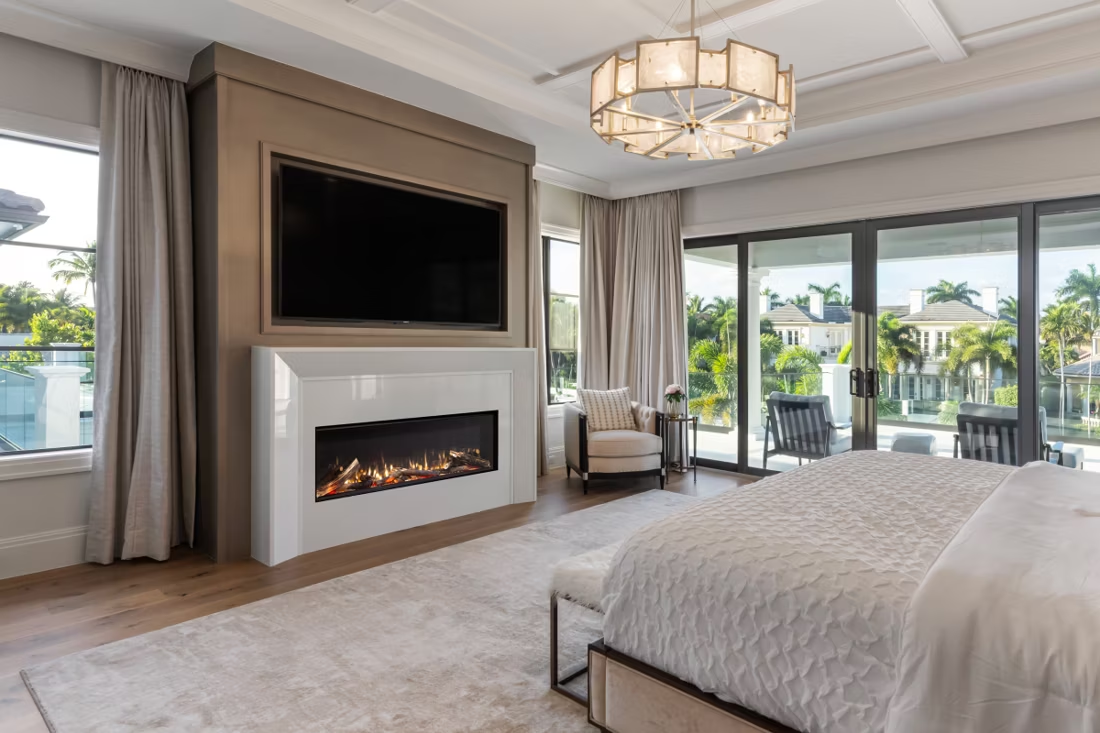
An electric fireplace is typically a wall-mounted or built-in unit designed to be the visual focal point of a room, often recessed into a wall. An electric insert is sized to slide into an existing masonry or wood-burning fireplace opening, letting you keep the existing surround while swapping out an old wood-burning firebox for something simpler to operate. A mantel package pairs an electric insert or unit with a manufactured mantel surround—often finished in oak, cherry, or another hardwood that fits the character of an older Ohio Valley farmhouse. For Pleasants County homes with an existing fireplace opening they no longer want to feed wood into, an insert is usually the most cost-effective route.
What happens to an electric fireplace during a power outage?
It stops working—electric fireplaces have no backup fuel source, so a power outage means no heat and no flame effect until power returns. This matters more in Pleasants County's outlying areas, where ice and wind can knock out power for longer stretches than in town. Homeowners who want heat that survives an outage typically pair an electric fireplace in the main living space with a wood stove or a pellet stove—pellet fuel from regional suppliers like Energex or Hamer Pellet Fuel is available in the area—as a backup source for the rooms that matter most when the grid goes down.
How much does it cost to run an electric fireplace day to day?
Most electric fireplaces draw around 1,500 watts on the heater setting, which costs roughly 15 to 25 cents per hour to run depending on your electric rate—often just a few dollars for an evening's use. Running the flame effect alone, without the heater engaged, costs a fraction of that since the LED or flame-simulation components draw very little power. For Pleasants County homeowners weighing electric against a wood stove, the operating cost is predictable and doesn't require buying, stacking, or hauling firewood—a real convenience factor even though the upfront heat output is lower than a full cord-burning setup.
Electric vs. wood—which makes more sense for my Pleasants County home?
Wood remains a strong choice in this part of West Virginia—local hardwoods like oak, hickory, maple, and cherry are common and burn well, and a wood stove keeps working when the power doesn't. Electric wins on convenience and simplicity: no chimney, no ash, no permits for a plug-in unit, and instant on-off operation at the flip of a switch. Many Pleasants County homeowners land on a hybrid approach—wood heat in a den or basement for backup and ambiance, electric in a bedroom, sunroom, or secondary living space where running a flue isn't practical. A local dealer can walk through both options for your specific rooms.
Can I install an electric fireplace insert into my existing wood-burning fireplace?
In most cases, yes, and it's a common project in Pleasants County's older homes that have an existing masonry fireplace they no longer want to maintain for wood burning. An electric insert slides into the firebox opening, plugs into an outlet (or a new dedicated circuit if the unit calls for one), and gives you a clean, glowing display without a working chimney, ash cleanup, or the annual sweep a wood-burning fireplace needs. It's usually the fastest and least invasive way to convert an old, rarely used fireplace into something you'll actually use on a regular winter evening.
Does an electric fireplace need a vent or chimney?
No—that's its superpower. An electric fireplace needs a wall and an outlet, period. No vent pipe, no gas line, no clearances to design around, which is why it works in bedrooms, offices, apartments, and walls where venting a gas or wood unit would be impractical or impossible. Installation is typically the simplest and least expensive of any fireplace type.
Do electric fireplaces actually produce heat?
Yes—most put out around 4,800–5,000 BTUs from a standard outlet, which comfortably warms a bedroom, office, or den as a comfort-zone heater. What they won't do is carry a whole house the way wood, gas, or pellet can. Think of electric as ambiance-first with honest supplemental heat: flames on with no heat in July, flames plus warmth in January.
How much should I budget for a fireplace?
For an average home—covering the fireplace, the vent pipe, and basic installation—a budget between $3,900 and $5,500 gives you a lot of options across wood, gas, and pellet. By the time you add finish work, gas line, and electrical, the average complete installation lands between $5,000 and $12,000 all-in. In a remodel or new build, a good rule is to put about 2.5% of the total project cost toward the fireplace.
Can I install a fireplace myself?
If you're putting a fire in your house on purpose, it's best to work with an expert. Unless you're genuinely experienced in framing, gas line, vent pipe, and the national code on clearances to combustibles, have a professional do it—and ideally the same company that sells you the fireplace, so warranty, service, and liability all live under one roof.
Stove and Fireplace Dealers in Pleasants County
Listings include WhyFire partner dealers, dealers we have verified as authorized for the brands we recommend, and established local businesses that carry hearth products. Every listing shows which one it is. The ones marked Preferred run on WhyFire's software, so they can show you real pricing and book your appointment right here. No manufacturer pays for placement. How we verify dealers →
Contractor’s Building Center
Apex Feed & Supply, Inc.
Bob's Fireplace
The Fore Timber Company Inc.
Hardman's Hardware
Find your electric fireplace in Pleasants County.
Tell us a bit about your home and we'll match you with the right electric fireplace, insert, or mantel package—plus a free Project Guide & Parts List and a trusted local dealer to install it.
Find Your Fireplace →