
Zone heat for the Highlands—no chimney required.
From cabins near Spruce Knob to farmhouses along the South Branch Potomac, electric heat drops into almost any Pendleton County room with no venting and no gas line. Find the right unit and connect with a trusted local dealer.
Every Project Starts From One of These Five Situations
The easiest fireplace to add to a mountain home.
Pendleton County is West Virginia's highest and most remote corner—Spruce Knob rises to 4,863 feet, the state's tallest point, and the county's roughly 525 year-round residents are scattered across deep hollows and the South Branch Potomac valley rather than clustered in a town. Winters here sit in climate zone 5A, with the kind of persistent cold you'd expect in Burlington, Vermont, more than the mid-Atlantic lowlands most people picture when they think of West Virginia. Many properties in the county are seasonal—hunting camps near Seneca Rocks, river cabins, weekend places—where a full wood-burning or gas installation isn't practical but reliable heat still matters.
That's where electric fireplaces and stoves earn their place. There's no chimney to build, no gas line to run, and no combustion byproducts to vent—which also means no smoke and no emissions concern in a county that reports none on the air quality front. A plug-in unit can go into an outlet the day it arrives; a hardwired built-in on a dedicated 240V circuit, wired through Potomac Edison service, is usually a same-day job for a licensed electrician. For older farmhouses with uneven propane or baseboard heat, an electric insert or stove is also a simple way to close off and zone-heat one room without touching the rest of the house.
Three steps. No salesperson until you're ready.
Tell us about your project
Your zip code, your situation, and the fuel you're leaning toward—or let the answers point you to one.
See what's actually available
The brands dealers within 100 miles genuinely carry—real options, never a catalog mirage.
Get your dealer & Project Guide
A trusted local dealer, plus the free Project Guide & Parts List that names every component of the job.
Frequently Asked Questions
How much does an electric fireplace installation cost in Pendleton County?
A plug-in electric fireplace or stove that runs on a standard 120V outlet typically costs $300 to $1,200 installed, and often requires nothing more than setting the unit and plugging it in. A built-in electric fireplace or insert wired to a dedicated 240V circuit runs closer to $1,200 to $2,500 once you factor in a licensed electrician's time, especially for older Pendleton County farmhouses where the existing electrical panel may need a new circuit added. Cabins and camps in the more remote parts of the county—toward Spruce Knob or up the smaller hollow roads—sometimes see a modest travel charge added by installers.
Do I need a permit to install an electric fireplace in Pendleton County?
For a plug-in unit, no—there's nothing to inspect. Pendleton County does not enforce a county-wide building code, so most electric fireplace installs proceed without any permitting step at all. If you're having a built-in unit hardwired on a new dedicated circuit, it's still worth having a licensed electrician pull any required electrical permit and follow National Electrical Code practices, particularly within the town of Franklin where inspections are more likely to apply. It's a small step that protects your homeowner's insurance and your warranty.
Will an electric fireplace keep my home warm if the power goes out?
No—and this is worth being honest about before you buy. Electric fireplaces and stoves need power to run the fan and heating element, so they go dark the moment the lines do. In Pendleton County's mountain terrain, winter storms can knock out power along the hollow roads for hours or longer. For that reason, most local homeowners treat electric heat as a zone-heating supplement to a primary wood stove or propane furnace rather than a sole heat source, especially in year-round residences. For seasonal cabins used mainly in warmer months, that limitation matters much less.
What's the difference between an electric fireplace, insert, and stove?
An electric fireplace is typically a built-in or wall-mounted unit designed to look like a traditional fireplace, often with a linear or widescreen flame display. An electric insert is sized and shaped to slide into an existing masonry fireplace opening, which is a common option in Pendleton County's older farmhouses that have an unused wood fireplace they'd like to keep visually but stop maintaining for real fires. An electric stove is a freestanding unit styled like a wood or gas stove, which works well in cabins or camps where you want stove-style ambiance without any venting at all. All three plug in or hardwire the same way—the choice mostly comes down to the look you want and whether you're filling an existing opening.
How much does it cost to run an electric fireplace in Pendleton County?
Most electric fireplace inserts and stoves draw around 1,500 watts on the heat setting, which works out to roughly 1.5 kWh per hour of use. At typical Potomac Edison residential rates, that's a modest addition to a monthly bill for supplemental use—running a few hours in the evening in one room costs far less than heating that same space with central propane or electric baseboard. Flame-only mode with the heater off draws only a few watts, which is common for cabins where owners want ambiance without running the heating element.
Are electric fireplaces good for cabins and vacation rentals near Spruce Knob and Seneca Rocks?
Yes—this is one of the most common uses in Pendleton County. Electric fireplaces are popular in cabins and short-term rentals near Spruce Knob, Seneca Rocks, and the South Branch Potomac because they add ambiance and supplemental warmth without a chimney, a gas line, or any of the maintenance a wood stove requires between guest stays. A remote-controlled unit also gives renters an easy, foolproof way to add heat without training on a wood stove or worrying about a fire left unattended. Pair it with the property's existing propane or electric baseboard for backup heat, and you've got a simple, low-liability setup for a rental cabin.
Electric vs. wood—which makes more sense for my Pendleton County home?
For a year-round primary residence in Pendleton County, wood often still wins as the main heat source—oak, hickory, maple, and cherry are all common locally, firewood is easy to come by, and a wood stove keeps working through the power outages that come with mountain winters. Electric heat, by contrast, is unbeatable for convenience: no wood to split or stack, no chimney to sweep, no ash, and no smoke, which also makes it the simpler choice for a second home or rental cabin nobody's tending regularly. Many Pendleton County households end up with both—a wood stove for real winter heat and an electric unit in a bedroom, den, or rental property for easy supplemental warmth.
Do electric fireplaces need any special wiring in an older Pendleton County home?
It depends on the unit. Small plug-in fireplaces and stoves run on a standard 120V, 15-amp household outlet, which most Pendleton County homes already have in any room. Larger built-in electric fireplaces, especially wide linear models, often call for a dedicated 240V circuit for full heating output. In some of the county's older farmhouses, that means an electrician needs to confirm the panel has capacity for a new circuit—not unusual in homes that were wired decades before central air or large electric appliances were common. A local dealer or electrician can tell you within a few minutes which category your chosen unit falls into.
What size electric fireplace do I need for my room?
Sizing an electric fireplace is more about coverage area and visual fit than the aggressive BTU calculations you'd run for a wood stove. Most electric inserts and stoves are rated to comfortably heat 400 to 1,000 square feet as supplemental heat, which covers a single large room or open den in most Pendleton County homes. For a big farmhouse living area or a drafty older cabin, don't expect the unit to heat the whole space—it's built for zone heating, not whole-house performance. A local dealer can help you match the unit's width and heat output to the specific room you're outfitting.
Can I put a TV above my fireplace?
Yes—with an asterisk. Fireplaces are hot and TVs don't like heat. Either put a mantel between them to deflect rising warmth, or choose a fireplace with heat-management technology that creates a cool zone on the wall above—the wall stays around 125 degrees, barely warm, while the room still gets full heat. If you like clean lines and don't want a mantel, heat management is the answer.
Does an electric fireplace need a vent or chimney?
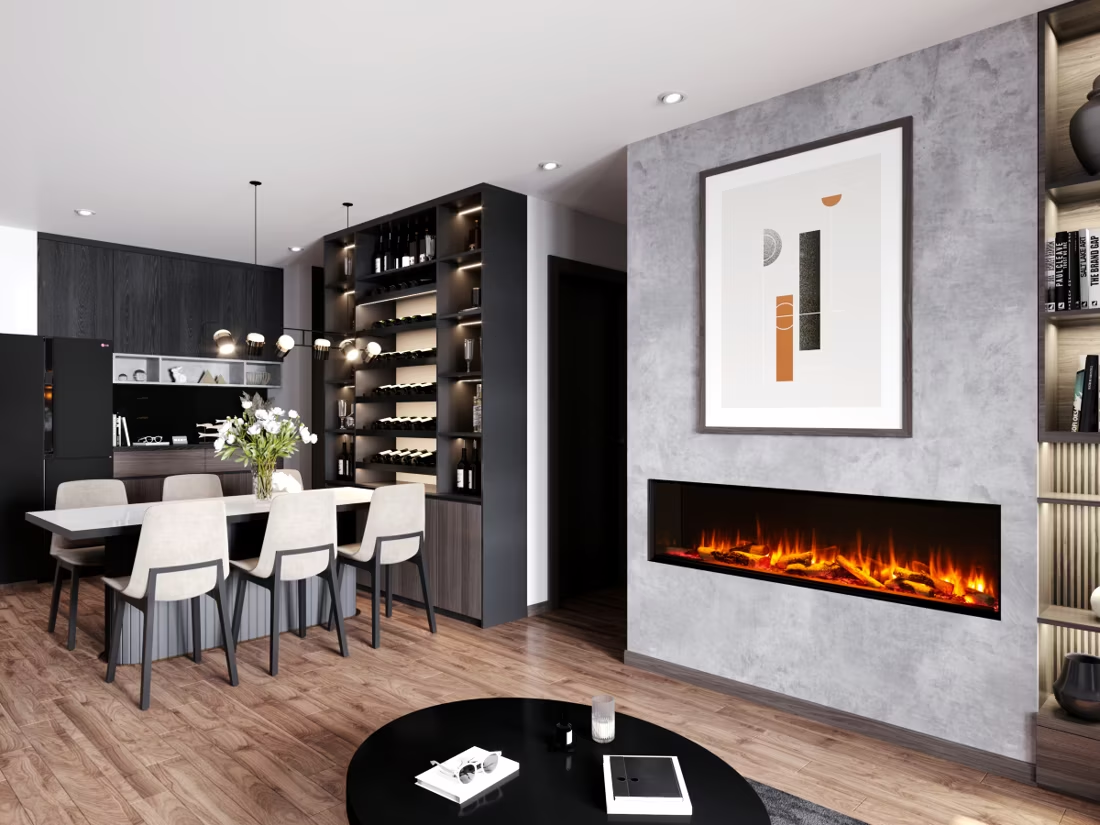
No—that's its superpower. An electric fireplace needs a wall and an outlet, period. No vent pipe, no gas line, no clearances to design around, which is why it works in bedrooms, offices, apartments, and walls where venting a gas or wood unit would be impractical or impossible. Installation is typically the simplest and least expensive of any fireplace type.
How much should I budget for a fireplace?
For an average home—covering the fireplace, the vent pipe, and basic installation—a budget between $3,900 and $5,500 gives you a lot of options across wood, gas, and pellet. By the time you add finish work, gas line, and electrical, the average complete installation lands between $5,000 and $12,000 all-in. In a remodel or new build, a good rule is to put about 2.5% of the total project cost toward the fireplace.
Can a fireplace actually lower my heating bill?
Yes—by creating a comfort zone. A furnace heats every square foot of the house just to warm the one room you're in; a gas fireplace on low burns roughly a sixth of the gas a typical furnace does. Set the furnace around 55–60 degrees as a baseline, then heat the rooms your family actually uses. Families who heat this way commonly save $20–$60 a month.
Stove and Fireplace Dealers in Pendleton County
Listings include WhyFire partner dealers, dealers we have verified as authorized for the brands we recommend, and established local businesses that carry hearth products. Every listing shows which one it is. The ones marked Preferred run on WhyFire's software, so they can show you real pricing and book your appointment right here. No manufacturer pays for placement. How we verify dealers →
Blue Ridge Chimney
Acme Stove Co.
Hardman's Hardware - Moorefield
Blossman Gas And Appliance
Holtzman Propane
Find your electric fireplace in Pendleton County.
Tell us a bit about your home or cabin and we'll match you with the right electric fireplace, insert, or stove—and hand you a free Project Guide & Parts List built around a trusted local dealer.
Find Your Fireplace →