
Instant Warmth for Your Pea Ridge Home.
Clean, on-demand heat for Cabell County winters—without hauling wood or tending a stove. Find the right gas unit and get matched with a trusted local dealer.
Every Project Starts From One of These Five Situations
Reliable heat without the woodpile.
Pea Ridge sits at 672 feet along the Ohio River Valley in Cabell County, where climate zone 4A winters bring an average low near 27°F and a winter heating load noticeably milder than harder winter climates like Duluth or Fargo, but still cold enough that most homes here run supplemental heat five or six months of the year. Oak, hickory, maple, and cherry are the hardwoods that grow throughout this part of West Virginia, but wood-burning stoves and pellet appliances have never really taken hold in Pea Ridge's tighter residential lots and unincorporated neighborhoods—there's little of the cutting-permit infrastructure or bulk firewood culture you'd find near national forest land further south. Gas has become the practical default instead.
Piped natural gas service is inconsistent across unincorporated stretches of Cabell County, so a meaningful share of Pea Ridge households run on propane rather than a municipal gas line—either works fine for a modern direct-vent fireplace or insert once your installer sets the correct orifice and regulator. Appalachian Power serves the area's electric grid at a residential rate around 17 cents per kWh, which is worth knowing if you're weighing a gas unit against an electric fireplace for a secondary room. A properly installed gas fireplace gives you real, immediate heat at the flip of a switch or a wall thermostat, without the ash, creosote, or storage headaches that keep wood and pellet appliances rare in this part of the county.
Three steps. No salesperson until you're ready.
Tell us about your project
Your zip code, your situation, and the fuel you're leaning toward—or let the answers point you to one.
See what's actually available
The brands dealers within 100 miles genuinely carry—real options, never a catalog mirage.
Get your dealer & Project Guide
A trusted local dealer, plus the free Project Guide & Parts List that names every component of the job.
Frequently Asked Questions
How much does a gas fireplace installation cost in Pea Ridge?
Most gas fireplace and insert installations in the Pea Ridge area run roughly $3,500 to $8,500, depending on the unit, the venting path, and whether you're on propane or an existing natural gas line. A direct-vent insert going into a masonry fireplace that already has gas plumbed nearby sits toward the lower end. New construction, a fresh propane tank setup, or a longer gas line run from the meter or tank pushes costs toward the higher end. Because so many homes here run on propane rather than piped gas, ask your installer to price both the appliance and any tank or line work as a single quote—that's usually where estimates diverge the most.
Can I convert my existing wood fireplace to gas?
Yes, and it's a common upgrade for the older masonry fireplaces still found in Cabell County's established neighborhoods. A gas insert slides into the existing firebox and typically uses a stainless steel liner run through your current chimney for venting. In Pea Ridge, the main variable is fuel source: if you're on propane, your installer will need to size a line from your tank; if natural gas reaches your street, tying into an existing line is usually simpler and cheaper. Expect the conversion itself to land in the $3,500 to $7,000 range before any tank or major line work.
Should I use natural gas or propane for my fireplace?
It depends on what already reaches your property. Natural gas service doesn't extend evenly across unincorporated Cabell County, so a large share of Pea Ridge homes rely on propane delivered and stored in an above- or below-ground tank. If your home already has natural gas for a furnace or water heater, adding a fireplace on the same line is usually the more affordable path. If not, propane is a straightforward alternative—nearly every gas fireplace on the market today can be configured for either fuel, so the decision comes down to what's already at your house rather than which fuel performs better.
Will my gas fireplace still work if the power goes out?
Most will, with the right ignition system. Units with intermittent pilot ignition (IPI) run on a small battery backup that keeps the fireplace lighting on demand even when Appalachian Power's grid goes down—something worth planning for, since ice and wind events along the Ohio Valley can knock out power for a day or more. Valor fireplaces take a different approach: their pilot assembly generates its own electricity through the thermocouple, so there's no battery to remember or replace at all. Whichever system you choose, ask your local dealer to walk you through backup operation before you buy, not after the first outage.
What's the difference between a gas fireplace, gas insert, and gas stove?
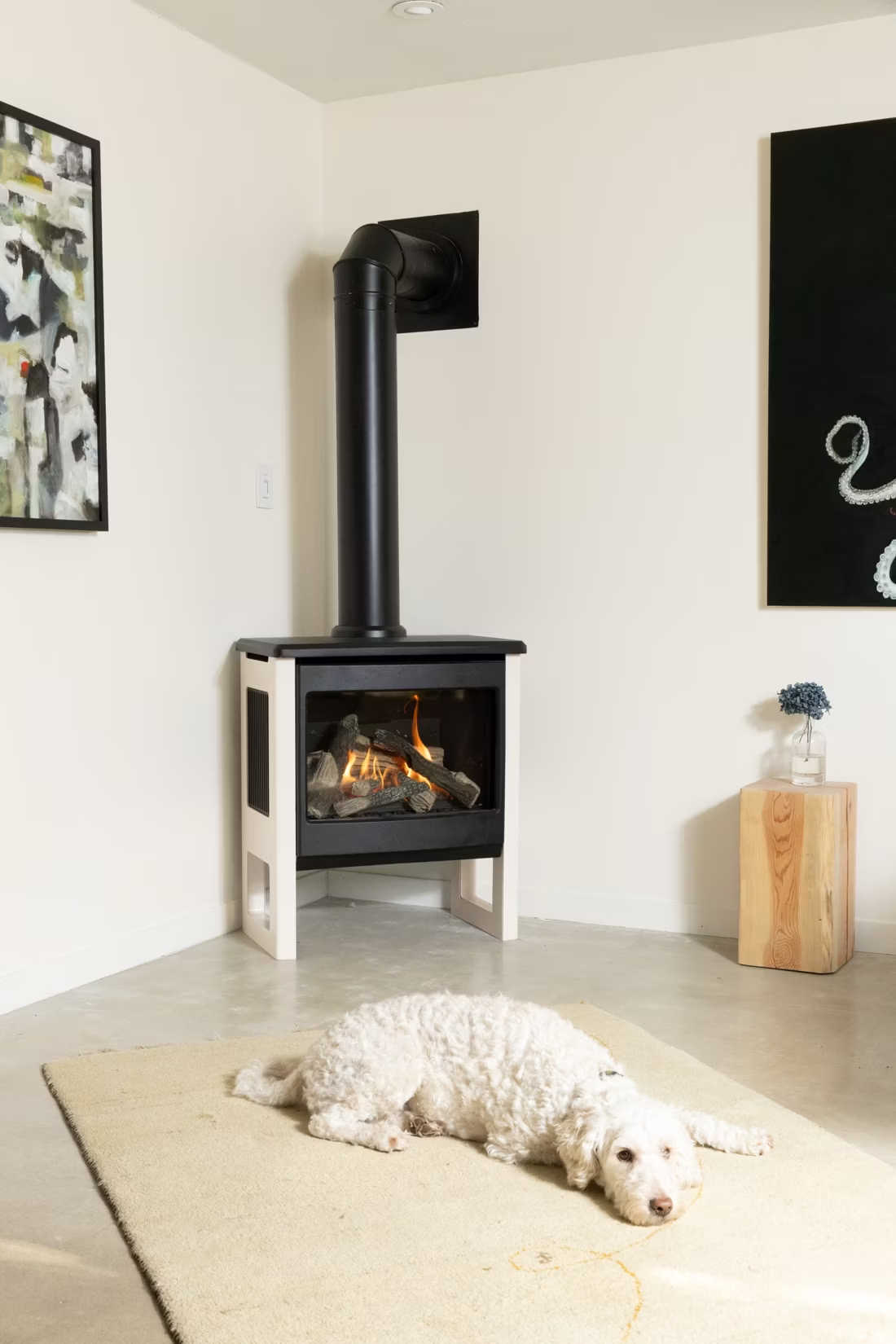
A gas fireplace is a built-in unit framed into a wall, most common in new construction or a full remodel. A gas insert is built to slide into an existing masonry firebox, turning a drafty old wood-burning fireplace into a sealed, efficient heat source using the chimney you already have. A gas stove is a freestanding cabinet-style unit that sits on the floor, similar in footprint to a wood stove but running on gas or propane. For the older homes scattered through Pea Ridge with an existing masonry fireplace, an insert is usually the simplest and most cost-effective upgrade.
Do I need a permit to install a gas fireplace in Pea Ridge?
In unincorporated parts of Cabell County, gas appliance installations typically require both a building permit and sign-off on the gas line work, whether that line runs from a propane tank or a natural gas main. A licensed gas-fitter has to handle the fuel line regardless of permit requirements, which is one reason it's worth using an established local hearth dealer—they coordinate the gas work, venting, and inspection instead of leaving you to manage separate trades. Confirm current permit requirements with the Cabell County Building Department before work begins.
Are vent-free gas fireplaces allowed in West Virginia?
Yes—West Virginia permits vent-free (unvented) gas fireplaces, but they come with strict room-size and ventilation rules, and most units require an oxygen depletion sensor. Vented direct-vent fireplaces, by contrast, pull combustion air from outside and exhaust it back outside through sealed pipe, which keeps combustion byproducts out of your living space entirely. For most Pea Ridge homes, a direct-vent unit is the safer, more universally recommended choice, especially in bedrooms or smaller additions where a vent-free unit's room-size minimums can be hard to meet. Ask your local dealer to walk through both options for your specific space.
How often does a gas fireplace need to be serviced?
Plan on an annual inspection, ideally before the coldest months hit. A technician checks the burner, pilot assembly, gas connections, and venting, and cleans the glass and interior—a much quicker job than a wood chimney sweep, but just as important for safe operation. In the Pea Ridge and Huntington area, annual gas appliance inspections typically run $125 to $200. If your unit runs on propane, it's also a good time to have your supplier check tank pressure and connections.
Gas vs. electric fireplace—which makes more sense for my home?
Gas delivers real, consistent heat output—enough to meaningfully offset a furnace bill during a Cabell County cold snap—and, with the right ignition system, keeps working through a power outage. Electric fireplaces cost far less to install (often under $1,200), require no venting or gas line at all, and can go almost anywhere, but at Appalachian Power's residential rate of about 17 cents per kWh, they're better suited to ambiance and light supplemental heat in a single room than to carrying real heating load. Since wood and pellet stoves are rarely installed in this part of the county, most Pea Ridge homeowners are really choosing between these two options—gas for genuine heat, electric for flexibility and lower upfront cost.
Why is my open fireplace making my house colder?
Open fireplaces suck—literally. As the fire burns, it consumes air your furnace already paid to heat and pulls it out through the chimney, so the house is actually colder after the fire goes out than before you lit it. An insert fixes this: it seals the chimney, puts fixed glass across the front, and turns that hole in your house into a real heat source.
Can I put a TV above my fireplace?
Yes—with an asterisk. Fireplaces are hot and TVs don't like heat. Either put a mantel between them to deflect rising warmth, or choose a fireplace with heat-management technology that creates a cool zone on the wall above—the wall stays around 125 degrees, barely warm, while the room still gets full heat. If you like clean lines and don't want a mantel, heat management is the answer.
How much should I budget for a fireplace?
For an average home—covering the fireplace, the vent pipe, and basic installation—a budget between $3,900 and $5,500 gives you a lot of options across wood, gas, and pellet. By the time you add finish work, gas line, and electrical, the average complete installation lands between $5,000 and $12,000 all-in. In a remodel or new build, a good rule is to put about 2.5% of the total project cost toward the fireplace.
Can I install a fireplace myself?
If you're putting a fire in your house on purpose, it's best to work with an expert. Unless you're genuinely experienced in framing, gas line, vent pipe, and the national code on clearances to combustibles, have a professional do it—and ideally the same company that sells you the fireplace, so warranty, service, and liability all live under one roof.
Nearby Dealers
Hearth shops serving Pea Ridge and the surrounding area. Every listing shows whether it is a WhyFire partner, a dealer we have verified as authorized for the brands we recommend, or a local business carrying hearth products. No manufacturer pays for placement. How we verify dealers →
T.r. Johnson & Son Inc.
Kenny Queen Hardware
Chimney Doctor
Sootshaker Chimney Sweep
Chimney Doctor LLC
Find your gas fireplace in Pea Ridge.
Tell us about your home and fuel situation—propane or natural gas—and we'll match you with the right gas fireplace, insert, or stove, plus a free Project Guide & Parts List from a trusted local dealer.
Find Your Fireplace →