
Gas heat that keeps up with a Mountaineer winter.
Morgantown sits in the Appalachian foothills at about 1,150 feet, with a winter heating season that runs five or six months—cold enough for a real winter, mild enough that gas heat handles it without a wood pile. Find the right fireplace, insert, or stove, and get matched with a trusted local dealer.
Every Project Starts From One of These Five Situations
Consistent warmth, no firewood required.
Morgantown climbs through the folded hills along the Monongahela River at roughly 1,150 feet of elevation, in climate zone 5A, with average winter lows near 24°F and a heating season that keeps furnaces running steadily. That's a real heating season—five or six months where the furnace runs most nights—but it's noticeably milder than the deep-freeze totals you'd see in Fargo ND or Duluth MN. For a college town built on brick rowhouses near WVU, split-levels toward Suncrest, and newer construction out by Cheat Lake, that moderate cold sits right in the range where a gas fireplace or insert earns its keep: real heat output without babysitting a wood stove through a West Virginia winter.
West Virginia sits on top of the Marcellus Shale, and that's kept natural gas both abundant and comparatively affordable in this part of the state for decades—Mountaineer Gas Company serves natural gas throughout most of the city of Morgantown. Out in the more rural stretches of Monongalia County, propane tends to be the standard fuel instead. Either way, a direct-vent gas fireplace or insert delivers instant, thermostat-controlled zone heat without hauling wood or tending a stove—a fit for a lot of Morgantown households, whether that's a rental near campus, a Cheat Lake new build, or a downtown rowhouse with an old coal-fireplace opening ready for an upgrade.
Three steps. No salesperson until you're ready.
Tell us about your project
Your zip code, your situation, and the fuel you're leaning toward—or let the answers point you to one.
See what's actually available
The brands dealers within 100 miles genuinely carry—real options, never a catalog mirage.
Get your dealer & Project Guide
A trusted local dealer, plus the free Project Guide & Parts List that names every component of the job.
Frequently Asked Questions
How much does a gas fireplace installation cost in Morgantown?
In Morgantown, a gas fireplace or insert installation typically runs $3,800 to $9,500, depending on the unit, the venting run, and whether new gas line work is required. A direct-vent insert dropped into an existing masonry fireplace with a gas line already nearby sits toward the lower end. A new built-in gas fireplace for a remodel or addition—framing, direct-vent piping through an exterior wall, and a fresh gas line from the meter—lands in the middle to upper end. Homes that need a longer gas line run from the street, or that require a propane tank because they're outside Mountaineer Gas Company's service area, can push toward the higher end. A local hearth dealer will give you a firm number after seeing the space.
Can I convert my existing fireplace to gas?
Yes, and it's a common project in Morgantown's older neighborhoods—plenty of the brick homes near downtown and South Park still have the original masonry fireplace, sometimes with an old coal-grate opening. A gas insert typically runs $4,000 to $8,500 installed, using a stainless liner run down your existing chimney as the vent path. If the home is already on Mountaineer Gas Company service, the job is usually simpler and cheaper than if a new gas line has to be run from the meter or a propane tank has to be added.
Natural gas or propane—which do I need?
It depends on where in Monongalia County you are. Mountaineer Gas Company runs natural gas lines through most of the city of Morgantown and the denser areas around WVU. Once you're out toward the more rural parts of the county—some areas around Cheat Lake, Cassville, or near the county line—natural gas service often doesn't reach that far, and propane, delivered and stored in a tank on the property, becomes the standard fallback. Most gas fireplace models can be configured for either fuel; your installer sets the orifice and regulator to match.
Will a gas fireplace still work if the power goes out?
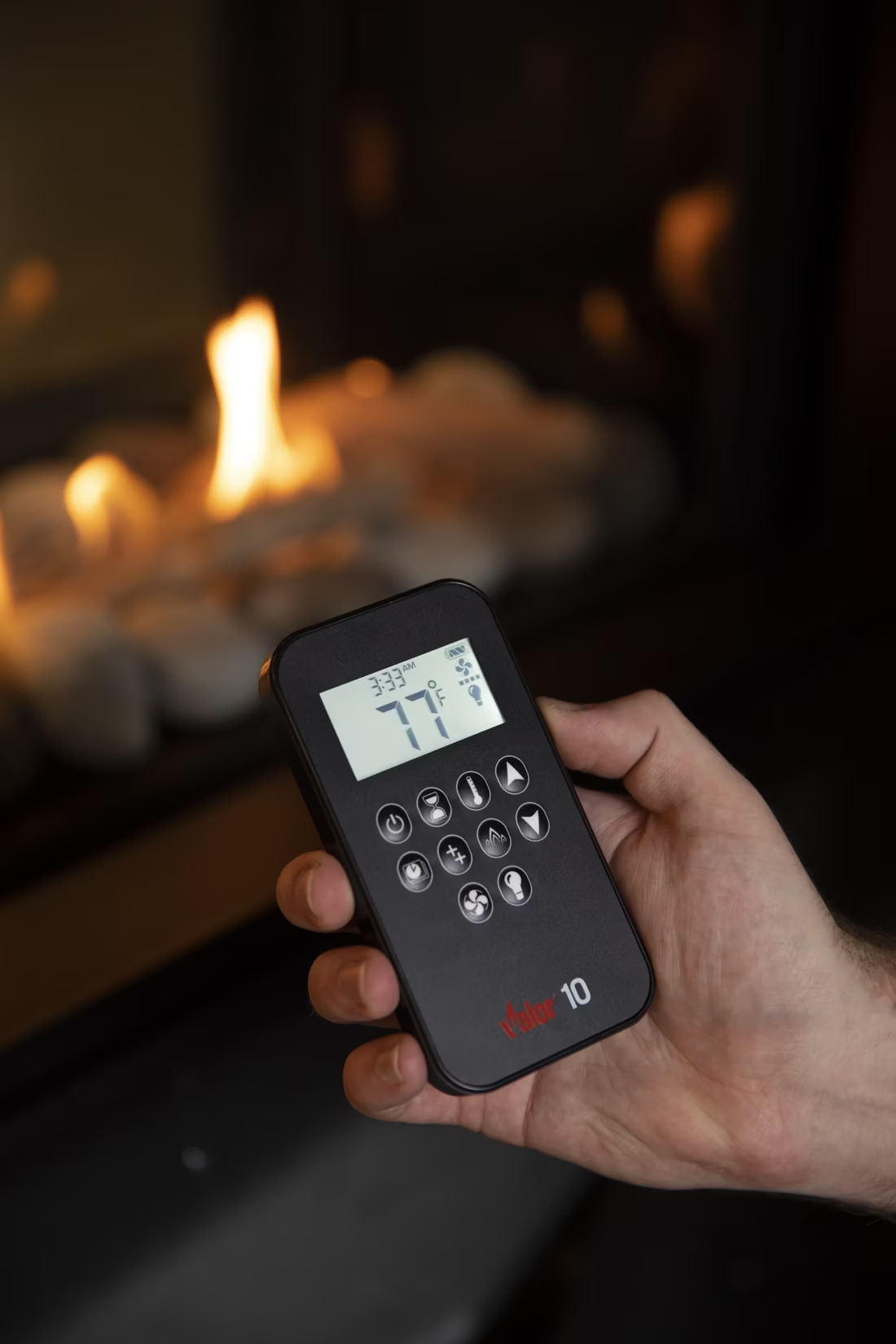
Most will. Gas fireplaces with intermittent pilot ignition (IPI) include a battery backup that keeps the igniter working when the power drops, so the fireplace still lights on demand. Given how ice storms in the Appalachian foothills can knock out power to Monongahela Power Co customers for a day or two, that battery backup is worth having. A few brands, notably Valor, skip batteries altogether and generate their own current off the pilot's thermocouple, so there's nothing to remember to replace. Ask your local dealer which ignition system is in the unit you're considering.
What's the difference between a gas fireplace, insert, and stove?
A gas fireplace is a built-in unit framed into a wall—the right choice for new construction or a remodel without an existing chimney. A gas insert slides into an existing masonry fireplace opening and vents up through the original chimney with a liner, which is the more common upgrade in Morgantown's older housing stock. A gas stove is a freestanding cabinet-style unit, similar in footprint to a wood stove, that can sit against nearly any wall with the right clearances. For most Morgantown homeowners with an existing fireplace to update, an insert is the simplest and most cost-effective path.
Do I need a permit to install a gas fireplace in Morgantown?
Yes. The City of Morgantown's code enforcement office, or Monongalia County's building permit office if you're outside city limits, requires a building permit for the installation, and the gas line work itself has to be done or signed off by a licensed master plumber or gas-fitter under West Virginia's plumbing code. Most hearth dealers coordinate both the building permit and the gas line work as part of the installation, so you aren't stuck managing separate trades and inspections yourself.
Vented or vent-free—what's allowed in Morgantown?
Both are legal in West Virginia, but they work differently. Vented, or direct-vent, gas fireplaces pull combustion air from outside and exhaust it back outside through sealed venting—cleaner and code-accepted everywhere. Vent-free units burn directly into the room and are subject to room-size and ventilation rules, plus an oxygen-depletion sensor. Direct-vent is by far the more common installation in Morgantown, especially in the tighter, well-insulated homes near WVU where indoor air quality is worth protecting. Ask your dealer to walk through both if you're deciding.
How often does a gas fireplace need to be serviced?
Plan on an annual inspection, typically before the heating season starts in the fall. A technician checks the burner, pilot assembly, venting, and gas connections, and cleans the glass and interior. It's a lighter service than a wood chimney sweep, usually $125 to $200 in the Morgantown area, but skipping it is how pilot and ignition problems go unnoticed until the first cold snap in November.
Should I go with gas instead of wood?
For most homes inside Morgantown city limits, gas is the practical choice—the housing stock is dense, natural gas service from Mountaineer Gas Company is widely available, and there's little tradition of wood heat in town the way there is in more rural parts of West Virginia. Wood is still burned out in unincorporated Monongalia County, where oak, hickory, maple, and cherry are common, and a Monongahela National Forest cutting permit runs about $20 a cord during the May-to-October season—but that's a rural supplemental-heat setup, not a typical in-town solution. If you're in Morgantown proper, a direct-vent gas fireplace or insert is going to be the simpler, cleaner, and more code-straightforward option.
Why is a fireplace insert so efficient?
An insert does two things: it seals the chimney completely, so you stop losing air you already paid to heat, and it radiates warmth into the room through the firebox and glass. Most add a heat-exchange fan that pulls cool room air underneath, wraps it around the hot firebox, and pushes it back out warm. Your home is more efficient before you've even lit the first fire.
Can I put a TV above my fireplace?
Yes—with an asterisk. Fireplaces are hot and TVs don't like heat. Either put a mantel between them to deflect rising warmth, or choose a fireplace with heat-management technology that creates a cool zone on the wall above—the wall stays around 125 degrees, barely warm, while the room still gets full heat. If you like clean lines and don't want a mantel, heat management is the answer.
How much should I budget for a fireplace?
For an average home—covering the fireplace, the vent pipe, and basic installation—a budget between $3,900 and $5,500 gives you a lot of options across wood, gas, and pellet. By the time you add finish work, gas line, and electrical, the average complete installation lands between $5,000 and $12,000 all-in. In a remodel or new build, a good rule is to put about 2.5% of the total project cost toward the fireplace.
Can I install a fireplace myself?
If you're putting a fire in your house on purpose, it's best to work with an expert. Unless you're genuinely experienced in framing, gas line, vent pipe, and the national code on clearances to combustibles, have a professional do it—and ideally the same company that sells you the fireplace, so warranty, service, and liability all live under one roof.
Preferred Dealer in Morgantown
Marked Preferred because they run on WhyFire's software—so they can show you real pricing and book your appointment right here. No manufacturer pays for placement. How we verify dealers →
Find your gas fireplace in Morgantown.
Tell us about your home and we'll put together a free Project Guide & Parts List—the right gas fireplace or insert, the exact venting and parts needed, and a trusted local Morgantown dealer to install it.
Find Your Fireplace →