
No chimney. No gas line. Just heat, anywhere in Mercer County.
From the hillside homes of Bluefield to the historic brick of Bramwell, an electric fireplace adds real supplemental warmth without touching the flue or the gas meter. Find the right unit and connect with a trusted local dealer.
Every Project Starts From One of These Five Situations
Heat that plugs in, not permits in.
Mercer County sits in the Appalachian Plateau of southern West Virginia, with elevations running from around 1,500 feet along the Bluestone River up past 3,600 feet on East River Mountain. Roughly 22,047 people live across Bluefield, Princeton, Athens, and small coalfield towns like Bramwell—once nicknamed "the town of millionaires" during the coal boom, and still full of the large, older brick homes that boom built. Winters here average a 22-degree low and add up to a solidly cold heating season—cold enough to matter, though noticeably milder than a place like Buffalo, NY, which runs a good deal colder overall. That mid-range cold is exactly the zone where a well-placed electric fireplace earns its keep as everyday supplemental heat rather than a novelty.
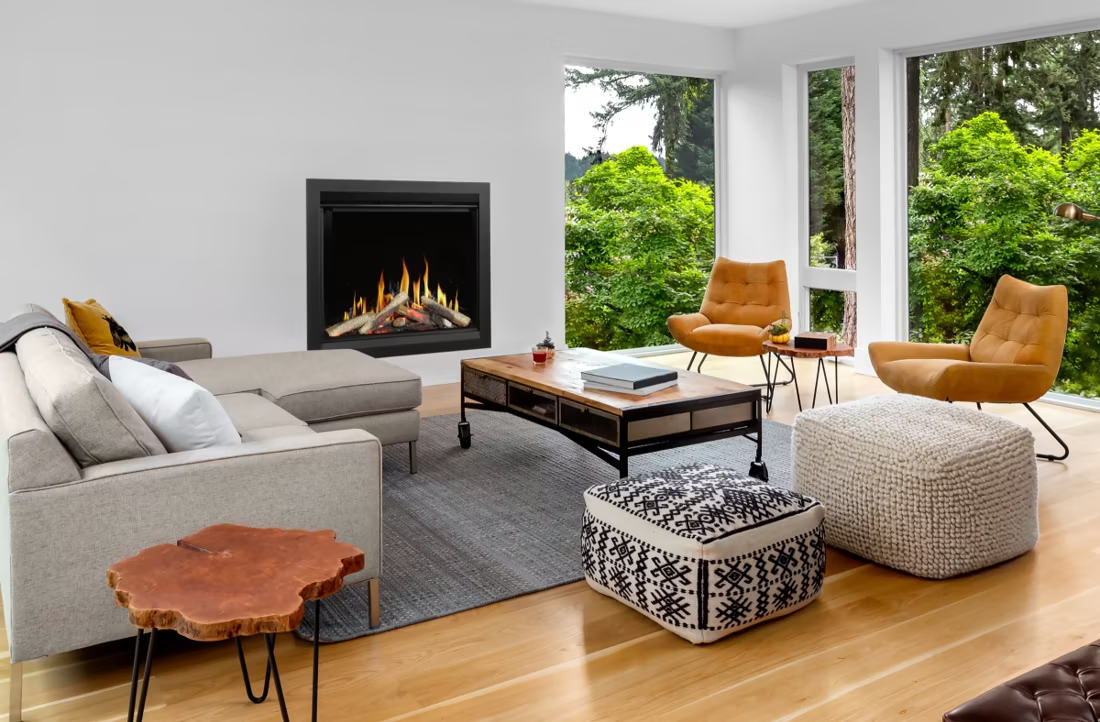
A lot of Mercer County's housing stock predates central HVAC—many homes still run on electric baseboard or older heat pumps, and natural gas service is limited outside the Bluefield and Princeton core. An electric insert or wall-mounted unit adds zone heat to a chilly upstairs bedroom, a sunroom, or a converted attic space without opening a wall for venting, without running a gas line, and in most cases without a building permit. Power comes through Appalachian Power (AEP) here, and because there's no combustion involved, clearance requirements are limited to whatever the manufacturer specifies on the unit label—a real advantage in older hillside homes where wall framing and chimney chases don't always match modern code.
Three steps. No salesperson until you're ready.
Tell us about your project
Your zip code, your situation, and the fuel you're leaning toward—or let the answers point you to one.
See what's actually available
The brands dealers within 100 miles genuinely carry—real options, never a catalog mirage.
Get your dealer & Project Guide
A trusted local dealer, plus the free Project Guide & Parts List that names every component of the job.
Frequently Asked Questions
How much does an electric fireplace installation cost in Mercer County?
Most electric fireplace projects in Mercer County run between $400 and $2,200. A plug-in freestanding unit or a simple insert that drops into an existing fireplace opening sits at the low end—no wiring changes needed. A wall-mounted unit or built-in that requires a dedicated 240V circuit and some carpentry (framing a niche, patching drywall) runs toward the middle and upper end, especially in older Bluefield and Bramwell homes where the electrical panel may need updating to add a circuit. Local dealers can tell you quickly which category your project falls into after seeing your space.
What size electric fireplace do I need for my room?
Electric fireplaces are rated in BTUs rather than square footage of a whole house, since most are meant to supplement—not replace—your existing heat. A 4,600–5,000 BTU unit comfortably takes the chill off a single room in the 300–400 square foot range, which covers most bedrooms and sunrooms common in Mercer County's older homes. Larger open living areas, especially in the bigger brick houses around Bramwell and Princeton, may need two zones or a higher-output insert. A local dealer will walk your space and match output to the room rather than guess from a size chart.
Do I need a permit to install an electric fireplace in Mercer County?
Usually not for a plug-in unit that runs off a standard outlet—there's no combustion, no venting, and nothing to inspect for code beyond normal outlet safety. If your install requires a licensed electrician to run a new dedicated circuit for a built-in or wall-mounted unit, that electrical work typically does require a permit through the county building department, and the electrician generally handles that paperwork as part of the job. Ask your installer directly which category your unit falls into before work starts.
What's the difference between an electric fireplace, insert, and wall-mount unit?
A freestanding electric fireplace is a self-contained cabinet unit you plug in and place anywhere near an outlet—no installation required beyond finding a spot. An electric insert is built to slide into an existing masonry or wood fireplace opening, giving you flame effect and heat from a firebox you already have without touching the chimney. A wall-mounted or built-in unit is recessed into the wall like a flat-screen TV, usually wired to a dedicated circuit, and gives the cleanest, most modern look. For Mercer County homes with an existing fireplace opening sitting unused, an insert is often the simplest upgrade; for new construction or a remodel, a built-in wall unit tends to look most intentional.
Will my electric fireplace work during a power outage?
No—electric fireplaces require power to run the heater, blower, and flame effect, so they go dark along with everything else when Appalachian Power's lines go down. Mercer County's mountainous terrain means ice storms and downed lines aren't rare events, especially outside Bluefield and Princeton in the more rural hollows. If backup heat during outages matters to you, many local homeowners pair an electric fireplace for everyday zone heat with a wood stove or insert—burning oak, hickory, or maple cut locally, including permits available through the George Washington & Jefferson National Forest—as their true off-grid fallback.
What's the best electric fireplace for a Mercer County home?
For most Mercer County homes, a mid-size insert or wall-mount rated around 4,600–5,000 BTU with a realistic LED flame effect covers everyday supplemental heat in a bedroom, den, or sunroom without straining an older home's electrical panel. In the larger Victorian and brick homes common around Bramwell and downtown Bluefield, look at models with adjustable heat settings so you can run the flame effect alone in shoulder seasons and add heat only when temperatures actually drop toward that 22-degree average low. Local dealers carry a range of finishes that suit older mantels as well as more modern flush-mount installs.
How much does it cost to run an electric fireplace day to day?
Most electric fireplace heaters draw around 1,500 watts on the heat setting, which—at typical Appalachian Power residential rates—runs somewhere in the range of 15 to 20 cents an hour to operate. Used a few hours a day to take the edge off a cold room rather than as whole-home heat, that's a modest add to a monthly bill, and it's usually cheaper than running electric baseboard in the same room continuously. The flame-effect-only mode, with the heater off, draws only a few watts and costs next to nothing to run for ambiance.
Does my Mercer County home need any special wiring for an electric fireplace?
Plug-in units need nothing beyond a standard grounded outlet. Built-in and larger wall-mounted units typically call for a dedicated 20-amp (sometimes 240V) circuit, which means an electrician running new wire back to the panel—a real consideration in some of Mercer County's older homes where panels haven't been updated since the coal-era housing stock was built. A local installer or electrician can check your panel capacity during a walkthrough before you commit to a specific unit.
Electric vs. wood—which makes more sense for my Mercer County home?
Wood remains a strong option here—Mercer County sits near the George Washington & Jefferson National Forest, where cutting permits run about $20 per cord from May through October, and oak, hickory, maple, and cherry are all common locally. Wood also keeps working when the power doesn't. Electric wins on convenience: no wood to split or stack, no chimney to sweep, no smoke, and instant on-off operation from a wall switch or remote. For a lot of Mercer County homeowners, electric handles the everyday zone heating in a bedroom or sunroom, while a wood stove elsewhere in the house covers the deep-cold nights and the occasional outage. Either way, a local dealer can help you figure out which room actually needs which fuel.
Can I put a TV above my fireplace?
Yes—with an asterisk. Fireplaces are hot and TVs don't like heat. Either put a mantel between them to deflect rising warmth, or choose a fireplace with heat-management technology that creates a cool zone on the wall above—the wall stays around 125 degrees, barely warm, while the room still gets full heat. If you like clean lines and don't want a mantel, heat management is the answer.
Does an electric fireplace need a vent or chimney?
No—that's its superpower. An electric fireplace needs a wall and an outlet, period. No vent pipe, no gas line, no clearances to design around, which is why it works in bedrooms, offices, apartments, and walls where venting a gas or wood unit would be impractical or impossible. Installation is typically the simplest and least expensive of any fireplace type.
How much should I budget for a fireplace?
For an average home—covering the fireplace, the vent pipe, and basic installation—a budget between $3,900 and $5,500 gives you a lot of options across wood, gas, and pellet. By the time you add finish work, gas line, and electrical, the average complete installation lands between $5,000 and $12,000 all-in. In a remodel or new build, a good rule is to put about 2.5% of the total project cost toward the fireplace.
Can I install a fireplace myself?
If you're putting a fire in your house on purpose, it's best to work with an expert. Unless you're genuinely experienced in framing, gas line, vent pipe, and the national code on clearances to combustibles, have a professional do it—and ideally the same company that sells you the fireplace, so warranty, service, and liability all live under one roof.
Stove and Fireplace Dealers in Mercer County
Listings include WhyFire partner dealers, dealers we have verified as authorized for the brands we recommend, and established local businesses that carry hearth products. Every listing shows which one it is. The ones marked Preferred run on WhyFire's software, so they can show you real pricing and book your appointment right here. No manufacturer pays for placement. How we verify dealers →
Country Power Equipment
Marsh Lp Gas Company
Newport Trading Company Inc.
Global Stoves & Services
A & D Chimney Cleaning
Radford Chimney Works
Global Resources
Cline Lumber Company
Find your electric fireplace in Mercer County.
Tell us a bit about your home and we'll put together a free Project Guide & Parts List for your electric fireplace project—the right unit, the exact parts, and a trusted local Mercer County dealer to install it.
Find Your Fireplace →